
TikTok is Back, Thanks to Trump. The Battle Against Tech Addiction Continues
TikTok has gone through a chaotic whirlwind over the last few daysTrump has garnered support from an unlikely cast of tech giants. What happens now?
Read More ›Trump has garnered support from an unlikely cast of tech giants. What happens now?
Read More ›
A federal ban of the wildly popular social media app TikTok is set to take effect on Sunday, unless a last-minute intervention occurs, or an American-owned business buys the company. The FBI, as well as several state authorities around the country, have said the app represents a national security threat, as it allows a foreign adversary to access the data of the 170 million Americans who use it. Apart from the issue of national security, plenty of people, particularly sociologist Jonathan Haidt, have pointed out TikTok’s profound negative impact on kids and users in general. TikTok uses an advanced algorithm system to hook its users. Haidt and his research assistant, Zach Rausch, list out the multiple harms: Executives within the Read More ›
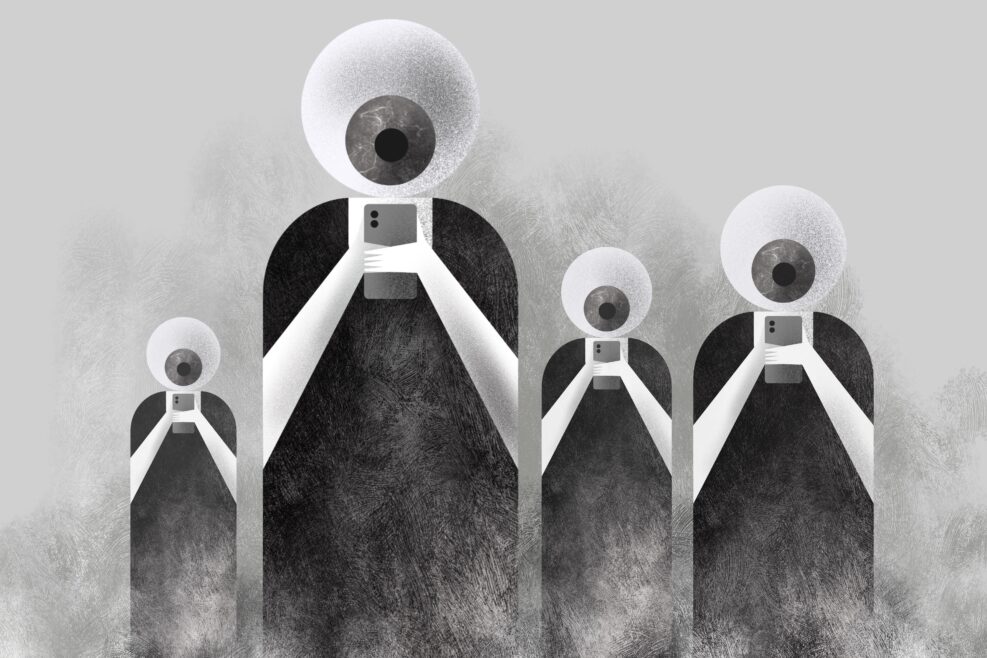
Following the data, observing personal experience, and developing another vision for human flourishing can get us a step closer to a fuller, intentional life.
Read More ›
While spectrum “auctions” generate significant revenue, they raise concerns about fairness, as the big players outbid others, potentially stifling innovation.
Read More ›
Ironically, “brain rot” started making the rounds primarily on TikTok, one of the biggest culprits when it comes to getting people addicted to screens.
Read More ›
Phones block access to spiritual depth. That’s what social psychologist Jonathan Haidt writes in his newest bestseller The Anxious Generation. The frenetic, distractible nature of the screen-based existence most of us live in every day is eroding our ability to pursue meaning, transcending values, and empathy for other people. Haidt was recently joined in conversation by Andy Crouch, a Christian author who has written extensively on technology and culture in books like The Tech-Wise Family and The Life We’re Looking For: Reclaiming Relationship in a Technological World. “My life is full of convenience,” Crouch writes in the latter title mentioned. It is full of transaction, at its best a mutually beneficial exchange of value, a kind of arm’s-length benign use Read More ›

Smartphones are distracting and addicting, but according to Jonathan Haidt, and supported by our common experience, they can also keep us from a basic ingredient of human life: Experience. Sometimes I wonder if the worst aspect of the “dopamine culture,” as culture critic Ted Gioia calls it, is not that we no longer have the attention spans to focus on our work, but that we no longer seem able to enjoy activities that aren’t based on screens. Simple pleasures like a good meal, meant to savor and digest at a slow pace, or going through a rich and complicated novel that yields real insight and literary joy, or even kissing an actual person in an affectionate way are all “old-school” Read More ›

But being constantly online, constantly available to reach, and constantly bombarded with the woes of the world is a recipe for emotional turmoil.
Read More ›
Metcalfe’s Law of IT growth begins with the fact that one fax machine — for example — is useless. Two help a bit but millions of them made a difference.
Read More ›
Wish you had known about the smartphone before 2000 – instead of the Y2K scare? To hear what’s really next, get in on COSM’s special price till September 30.
Read More ›
Mead never saw technology research as a left-brained thing; for him, he says, it is a matter of love. It only sounds simple afterward.
Read More ›
As more of our daily experience goes mediated and buffered through screens, it’s important to wonder what we’re losing.
Read More ›
“Hell is other people,” wrote Sartre. For the modern apologist of self-love, no one spoke a truer word.
Read More ›
How can students be expected to read and study or engage in discussions when educators are competing with TikTok videos and Instagram in the classroom?
Read More ›
What do we lose when we’re never quiet with our own thoughts, always checking our phones, always listening to Spotify or a podcast in the background?
Read More ›
Not only is the online world making us angry and sad. It’s also causing our character to atrophy.
Read More ›
Viewing the heavens beyond our reach causes us to look up and stretch our imaginations to envision a realm vastly greater than our own.
Read More ›
I think it’s fair to say that interstellar space travel isn’t even remotely possible with our current understanding of physics and technology.
Read More ›
It’s a strong sign that political figures are starting to realize the negative effects of social media on young people.
Read More ›
At the end of the day, I had to examine the real reasons I had an iPhone, and realized most of them were connected to distraction and entertainment.
Read More ›