AI: Tool or Companion?
Personalized AI systems only make sense in a friendless society.One of the problems of AI-human “relationships” is that, by definition, we cannot relate to a computer, nor can a computer relate to us.
Read More ›One of the problems of AI-human “relationships” is that, by definition, we cannot relate to a computer, nor can a computer relate to us.
Read More ›
Whatever one’s opinion, it’s still a fact that, unlike a human writer or artist, AI can’t think or feel.
Read More ›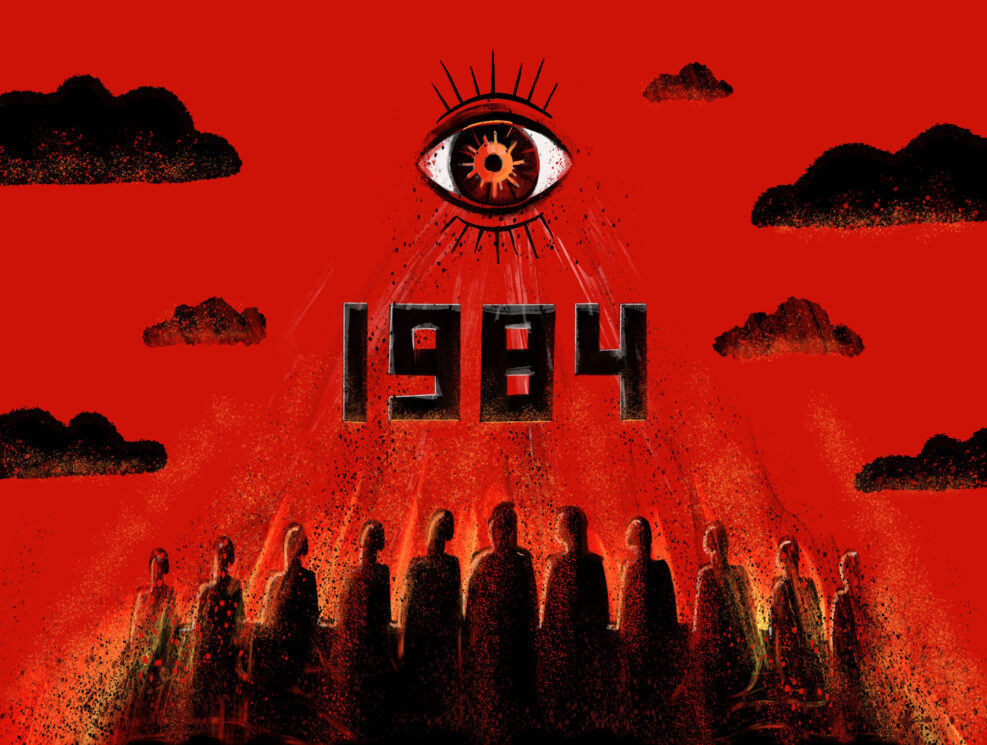
Three books stand at the top of the dystopian genre, even several decades after their publication: Brave New World, by Aldous Huxley; Fahrenheit 451, by Ray Bradbury; and perhaps supremely, 1984, by George Orwell. Each novel features versions of a futuristic society in which freedom is restricted (through different means) and foresees a bleak existence governed by the basest impulses in the human race. While Orwell’s masterpiece is typically hailed as a warning of the surveillance state, where individuality is erased in favor of group identity, it is also about the rise of technologies that replace human thought. Novelist Walter Kirn points this out in a recent episode of America This Week: 1984 is the story of the extinguishing, the Read More ›
Johnson’s views on AI sound crazy, but they reflect a burgeoning hope that computerized superintelligence will somehow solve all the enigmas of existence.
Read More ›
When measuring the significance of a plot hole, we should ask, how does it ultimately affect the story? Some of the ones in Romulus are not deep.
Read More ›
What do we lose when we’re never quiet with our own thoughts, always checking our phones, always listening to Spotify or a podcast in the background?
Read More ›
A classic episode of ID the Future dives into the controversial realm of artificial intelligence (AI). Will robots or other computers ever become so fast and powerful that they become conscious, creative, and free? Will AI reach a point where it leaves humans in the dust? To shed light on these and other questions, host Casey Luskin interviews computer engineering professor Robert J. Marks, head of the Walter Bradley Center for Natural and Artificial Intelligence. In this fast-paced interview, Marks touches on dystopian AI and the limits of computer algorithms (they can never do anything that is inherently non-computable, Marks argues), and discuss celebrity thinkers and entrepreneurs who’ve weighed in on the promises and perils of AI, such as Mark Zuckerberg, Elon Musk, Read More ›
I, Robot is one of those rare movies that manages to merge two genres seamlessly: sci-fi and noir.
Read More ›
Last time, we talked about Jakub’s new buddy, a giant spider that may or may not be real. This potential hallucination wants to help the astronaut with his loneliness because his wife, Lenka, has left him. The trouble is that the spider’s idea of helping poor Jakub is forcing him to remember his past. The writer wanted to give Jakub a redemption arch using these flashbacks; however, the astronaut’s memories were shown in a disjointed order, confusing the story and making Lenka look very bad, which made her and Jakub’s relationship difficult to root for. The chaotic flashbacks, mixed with a variety of plot holes, made for a very irritating story. One of the most glaring plot holes arises when Read More ›
Recent history tells us that corporations may be eager to get the upper hand and use it as an excuse to violate privacy even more than they already have.
Read More ›
A problem for the franchise as a whole is that there’s been no consistent measurement for these creatures’ intelligence.
Read More ›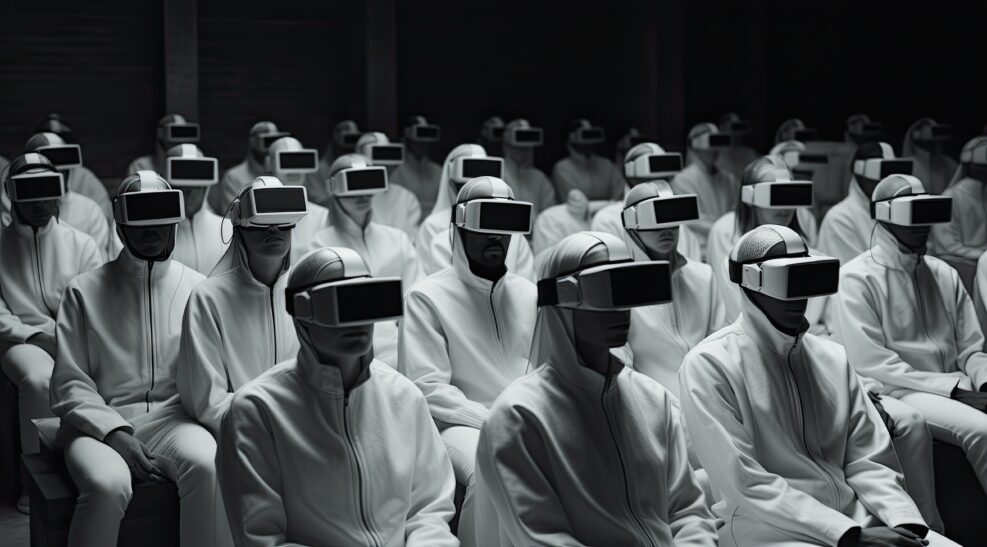
Tech investors and entrepreneurs are self-fulfilling old prophecies. One also thinks of Fahrenheit 451 by Ray Bradbury, a dystopian classic published in 1953.
Read More ›
In the third article, Ripley woke up in an all-male prison after surviving a shuttle crash. A parasitic alien tagged along and implanted an embryo in an inmate’s dog. The embryo breaks out of the animal and begins killing people until everyone figures out what’s going on, then they hatched one of the dumbest plans I’ve ever seen in cinema. After that, Ripley begins feeling sick. She goes to her still fully intact cryobed and scans herself. She finds that the parasitic alien has also planted an embryo inside her. The fact that Ripley had an embryo in her the entire time is ridiculous for a number of reasons. As I’ve mentioned in previous articles, her cryobed wasn’t broken, so Read More ›
Perhaps the doomers have a dystopian and exaggerated fear of AI, but a discussion about the new technology’s potential harms still needs to be had.
Read More ›
Last time, we began with the opening scene, and already, the entire franchise is ruined. In this review, we’ll discuss why. I would recommend reading the previous article for clarity, but for now, I’ll simply list the sequence of events. The alien queen, somehow, managed to lay an egg inside the room where the cryobeds were kept in spite of the fact that she’d never been outside the hull of the ship. The egg hatched and the parasitic alien damaged Newt’s cryobed, then for no apparent reason, abandoned its attempt to latch onto Newt, and latched onto Ripley instead. But here’s the thing. Ripley’s bed wasn’t damaged in anyway. So, how did it break into the bed? Both the ship Read More ›

No sense in burying the lead. This one is awful. But it’s important to understand how and why it’s awful. Alien 3 manages to destroy the entire franchise with remarkable speed. I’ll explain how, as the reviews go on. We start off with a credit sequence, and already things feel off. Ripley and the surviving members of the previous film are still in their cryobeds, but something else is aboard the ship as well: an alien egg. This egg is seen hanging upside down, almost at eye level. Already, we have a plethora of problems, so let’s dive in, shall we? The previous movie, Aliens, established that it takes a queen to lay these eggs. Now, we don’t know exactly Read More ›

There are a number of plot holes and contrivances that force the story along, but the movie is enjoyable as long as you don’t think too hard.
Read More ›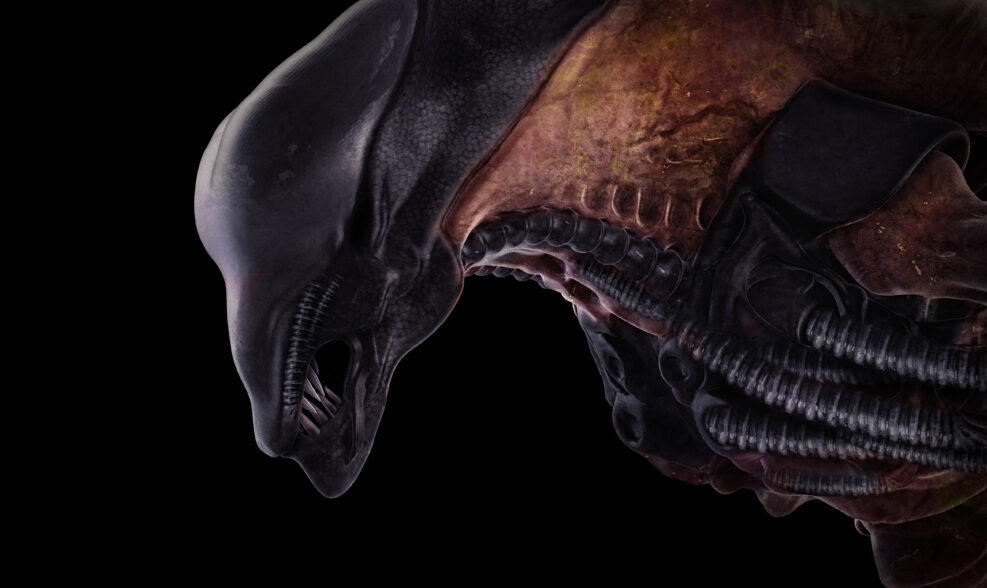
Aliens is much better than its predecessor. The plot remains mostly solid save for the dream sequence which really confused things in the beginning.
Read More ›
In the previous review, Megan began her killing spree, but Gemma quickly figured out there was a problem with the robot and took her back to her lab. Cady was distraught about the loss of her favorite toy, but Gemma still brought the girl to the lab and made Cady talk with a social worker. Afterward, she and Cady had a heartfelt discussion about the loss of the child’s parents. Gemma takes Cady home. Meanwhile, the assistants bring Megan down to the lab, but the robot escapes. Megan makes a B-line for Gemma’s house, but along the way, she encounters Gemma’s employer, David. She quickly kills the boss and his assistant before stealing a car. David was a rather unlikable Read More ›
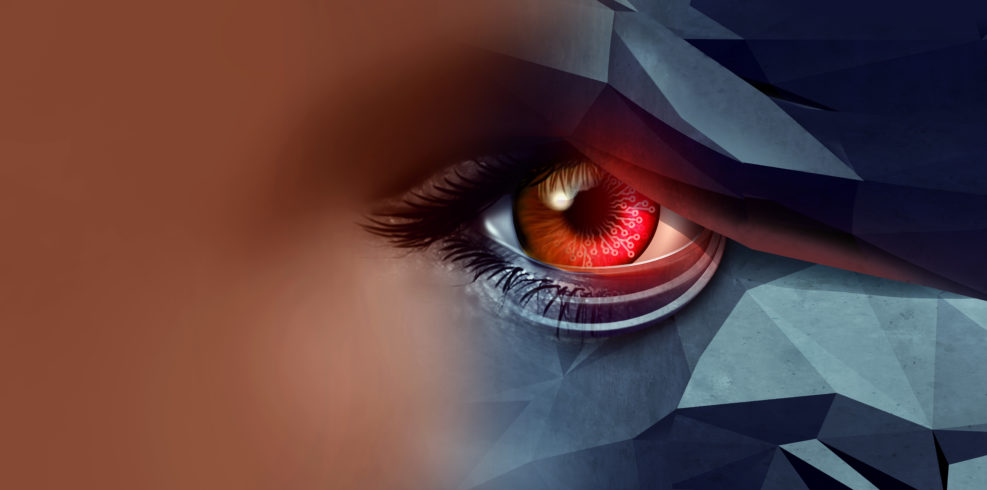
Last time, we talked about how Gemma gave Cady, her niece, a robotic doll, Megan, to help her raise the child after Cady’s parents were killed. At first, things go smoothly enough, but then Megan is attacked by a dog. The writers seem to have given us two potential theories about what’s happening. The first is that the robot is going through some sort of awakening right at the beginning. Megan has overridden the various safety protocols put in place to keep the robot from hurting people, and it’s only pretending to be protective of Cady. The second option is that during this dog attack, the fail safes malfunction, and this enables the robot to go on its murderous rampage. Read More ›