Harari, Humans, Algorithms, and AI
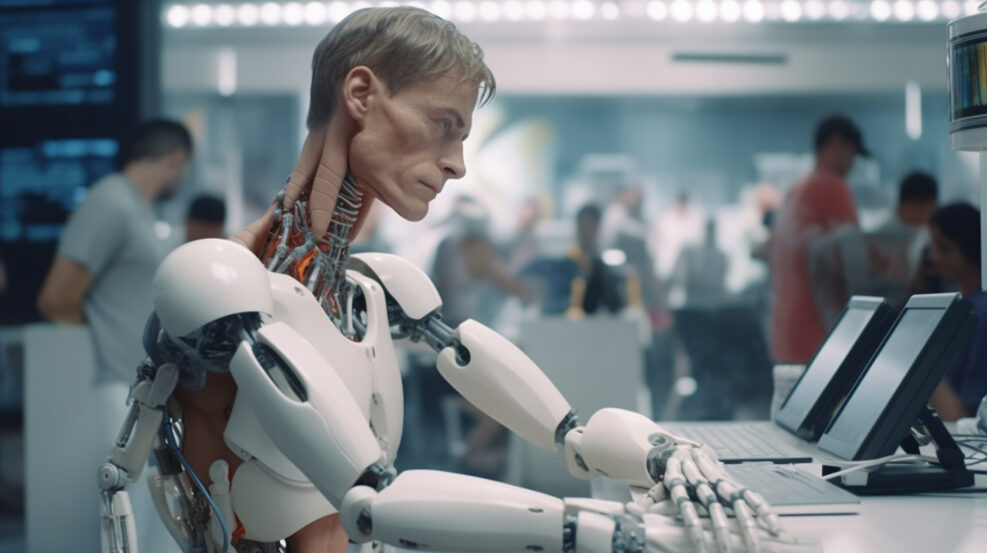
A futurist’s warning: AI may soon redefine the boundaries of human agencyThis anthropological starting point assumes the similarity of humans to computers, not the other way around.
Read More ›
This anthropological starting point assumes the similarity of humans to computers, not the other way around.
Read More ›
The country has increased life expectancy through orthodox means such lifestyle and healthcare improvement. But some of the research seeks more.
Read More ›
Tyler Bauer: If personal identity is grounded in an immaterial soul, the real Smith is the body that contains his original soul.
Read More ›
When dictators adopt transhumanism, it won’t just be Ray Kurzweil trying to upload himself to digital immortality. There will be a very dark side.
Read More ›
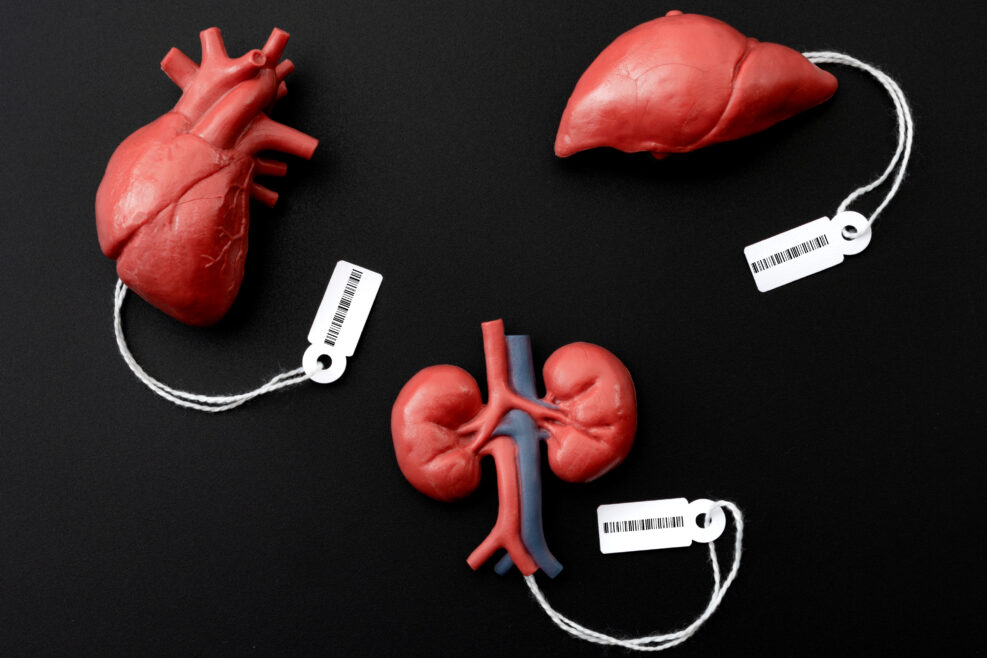
It wouldn’t surprise me if Xi has a political prisoner all tissue-typed and ready to be sliced and diced should the need arise.
Read More ›
It’s no wonder that techno-futurists trumpet a coming machine intelligence with such ease — they’ve lowered the standards so much to begin with.
Read More ›
Johnson’s views on AI sound crazy, but they reflect a burgeoning hope that computerized superintelligence will somehow solve all the enigmas of existence.
Read More ›
Traditionally, atheists have not thought that just about anything is permissible in order to avoid death; like the religious, they approached it philosophically
Read More ›
There is no convincing evidence that computers will ever experience creativity, understanding, and sentience. These are human attributes that can’t be computed.
Read More ›
“The product is certified ready for human testing.” I’m not quoting Elon Musk in relation to Neuralink. That’s the line from the fictional Norman Osborn in Sam Raimi’s original Spider-Man movie, starring Tobey Maguire, Kirsten Dunst, and the green maniac himself, Willem Dafoe. I’ve seen this movie dozens of times, so maybe it’s due to the weird fact that twenty-plus years after this film hit the scene, we now live in a world where big science organizations like Osborn’s Oscorp seem to be dealing with similar conflicts that ultimately produced the iconic Green Goblin. Not that Elon Musk or Sam Altman are going to start flying around on saucers and terrorize New York City. But they are eager to rush Read More ›

Larson tells his EP podcast host that the real danger is that powerful AI in the hands of bad actors could bring down banking systems and cripple grids.
Read More ›
AI systems alone go bankrupt, Dembski argues, because intelligence by nature requires novel insights and creativity, which is to say, an oracle from outside.
Read More ›
Marks points out in his work that many key acts of the mind, especially those involving creativity, are non-computable and AI doesn’t and can’t do them.
Read More ›
The Nazis were keen on creating a superhuman race with unsurpassable physical, intellectual, and (ironically) moral qualities.
Read More ›
AI’s greatest threat may not be its sophistication, but our own over-reliance on it. As a technology, it has its uses and benefits. As a religion, it fails.
Read More ›
The first time I watched Westworld, I remember enjoying it, but upon revisiting the series, my opinion of it has dropped a great deal. There are a variety of problems. First, it’s a bait and switch. It teases the idea of showing how robots can come to life, and it plays with your expectations for most of the series. It even goes as far as to discuss theories like The Bicameral Mind, and The Turing Test. Then, in the last episode, it confirms what the viewer has been slowly growing to suspect. The robots had been coming to life the entire time, and Ford had been wiping their memories. The show says that Ford programmed the robots to experience everything Read More ›

Since its release in July, Barbie has proved as controversial as it has popular. Its joint release alongside Oppenheimer has had movie theaters across the country teeming with “Barbenheimer” fans, those zealous people who watched both movies on the same day in an unprecedented feat of pink glitz and existential dread. But what is Barbie about? Is it a takedown of the patriarchy, a gentle comedy, or something a bit more subtle and powerful? The reviews have ranged between harsh critique and lavish praise. With the flood of commentary, though, have most people missed a central and yet subtle point? Elayne Allen, writing for Public Discourse, offers an alternative interpretation of the movie which might have bypassed the imaginations of Read More ›

Dr. Jay Richards, a Senior Fellow at Discovery Institute and a friend of the Walter Bradley Center, which publishes Mind Matters, spoke recently at the Acton University conference, discussing both transhumanism and AI. Transhumanists, Richards notes, look at the scope of “cosmic evolution,” see a kind of increasing complexity among the human race, and speculate the next dramatic step: achieving immortality through a mixture of genetic engineering, nanotechnology, and artificial intelligence. Richards described the transhumanist ideology as “anti-human,” but cautioned against having a reactionary response to all new technologies that seem to be involved in transhumanism’s vision, noting that some of them, when analyzed specifically, could have benefits (such as AI). The underlying philosophy of transhumanism, however, should be rejected. Read More ›

This is a conversation from a year ago but nevertheless remains radically pertinent today. Paul Kingsnorth and Mary Harrington, both who have written on various modern trends to try and transcend bodily limits, sat down on the Rebel Wisdom YouTube channel to have a chat. Both have written for the online magazine UnHerd, but up until this point, had never interacted with each other. Kingsnorth is a former environmentalist who became disillusioned with the movement and eventually converted to Orthodox Christianity. He is also a novelist and currently lives a simple life in Ireland. Harrington is a contributing editor of UnHerd and writes on feminism, politics, and other pressing cultural issues. Both believe that the urge to throw off human Read More ›

C.S. Lewis’s 1946 science fiction novel That Hideous Strength is almost eighty years old now. Written during the throes of World War II, the novel is the culmination of Lewis’s cosmic trilogy, preluded by Out of the Silent Planet and Perelandra. There are hosts of other articles attending to the prescience of Lewis’s terrifying novel, and for good reason; That Hideous Strength is a warning against using technology to dehumanize people and ultimately cripple the world into submission. It’s a great book as a novel, but it seems especially appropriate to revisit in lieu of the growing interest in transhumanism and the rapid acceleration of AI development. It feels like much of the talk on AI in recent months involves Read More ›