
If OpenAI fails, would the tech industry suffer?
Economist Gary Smith, writing in MarketWatch, says OpenAI’s failure would not replay the 2008 financial crisis. Not enough is at stake.
Read More ›
Economist Gary Smith, writing in MarketWatch, says OpenAI’s failure would not replay the 2008 financial crisis. Not enough is at stake.
Read More ›
Lähde, who regrets the decision, mentions “Capitalocene,” “Anglocene,” and “Plantationocene” as awaiting their chance in the wings.
Read More ›
Near-death experiences are challenging — not science — but the materialist presumption that has dominated for many decades in science.
Read More ›
James Watson’s science legacy is for the ages. It would be fair if his ignoble thinking about faith and race faded into the background after some time.
Read More ›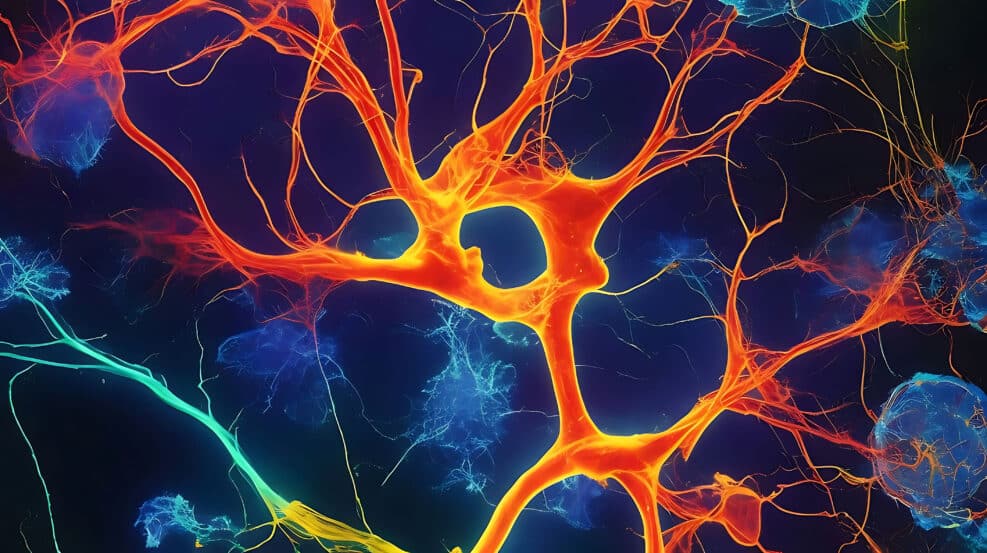
The problem with neuroscience today, Dr. Green says, isn’t lack of data, but lack of a unifying theory.
Read More ›
Whatever is really going on, claiming that AI made the workers obsolete is good for keeping investors and valuators confident.
Read More ›
In a “publish or perish” world, we shouldn’t be shocked — especially considering the more serious scandals. But it is worth noting for what it tells us about the general atmosphere.
Read More ›
Two of our writers, economist Gary Smith and technology consultant Jeffrey Funk, offer a very different assessment.
Read More ›
From the paper: “community well-being is more important than “accurate” data, and data makes us visible to institutions.”
Read More ›
The Valley forgets to factor in that everything in this universe has its limits.
Read More ›
Relativity Space likes to call itself a “customer-centric rocket company.” When we hear a tag line like that, we know times have changed.
Read More ›
Twenty years ago, materialism was expected to explain everything; now, more people are looking for broader picture answers.
Read More ›
Kukushkin et al. have a rather different philosophy of biology than we would expect to find in, say, textbook Darwinism. And they offer evidence.
Read More ›
Dr. Egnor agreed, observing that the United States seems to be losing its ability to hold respectful disagreement. Post responded by quoting Abraham Lincoln’s call for unity
Read More ›
It’s not clear how this will impact a commonly heard criticism of Wikipedia — bias. Chatbots could be tweaked to spout biased information too.
Read More ›
Just as the AI industry is becoming more analytical and realistic about how best to use AI, some users are falling in love with chatbots. We need to know more.
Read More ›
Klinghoffer notes that the question, “Why there is something rather than nothing?” is also addressed in the new video, “Proof of God in 3 Minutes.”
Read More ›
Michael Egnor adds that classical philosophers defined love as “willing the good of the other,” not merely liking someone and Stephen Post agrees.
Read More ›
If intelligence essentially involves agency, artificial general intelligence (AGI) in the human sense is not attainable by computation alone.
Read More ›
The more useful an AI data collection system becomes, the more tempting a target it will be for hackers. Some risks are actually the price of success.
Read More ›