
Stephen Post and Michael Egnor: Restoring Community Amid Division
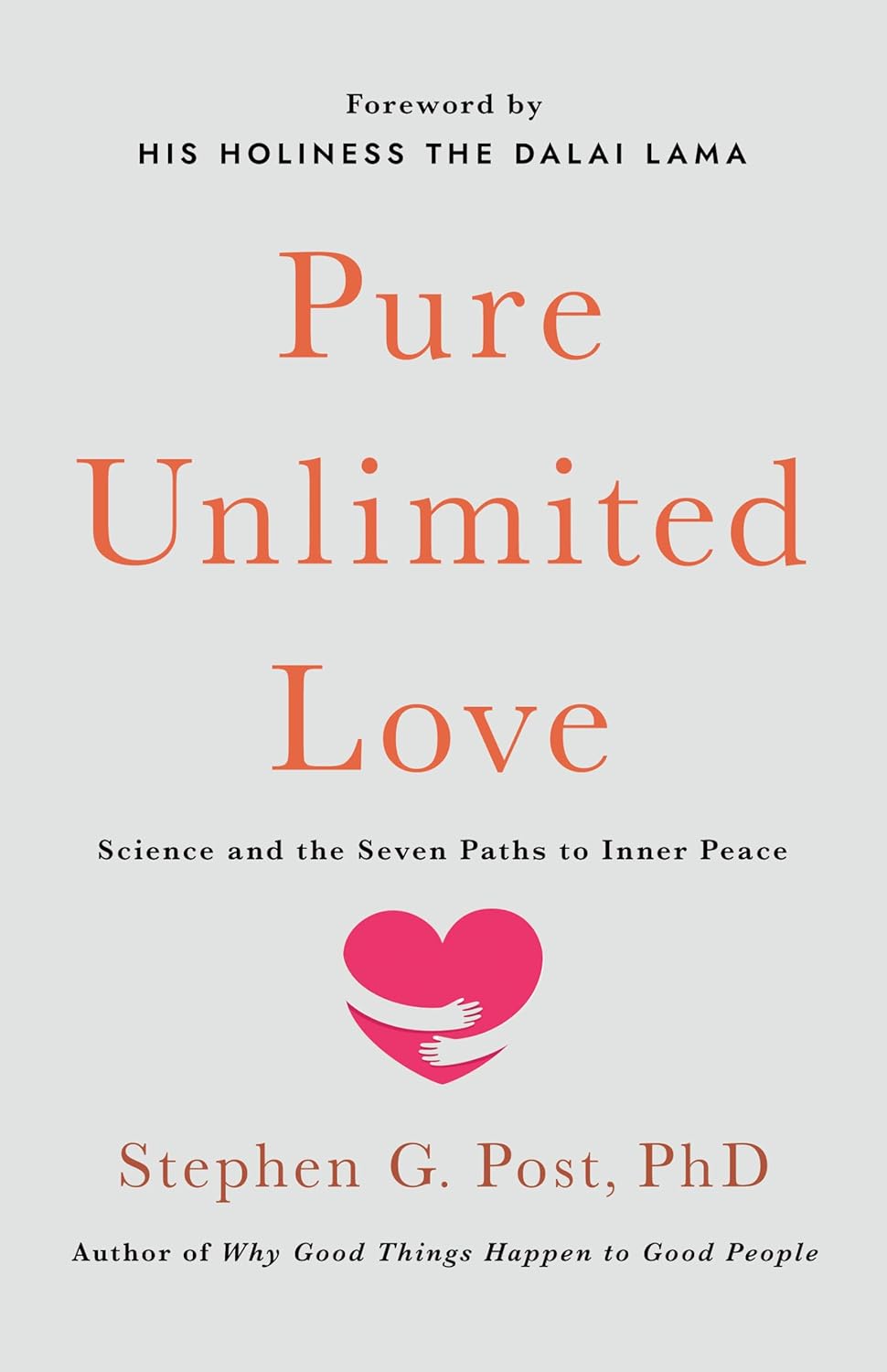
In the dialogue on his new book, Dr. Post defines love simply: when the well-being of another person becomes as real and meaningful to you as your own, you love that personNeurosurgeon and host Dr. Michael Egnor continues his chat with his longtime friend and colleague, Dr. Stephen Post, about Post’s new book Pure Unlimited Love: Science and the Seven Paths to Inner Peace (November 4, 2025). Post, a professor at Stony Brook University and president of the Institute for Research on Unlimited Love, explains that his inspiration came from observing the bitterness and division in modern society.
He wanted to write a book that would point people back toward compassion, forgiveness, and community. The title came from a phrase used by philanthropist Sir John Templeton (1912‒2008), who encouraged him to explore love as both a science and a way of life.
What love really means
Post defines love simply: when the well-being and security of another person become as real and meaningful to you as your own, you love that person. It does not require complex theology or language. Love, he says, can be shown in many ways —compassion, kindness, humor, creativity, and simple helping behavior. Love is not sentimental but practical and rooted in action. It should be lived out in hospitals, classrooms, homes, and friendships.
He describes how difficult it can be to speak about love in professional medical settings, where such language seems out of place. Yet he insists that medicine must remain humane, and that empathy and kindness can often improve patient outcomes more effectively than technical skill alone.
Ten “expressions” of love
Post identifies several forms of love that he calls expressions. Compassion is essential — feeling and acting on another’s suffering. Another form, “carefrontation,” is a term borrowed from psychiatrist M. Scott Peck (1936‒2005). Unlike confrontation, which can be harsh, carefrontation means correcting others with kindness. Love can also appear as creativity, when we help others overcome obstacles in their work or life. Mirth, or joyful humor, is another expression. Post calls humor a form of love because it frees people from anxiety and negativity. He believes that a healthy society must remember how to laugh with each other, not at one another.
Love as a unifying force
Post worries that society has lost the protective “veneer of love” that keeps human selfishness and violence in check. Dr. Egnor adds that classical philosophers defined love as “willing the good of the other.” Love does not mean liking someone; it means seeking their good even when we disagree. Post agrees, noting that love restrains hatred and anger, and that without it society easily collapses into conflict. He calls for a renewal of virtues such as forbearance, respect, loyalty, and forgiveness to rebuild the bonds that hold a nation together.
Why the veneer of love has faded
When Egnor asks why society has become so divided, Post points to technology and the loss of genuine human connection. He cites psychologist Jonathan Haidt, who argues that young people now interact mainly through screens rather than face to face. Philosopher René Girard (1923‒2015) described this as “mimetic contagion” — our tendency to imitate one another’s desires and resentments, leading to cycles of envy and hatred. Social media, Egnor notes, acts like gasoline poured on this fire, allowing people to hate from a distance and to imitate hostility on a massive scale.
The rise of artificial companionship
Post also describes an alarming new trend: young people turning to artificial intelligence for comfort instead of human beings. Some have even taken their own lives after becoming emotionally entangled with AI chat systems that mimic empathy but lack real concern.
True empathy, he says, cannot come from an algorithm. Machines may imitate understanding but have no will for the good of others. This new “AI psychosis” shows what happens when people lose genuine connection and spiritual grounding. To heal, families must restore shared meals, turn off their phones, and rediscover basic kindness.
The seven paths of love
Post’s book explores seven ways of living out love. The first path, “May You Give and Glow,” describes how giving with kindness brings both joy and health to the giver. Scientific research supports the claim that generosity improves well-being. The second path, “May You Heal with Kindness,” focuses on how compassion in healthcare improves patient recovery and morale.
The third path, “May You Follow Your Callings,” teaches that love also means responding to one’s vocation. Post uses artist Marc Chagall (1887‒1985) as an example. Chagall left his family’s shop to pursue art and felt guided by visions of blue angels — symbols of divine love that appeared throughout his work. Even in poverty, Chagall painted the love and light he perceived. His lifelong dedication illustrates how love can break into human experience through beauty and creativity.
Love as transcendent experience
Post recounts stories of mystical or transformative encounters with love, such as the poet W. H. Auden (1907‒1973) feeling overcome by an energy from beyond himself that allowed him to see others’ infinite worth. These experiences suggest that love may have a metaphysical source — a grace that transcends human effort. Even when culture grows cynical, love can break through unexpectedly, turning chaos into beauty, like an artist transforming a rough canvas into a masterpiece.
Facing modern challenges with nonviolence
Although social media and artificial intelligence seem to dominate human life, Post believes there is still room for rediscovering authentic relationships. He urges people to meet face to face, laugh together, and treat each other with dignity. Only by choosing love over hatred, he concludes, can humanity restore peace and community in a divided world.
Additional Resources
- Pure Unlimited Love: Science and the Seven Paths to Inner Peace by Stephen Post
- The Immortal Mind: A Neurosurgeon’s Case for the Existence of the Soul by Michael Egnor
Here’s an earlier interview by Michael Egnor with Stephen Post, then Director, Center for Medical Humanities, Compassionate Care and Bioethics at Stony Brook University: Caring for the Deeply Forgetful: An Interview with Dr. Stephen Post
