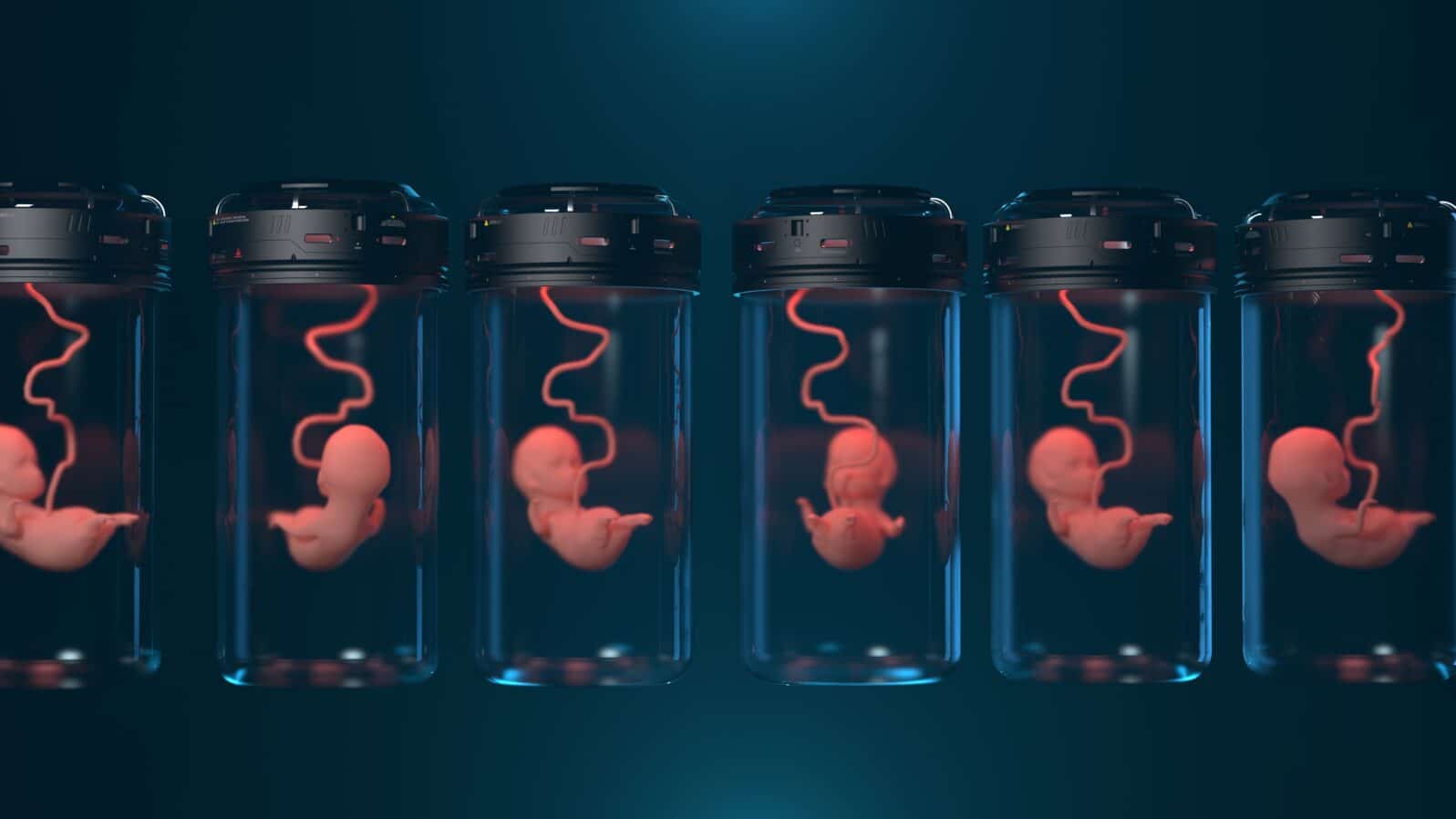
Radical Reproduction Turns Children Into Products
We are entering a world in which babies can be special-orderedThis article is republished from Epoch Times with the permission of the author.
Should men have the right to have their cells manipulated so they can become biological mothers? Should women past child-bearing age have the same right if their own eggs are no longer viable? More to the point, should we all have the right to do whatever it takes to have a baby if that is our desire and also, to obtain the baby we want?
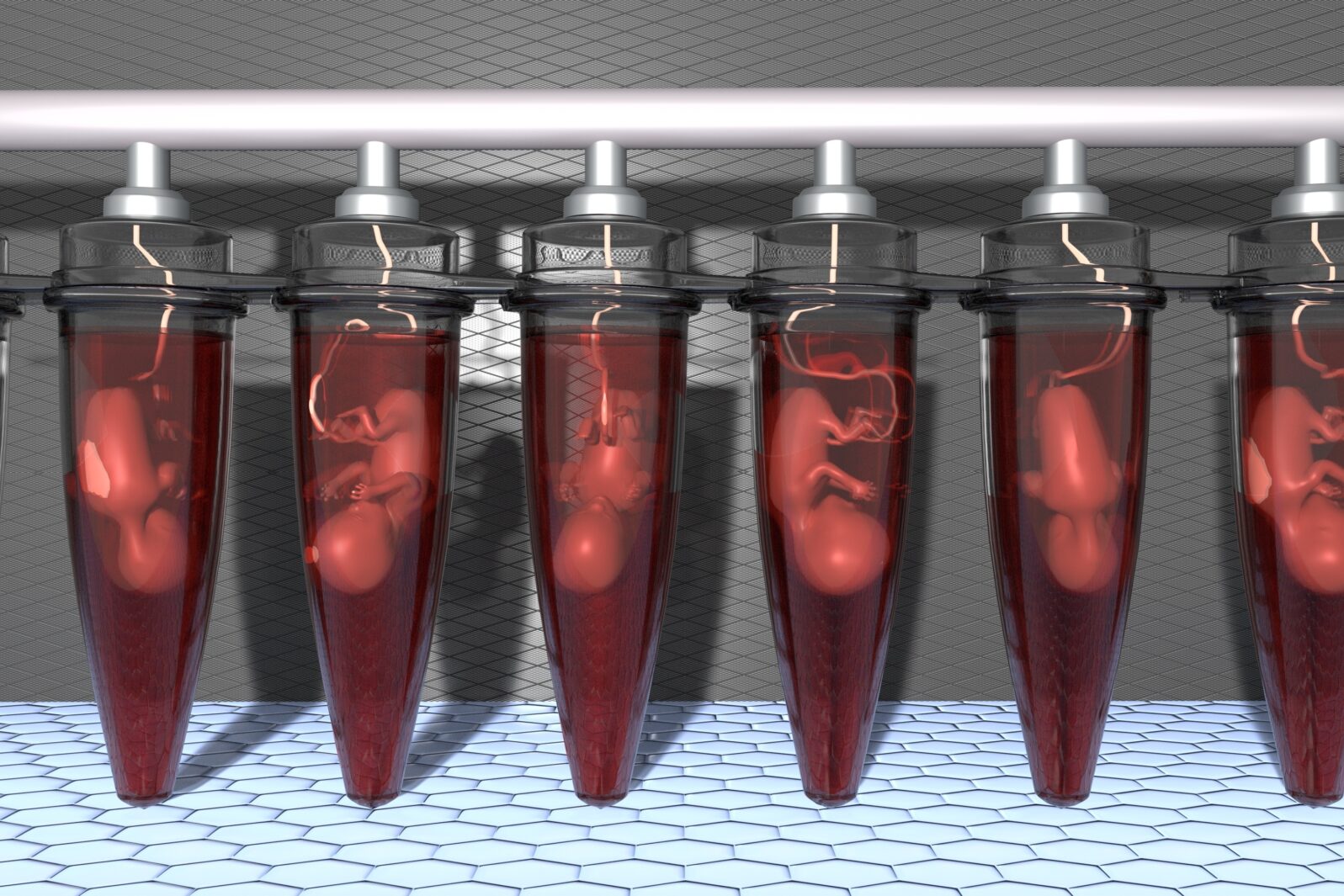 Image via AdobeStock
These questions have ceased to be grist for science fiction authors. Researchers recently announced that they have genetically manipulated human skin cells to become eggs, including those of men (the idea being to eventually enable both members of a same sex couple to have a genetic connection with their child). Then, after more genetic tinkering, the eggs were fertilized into embryos via IVF. Finally, the biotechnologists monitored embryonic development until the experiment was stopped, and the embryos destroyed.
No pregnancy has been established with this technique. But that is cold comfort. The researchers plan to keep experimenting and I have little doubt that when they overcome remaining technical difficulties, someone will create a pregnancy using “skin cell” embryos. After all, what beyond self-restraint—currently in little supply in this field—is to stop them?
Making eggs out of skin cells is just the latest example of an accelerating reproductive anarchy that is changing our very culture. Embryos created by IVF are already subjected to preimplantation genetic diagnosis (PGD) to decide which of a batch of embryos should be selected for implantation, whether for health reasons, sex selection, or superficial cosmetic purposes, with the “rejects” either frozen for future use, discarded as medical waste, or donated for research.
Research in China
Meanwhile in China, designer babies have been born who were genetically engineered through the CRISPR technique, moving society toward a new eugenics regime in which the equal inherent worth of all people is threatened by genetic manipulation. CRISPR may be the most powerful technology ever invented because it can alter any organism or cell to order. If performed in sperm or eggs or on early embryos, these alterations pass down the generations.
Technologists have even learned to manipulate eggs and sperm so that embryos have three biological parents. The supposed point is to prevent passing on mitochondrial illness. But this can also be deployed to enable novel polygamous family formation in which every partner has a genetic connection to the child.
Human asexual reproduction has also been accomplished—no sperm required—through the cloning process known as somatic cell nuclear transfer (SCNT), the same technique used to create Dolly the sheep. If a cloned embryos is ever implanted, the resulting baby would be the identical twin of the person whose DNA was used in the cloning process. In other words, cloning isn’t so much reproduction as it is replication.
What are we to make of all these developments?
When it comes to babies, all ethical boundaries are being obliterated as reproductive technologists manipulate the creation of new human life to fulfill any parental desire, no matter how extreme or socially destabilizing. Worse, these choices often ignore the potential deleterious biological and social impacts on the resulting children.
Indeed, according to children’s rights activist, Katy Faust, president of Them Before Us, reproduction in the laboratory is far from benign. She told me that the potential harms to children from such interventions include “violating their right to a mother and father, their right to life [of the embryos discarded as unsuitable], their right to be born free and not commodified, and their right not to be bought and sold.”
Second, think of the effort and expense deploying these techniques will require. IVF already costs tens of thousands of dollars when PGD (Preimplantation Genetic Diagnosis) is included and with average patients often requiring two or three cycles to establish a pregnancy. Now, add in the potential cost of CRISPR editing, creating eggs from skin cells, or crafting three-parent children, along with the increasing use of surrogate mothers—dehumanized as “gestational carriers” in industry parlance—and the potential expense for our emerging Brave New World goes through the proverbial roof.
Who will pay? The law already often requires health insurance and government benefits to pay for some of these procedures. It is hard to believe that trend will not continue as reproduction advances even farther toward manufacture and an equality of result “equity” principle embeds deeper into our cultural norms.
We are entering a world in which babies can be special-ordered, like a leather couch, complete with quality control and the right of return. What do I mean? In the wild world of commodified reproduction we are constructing, the same babies manufactured in the lab with such great effort could be aborted through the ninth month in many jurisdictions if the parents change their mind or the baby is deemed to be “defective” after prenatal testing.
What can be done to harvest the potential benefits of futuristic technologies like CRISPR—the technology was recently used to save a baby’s life—while avoiding the significant dystopian potential? Unless we grow some courage to enforce moral principles, very little.
There is no question that this field is ripe for strict regulation. But whenever attempts at even modest controls are proposed, the multi-billion-dollar Big Fertility industry—ever on the ready to throttle regulatory resistance to the current laissez faire system—goes to work. Parents of children created via these technologies soon storm the halls of the legislatures, emotionally demanding that legislators stand down. It works every time.
There’s a deeper reason for the fix we are in. When the most potent forces in society become feelings and exercising one’s subjective will, the government’s role in creating proper boundaries soon mutates into guaranteeing access to the great maw of “I want!”
Alas, as Faust reminds us, children resulting from these futuristic technologies could be the ones reaping the whirlwind.
