
Maturing Toward God: An Update from Charles Murray
It’s significant that the rethinking, in this and other cases, was prompted by evidence from scienceThis article, by David Klinghoffer is republished from Science and Culture Today.
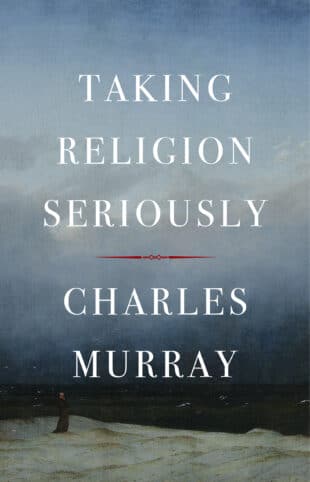
My article from this morning uses the metaphor of growing older and maturing to explain how prominent people like political scientist Charles Murray, once secular in outlook, have rethought their attitudes about God, the origin of the universe, human consciousness and the soul, and related matters. In many cases, the rethinking was prompted by evidence from science.
Now a reader points out that Murray has a New York Post op-ed, also published today, that uses the same metaphor. From, “As we grow out of intellectual adolescence, religion’s popularity soars“:
Children of the Enlightenment, we have seen ourselves as more rational than earlier generations and in the process cut ourselves off from mankind’s accumulated wisdom about topics that do not lend themselves to pure reason and empiricism.
That was a mistake.
Hence the adolescence analogy.
A common symptom of adolescence is deciding your parents are wrong about everything.
A common symptom of adulthood is realizing your parents are smarter than you thought.
Maybe we’re starting to grow up.
A Candid Admission
His new book is Taking Religion Seriously. I haven’t read it yet but I intend to. I am told that it cites our colleague Stephen Meyer.
Writing at The Free Press, Murray also makes this observation about his “first nudge” toward belief:
The first nudge, so soft that it barely registered (I cannot recall when it did more than cross my mind) was the mathematical simplicity of many scientific phenomena — most famously E = mc2. There’s also Newton’s second law of motion (which is just F = ma), Galileo’s law of free fall (d = 1/2gt²), and many other examples.
It just seemed extremely odd that so many basic phenomena were so mathematically simple. It was almost as if someone had planned it that way.
The first unmistakable nudge involved the question, “Why is there something rather than nothing?” I first heard it put in those words by the late columnist and commentator Charles Krauthammer during a session of a chess club we started in the early 1990s. That I thought Charles had come up with it himself is proof of how unreflective I had been. Anyone who had taken any interest in theology would have encountered it long since. It’s one of the most famous questions in metaphysics.
But I hadn’t heard it, and it caught me by surprise.
That is quite a candid admission. As it happens, why there is something rather than nothing is also the question posed in our new video, “Proof of God in 3 Minutes,” about the law of conservation of matter and energy.
