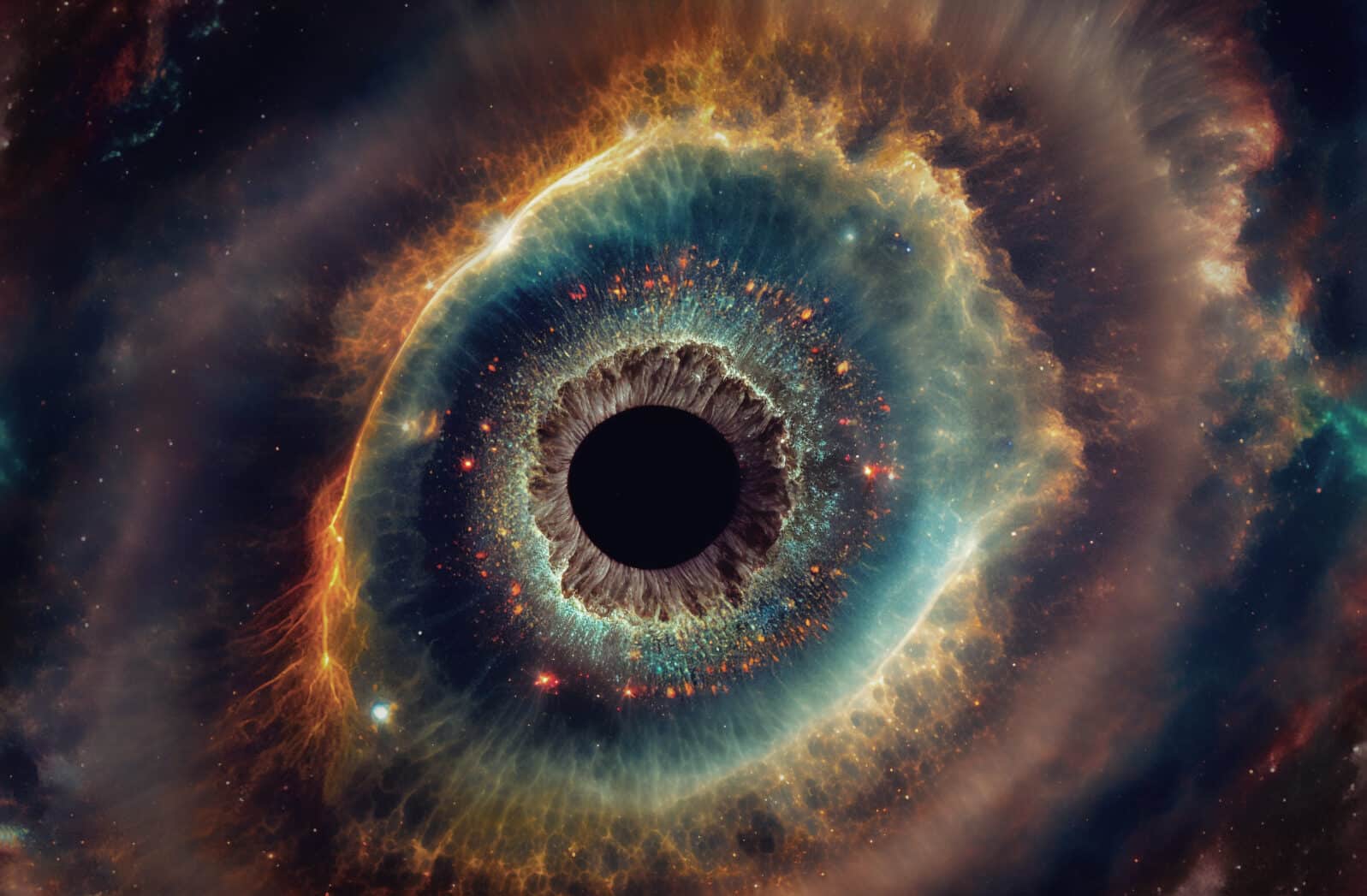
Change: Charles Murray Finds Out That He Does Need God
This growing interest in religion is a trend. It is all coming too close together to just be an accident of timing.People who have followed ferment in the book world since, say, the Eighties and the Nineties, have likely heard of political scientist Charles Murray (b. 1943). He authored the influential Losing Ground (1984) on welfare reform. Much more controversially, he co-authored with Richard Herrnstein (1930–1994) The Bell Curve (1994), which focused on the relationship between IQ and class structure. Coming Apart (2012) was less controversial but more sobering; it described the way social classes in the United States had slowly been diverging over the previous half century — with clear implications for politics.
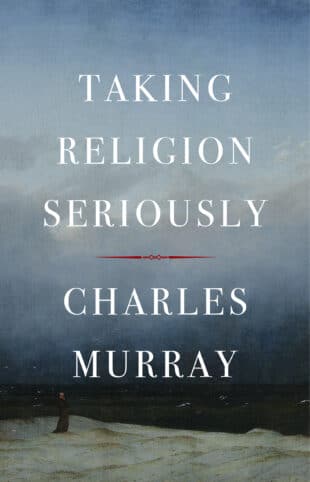
His forthcoming book, Taking Religion Seriously (December 2025) is rather more personal:
“Millions are like me when it comes to religion: well-educated and successful people for whom religion has been irrelevant,” Charles Murray writes. “For them, I think I have a story worth telling.”
Taking Religion Seriously is Murray’s autobiographical account of the decades-long evolution in his stance toward the idea of God in general and Christianity in particular. He argues that religion is something that can be approached as an intellectual exercise. His account moves from the improbable physics of the Big Bang to recent discoveries about the nature of consciousness, from evolutionary psychology to hypotheses about a universal Moral Law. His exploration of Christianity delves into the authorship of the Gospels, the reliability of biblical texts, and the scholarship surrounding the resurrection story. – From the Publisher
Murray gives his audience some idea what to expect in an excerpt in The Free Press:
My secular catechism from college through the mid-1990s went something like this:
The concept of a personal God is at odds with everything that science has taught us over the last five centuries.
Humans are animals. Our thoughts and emotions are produced by the brain. When the brain stops, consciousness stops too.
The great religious traditions are human inventions, natural products of the fear of death. That includes Christianity, which can call on no solid evidence for its implausible claims.
I look back on that catechism and call it “dead center” because it was so unreflective. I had not investigated the factual validity of any of those propositions. They were part of the received wisdom of most Western intellectuals throughout the 20th century. I accepted them without thinking.
In describing how I got unstuck, I will make the process sound more orderly than it was.
“I Thought I Didn’t Need God. I Was Wrong,” October 14, 2025
He started to notice the mathematical precision of the universe, the uniqueness of human consciousness and many other things the catechism didn’t account for very well.
The broader question
He says much more that is worth the reader’s time. But for now, a question: It’s not just Murray. Many sources have been noticing an apparent revival of religion and serious spirituality. Why?
For example, from our recent files:
Pew: Rate of Decline in Christian Belief in U.S. Is Slowing (June 1, 2025)
Unexpected: ChatGPT and the Return of God (September 21, 2025)
News Roundup: This Certainly Looks Like a Religious Revival… (September 21, 2025)
French Authors Say Science Points to God; Scientists Listen (October 6, 2025)
This is a trend. It is all coming too close together to just be an accident of timing.
Were trend watchers blindsided by all this?
At Unherd, urban geographer Joel Kotkin points out that the conventional picture of the religious vs. the non-religious population is gravely distorted:
In modern sociology, conventional wisdom holds that religious people are generally less curious, less ambitious, and less intelligent than their nonbelieving peers. But this view is out of tune with current realities. On the contrary, a deep dive into the data shows that, over the last 15 years, religiously engaged people have become more likely to be well-educated, while atheists are less so. In the United States, religious groups outperform atheists and agnostics.
Overall, religious enthusiasm is most concentrated among middle-income professionals. An analysis of the 2022-2023 Cooperative Election Study, surveying nearly 85,000 Americans, found a positive correlation between education and weekly religious attendance. The rate of attendance rises from 23% among high school graduates to 30% for those with graduate degrees
“Why God Came Back, October 16, 2025
Not what you heard? Well, if you heard something else from traditional media, maybe those media aren’t so reliable any more. They’re declining because, increasingly, younger people are getting their news from new media sources.
Unexpected sources
But the big story is the fact that the interest in religion is arising from unexpected sources:
Christian talk show host Justin Brierley predicts “the fall of the New Atheism.” Richard Dawkins’s vision of a universe driven by “blind, pitiless indifference” is being challenged by a generation of conservative intellectuals like Jordan Peterson, JD Vance, and Ayaan Hirsi Ali, who embrace religion’s resurgence as counterweight to the current declines in marriage, family, community, and civil society.
Even some in the tech elite are having second thoughts. Most scientists tend towards secularism, but there seems to be a trend among scientists to embrace faith. Most notably, the expanding Society of Catholic Scientists counts more than 2,100 members and has 28 regional chapters.
Even in the technological heartland of secular America, Silicon Valley, there are religious stirrings. “Came Back”
Kotkin doesn’t identify a driving force for the trend; perhaps it’s too soon to tell. All we can say for now is that the future that we were told to expect is being substantially revised in front of us.
