Stony Brook University neurosurgeon Michael Egnor and I argue—from modern neuroscience evidence—that the human mind is not merely what the brain does; it is immaterial and immortal…
We steadied ourselves for pushback from atheists, whether they were Oxford dons or bloggers.
But that’s not what has happened. I was surprised by the polite reception that the book has received from unexpected quarters. For example, when Dr. Egnor discussed our approach with well-known skeptic Michael Shermer and leading neuroscientist Christof Koch on Shermer’s podcast in June, the conversation was notably polite and productive. And when he discussed it—again with Michael Shermer—on Piers Morgan’s show in July, many commenters were pleased at the polite normalcy of the discussion. It was a refreshing change from the all-too-common Punch-and-Judy show; there was no hint of mere ridicule from host or opponent.
Twenty years ago, there was not nearly so much openness. As co-author of a book on a similar theme—The Spiritual Brain (Harper One 2007)—I can testify that neuroscientist Mario Beauregard and I did not encounter anything like the same willingness to listen back then. Materialism was expected to explain everything someday soon and put a stop to all those fanciful beliefs about the mind or the soul as anything more than the workings of a randomly evolved brain.
What Has Changed?
I think that one reason for a newfound willingness to listen is that in many areas, materialism is failing to account for all the evidence. Even people who are not paying close attention may be beginning to sense that. Neuroscience is one of these areas. Dr. Egnor, for example, started out as a materialist, skeptical of religion and spirituality. But he kept encountering situations in his practice—which includes 7,000 brain operations—that challenged his materialist view.
Early in his career, he had to split a man’s brain in half to control epilepsy, yet the man was the same person afterward. Studying split-brain research, he discovered that two split halves communicate successfully, yet it is unclear how they can physically do so. He also discovered in his own practice something that researchers have been learning from neuroscience studies—that people can function normally with large parts of the brain missing or removed. Similarly, as we discuss in the book, people deep in dementia can suddenly become lucid—and not only just as they are dying.
Dr. Egnor also had a spiritual experience that cemented his growing recognition of a reality: The brain he works on is the organ by which a human mind is rooted in the world, but it is not the sum total of that mind. Oft-heard claims that the brain is just a machine and the mind is merely what the brain does cannot be correct. A key consequence is that the human mind (or soul) does not necessarily die with the body.
Near-Death Experiences and Immortality
In the book, we … also address—more controversially—near-death experiences (NDEs). These include experiences where people whose brains are non-functional report seeing things that are later confirmed as fact.
Near-death experiences have been recorded for thousands of years, but there is a critical difference today that has attracted science interest: Modern medicine has enabled many more people to be pulled back from various states of death that can be confirmed by the recording of vital signs. Thus, one significant change is that NDEs are no longer associated with the occult; they are studied in research published in science journals.
Veridical NDEs demonstrate that the human mind can survive, at least for a time, while physically detached from the body. However, that fact does not, by itself, demonstrate that the mind or soul is immortal. After all, we only hear accounts from people who returned to the body to tell us what they saw. We do not hear from those who did not.
So, arguing for the immortality of the human mind, Dr. Egnor and I build the case from philosophy: The human mind (or human soul) can be seen as having two parts. One part is the material powers of the brain: movement, sensation, memory, and emotion. We share that part with animals. The other part is the immaterial powers of the mind: abstract thought and moral choice. This part is unique to humans. It does not die with the body. This specifically human part of our minds is nonlocal and indivisible and cannot simply cease to exist…
Michael Egnor and I are both observant Catholics and the teachings of the New Testament are foundational to our lives. However, we did not reference them much in the book. That is because the Scriptural witness simply assumes the immortality of the soul (the human part of the mind) in the same way that modern materialism simply denies it. Jesus rebukes the Sadducees (Matt 22:23–33) and Paul rebukes some new Christians for doubt in the matter (1 Cor 15:13–15), but arguing the case is not central for them.
Now, in an unexpected turn of events, medical science provides clear evidence that the materialist view is wrong, that the mind is not simply what the brain does. Medical science cannot prove that the Scriptural view is right, but it can easily remove alleged sources of doubt. And that is what we resolved to do.

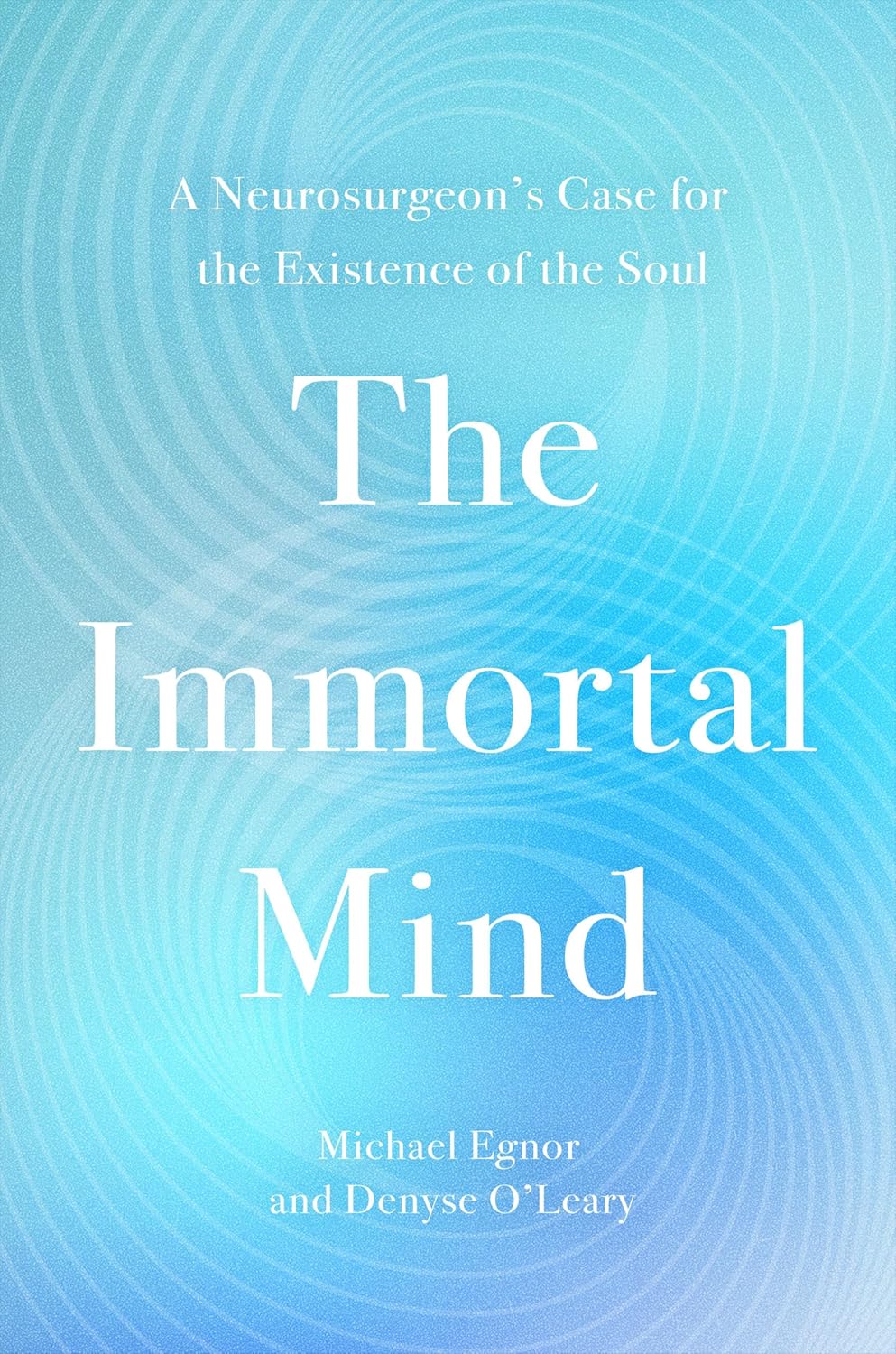 Published by Worthy Books