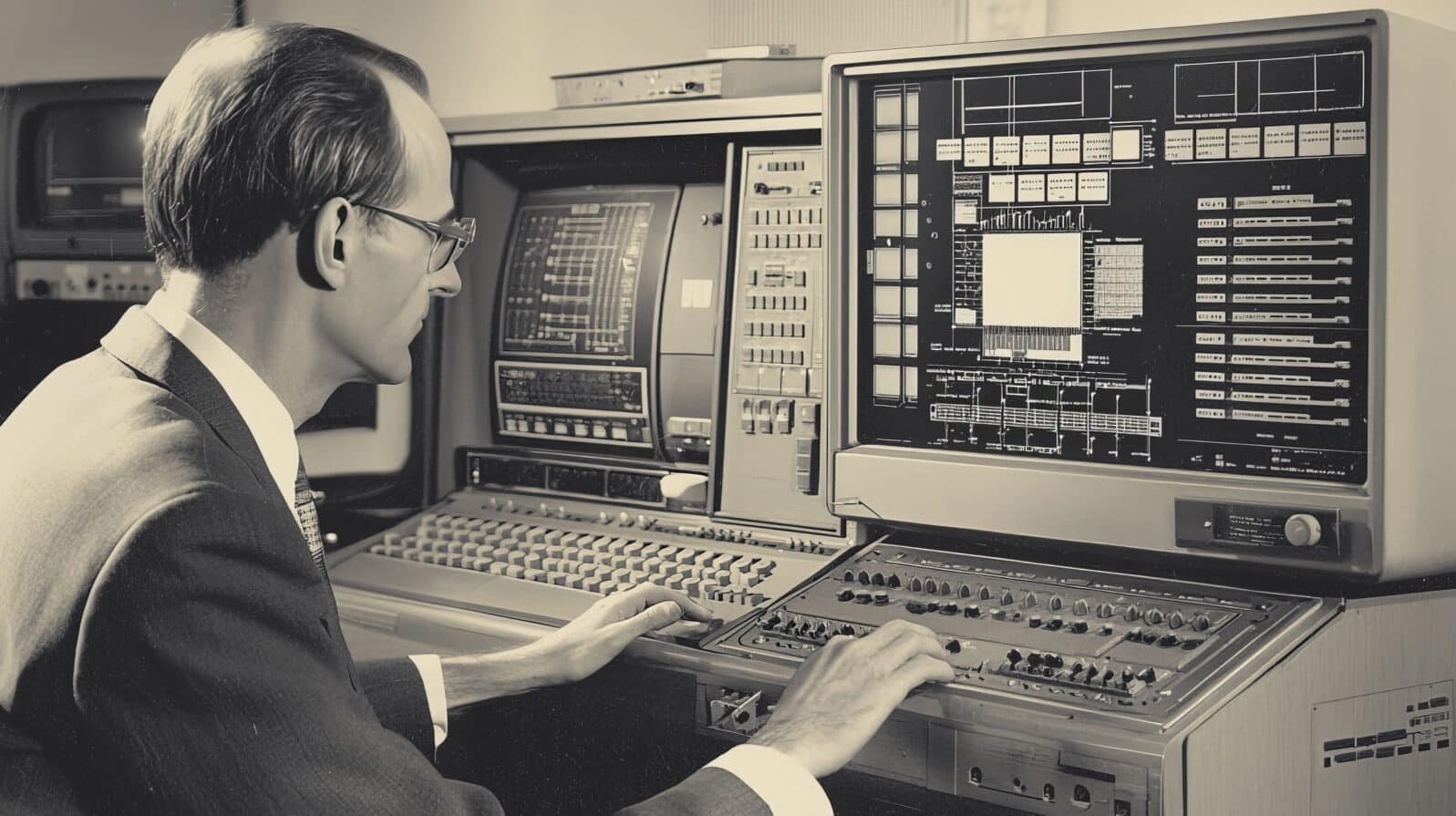
Superintelligence? AI’s History vs. the Myth
Here is the history in a nutshell outlining how we got to where we are today.“The longer you can look back, the farther you can look forward” – Winston Churchill1
The historical record of artificial intelligence shows that AI superintelligence won’t happen. Every major advance in AI has followed the introduction of a new computational model, learning paradigm, or algorithm conceived by human beings. From the early neural networks to large language models to agentic AI, the breakthroughs have come from human creativity. Computers have served as powerful tools for implementing these innovations, but they did not invent them.
Here is history in a nutshell outlining how we got to where we are today.
1943 – McCulloch–Pitts Neuron: First mathematical model of an artificial neuron2
McCulloch and Pitts introduced the first mathematical model of a neuron. A number of inputs were fed into a neuron, which combined them to achieve a numerical value assigned to that neuron that it could pass on.
1949 – Hebb’s Law: “Neurons that fire together wire together.”3
Donald Hebb proposed a biological learning rule in which the connections between neurons strengthen when they are activated simultaneously. This is the basis of biological neuroplasticity and inspired the learning mechanisms used in artificial neural networks. Hebb’s insight is often paraphrased as “neurons that fire together wire together.”
1958 – Rosenblatt’s Perceptron: First electronic trainable neural classifier4
Frank Rosenblatt introduced the perceptron, demonstrating that simple artificial neural networks could learn to classify directly from training examples.
1960 – ADALINE: Adaptive Linear Neuron5
Widrow and Hoff introduced their ADALINE neural net together with the Least Mean Squares algorithm, providing one of the first practical learning algorithms still widely used in signal processing. Their neural network was trained to play blackjack at an expert level, perform voice-to-text translation, and forecast the weather better than the local weatherman.6
1974 – Backpropagation Invented7
Paul Werbos developed the mathematically elegant error backpropagation algorithm for training neural networks. Today, backpropagation is one of the most widely used algorithms in computing.8
Backpropagation overcame some of the performance limits of the perceptron and Adaline, making it possible for the neural network to learn more complicated relationships.
Error backpropagation became the cornerstone of subsequent advances in artificial intelligence. It is used to train a wide range of neural network architectures, including today’s convolutional neural networks (CNNs), generative adversarial networks (GANs), diffusion models, and transformer architectures, including the large language models (LLMs).
1986 – Backpropagation Popularized: Parallel Distributed Processing (PDP)9
Paul Werbos invented error backpropagation, but it wasn’t popularized until over a decade later. Rumelhart and Williams demonstrated that backpropagation could successfully train multilayer neural networks on practical problems, sparking renewed interest.
For the first time, artificial neural networks found widespread commercial application. Electric utilities used them to forecast power demand,10 while financial institutions deployed them for credit card fraud detection and credit risk assessment. The Hecht-Nielsen Corporation was among the pioneers in commercializing this technology, becoming the first artificial neural network based company to achieve a billion-dollar sales tag.11
1989–1998 – Convolutional Neural Networks
The introduction of convolutional neural networks (CNNs) made it possible to train neural networks directly from image pixels. Before CNNs, the so-called curse of dimensionality12 restricted neural networks to a relatively small number of inputs.
 From ThisPersonDoesNotExist.com
ThisPersonDoesNotExist.com
CNNs revolutionized image analysis by making it possible to train directly on raw pixel data. Today, CNNs are widely used in medical diagnosis—including cancer detection from pathology slides and medical imaging—as well as facial recognition, autonomous vehicles, industrial inspection, satellite imaging, robotics, and countless other computer vision applications.
Kunihiko Fukushima’s Neocognitron (1980)13 introduced the first hierarchical CNN-like neural network establishing the architectural foundation for modern convolutional neural networks. Independently, Homma, Atlas & Marks (1988–1989)14 developed one of the earliest convolutional neural networks for speech recognition. Building on these earlier innovations, LeCun15 and his colleagues created trainable convolutional neural networks for handwritten digit recognition, demonstrating their practical effectiveness and launching the modern era of deep learning for computer vision.
2014 ‒ Deepfakes: Generative Adversarial Networks (GANs)16
Remarkable deep fake images were made possible through the introduction of generative adversarial networks (GANs) The algorithm introduced adversarial training in which a generator competes with a discriminator, producing remarkably realistic synthetic images, audio, and video.
2015 – Better Deepfakes: Diffusion Models18
 Image generated with ChatGPT
Diffusion models have largely replaced GANs. GANs suffered from several inherent weaknesses that diffusion models largely overcome.
Diffusion models generate data by learning to reverse a gradual noising process.
2017 – Transformer Models: Foundation for Large Language Models19
Transformer models, more than any other advance in neural networks, brought artificial intelligence into widespread public use. They enabled generative AI systems such as large language models, image synthesis programs, and automatic code generation, making AI a part of everyday life. Although the transformer architecture was designed to model long-range relationships in sequential data, its capabilities proved far more powerful and versatile than even its creators anticipated.
A. Vaswani and colleagues at Google replaced recurrent neural networks with the self-attention mechanism, allowing efficient training on massive datasets. The result was astonishing. Modern large language models are transformer-based.
2025 – Agentic AI: AI systems that autonomously plan and execute multi-step tasks
Agentic AI refers to artificial intelligence systems that autonomously pursue goals by planning sequences of actions, using external tools, and adapting based on feedback. Although the term “agentic AI” has become popular only recently, the underlying concepts date back at least to intelligent-agent paradigms of the 1990s.20
Agentic AI extends language models beyond text generation by enabling planning, tool use, memory, and iterative reasoning.21 Such systems autonomously decompose goals into subtasks, invoke external software or databases, monitor progress, and revise plans in response to new information.
What all these breakthroughs have in common
Every breakthrough described above originated from the intellect and creativity of human researchers. From backpropagation to convolutional neural networks, transformers, and diffusion models, each advance resulted from a new insight introduced by computer nerds. Computers faithfully implemented these algorithms, but they did not invent them.
This historical record casts doubt on claims that artificial intelligence will inevitably achieve superintelligence. Throughout the history outlined above the breakthroughs that created new paradigms in artificial intelligence have come from human ingenuity, not from AI systems themselves. To date, there is no evidence that AI can independently produce the kind of creative conceptual breakthroughs required to invent fundamentally new paradigms for artificial intelligence. This historical record is evidence that AI is not genuinely creative and is unlikely ever to become so. The same pattern argues against the emergence of artificial superintelligence capable of originating fundamentally new ideas.
Although other theoretical considerations support this conclusion, the history of AI itself provides compelling empirical evidence: every major conceptual advance has come from the human mind, not from a machine.
What comes next?
 Image Credit: OMD -
 An old Danish proverb reminds us, “It is difficult to predict, especially when it concerns the future.” For the sequence of innovations listed above, at each step along the way, no one had any idea what the next breakthrough would be.
Nevertheless, let me venture a prediction. Today’s large AI models require enormous computational resources, often consuming gigawatts of electrical power during training. In striking contrast, the human brain operates on about the power consumed by a refrigerator light bulb. This remarkable disparity has motivated research into so-called organoid intelligence,22 in which living neural tissue is explored as a computing substrate. Although the concept is intriguing, results to date have been modest at best, and organoid intelligence remains far from demonstrating practical advantages over conventional artificial intelligence.
History shows that the next conceptual breakthrough will once again originate from the creativity of human minds rather than from the machines themselves. Machines can be used as an aid in the creative process, but the guiding force is the astonishing creativity of the human mind.
[1] C. Eade, Comp., War Speeches by the Right Hon. Winston S. Churchill, C.H., M.P.: The Dawn of Liberation. London, U.K.: Cassell & Co., Ltd., 1945. [Online.]
[2] W. S. McCulloch and W. Pitts, “A logical calculus of the ideas immanent in nervous activity,” Bulletin of Mathematical Biophysics, vol. 5, no. 4, pp. 115–133, Dec. 1943.
[3] D. O. Hebb, The Organization of Behavior. New York, NY, USA: Wiley, 1949.
[4] F. Rosenblatt, “The perceptron: A probabilistic model for information storage and organization in the brain,” Psychological Review, vol. 65, no. 6, pp. 386–408, 1958.
[5] B. Widrow and M. E. Hoff, “Adaptive switching circuits,” in Proc. IRE WESCON Conv., New York, NY, USA, Aug. 1960, pp. 96–104.
[6] Robert J. Marks, “A Pioneer Ahead of His Time: Bernard Widrow and the Origins of Modern AI” Mind Matters News, January 12, 2026.
[7] P. J. Werbos, “Beyond regression: New tools for prediction and analysis in the behavioral sciences,” Ph.D. dissertation, Committee on Applied Mathematics, Harvard Univ., Cambridge, MA, USA, Aug. 1974.
[8] R. J. Marks, “Dr. Paul Werbos: Artificial Neural Networks,” Mind Matters News, Apr. 20, 2021.
[9] D. E. Rumelhart and J. L. McClelland, Eds., Parallel Distributed Processing, Vols. 1–2. Cambridge, MA, USA: MIT Press, 1986.
[10] D. C. Park, M. A. El-Sharkawi, R. J. Marks II, L. E. Atlas, and M. J. Damborg, “Electric Load Forecasting Using an Artificial Neural Network,” IEEE Transactions on Power Systems, vol. 6, no. 2, pp. 442–449, May 1991
B. F. Hobbs, U. Helman, S. Jitprapaikulsarn, S. Konda, and D. Maratukulam, “Artificial neural networks for short-term energy forecasting: Accuracy and economic value,” Neurocomputing, vol. 23, nos. 1–3, pp. 71–84, Dec. 1998. [Online].
[11] Robert J. Marks, “AI Pioneer Was Ahead of the Curve, Bridged Differences” Newsmax, January 30, 2025.
[12] R. D. Reed and R. J. Marks II, Neural Smithing: Supervised Learning in Feedforward Artificial Neural Networks. Cambridge, MA, USA: MIT Press, 1999.
[13] K. Fukushima, “Neocognitron: A self-organizing neural network model for a mechanism of pattern recognition unaffected by shift in position,” Biological Cybernetics, vol. 36, no. 4, pp. 193–202, 1980.
[14] L. E. Atlas, T. Homma, and R. J. Marks II, “An Artificial Neural Network for Spatio-Temporal Bipolar Patterns,” in Proc. IEEE Int. Conf. Acoustics, Speech, and Signal Processing (ICASSP), New York, NY, USA, Apr. 1988, pp. 27.6.1–27.6.4.
T. Homma, L. E. Atlas, and R. J. Marks II, “An Artificial Neural Network for Spatio-Temporal Bipolar Patterns: Application to Phoneme Classification,” in Advances in Neural Information Processing Systems 1, D. S. Touretzky, Ed. San Mateo, CA, USA: Morgan Kaufmann, 1989, pp. 31–40.
[15] Y. LeCun et al., “Backpropagation applied to handwritten zip code recognition,” Neural Computation, vol. 1, no. 4, pp. 541–551, 1989.
Y. LeCun, L. Bottou, Y. Bengio, and P. Haffner, “Gradient-based learning applied to document recognition,” Proceedings of the IEEE, vol. 86, no. 11, pp. 2278–2324, Nov. 1998.
[16] I. Goodfellow et al., “Generative adversarial nets,” in Proc. Adv. Neural Inf. Process. Syst. (NeurIPS), 2014, pp. 2672–2680
[17] G. van de Ven, “This Person Does Not Exist – How Does It Work?,” MachineCurve, Jul. 17, 2019.
[18] J. Sohl-Dickstein, E. Weiss, N. Maheswaranathan, and S. Ganguli, “Deep unsupervised learning using nonequilibrium thermodynamics,” in Proc. ICML, 2015, pp. 2256–2265.
J. Ho, A. Jain, and P. Abbeel, “Denoising diffusion probabilistic models,” in Proc. NeurIPS, 2020.
[19] A. Vaswani, N. Shazeer, N. Parmar, J. Uszkoreit, L. Jones, A. N. Gomez, Ł. Kaiser, and I. Polosukhin, “Attention Is All You Need,” arXiv preprint arXiv:1706.03762, Jun. 2017. A. Vaswani, N. Shazeer, N. Parmar, J. Uszkoreit, L. Jones, A. N. Gomez, Ł. Kaiser, and I. Polosukhin, “Attention Is All You Need,” in Advances in Neural Information Processing Systems 30 (NeurIPS 2017), I. Guyon et al., Eds. Red Hook, NY, USA: Curran Associates, Inc., 2017, pp. 5998–6008.
[20] A. S. Rao and M. P. Georgeff, “BDI Agents: From Theory to Practice,” in Proceedings of the First International Conference on Multi-Agent Systems (ICMAS), San Francisco, CA, USA, Jun. 1995, pp. 312–319.
[21] M. Gridach, J. Nanavati, K. Z. E. Abidine, L. Mendes, and C. Mack, “Agentic AI for Scientific Discovery: A Survey of Progress, Challenges, and Future Directions,” arXiv preprint arXiv:2503.08979, 2025.
[22]R. J. Marks, “Organoid Intelligence?: That’s AI Powered by Pizza and Beer,” Mind Matters News, May 19, 2026.
