Hotter water? Neuroscientist Christof Koch plans to study NDEs
Having survived an effort to Cancel him, he makes no further commitment to a conventional materialist viewProminent Allen Institute neuroscientist Christof Koch hit the news again recently, suggesting that the brain does not create consciousness.
That is very much at odds with the current neuroscience perspective, set out in a journal article by J. L. Saver and J. Rabin in 1997: “All human experience is brain-based, including scientific reasoning, mathematical deduction, moral judgment, and artistic creation, as well as religious states of mind…. There are no exceptions to this rule.”
Koch was making a presentation at the biennial Behind and Beyond the Brain Symposium sponsored by Portuguese pharmaceutical company Bial, which focuses on neuroscience and rare diseases:
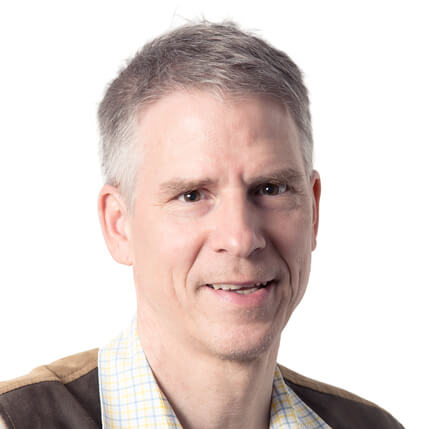 Christof Koch at
 Koch’s presentation examined the limits of materialism, the dominant scientific view that everything in existence can ultimately be explained through matter, energy, and physical laws.
Neuroscience has made enormous progress in identifying brain regions and networks associated with awareness. However, it has not solved what philosophers call the “hard problem” of consciousness. The term refers to the difficulty of explaining how electrical and chemical activity in the brain gives rise to subjective experience, including sensations, emotions, thoughts, and the personal feeling of being alive.
A brain scan might show what happens when someone sees the color red, for example, but it cannot reveal why seeing red feels like anything at all.
“What if the brain does not create consciousness?”, ScienceDaily, July 26, 2026
Commentator Robert Lawrence Kuhn, host of Closer to Truth, estimates that about 325 theories of consciousness have been proposed — which is more than enough to suggest that modern neuroscience is on the wrong track.
And now the kicker…
Koch believes researchers may need to reconsider philosophical ideas such as idealism and panpsychism while continuing to apply modern scientific methods.
Idealism broadly proposes that consciousness or mind is central to the nature of reality. Panpsychism suggests that consciousness is not limited to human beings or animals, but may instead be a fundamental property found throughout nature in varying degrees. “Does not create consciousness?”
In short, he is prepared to go head-to-head against Saver, Rabin, and most neuroscientists and say that avenues other than a fully materialist theory should be pursued.
This despite the fact that he and his Integrated Information Theory (IIT) were denounced in 2023 in a letter signed by many prominent academics in neuroscience for similar “misdeeds.”
Curiously, the denunciation arrived shortly after he lost a bet with philosopher of mind David Chalmers. He had maintained in 1998 that a material “consciousness spot” would be found in the brain over the next 25 years. It wasn’t. So he conceded.
If those letter signees were warning him to just back off now and start mumbling materialism again, he seems not to be taking the hint.
What about a non-materialist theory of consciousness?
As Koch goes on thinking aand researching, this might be a good time to reintroduce an older theory of the mind, the filter model: The brain does not create consciousness but filters it, focusing our attention on what is useful to us in the here and now.
Boston College philosopher Peter Kreeft explains:
The brain may not be the cause of thought but the stopping down, the ‘reducing valve’ for thought, as Bergson, James and Huxley suppose: an organ of forgetting rather than remembering, eliminating from the total field of consciousness all that serves no present purpose. Thus when the brain dies, more rather than less consciousness occurs: the floodgates come down. This would account for the familiar fact that dying people remember the whole of their past life in an instant with intense clarity, detail, and understanding.
“The Case for Life After Death”
In defense of the filter model
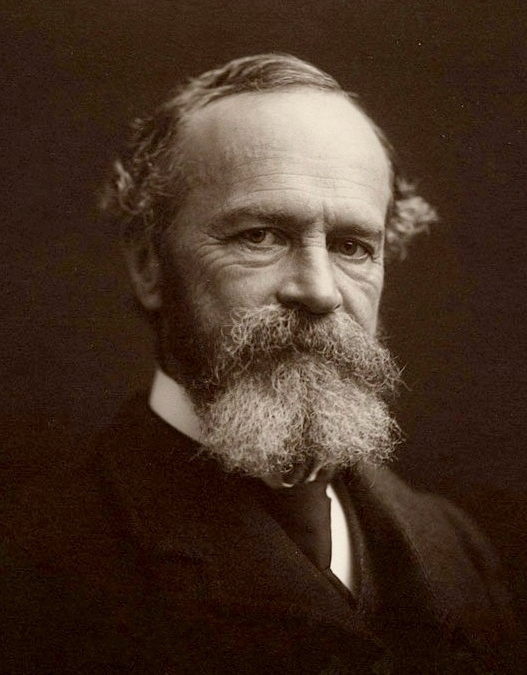
As Kreeft notes, psychology pioneer William James (1842–1910) thought that the filter model was a good one. He suggested in Human Immortality (1898) that “mind, cognition, or mental awareness are the result of the essential reality of the universe being transmitted through the ‘receiving station’ of the brain.” We naturally belong, he said, to “that more real world.”
The filter model better accounts for paradoxical and terminal lucidity — where consciousness appears to operate independently of brain function as the brain fails or nears death — than a materialist one does.
It also provides insight into one of the most significant characteristics of near-death experiences, the extraordinary lucidity that experiencers report — in just the sort of situation where the brain would not be expected to function normally. What if part of the brain’s normal function is to block out that very kind of consciousness in favor of a more useful everyday mode?
And, wouldn’t you know, Koch hopes to make headway now by studying near-death experiences and terminal lucidity.
Even in everyday life, our senses and brains are set to receive certain kinds of input and not others. For example, humans often don’t see, hear, or smell things that many other life forms can. That’s simply because we lack the needed receptors.
In these matters at least, we generally know better than to assume that what we cannot sense is not real. So, in at least one respect, we understand the filter model implicitly already. Whether neuroscientists will give it a fair hearing is another matter.
Next: The mind–body “interaction problem” is desperately overhyped
