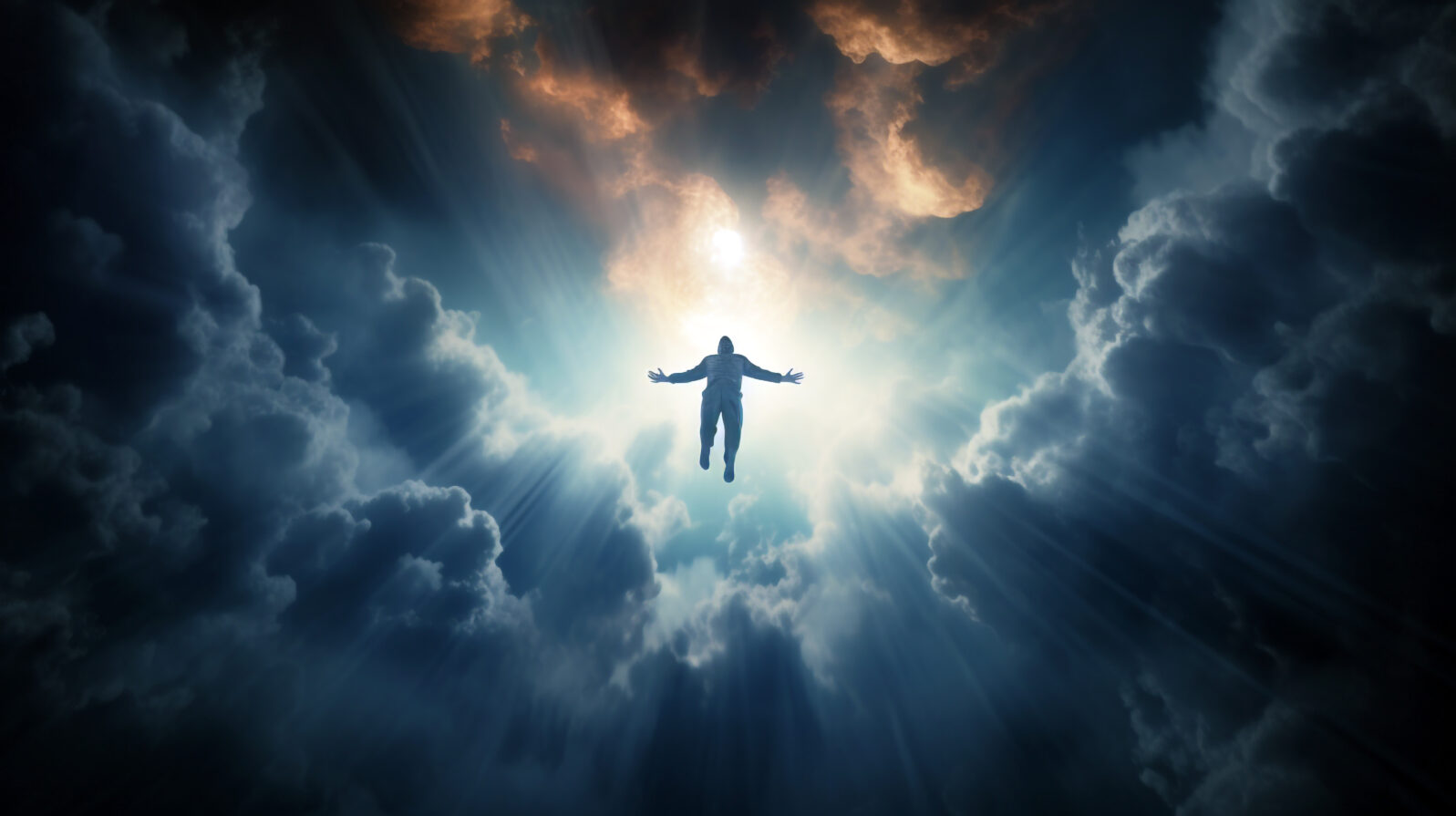
Understanding the State of Afterlife Bliss
It’s certainly not an eternity playing harps while sitting on a cloudDoes Heaven exist and what is it like to be there? It’s certainly not an eternity playing harps while sitting on a cloud as your wings flutter in the wind.
Many people have reflected on such a profound question of the afterlife but there are those who claim they have died and come back from the ‘dead’ to tell of their experience.
Such a phenomenon is called Near Death Experience (NDE: always be conscious of the letter ‘N’ in the initial cluster: ‘Near’, not ‘Dead’). Some NDE people try to describe the state of bliss that they felt. Check out this ground-breaking book on such a phenomenon: The Immortal Mind: A Neurosurgeon’s Case for the Existence of the Soul: Egnor, Michael, O’Leary, Denyse: 9781546006350: Amazon.com: Books
On Christianity, in Heaven there will be no more mental suffering or physical pain; no more longing for earthly desires; all physical ailments or deformities will be banished; all psychological illnesses or emotional damage will end; the resurrected bodies of the saved will be free of defects and dysfunction. Consider 1 Corinthians 15:21-23 and 51-52: in verse 21, Paul says:
For since by a man came death, by a man also has come the resurrection of the dead. For as in Adam all die, even so in Christ all shall be made alive. But each one in his own order, Christ the first fruits, afterward those who are Christ’s at His coming.
In the many books written on NDEs, some people have claimed they arrived in Heaven and spoke to dead loved ones and even met with Jesus. They tell these stories after they are allegedly told by a voice, ‘it’s not time yet’, as they recover in a hospital bed.
But the crux of Heavenly or NDE stories is the state of bliss, and ultimately, eternal bliss. Regarding visions of God, the many saints bore witness to such bliss. In the Catholic tradition, such events are seen as gifts from the Holy Spirit. They often occur in the context of deep prayer and commitment to the faith.
The Church examines these experiences carefully to ensure they align with doctrine. Many saints who had these encounters wrote about them to guide others. These phenomena are not everyday occurrences but appear in specific historical contexts.
The Church teaches that they serve to build up the community of believers. Scripture provides a basis for understanding these gifts, as in 1 Corinthians 12:4-11, which discusses varieties of spiritual gifts. Catholic theology distinguishes between ordinary prayer and these exceptional graces. Read more at: https://www.catholicshare.com/who-are-the-saints-that-experienced-mystical-phenomena-and-what-is-their-theological-significance/
But what exactly is bliss? It is not ordinary happiness, but an overwhelming of complete contentment that’s infused within the spiritual mind of a worldly deceased person in a Heavenly, eternal state. Think about it: Thisstate brings profound joy, peace; a timeless, fulfilment that fills the ‘hole’ that most normal people feel that is missing in their heart and mind.
According to ChatGPT:
Heavenly bliss is a feeling of perfect peace, profound joy, and complete contentment — as though the soul has found its true home and nothing is missing. It is often imagined as a state of being beyond earthly worries, pain, fear, and sorrow, where love is unconditional, beauty is limitless, and the heart rests in the presence of something divine. Imagine a place where golden light fills the sky, gentle music seems to flow through the air, and a deep sense of warmth surrounds you. There is no anxiety about tomorrow, no regret about yesterday, and no need to prove yourself to anyone. You feel completely safe, deeply loved, and entirely at peace. For some, heavenly bliss means being in the presence of God or reuniting with loved ones in the afterlife. For others, it is a spiritual experience of oneness with the universe, or a moment on Earth when happiness and inner peace feel almost beyond words. In its simplest form, heavenly bliss is the feeling that everything is as it should be — that you are loved, that you belong, and that your soul can finally rest.
When ChatGPT says, “For some, heavenly bliss means reuniting with loved ones in the afterlife,” it misses the point that in such a profound state, there would be no longing or sadness if we don’t see our loved ones. Why? Because if it caused us pain to not see our loved ones, then that’s not a state of bliss, which is not to be confused with ecstasy, which is temporary, intense emotional high.
There are two answers to that situation: God erases the memories of one’s time on Earth with their loved ones (Isaiah 65:17-18 NIV – New Heavens and a New Earth – “See, I – Bible Gateway, or, as mentioned above, the state of enteral bliss prevents any sadness or longing. There can be no sorrow in a state of bliss.
As for the real, mostly secular, fallen world filled with deception which is punctuated by moments of fear, sorrow and joy of restless souls, C.S. Lewis said:
“If we find ourselves with a desire that nothing in this world can satisfy, the most probable explanation is that we were made for another world.”
Lewis also said our desires were never meant to be satisfied by earthly pleasures alone; instead, they lead us to something “further up and further in,” to the true source of satisfaction found only in the presence of God, or more succinctly, in Heaven: Hope Made Certain – Official Site | CSLewis.com
