
The Mind–Body “Interaction Problem” Is Desperately Overhyped
Why would our mental states NOT be "causally relevant" to the way we behave?You don’t have to spend much time skimming the voluminous philosophy of mind literature to come across the mind–body interaction problem. Stanford Encyclopedia of Philosophy explains it thus:
Originally, the problem of mental causation was that of understanding how an immaterial mind, a soul, could interact with the body. Most philosophers nowadays repudiate souls, but the problem of mental causation has not gone away. Instead, focus has shifted to mental properties. How could mental properties be causally relevant to bodily behavior?
Robb, David, John Heil, and Sophie Gibb, “Mental Causation,” The Stanford Encyclopedia of Philosophy (Spring 2023 Edition), Edward N. Zalta & Uri Nodelman (eds.).
Note the sentence, “How could mental properties be causally relevant to bodily behavior?”
 Image Credit: ty -
 Actually, it’s hard for some of us to see how mental properties could not be causally relevant to bodily behavior.
For example, if you begin to suspect that your coworkers are setting you up to be the one the boss lays off during a downturn, will that not affect your behavior around them? Even if you decide that the best strategy is to act as if nothing is amiss, you will experience a very different state of both mind and bodily behavior from one in which you are unaware of any reason to be concerned.
The authors continue, “Instances of apparent mental causation are so common that they often go unremarked, but they are central to the commonsense picture we have of ourselves. It’s not surprising, then, that questions about the nature and possibility of mental causation arise in a variety of philosophical contexts.”
The role of eliminative materialism in making mind–body interactions a problem
It is surprising that the “possibility of mental causation” garners so much attention — until we realize one critical thing: Mind–body interactions are most likely a “problem” because the unspoken goal is not to understand how the mind and body work together but to platform the idea that the mind doesn’t really exist (eliminative materialism).
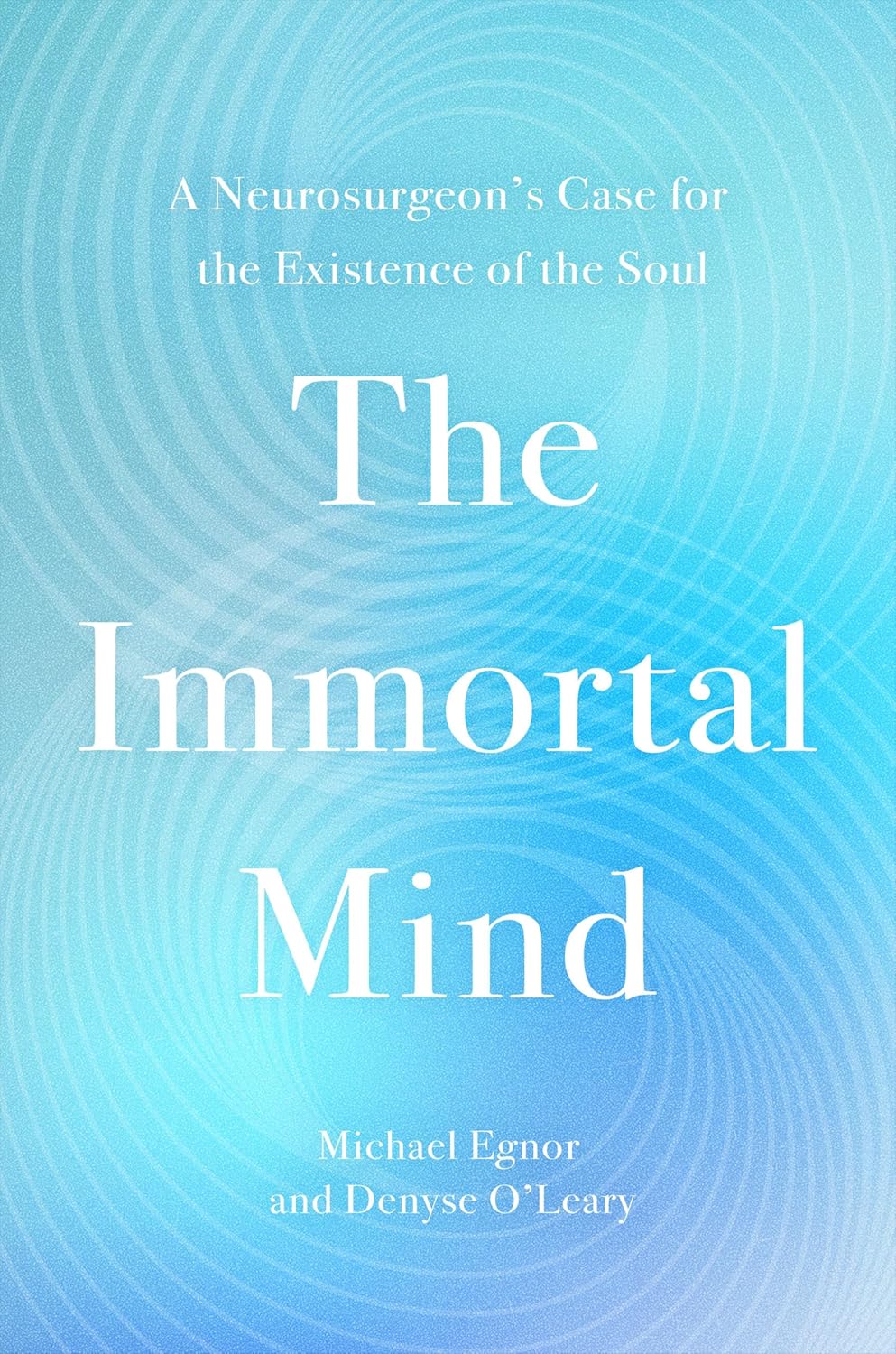 Published by Worthy Books
In The Immortal Mind (2025), neurosurgeon Michael Egnor and I noted a number of instances of eliminative materialism and variants thereof (pp 161–62):
● Stanford tells us that prominent philosophers Patricia and Paul Churchland’s writings “have forced many philosophers and cognitive scientists to take eliminativism more seriously.” Briefly, the Churchlands hold that the mind is mere “folk psychology,” a false, misleading account of the causes of human behavior.
● University of Mainz philosopher Thomas Metzinger offers, “The first-person pronoun ‘I’ doesn’t refer to an object like a football or a bicycle, it just points to the speaker of the current sentence. There is nothing in the brain or outside in the world, which is us. We are processes”(2017).
● According to Duke University philosophy professor Alex Rosenberg, naturalism “forces us to say no in response to many questions to which most everyone hopes the answer is yes. These are the questions about purpose in nature, the meaning of life, the grounds of morality, the significance of consciousness, the character of thought, the freedom of the will, the limits of human self-understanding, and the trajectory of human history” (2020).
● “The terms ‘mind’ and ‘mental’ are messy, harmful and distracting. We should get rid of them,” says philosopher Joe Gough (2021).
● It is time to give up on consciousness, say neuropsychologist Peter L. Halligan and psychologist David A. Oakley: “Our proposal feels personally and emotionally unsatisfying, but we believe it provides a future framework for the investigation of the human mind— one that looks at the brain’s physical machinery rather than the ghost that we’ve traditionally called consciousness” (2021).
The disconnect with reality at the heart of eliminative materialism
In short, the one thing we are all most sure of — our own consciousness — is supposed to be an illusion. What then is the non-mental basis for an eliminative materialist philosophy itself?
 Image Credit: toricheks -
 Philosopher Edward Feser points out,
Since science is as laden with intentionality as anything else, you will have to eliminate the very science in the name of which you are carrying out the elimination; and since philosophy (including eliminative materialist philosophy) is also as laden with intentionality as anything else, you will also have to eliminate eliminativism. Eliminativism is a snake that eats its own tail.
Edward Feser, “Mad Dogs and Eliminativists,” Edward Feser, August 21, 2013.
Perhaps the eliminativists grant themselves an exemption from this problem because they hit on eliminationism first, disposing of all other points of view. Or perhaps, as long as a pronouncement is in line with some sort of materialist thinking, internal contradictions don’t really matter.
Terminology that works around the disconnect is doubtless easily created. We can be fairly sure that the philosophers will not talk themselves out of a job.
The universe we live in contradicts the eliminativist point of view
Consider this: Our universe is governed by laws. For example: force equals mass times acceleration (F = MA), which is Newton’s Second Law.
Is that law a physical thing? No. Does it make a difference to anything? Yes, especially if you are thinking of skydiving — more than once.
Is our awareness of the Second Law “folk psychology”? Only if we think reality doesn’t exist or doesn’t matter or that we have no access to it. But those are rather extreme cases to make. A person who is doing so in order to protect eliminative materialism would be well advised to stop.
Eliminative materialism is best seen as a nice try at cementing materialism in a world where it faces mounting serious challenges. Apart from that, mind–body interactions are not a big problem; they are just a fact of the frame of reality in which we live.
Next: The growing challenges that neuroscience offers to materialism
