Whatever Happened to Dawkins’s Famous Darwinian “Memes”?
His materialist theory of information transmission was wildly popular but, after a couple of decades, it has disappeared, almost without a traceLast Wednesday, I noted the curious fact that prominent science mags Nature and Scientific American were very restrained in their approach to Richard Dawkins’s once-deeply popular book The Selfish Gene (1976). On the 50th anniversary of its publication, they mainly seemed to find that its ultra-Darwinian thesis was out of date.
Those looking for evidence that many people in science now wish to move beyond Darwinism should take note not only of words but of striking omissions like that one.
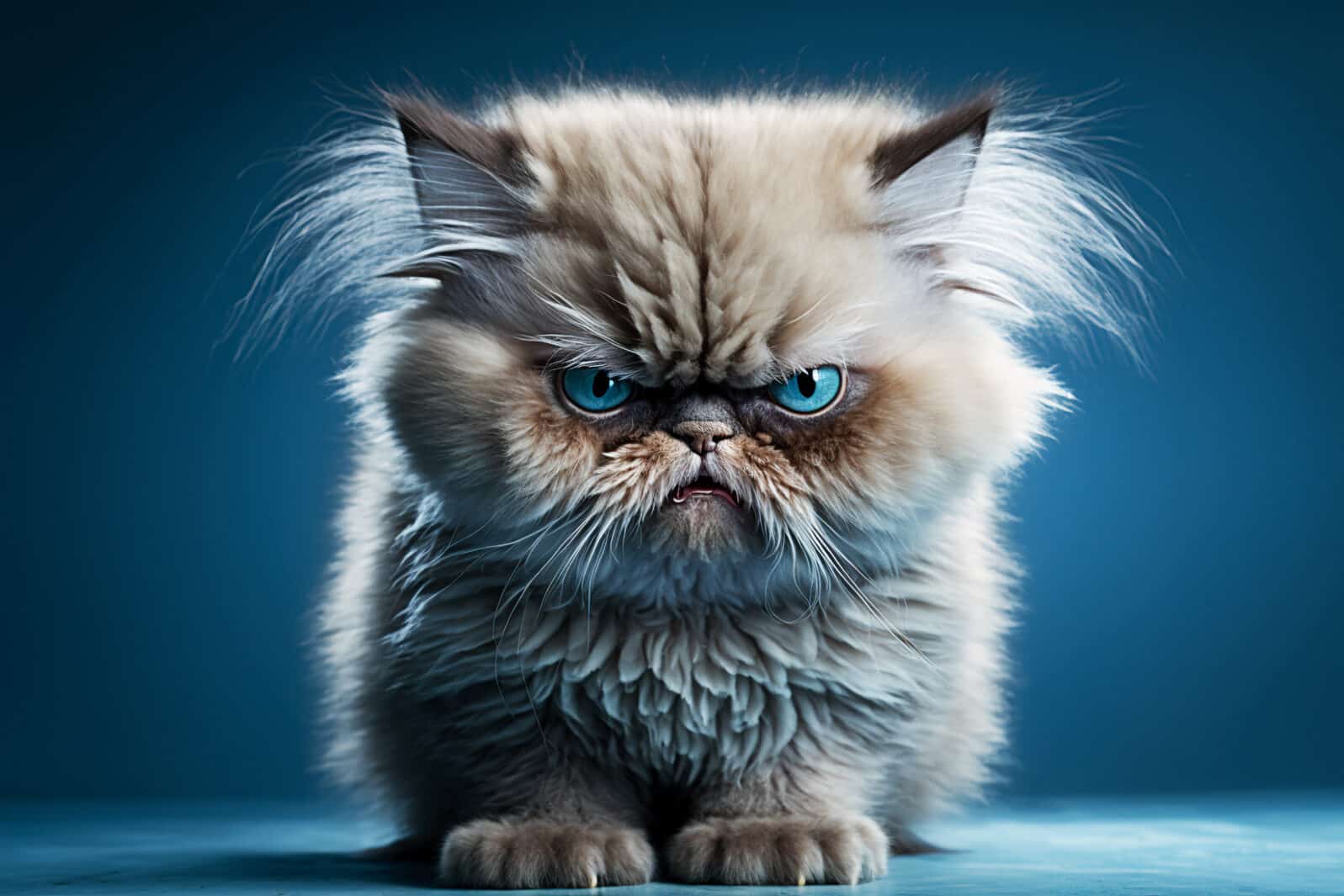
One of the concepts Dawkins introduced in TSG was the meme, a “unit of cultural transmission.” Britannica tells us, “Memes are ideas, behaviors, or styles that spread from person to person within a culture, analogous to how genes spread biologically. This concept has since developed into the field of memetics.” The “grumpy cat” meme, a staple of light-hearted social media, is offered as an example.
The underlying idea was part of a trend to interpret the workings of human consciousness in terms of Darwinian theory: You do not think; your genes direct your neurons to produce output. That output can be understood in the same terms as the origin and evolution of species. Meme.com explains, “At its core, a meme is any piece of cultural information that copies itself from person to person and mutates as it travels, competing for attention the way genes compete for survival.”
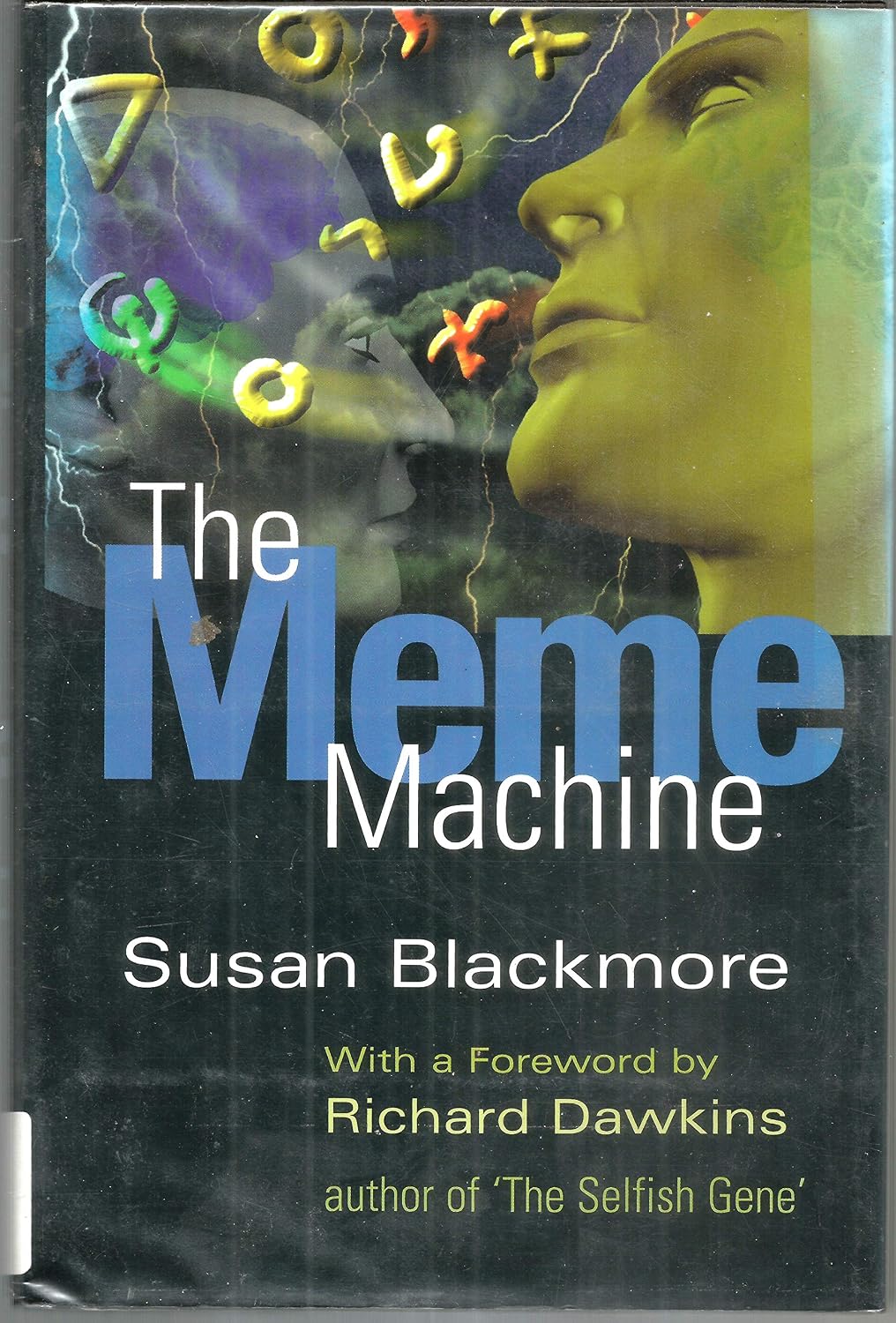
For decades, the meme was a popular concept, producing new terms like memetics (the study of memes) and memeplex (cluster of ideas). British psychologist Susan Blackmore, a Dawkins fan, wrote much material on the subject, including a popular book, The Meme Machine (1999).
And then it all just faded away…
In recent decades, the meme seems to have gone down to near-oblivion as a concept — except in a very restricted sense. It is worth another look for that very reason.
It had critics among evolutionary biologists from the beginning, of course. Stephen Jay Gould (1941–2002) described the meme as a “meaningless metaphor” and H. Allen Orr called it “cocktail-party science.”
That wasn’t just spite on their part. By the Millennium, the meme concept had become a riff off summer reading, easily gabbled at mixers, with no real application in science.
In a 2023 paper lamenting the demise of memetics, Agner Fog of the Technical University of Denmark confirms this problem (perhaps without realizing it):
A meme is best viewed as a fuzzy concept. There is no universal formula that fits both a video shared on social media, a music genre, and a religious cult. Yet, these are all phenomena that can be studied with the principles of memetics to gain important insight. Many different kinds of information, and even quantitative traits such as wealth and influence, are subject to cultural selection (Fog, 1999).
“Whatever happened to memetics?”
That level of fuzziness is usually fatal to science. When we are describing memes, what’s in and what’s out? Everything and anything, it turns out. The term eventually became a general handle for the manipulation and transmission of images on the internet.
What happened afterward was predictable. The Journal of Memetics ceased publication in 2005 and prominent proponents went on to other things.
Some thoughts on what went wrong
When we are dealing with immaterial ideas, there is literally no “there” there. It makes no sense to treat ideas as if they were physical life forms because they have no specific location.
However, that doesn’t mean that psychology in general needs to be fuzzy. Many concepts in psychology are quite clear, even if they involve immaterial ideas.
For example, in 2003, film star Barbra Streisand sued a photographer for $50 million because her mansion was included in one of his thousands of aerial photos documenting coastline erosion. The offending photo had been downloaded a grand total of six times, including twice by her lawyers.
She lost the lawsuit, with costs. But in the ensuing uproar, the photo was downloaded 400,000 times and reposted widely. Thus, the term Streisand effect refers to the way attempts to suppress information typically magnify its perceived importance.
Not everyone learns from history or psychology though.
At the New York Post, law prof Glenn Reynolds tells us about Fraser, a British 15-year-old who posted an altered photo of a local city councillor, Simon Bennett, on Facebook. He had altered it to add bunny ears. The councillor called the police and, Reynolds recounts, “The West Midlands Police, incredibly, didn’t just visit Fraser: They arrested him, seized his devices and took him in for questioning.”
Well, readers who don’t already know can probably guess what happened next.
Before Fraser’s arrest, his Facebook post had been seen by a relatively small audience. Afterward? “Bunnyrabbit Bennett” has been viewed so far by 6.9 million at the PolyMarket X account alone! Reynolds summarizes, “if you don’t want people sharing a picture of you as a bunny rabbit, you probably shouldn’t call attention to it.”
Note that, unlike the admittedly fuzzy concept of a meme, the Streisand effect is specific, easily recognized, and well accepted. People debate whether psychology is a science but it stands a much better chance than memetics. One wonders how much of Darwinism will meet the fate of memetics in coming years.
