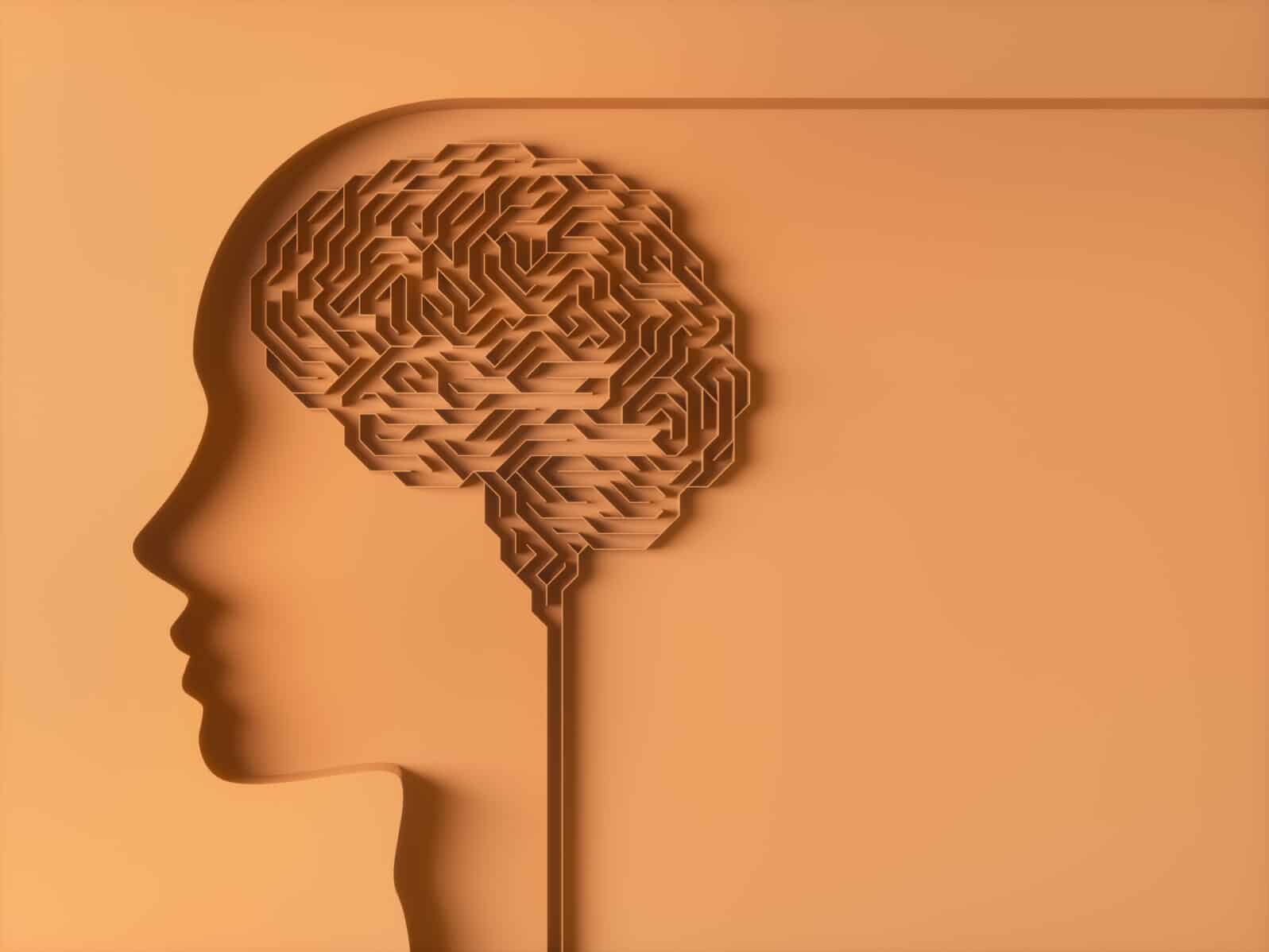
Consciousness is not a problem to be solved
It’s not even a problem that CAN be solved. It is an experience to be lived and it did not randomly evolveOn Friday, I wrote a reflection, “A case for the special creation of human language,” after reading about an open-access study of primate laughter, including human laughter. The authors think that similarities between human and ape patterns in laughter help us understand how human speech originated. Their evidence seemed surprisingly thin, especially because of what they conceded:
The researchers found that while the basic rhythm stayed constant, human laughter has become faster, more variable and gained sophisticated context-dependent control.
Of the great apes, humans alone have the ability to control when and how they laugh depending on context: an uncontrollable laugh when tickled differs sharply from a polite laugh in a meeting, a nervous laugh after a mistake or the infectious laughter that spreads through a group of friends. The same underlying rhythm is shaped by conscious control to communicate different emotions and intentions.
University of Warwick, “Apes and humans have been sharing a laugh for 15 million years,” Phys.org, June 25, 2026
When a widely publicized thesis around ape and human laughter falls so woefully short at explaining anything, it forces an evaluation of other possibilities. If human language — which is unlike any other communication in nature — evolved from something, we simply have no idea what that something is.
Thesis after thesis is advanced and forgotten. We can just as plausibly assume that human language was specially created. Only a prior assumption that special creation is impossible (or much worse, unscientific) prevents the thesis from being considered.
What are the other possibilities?
Language is intimately connected with human consciousness. It is structured to convey abstractions as well as information. But that means language participates in the “Hard Problem of consciousness.”
Not only is there no apparent long, steady evolution of human consciousness from mud to mind but efforts to explain it away are beginning to sound increasingly desperate.
Recently, theoretical physicist Carlo Rovelli responded by denying that there is any problem: “The mind is the behavior of the brain, properly described in a high-level language. Neither my own experience of myself nor an external experience of me is primary: They are two distinct perspectives on the same events.”
Indeed? And who told Rovelli that there is such a abstraction as perspective or differing perspectives or consciousness — one that he understands and the tree in the back yard doesn’t? He expects to get all that for free, without explanation? And then to go on to deny the Hard Problem, including how it all came about uniquely for us humans — but not for the tree or the squirrel in it?
But what about claiming that consciousness exists but only as an illusion (eliminative materialism), as well-known philosophers Daniel Dennett (1942–2024), Patricia Churchland, and Paul Churchland do?
Michael Egnor commented on that recently, “The capacity to have an illusion presupposes a mind. And if the mind is an illusion, then it’s an illusion that has an illusion. And if that’s an illusion, then it’s also not an illusion. But if it’s not an illusion, then it is an illusion.” In short, we cannot write off consciousness as an illusion without degenerating into nonsense.
But there is another route — panpsychism. We won’t say that nothing is conscious; we will say that everything is. The tree, the squirrel, the electrons — and of course us too. Our consciousness evolved along with theirs. But now we run into a boundary problem. as Egnor noted yesterday: “ If electrons have minds, do the individual electrons in one particular atom each have different opinions? Is the atom’s opinion just the average sum of the electrons’ opinions, or does the atom have an opinion that is above and beyond them?”
Okay, let’s qualify the panpsychist thesis a bit. We can restrict consciousness to life forms; we can even agree that the consciousness of a human is more sophisticated than that of a sand dollar.
But human consciousness still differs very much from anything that a sand dollar experiences, or even what a dog or chimpanzee experiences. Egnor again: “In this respect, a human being is more different from an ape than an ape is from a virus. And there’s nothing even close to us in that regard. It’s not like apes do calculus slowly and relatively incompetently. It’s not even that apes don’t do calculus. Apes don’t even think that way.”
It doesn’t have to be calculus. It could just be writing out a recipe.
So the question comes down to this …
Three hundred and twenty-six theories of human consciousness later, the means by which we know our world is still clearly immaterial. It resists any material explanation.
The most reasonable account would be that consciousness is an immaterial creation given only to human beings to enable us to have a relationship with a higher power and to understand our universe better. If science cannot accept that, so much the worse for science. There isn’t an answer coming down the pike from materiality that will just dissolve the enigma.
In that respect, consciousness is a bit like one of the great works of art or literature or theories in science that it makes possible. We don’t approach them to explain them away; we approach them to participate in what they represent.
Seen in that light, even theories of consciousness or language have their place — it’s just that the proponents of the theories often don’t seem to recognize what that place is. Their place is to be challenged, not to tidy up.
