Panpsychism: The Boundary Problem We Face With Uncountable Minds
Egnor notes that if all living things — or everything in the universe — is conscious, as many believe, we face a huge problem with point of viewRecently, neurosurgeon Michael Egnor and I were talking about a variety of things in connection with our upcoming book (Worthy 2028), offering a science-based but non-materialist approach to near-death experiences.
One topic that came up was panpsychism, the idea that all living things or all things, including electrons, are conscious. Over the years, I have tracked the steady growth of this viewpoint in science.
Essentially, the safest materialist position is that nothing is conscious (eliminative materialism); thus, even human consciousness is an illusion.
But that’s self-refuting. If the materialist is not a conscious entity, he has no opinion and no basis for one. Bummer. Hence the gradual move from “Nothing is conscious!” to “Everything is conscious!” If so, the materialist, his audience, fungi, and electrons can all be conscious.
So the materialist does have an opinion — and it counts. Perhaps he shares that quality with fungi and electrons, but we can at least discuss it. After all, our consciousnesses are real too.
I asked Egnor what he thought about panpsychism and here are a few excerpts from our discussion.
 Photo courtesy of Discovery Institute
Michael Egnor: I think the biggest problem with panpsychism is that you really need some kind of coherent scientific basis for attributing a mind to something. What is the predicate for having a mind?
It is a boundary problem. If electrons have minds, do the individual electrons in one particular atom each have different opinions? Is the atom’s opinion just the average sum of the electrons’ opinions, or does the atom have an opinion that is above and beyond them?
If there are 6 electrons in a carbon atom, there’d be 6 different opinions.
Denyse O’Leary: But the carbon atom itself would have an opinion too. That’s 7 different opinions.
Egnor: And then each quantum state has to have its own opinion. Crazy.
O’Leary: But if atoms and electrons can have opinions, why can’t my lungs have opinions?
Egnor: Oh, absolutely. It must happen at every level. Your lungs are made of countless particles, each of which has an opinion, and then the lung themselves and the lobes of your lungs each have their own individual opinions.
If it’s a sum total, is it summed or is it averaged? Or a Gaussian distribution? Take my opinion about Donald Trump. Is that an average of the opinion of each electron in my body? All my electrons get together and vote on it, and that’s what I think? So then how does my opinion relate to an opinion of, you know, a proton in my eyebrow?
O’Leary: Taken that seriously, it becomes crazy. But do most panpsychists really take it that seriously?
Egnor: If panpsychists are going to make the argument, then they have to defend the argument. And if they can’t defend it, then their argument fails.
Why minds need sense organs
Egnor: The philosopher Aristotle (384–322 BC) thought about this a long time ago. The commonsense viewpoint is that some things have minds and some things don’t. He said, you can’t have a mind unless you have a sense organ: “Everything in the mind was once in the senses.”
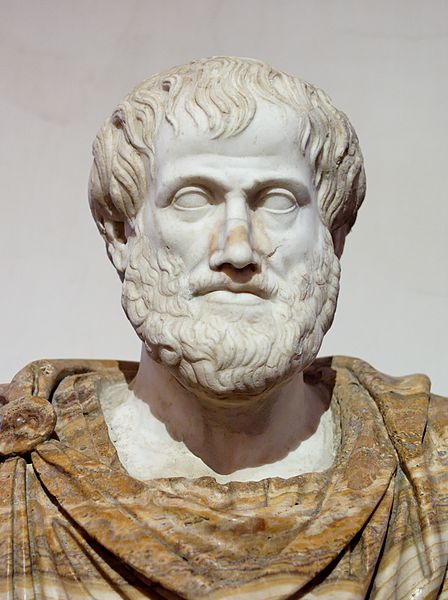
So the reason electrons don’t have minds is that they have no sense organs. With plants, you could make a case that plants have a mind of sorts, because they have things that are like sense organs. That is, they they’ll bend towards the sun. They will seek nourishment, things like that…
O’Leary: They also have a habit of trying to poison each other through their root systems, so in a sense they certainly have intentions…
Egnor: Aristotle saw that a living thing has immanent causation. Its causes come from within. Like, my desire to read, to have a meal, or something.
Aristotle said that the causation in a living thing is fundamentally directed towards its perfection. Perfection here doesn’t mean “the greatest”; it simply means that you make yourself a better version of what you are. A squirrel will really try on a daily basis to be a better squirrel, meaning it’ll try to be stronger, better fed, have a healthier coat… Things like electrons don’t try to perfect themselves.
O’Leary: But another distinction. A cat does all those things but he doesn’t have an intellect, How would you understand that?
Egnor: The only material creature that has an intellect is a human being. Intellect is the capacity to contemplate universals. It’s the capacity to think abstractly.
A cat can have an almost complete comprehension if someone is trying to hurt it. He’ll fight back, he’ll run away, his hair will stand up on end. But the cat does not contemplate the injustice of it all. He doesn’t think abstractly. This was Aristotle’s idea, but I think every bit of the science of animal behavior has confirmed this.
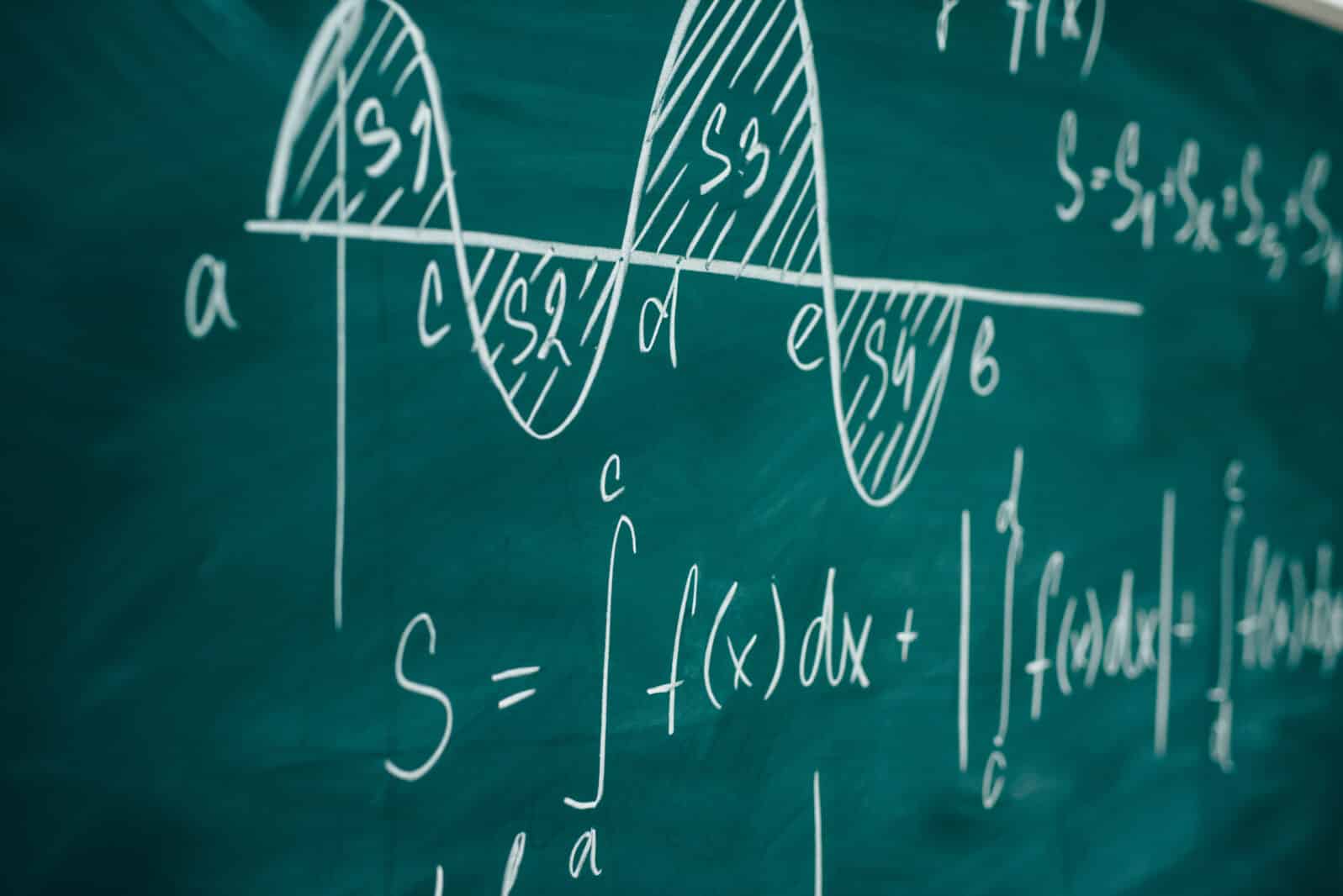 Image Credit: undrey -
 In this respect, a human being is more different from an ape than an ape is from a virus. And there’s nothing even close to us in that regard. It’s not like apes do calculus slowly and relatively incompetently. It’s not even that apes don’t do calculus. Apes don’t even think that way.
O’Leary: So then so where does the abstract thought come from?
Egnor: I think Aristotle would just say the intellect is an immaterial power of the human soul. And a Scholastic philosopher would say that’s God’s image in us.
O’Leary: Aristotle didn’t live in a culture where people said that immaterial things can’t exist.
Egnor: Materialism was a fringe viewpoint back then. Materialists weren’t persecuted because people thought they were crazy and felt sorry for them.
O’Leary: Well, I would say the 20th century taught us where materialism can lead.
