
Neuroscientists Who Don’t Endorse Materialism Face Career Ruin
In a recent podcast with Pat Flynn, Michael Egnor offers an anecdote that shows how far the field is in the tank for materialismOn Monday, neurosurgeon Michael Egnor did a podcast with Pat Flynn for Center for Natural and Artificial Intelligence on how materialism is faring in the battle for the mind. Egnor is the first author of The Immortal Mind: (Worthy, June 3, 2025):
From the Introduction at YouTube:
In modern neuroscience, materialist assumptions dominate the discussion of how the mind relates to the brain, yet many researchers remain largely unacquainted with the philosophy of mind or the physical realities of living human brains. Drawing from a career of performing thousands of brain surgeries, neurosurgeon Dr. Michael Egnor addresses major flaws in conventional materialist theories of consciousness.
Some highlights
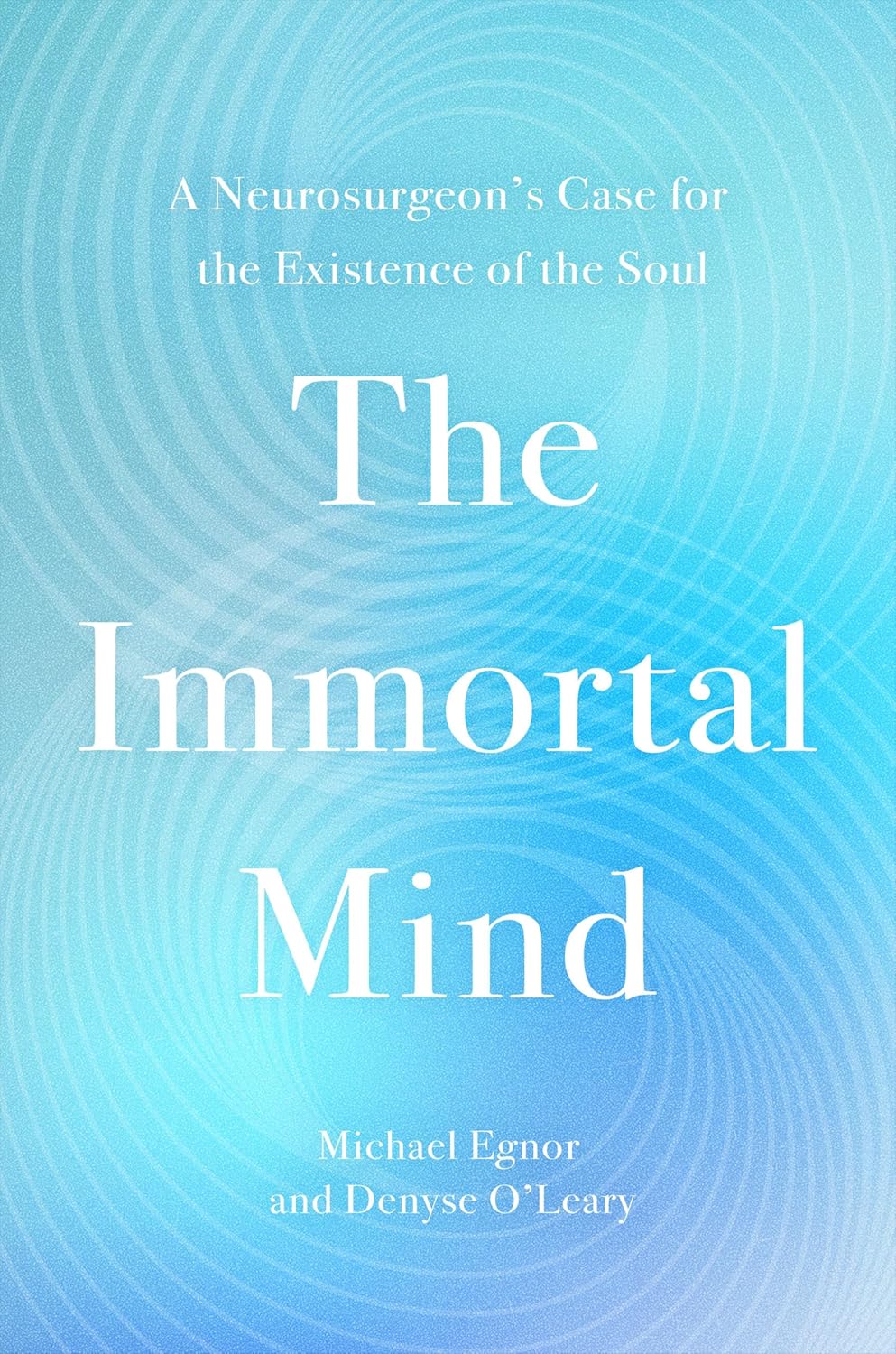 Published by Worthy Books
Flynn: [0:02] What’s the feel among neuroscientists generally? Do they, do they lean in a certain direction? If if they lean, is it a heavy lean? Do you encounter a lot of bias against your particular positions or are neuroscientists more open to non-materialist views of the mind? I’m just curious to hear your experience here before we dive.
Egnor [0:19] Well, two words come to mind on that. The first is ignorance. That is, most neuroscientists haven’t a clue that there’s even a question and those who do have a clue realize that their career is over with if they endorse any kind of immateriality. So it’s pretty radical.
Actually, I went to a lecture a number of years ago here at Stonybrook by philosopher of neuroscience Patricia Churchland who’s an advocate of eliminative materialism, which is the viewpoint that we don’t have minds. We are just brains and we misunderstand … it’s a pretty bizarre theory but it’s actually rather popular among materialists and among even neuroscientists who care about philosophy.
So I was leaving the lecture and I was with a friend who was a neuroscientist and we were talking
about it and we both agreed that it was a crazy theory. I mean this whole idea that we don’t have minds is just crazy.
So I said, where do you think the mind comes from? What’s your understanding? He says, it comes from cortical neurons. And I said,“Well, how does that happen? I mean, how do you get, you know, a first-person experience out of out of third person, little globs of protein shapes,?
And he said, “That’s just that’s a silly question. You just do, you know, and that was his
whole answer. So, this is a guy who was a very good neuroscientist. At least he had the sense to realize that we, we do have minds. But he had never thought about exactly how that works.
I never thought about all the logical conundrums that go along with that. So there’s not a
lot of reflection in the neuroscience community. Most of them know nothing about philosophy of mind. [2:02]
Enjoy the rest! Especially the fact that most neuroscientists have never even seen a brain!
Egnor’s contact is hardly alone
A recent journal paper proposes that near death experiences (NDEs) are a human version of thanatosis — opossums “playing dead.” The authors state in the paper that “ “We have excluded dualistic theories from our discussion owing to the lack of empirical neuroscientific evidence and the fact that a fundamental tenet of neuroscience asserts that human experience arises from the brain.”
In short, materialism in neuroscience is not a finding, it is a tenet. It does not need to be true. It simply needs to be enforced.
Note: Egnor and Denyse O’Leary are currently at work on a book on near-death experiences (Worthy 2027).
