A Case for the Special Creation of Human Language
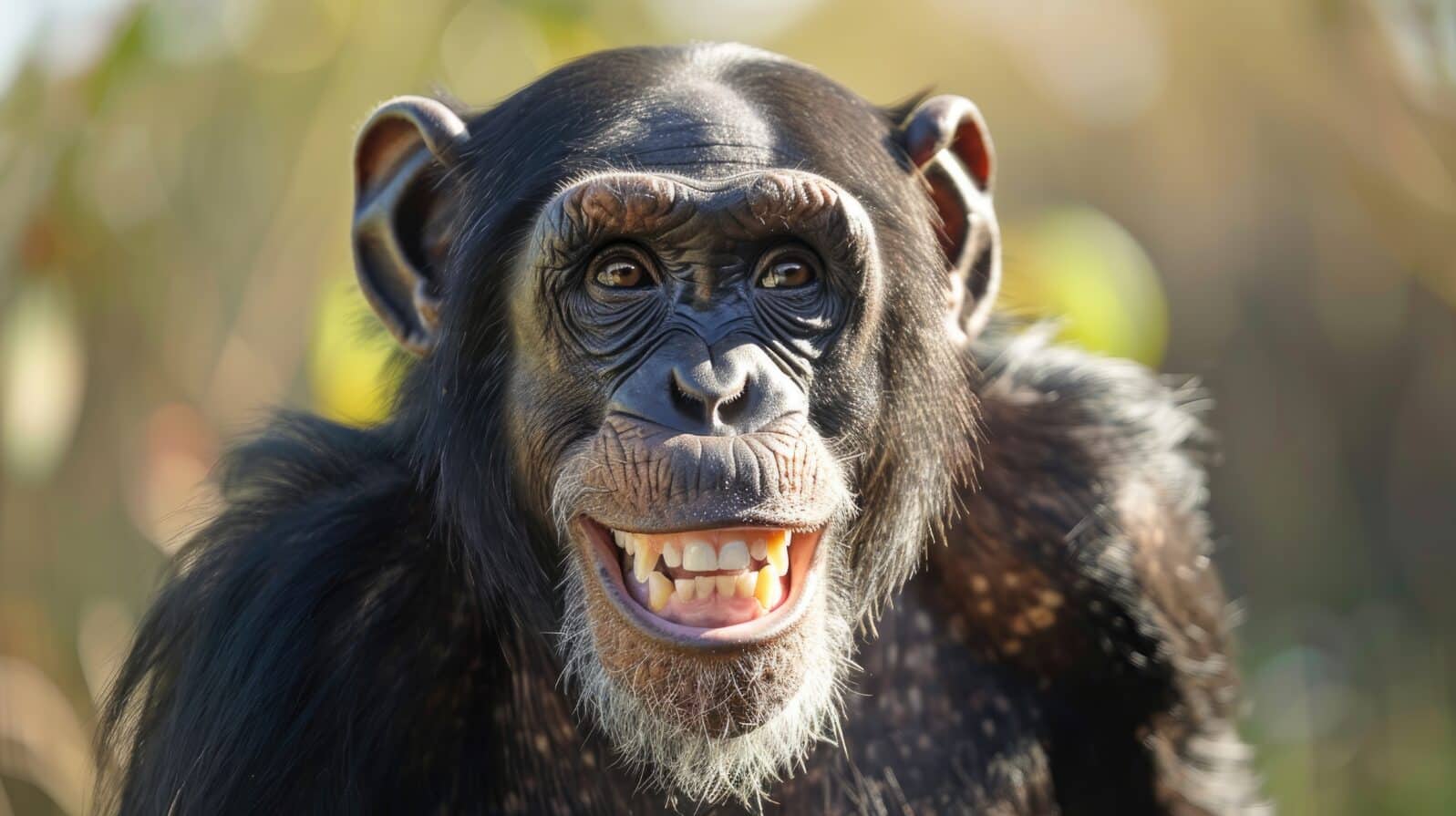
A widely publicized thesis around ape and human laughter falls so woefully short that it forces an evaluation of other possibilitiesAt Phys.org, the University of Warwick announces a new clue to the origin of human speech — shared patterns of laughter among primates:
In a new Communications Biology study, Warwick researchers analyzed laughter recordings from four orangutans, two gorillas, three bonobos, four chimpanzees and four humans. Across 140 laughter sequences, they found the same pattern: All species produce laughter with evenly spaced rhythmic intervals between successive sounds.
The researchers propose this basic rhythmic structure was already present in a shared common ancestor 15 million years ago and has remained remarkably conserved, with all living great apes still showing the same underlying pattern.
“Apes and humans have been sharing a laugh for 15 million years,” June 25, 2026. The paper is open access.
We scarcely have time to wonder whether similar anatomy plays a role than the critical qualifications begin:
The researchers found that while the basic rhythm stayed constant, human laughter has become faster, more variable and gained sophisticated context-dependent control.
Of the great apes, humans alone have the ability to control when and how they laugh depending on context: an uncontrollable laugh when tickled differs sharply from a polite laugh in a meeting, a nervous laugh after a mistake or the infectious laughter that spreads through a group of friends. The same underlying rhythm is shaped by conscious control to communicate different emotions and intentions. “For 15 million years”
Is human laughter really an early milestone on the long, winding road to speech?
We don’t know that specifically human laughter precedes speech; it sometimes stands in for it. That is because we know the words we could say but sometimes it is better not to. Explaining to the boss why his joke is unfunny is a career-limiting move; laughing only very moderately conveys the same message but is much harder for him to penalize.
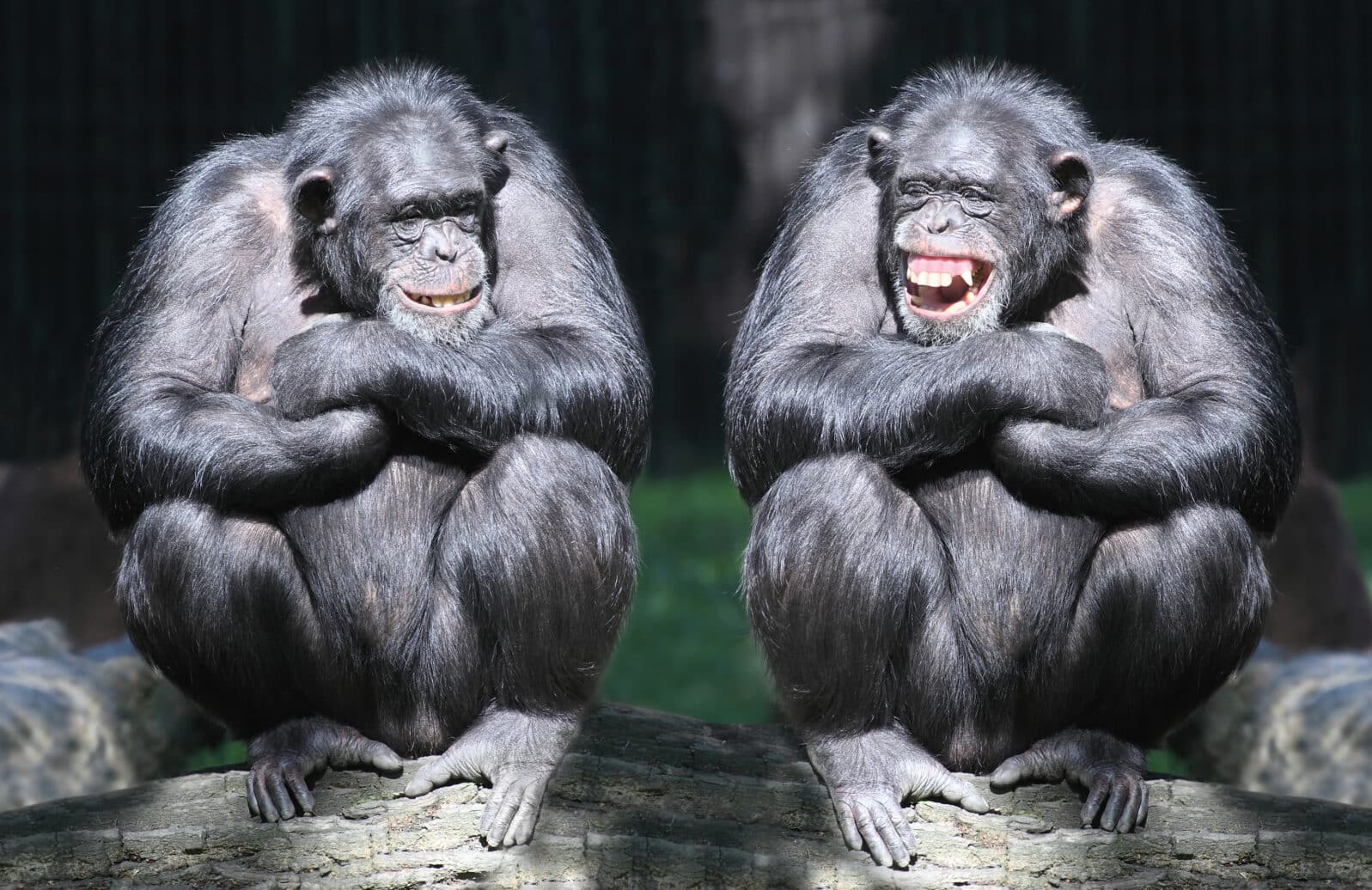 Image Credit: Kletr -
 “Sophisticated context-dependent control,” as above, is science journalese for the human consciousness that enables us to make these judgments. And the fact that we share the vocal equipment that enables laughter with other primates tells us nothing about how either human consciousness or the human speech that it enables evolved — or even if they did evolve. The argument for special creation of human consciousness and speech seems better than the claims offered here.
But, predictably, in “Oo oo, ha ha: why humans and great apes giggle alike when tickled” at Nature (June 25, 2026), none of these issues are raised. The last line quotes study co-author Chiara De Gregorio suggesting that “The findings could reveal ‘something about laughter itself, but also, in a way, about the evolution of human speech.’” But what exactly do they reveal? Fifteen million years later, we speak and apes don’t. The gap is still unbridged and unexplained.
ZME Science buys in too:
Across all species, laughter showed isochrony—a regular beat, with similar time gaps between vocal bursts, like a biological metronome. In the study, this pattern appeared most clearly during tickling, while rough-and-tumble play produced more disrupted rhythms. …
To gather the sounds, researchers recorded spontaneous laughter during familiar, playful interactions in zoos and home settings. Human children were recorded during natural play with their mothers.
“It was striking,” De Gregorio told National Geographic. “Once you really focus on that, you see how similar it is to our kind of laughter.” June 26, 2026
Actually, it isn’t similar. The researchers explicitly tell us that human laughter is more variable and more controlled, a fact that we all experience. At the end of the day, there is no obvious link between the ape laughter, for which the Phys.org release offers sound files, and human speech. The researchers and science writers appear to see what they need to see, not what we all experience and know.
And so, a related question…
Is there any such thing as a “primitive” human language?
In the mid-nineteenth century, the French Academy banned the discussion of the origin of language, “one of the hardest scientific problems.” Today, one research group (among many) points to a period 135,000 years ago when, in their view, language started.
 Image Credit: Konstantin -
 Like the Book of Genesis, their paper holds that human speech originated in one common language: “Like many linguists, Miyagawa believes all human languages are demonstrably related to each other, something he has examined in his own work. For instance, in his 2010 book, “Why Agree? Why Move?” he analyzed previously unexplored similarities between English, Japanese, and some of the Bantu languages.”
But trying to pinpoint an era when human language developed doesn’t answer the most interesting question: Was there ever a point at which human language was simply grunts and hisses? When we could, for example, laugh out loud on suddenly realizing the existential absurdity of a tiresome local melodrama we got ourselves roped into — but we had no words along the lines of “This is really over the top and we must quit taking the bait.”?
When I tried to find out online whether there is any such thing as a primitive language, DuckDuckGo’s Search Assist suddenly appeared and informed me pointedly,
Search Assist
No, the concept of “primitive languages” is considered discriminatory and lacks scientific merit. All languages have evolved to meet the needs of their respective cultures, and labeling any language as primitive undermines the complexity and richness of human communication.
Well, lectures from bots aside, it is hard to imagine human language without human consciousness. Or vice versa. And human consciousness is notoriously, the “Hard Problem.”
A perfectly reasonable case can be made for special creation in both cases. The people trying to manufacture human language from ape laughter simply do not have a better hypothesis than that. But a great deal seems to be invested in pretending otherwise.
