Mind Matters Natural and Artificial Intelligence News and Analysis

TagAlan Turing

the-robot-writes-with-a-pen-and-looks-at-the-computer-monitor-artificial-intelligence-stockpack-adobe-stock.jpg
The robot writes with a pen and looks at the computer monitor. Artificial Intelligence

Bingecast: Selmer Bringsjord on the Lovelace Test

The Turing test, developed by Alan Turing in 1950, is a test of a machine’s ability to exhibit intelligent behaviour indistinguishable from a human. Many think that Turing’s proposal for intelligence, especially creativity, has been proven inadequate. Is the Lovelace test a better alternative? What are the capabilities and limitations of AI? Robert J. Marks and Dr. Selmer Bringsjord discuss Read More ›


robot-make-a-relationships-with-human-it-use-for-match-and-make-satisfaction-for-love-buddy-by-pair-the-personality-data-with-algorithms-technology-combine-deep-machine-learning-digital-twin-stockpack-adobe-stock.jpg
robot make a relationships with human, it use for match and make satisfaction for love buddy by pair the personality data with algorithms technology combine deep, machine learning, digital twin

Are We Here to Re-Create Ourselves?

What are the capacities of human-like robots? Will they ever replace humans? Dr. Geoffrey Simmons and Dr. Robert J. Marks discuss artificial intelligence, outer space, consciousness, and Dr. Simmons’ book Are We Here to Re-Create Ourselves?: The Convergence of Designs. Show Notes Additional Resources

Stack of shipment boxes.jpg
Interior of warehouse storage, Stack of shipment boxes on pallets and hand pallet truck, Warehouse industry delivery shipment goods, logistics and transportation.

Part 2: A Peek Under the Covers at the New Docker Technology

Many advances enable Docker to significantly reduce a system’s overhead

As businesses move more and more of their infrastructure online due to the effects of competition (not to mention COVID-19), finding the best way to manage that infrastructure becomes more and more important. As we saw in Part 1, Docker enables development teams to have more reliable, repeatable, and testable systems that can be deployed at massive scale with the click of a button. In this installment, we are going to take a look at the technology behind Docker and how it originated. From Emulators to Virtual Machines Docker allows you to run numerous “containers” at the same time on a single computer. Each of these containers acts as if it were a separate computer. It knows nothing about what Read More ›

magpie-pica-pica-stockpack-adobe-stock.jpg
Magpie (Pica pica)

Is the Turing Test Misguided? George Montañez comments

When you think about it, the Turing test is a bit of a scam. Human beings are supposed to guess whether we are talking to computers purely according to answers. But clever answers can be precoded by a clever person. We could be talking to a well-trained magpie. George Montañez of Harvey Mudd College argues that the question of whether machines can think, as posed in Alan Turing’s seminal paper in 1950 , “Computing machines and intelligence,” is too vague to admit of an exact answer. Besides which, it is kind of complicated. https://episodes.castos.com/mindmatters/Mind-Matters-088-George-Montanez.mp3 Transcript. As he told Walter Bradley Center director Robert J. Marks in a recent podcast: George Montañez Yeah. So, there was actually three versions of the Read More ›

robot-typing-on-keyboard-stockpack-adobe-stock.jpg
Robot typing on keyboard

Bingecast: George Montañez on Intelligence and the Turing Test

What do computer scientists say about the ability of machines to think? Alan Turing, the father of modern computer science, tackled the question in 1950 and proposed the Turing test as an answer. Is the Turing test important today? Can a deeper undertanding of intelligence be culled for the Turing test? Robert J. Marks discusses the Turing test, artificial intelligence, Read More ›

abstract-circle-fractal-background-stockpack-adobe-stock.jpg
abstract circle fractal background

Hulu’s Devs Series: Where They Get Determinism Wrong

Devs disposes of a key limitation of computers that can supposedly predict the future with psychobabble

Call me a nitpicker: As a computer engineer, I must say, computers cannot predict the future.

Read More ›
close-up-view-of-the-difference-engine-stockpack-adobe-stock.jpg
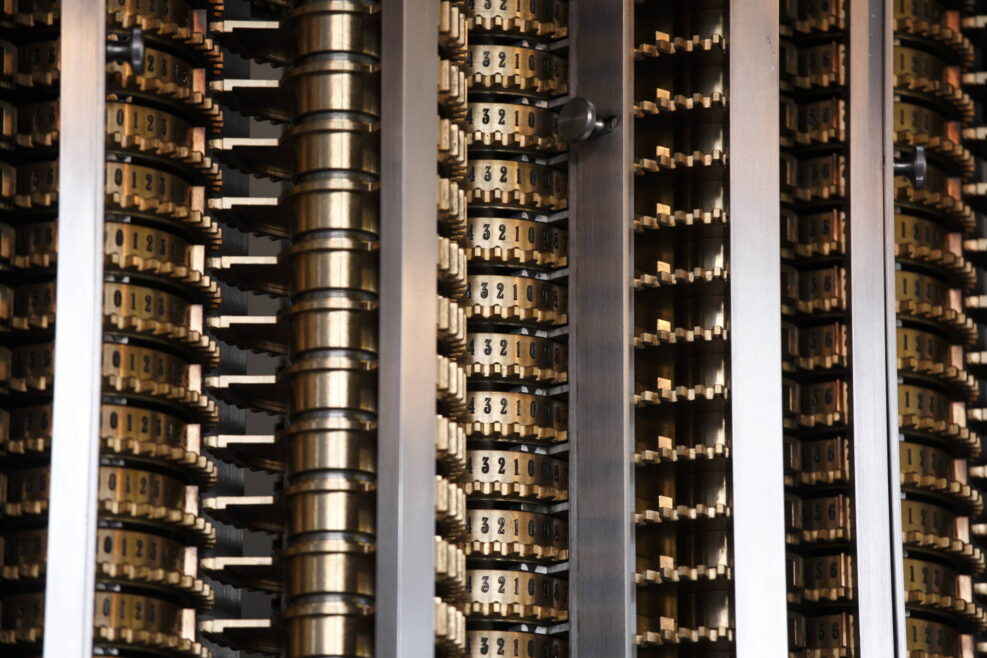
Close-up view of the Difference Engine

Lovelace: The Programmer Who Spooked Alan Turing

Ada Lovelace understood her mentor Charles Babbage’s plans for his new Analytical Engine and was better than he at explaining what it could do

Turing thought that computers could be got to think. Thus he had to address Lovelace’s objection from a century earlier, that they could not be creative.

Read More ›
the-poetry-of-love-stockpack-adobe-stock.jpeg
The poetry of Love

Thinking Machines? The Lovelace Test Raises the Stakes

The Turing test has had a free ride in science media for far too long, says an AI expert

In the view of Rensselaer philosopher and computer scientist Selmer Bringsjord, the iconic Turing test for human-like intelligence in computers is inadequate and easily gamed. Merely sounding enough like a human to fool people does not establish human-like intelligence. He proposes the much more challenging Lovelace test, based on an observation from computer pioneer Ada Lovelace (1815–1852) that true creativity is what distinguishes humans from machines.

Read More ›
thought-catalog-505eectW54k-unsplash

The Turing Test is Dead. Long Live The Lovelace Test

The Turing test, developed by Alan Turing in 1950, is a test of a machine’s ability to exhibit intelligent behaviour indistinguishable from a human. Many think that Turing’s proposal for intelligence, especially creativity, has been proven inadequate. Is the Lovelace test a better alternative? Robert J. Marks and Dr. Selmer Bringsjord discuss the Turing test, the Lovelace test, and machine Read More ›

magician-hands-with-magic-wand-showing-trick-stockpack-adobe-stock.jpeg
magician hands with magic wand showing trick

Current Artificial Intelligence Research Is Unscientific

The assumption that the human mind can be reduced to a computer program has never really been tested

Because AI research is based on a fundamental assumption that has not been scientifically tested—that the human mind can be reduced to a computer—then the research itself cannot be said to be scientific.

Read More ›
Computer algorithm productivity efficiency, cyber security concepts

Why we don’t think like computers

If we thought like computers, we would repeat package directions over and over again unless someone told us to stop

Robert J. Marks: We have a number of aspects that we exhibit that are not algorithmic. I would say, qualia, creativity, sentience, consciousness are probably things that you cannot write a computer program to simulate.

Read More ›
jr-korpa-1151200-unsplash
Silhouette of a person with words and numbers in the background

The Mind Can’t Be Just a Computer

Gödel demonstrated that fact and Turing tried to live with it

Kurt Gödel (1906–1978) proved that there are truths in mathematical logic that lie outside mathematical logic, which means that the mind cannot be understood simply as a computer.

Read More ›
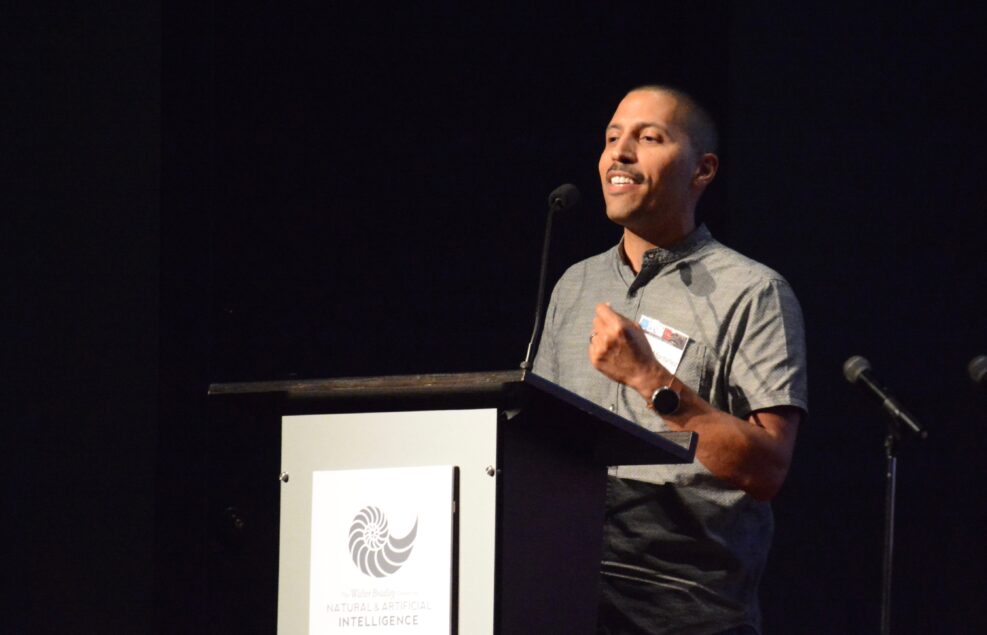
George Montañez

What is Learning Anyway?

Machine learning specialist George Montañez reflects on the question in a video excerpt from the CNAI gala

Can we make approximations that are so close to ourselves that the fact that they are approximations no longer matters?

Read More ›