Mind Matters Natural and Artificial Intelligence News and Analysis

CategoryReligion

scientist faith in platform
Scientist standing on sunny platform against building

Can Science Escape Faith-Based Beliefs? Maybe It Needs Them!

Marcelo Gleiser insists, for better or worse, science is a faith-based enterprise

Physicist and astronomer Marcelo Gleiser (pictured) offered some thoughts recently on faith and science, noting that the scientific revolution has hardly changed the picture of faith much: “the great scientific advances of the past four centuries have not radically diminished the number of believers” in transcendent realities: If science is to help us, in the words of the late Carl Sagan, by providing a “candle in the dark,” it will have to be seen in a new light. The first step in this direction is to admit that science has fundamental limitations as a way of knowing, and that it is not the only method of approaching the unattainable truth about reality. Science should be seen as the practice of Read More ›


the-beam-of-light-in-the-path-of-the-magic-forest-stockpack-adobe-stock
The beam of light in the path of the magic forest

The Rational Magicians

Can real meaning be experienced in a godless world? The postrationalists are trying

In the era of scientific enlightenment, progress, and technological sophistication, “magic” might be the last word one might use to describe the activity of modern Western culture. We live in an age of reason, not superstition. Right? The old world of myth, mystery, and religion is holed away in museums and cathedrals; these are relics of an admirable but outdated generation. After Reason In a fascinating new article from The New Atlantis, writer Tara Isabella Burton writes about the “postrationalists,” an Internet subculture disillusioned with the technocratic rationalism of Silicon Valley and in search of a sense of the mystical and divine. “Reason,” or the modern conception of it, has left the postrationalists disappointed. Neither, however, are they flocking to Read More ›

transcranial magnetic stimulation
Female doctor does transcranial magnetic stimulation the man with a broken spine. Physiotherapy. Electrotherapeutic treatment of the back.

Recalling the Hype Around Magnets That “End Belief in God”…

The 2015 claim that transcranial magnetic stimulation reduced religious belief in research subjects received wide publicity via a then-active New Atheist movement

Researcher Joel Furches, whose area of specialty is religious deconversion, recalls the 2015 hype around magnets and God: In 2015, religious and atheist forums exploded with news of an experiment performed out at the University of California. Social media feeds were splashed with headlines like “Directing Magnetic Energy Into The Brian Can Reduce Belief In God,” “Scientists reduce belief in God by shutting down the brain’s medial frontal cortex,” and the far more on-the-nose “Scientists Claim Zapping Brains with Magnets Can Treat Belief in God”. Joel Furches, “Magnets, the Human Brain, and God” at Patheos (December 19, 2022) The New Atheist movement was pretty strong at that time (it did not become the godlessness that failed until a few years Read More ›

elements-of-infinity-stockpack-adobe-stock
Elements of Infinity

Mathematics Can Prove the Existence of God

Atheist biologist Jerry Coyne finds that difficult to believe but it’s really a matter of logic

This story was #3 in 2022 at Mind Matters News in terms of reader numbers. As we approach the New Year, we are rerunning the top ten stories of 2022, based on reader interest. In “Mathematics can prove the existence of God” (July 31, 2022), neurosurgeon Michael Egnor offers this thought: Because mathematics can show infinity, eternity, and omnipotence, it can only have proceeded from a mind with those characteristics. That’s God. In a recent post, atheist biologist Jerry Coyne takes issue with a commenter who asserts that God exists in the same sort of way mathematics exists. Here’s the analogy the commenter offered, as quoted by Coyne: Think of numbers for example, or mathematical equations, these are metaphysical things, Read More ›

ritual-circle-in-the-oldest-temple-of-world-gobeklitepe-october-2019-stockpack-adobe-stock
Ritual circle in the oldest temple of world - Gobeklitepe. October 2019.

Philosophers: Religion, Not Nature, Made Us Human

Victor Kumar and Richmond Campbell argue that many very ancient human types had human minds; religion is the missing ingredient

The philosophers who make this claim are not evangelists. Victor Kumar is director of the Mind and Morality Lab at Boston University and Richmond Campbell is the George Munro professor of philosophy emeritus at Dalhousie University. In an essay at IAI News, adapted from their book, A Better Ape: The Evolution of the Moral Mind and How it Made Us Human (Oxford University Press 2022), they argue that “it was the cultural institution of religion, and its ability to create large tribes, that made us into modern humans.” Sometimes there is a story in titles. The official title of this piece is “Nature didn’t make us human, culture did.” The subtitle is “How religion made us a successful species.” But Read More ›

silver paper clips
An extreme close up image of metal paper clips

Santa Fe Prof Dissects End-of-World Super-AI Claims

There seems to be little communication, she notes, between people concerned about sci-fi AI risks and people concerned about predictable everyday risks

Santa Fe Institute professor of complexity Melanie Mitchell takes issue — in a gentle way — with those who warn about the dangers of superintelligent machines (AI alignment) destroying us all: In one scenario, for example, Oxford Future of Humanity Institute’s Nick Bostrom developed a scenario by which a super AI, told to make paper clips, might use up the world’s resources in doing so. Her comment: To many outside these specific communities, AI alignment looks something like a religion — one with revered leaders, unquestioned doctrine and devoted disciples fighting a potentially all-powerful enemy (unaligned superintelligent AI). Indeed, the computer scientist and blogger Scott Aaronson recently noted that there are now “Orthodox” and “Reform” branches of the AI alignment Read More ›

from-hypothesis-to-resultsresearch-experiments-on-repeat-stockpack-adobe-stock
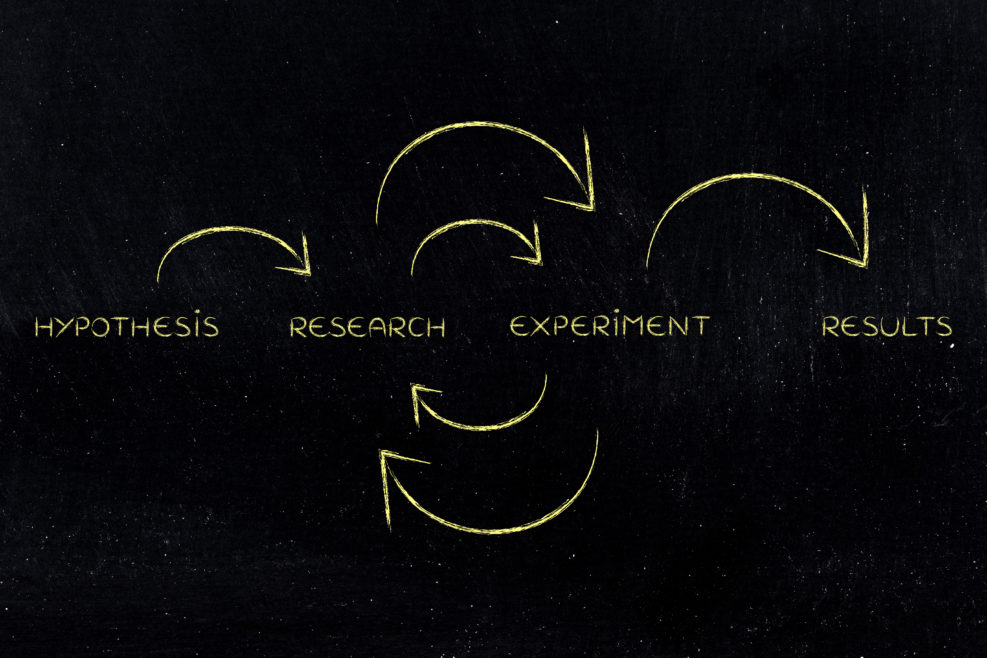
from hypothesis to results:research & experiments on repeat

Is God Just a “Hypothesis” Like the Big Bang?

Our friend and interlocutor Edward Feser takes exception to the title of Stephen Meyer ’s recent book, The Return of the God Hypothesis. Dr. Feser writes: With all due respect, the phrase “the God hypothesis” gets my hackles up. If X is something on which the world might merely “hypothetically” depend then X isn’t God. An argument gets to God only if it establishes the reality of an X on which the world couldn’t fail to depend. Hence arguments that present theism as a “hypothesis” are – qua arguments for theism – time-wasters at best and indeed cause positive harm insofar as they yield a distorted conception of God and his relation to the world. That is not to rule Read More ›

intelligence-artificielle-stockpack-adobe-stock
Intelligence artificielle

John Lennox: Transhumanism Versus Traditional Humans

In the second part of his bonus feature for Science Uprising, Oxford mathematician Lennox compares transhumanism with traditional claims to transcend humanity

In the second part of Oxford mathematician John Lennox’s bonus interview for the Science Uprising series, “John Lennox on the Transhumanist Claim AI Will Turn Humans into Gods” (October 17, 2022), Lennox talks about claims that we will merge with computers (artificial intelligence) to achieve immortality. How plausible is that? Lennox is the author of 2084:: Artificial Intelligence and the Future of Humanity (2020). A partial transcript and notes for the second half follow (the first half is here): The AI concept of transhumanism? (13:45) John Lennox: The origin of the word “transhumanism,” interestingly enough, is not secular at all. It wasn’t first used by a scientist but it was used in a translation of one of the books of Read More ›

blockchain-blocks-and-their-hexadecimal-hash-values-conceptual-vizualization-3d-render-stockpack-adobe-stock
Blockchain blocks and their hexadecimal hash values conceptual vizualization 3D render

Modern Bitcoin’s Surprising Lesson About Ancient Scripture

It turns out there’s a striking parallel between the historical record of scripture and the blockchain ledger

This article was published in The Stream (September 13, 2022) and is republished with permission. Can we trust the authenticity of the New Testament scriptures? Trust is foundational in the acceptance of scripture. There’s an interesting lesson to learn from a very modern system of trust: money. Even Bitcoin, believe it or not. An Exchange of Trust We’ll start with old-fashioned familiar money. Why is a twenty dollar bill worth $20? It’s just a small sheet of paper, after all. The answer is trust. We trust the piece of paper has value because its worth is backed by the United States government. We also trust that Walmart will give us $20 worth of Doritos if we give them a twenty Read More ›

person-reaching-through-broken-window-towards-helping-hand-stockpack-adobe-stock
Person Reaching Through Broken Window Towards Helping Hand

Atheists Who Scold Us on Morality Acknowledge God’s Existence

For example, every time internet-famous atheist P. Z. Myers scolds humanity on morality and immorality, he demonstrates the point

P.Z. Myers detests challenges to his atheism based on the reality of Objective Moral Law: There is a common line of attack Christians use in debates with atheists, and I genuinely detest it. It’s to ask the question, “where do your morals come from?” I detest it because it is not a sincere question at all — they don’t care about your answer, they’re just trying to get you to say that you do not accept the authority of a deity, so that they can then declare that you are an evil person because you do not derive your morals from the same source they do, and therefore you are amoral. It is, of course, false to declare that someone Read More ›

face-in-multiverse-stockpack-adobe-stock
Face in multiverse

Sabine Hossenfelder Asks, Is the Multiverse Science or Religion?

Or pseudoscience? The no-nonsense theoretical physicist reveals a gift for comedy as she tries to explain theories that place no constraints on what can happen

Some science controversies arise in disputes over findings. The current flap over the James Webb Space Telescope data, for one. Others sound like clashes over philosophy — claims about the multiverse (countless universes out there) are a good example. Theoretical physicist Sabine Hossenfelder takes on the multiverse in in her new book, Existential Physics: A Scientist’s Guide to Life’s Biggest Questions (2022). She also addresses the topic concisely — and wittily — in a short video and a blog post at Back(Re)Action. She looks at three popular multiverse models: Many Worlds, Eternal Inflation, and String Theory Landscape. Here’s her take on Eternal Inflation: We don’t know how our universe began and maybe we will never know. We just talked about Read More ›

religion-conflicts-global-issue-stockpack-adobe-stock
Religion conflicts global issue

Can Religion Without Belief “Make Perfect Sense”?

Philosopher Philip Goff, a prominent voice in panpsychism, also defends the idea of finding meaning in a religion we don’t really believe

Durham University philosopher Philip Goff, co-editor of Is Consciousness Everywhere? Essays on Panpsychism (November 1, 2022), has an interesting take on religion. While it’s common to assume that religious people are “believers,” he thinks that people can meaningfully be part of a religion without actually believing in it: But there is more to a religion than a cold set of doctrines. Religions involve spiritual practices, traditions that bind a community together across space and time, and rituals that mark the seasons and the big moments of life: birth, coming of age, marriage, death. This is not to deny that there are specific metaphysical views associated with each religion, nor that there is a place for assessing how plausible those views Read More ›

man-atheist-throws-all-religions-in-the-trash-stockpack-adobe-stock
Man atheist throws all religions in the trash

Analysis: Can “Communitarian Atheism” Really Work?

Ex-Muslim journalist Zeeshan Aleem, fearing that we are caught between theocracy and social breakdown, sees it as a possible answer

Zeeshan Aleem, an American journalist raised as a Muslim — but now an atheist — views his country as caught between “the twin crises of creeping theocracy and the death of conventional religion.” He seeks a new kind of atheism — communitarian atheism — as part of a solution: A rapidly increasing share of Americans are detaching from religious communities that provide purpose and forums for moral contemplation, and not necessarily finding anything in their stead. They’re dropping out of church and survey data suggests they’re disproportionately like to be checked out from civic life. Their trajectory tracks with a broader decades-long trend of secular life defined by plunging social trust, faith in institutions, and participation in civil society. My Read More ›

abstract-fractal-patterns-and-shapes-beautiful-abstract-background-solored-wavesspirals-lines-and-circles-infinite-universe-stockpack-adobe-stock
Abstract fractal patterns and shapes. Beautiful abstract background. Сolored waves,spirals, lines and circles. Infinite universe.

Is Ours One of a Few Working Universes Among Countless Flops?

Is that probable? How would we know? Philosopher Stephen C. Meyer offers some suggestions

In this fourth and final portion of a talk at the Dallas Conference on Science and Faith (2021), philosopher Stephen C. Meyer takes on the claim that the fine-tuning of our universe for life can be explained by the multiverse, that is, “there are many other universes with different laws and concepts of physics and different initial conditions, different arrangements that matter in energy at the beginning of those universes. And there are enough such universes to make the improbable features of our universe probable on a mega cosmic scale.” Dr. Meyer is the author of The Return of the God Hypothesis (Harper One, 2021). (A sample of the book is here.) The first portion is here, the second here, Read More ›

statue-of-gaia-stockpack-adobe-stock
Statue of Gaia

Pioneer Environmentalist: Cyborgs Will Rule the Planet

In one of his last pieces, James Lovelock, famous for the Gaia Hypotheses argues that half-human/half-machines will be vastly superior to humans

Lovelock is hard to classify. He has boundless faith in both Gaia and AI — in almost anything, it would seem, except humans.

Read More ›
abstract-futuristic-stripe-line-printed-circuit-board-pattern-with-gear-wheel-and-math-fornula-on-blue-color-background-math-science-engineered-drawn-project-plot-concept-stockpack-adobe-stock
Abstract futuristic stripe line printed circuit board pattern with gear wheel and math fornula on blue color background. Math science engineered drawn project plot concept

Mathematics Can Prove the Existence of God

Atheist biologist Jerry Coyne finds that difficult to believe but it’s really a matter of logic

In a recent post, atheist biologist Jerry Coyne takes issue with a commenter who asserts that God exists in the same sort of way mathematics exists. Here’s the analogy the commenter offered, as quoted by Coyne: Think of numbers for example, or mathematical equations, these are metaphysical things, that have not been created, however were discovered. The number 7 was the number 7 before anything at all came into existence. This is also true concerning the nature of God. He is not some material being that has come into existence, he is like a number that has always existed, (and by the way nobody will deny this logic with the number, however when someone mentions God a problem occurs). Jerry Read More ›

abstract-digital-human-face-artificial-intelligence-concept-of-big-data-or-cyber-security-3d-illustration-stockpack-adobe-stock
Abstract digital human face.  Artificial intelligence concept of big data or cyber security. 3D illustration

Artificial Intelligence, Worshipped as God, Is No Ordinary Deity!

Not only will we be reborn into new, immortal silicon bodies but rules regarding theft don’t seem to apply anymore…

This article was published in The Stream (July 6, 2022) under the title “The Church of Artificial Intelligence of the Future” and is republished with permission. There is a church that worships artificial intelligence (AI). Zealots believe that an extraordinary AI future is inevitable. The technology is not here yet, but we are assured that it’s coming. We will have the ability to be uploaded onto a computer and thereby achieve immortality. You will be reborn into a new, immortal silicon body. Of course, through salvation in Jesus Christ, Christianity has offered a path to immortality for over two thousand years. Someday, we are told, software will write better and better AI software to ultimately achieve a superintelligence. The superintelligence Read More ›

The concept of the human brain. The right creative hemisphere versus the left logical hemisphere. Education, science and medical abstract background.

When a Neurosurgeon and a Biologist Keep On Arguing…

… we suspect some pretty basic science issues are involved

In a recent ID: The Future podcast (June 24, 2022) Casey Luskin interviews pediatric neurosurgeon Michael Egnor on his blogosphere debates with evolutionary biologist Jerry Coyne. Egnor, who has authored many research papers, espouses a non-materialist view of the mind — and of life in general — with which Dr. Coyne, a committed atheist, emphatically disagrees. Here’s a partial transcript from “A Brain Surgeon Debates Evolutionist Jerry Coyne and Other Atheists”: Casey Luskin: We’re going to talk about these debates you’ve had with Dr. Coyne and others. Some of the arguments you’ve made, I think, have been very compelling. But before we get into that, I’d like to ask, why do you focus your writing so much on Dr. Jerry Read More ›

Face made of shiny metal cubes. Looking Down.3d render

Why Giving “Human Rights” to AI Is a Bad Idea

It’s especially bad, as Elaina George and Wesley Smith discuss at Living in the Solution, when we don’t always give them to other humans

In a recent Living in the Solutionpodcast with otolaryngologist and broadcaster Elaina George at Liberty Talk radio, Wesley J. Smith, lawyer and host of the Humanize podcast at Discovery Institute’s Center on Human Exceptionalism tackled the question of “Can You be a Christian and Believe in Transhumanism?” (June 4, 2022) Transhumanism or H+, as it is sometimes called, is a movement to create immortality through new biotechnology or merger with artificial intelligence (AI). In the first portion of the podcast, which we covered on Sunday, June 12, they talked about the way being a human, a computer, or an animal is viewed by transhumanists as all just a choice now, thanks to new technology. In the second, they looked at Read More ›

female-politician-talking-on-media-press-conference-public-relations-event-stockpack-adobe-stock
Female politician talking on media press conference, public relations, event

Why Science News Sucks — A Response to a Disgusted Physicist

There are reasons why science journalists can't usually be skeptical in the way that other journalists can. Here are some of them

In her usual forthright manner, theoretical physicist Sabine Hossenfelder asks, by blog post and Youtube video, “Why does science news suck so much? It’s hardly an original question but among her suggested answers are some thoughtful reflections, including 9. Don’t forget that science is fallible A lot of media coverage on science policy remembers that science is fallible only when it’s convenient for them. When they’ve proclaimed something as fact that later turns out to be wrong, then they’ll blame science. Because science is fallible. Facemasks? Yeah, well, we lacked the data. Alright. But that’d be more convincing if science news acknowledged that their information might be wrong in the first place. The population bomb? Peak oil? The new ice Read More ›