Mind Matters Natural and Artificial Intelligence News and Analysis

Denyse O'Leary

luxury-perfume-bottles-at-a-fragrance-scent-presentation-at-the-event-at-night-stockpack-adobe-stock
Luxury perfume bottles at a fragrance scent presentation at the event at night

How Can a Woman Missing Her Olfactory Bulbs Still Smell?

The brain’s plasticity intrigues and puzzles researcher, and it also raises a larger issue

Even since neuroscientists started imaging the brain, they’ve been turning up cases where people are missing brain parts we would expect them to need in order to do something — but they are doing that very thing anyway. One example, written up in LiveScience in 2019, concerns women who are missing their olfactory bulbs (illustrated) but can still smell: Researchers have discovered a small group of people that seem to defy medical science: They can smell despite lacking “olfactory bulbs,” the region in the front of the brain that processes information about smells from the nose. It’s not clear how they are able to do this, but the findings suggest that the human brain may have a greater ability to Read More ›


people-connected-people-by-lines-cooperation-and-collaboration-news-gossip-spread-teamwork-society-concept-social-science-relationships-marketing-dissemination-of-trends-and-information-stockpack-adobe-stock
People connected people by lines. Cooperation and collaboration, news gossip spread. Teamwork. Society concept. Social science relationships. Marketing, dissemination of trends and information

Is There a Boom in Research Dishonesty?

Or do some academics just feel sure they won’t get caught? Or that, if they do, it somehow doesn’t matter?

What to make of this news stream? ● Distinguished Professor Francesca Gino of Harvard Business School was recently accused by other academics of falsifying data in a number of studies, including one on dishonesty, where she was a co-author, Professors Joseph Simmons, Uri Simonsohn and Leif Nelson of University of Pennsylvania, Escade Business School in Spain, and University of California, Berkeley, respectively, accused Gino of the fraud on their blog Data Colada. “Specifically, we wrote a report about four studies for which we accumulated the strongest evidence of fraud,” they wrote, stating they shared their concerns with Harvard Business School. Therese Joffre, “Harvard ethics professor allegedly fabricated multiple behavioral science studies” at The College Fix, June 28, 2023 Gino, currently Read More ›

tribe-of-prehistoric-hunter-gatherers-wearing-animal-skins-stand-around-bonfire-outside-of-cave-at-night-portrait-of-neanderthal-homo-sapiens-family-doing-pagan-religion-ritual-near-fire-stockpack-adobe-stock
Tribe of Prehistoric Hunter-Gatherers Wearing Animal Skins Stand Around Bonfire Outside of Cave at Night. Portrait of Neanderthal / Homo Sapiens Family Doing Pagan Religion Ritual Near Fire

Our Ancestors Are Constantly Evolving, Just to Keep Up!

Negative biases about our forebears have long been part of science, education, and popular culture. Why?

Recently, archeologists came up with an interesting find from 30,000 years ago in what is now Moravia, part of the Czech Republic: Ravens lived among humans. over 30,000 years ago, during the Pavlovian culture, ravens helped themselves to people’s scraps and picked over mammoth carcasses left behind by human hunters. This took place in the region known today as Moravia, in the Czech Republic. Ravens live in human settlements today, of course, with one notable difference: The archeologists from the University of Tübingen and the Senckenberg Centre for Human Evolution noted that “The large number of raven bones found at the sites suggests that the birds, in turn, were a supplementary source of food, and may have become important in Read More ›

twin-african-girls-are-interested-and-playing-kalimba-or-thumb-piano-acoustic-music-instrument-from-africa-twins-little-african-girls-with-her-braided-hair-african-hair-style-stockpack-adobe-stock
Twin African girls are interested and playing Kalimba or Thumb Piano acoustic music instrument from Africa, twins little African girls with her braided hair, African hair style

That “Mirror Image” Myth About Identical Twins… What Happened?

Researcher of identical twins hoped to prove that Genes Rule! But there were ethics slippages along the way

For some decades, we heard claims from studies of identical twins (formed when one fertilized egg splits) that everything from exam results to homosexuality might hinge on genetics. Therefore, any similarity in later choices or behavior might be due to genetic factors (read “predetermined” or “inevitable” here). How has that assumption held up, especially in the age of genome mapping? Identical twins comprise roughly 1 in every 250 births. Studies of twins who were separated at birth, have been especially prized because the twins were assumed to grow up in different environments. Thus any significant similarities pointed to genetic influences. Several problems emerged though. For one thing, what about the assumption that separation at birth means that twins experience different Read More ›

the-complexity-of-digital-ethics-background-generative-ai-stockpack-adobe-stock
The complexity of digital ethics background. generative AI

The Philosopher Wins: There’s No Consciousness Spot in the Brain

After a 25-year search, dualist philosopher David Chalmers won the bet with neuroscientist Christof Koch

Back in 1998, premier neuroscientist Christof Koch had wagered philosopher of mind David Chalmers a case of fine wine that within the next twenty-five years, a specific “signature of consciousness” would be found in the brain. In 2018, Swedish journalist Per Snaprud reminded the world of that fact at New Scientist. With five years to run, a countdown of sorts began. Snaprud’s article was titled “Consciousness: How we’re solving a mystery bigger than our minds,” telling readers that “we’re uncovering clues.” The five years are up and who won? Mariana Lenharo reports at Nature, “Both scientists agreed publicly on 23 June, at the annual meeting of the Association for the Scientific Study of Consciousness (ASSC) in New York City, that Read More ›

mannequin narcissus
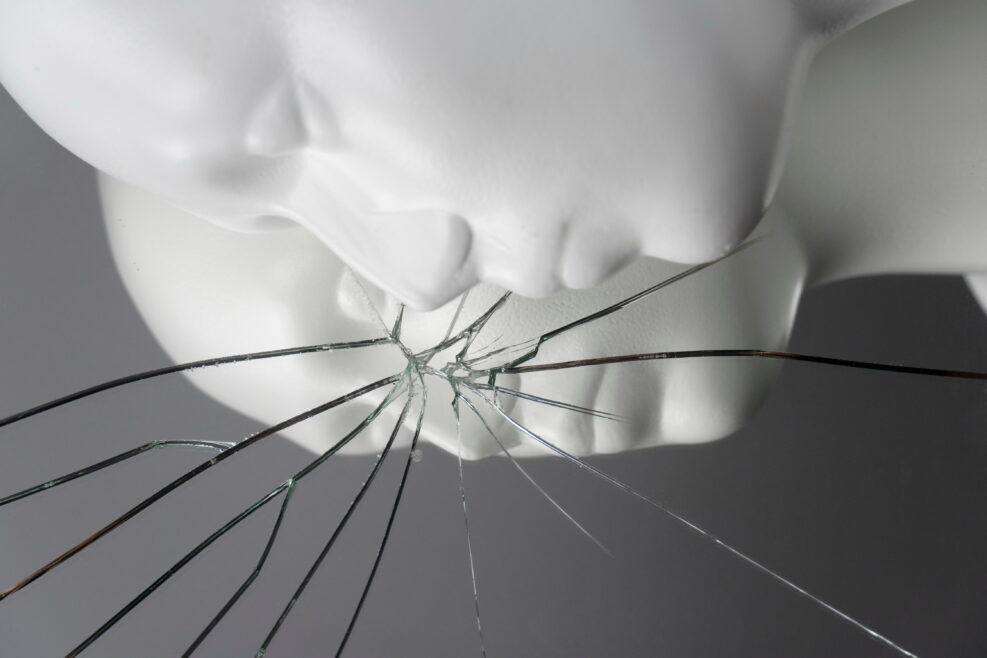
white man mannequin with broken crack reflection mirror in crime or violence scene

The “Conscious Machine” Is Just Real Enough to Scare People

The ancient Greek hunk Narcissus could tell us about the risks — if he hadn’t been turned into a daffodil…

Theologian and philosopher David Bentley Hart turns to an ancient folk tale to explain the danger of coming to believe that artificial intelligence is real human intelligence. Narcissus, as he tells us, was a young Greek hunter who fell in love with his own reflection in still water. He was entranced by the image but frustrated by the fact that it never did anything he didn’t do himself. He pined away and was eventually transformed into a flower — still called narcissus today. His name also found its way into psychology as a term for extreme self-absorption, narcissism. And that’s where Dr. Hart fears that an attraction to AI products as “machine selves” is taking us. While we’ve always been Read More ›

hands-of-a-man-tearing-a-piece-of-paper-with-inscription-free-will-stockpack-adobe-stock.jpg
Hands of a man tearing a piece of paper with inscription free will

Free Will: What Are the Real Reasons to Believe in It?

Some say that free will might be a useful delusion but neuroscience provides sound reasons to believe that it is real.

University of Missouri psychology professor Kennon Sheldon’s message is neatly summed up in an opening statement: “Regardless of whether humans do or don’t have free will, psychological research shows it’s beneficial to act as if you do”. The author of Freely Determined: What the New Psychology of the Self Teaches Us About How to Live (Basic Books, 2022) responds to philosophers who say that we do not have free will: All my life, I’ve struggled with the question of whether humans have ‘free will’. It catalysed my decision to become a psychologist and continues to inspire my research to this day, especially as it relates to the kinds of goals people set for themselves, and the effects of goal-striving on Read More ›

primeval-cavemanneanderthal-family-ai-generated-stockpack-adobe-stock
Primeval Caveman,Neanderthal Family , ai generated

Researchers: Neanderthals Invented Process to Produce Birch Tar

The tar can be used for glue, bug repellent, and killing germs. This finding tracks growing recognition of Neanderthals as intelligent

Many of us grew up with “Neanderthal!” used as a term of abuse for a stupid person. A 2021 study from the University of Tübingen and others, dusted off at ScienceAlert, paints quite a different picture, in connection with Neanderthals’ manufacture of birch tar. The tar from burnt birch wood can be used as glue, insect repellent, and antiseptic. It can be scraped from a fire naturally or it can be produced in a controlled way. Which method Neanderthals used says something about the development of their culture. The study authors, Patrick Schmidt et al., went to a lot of potentially messy trouble to try to answer the question: Some think of black tar as a happy accident that Neanderthals Read More ›

robot-paints-picture-at-home-humanoid-robot-creating-as-artist-generative-ai-stockpack-adobe-stock
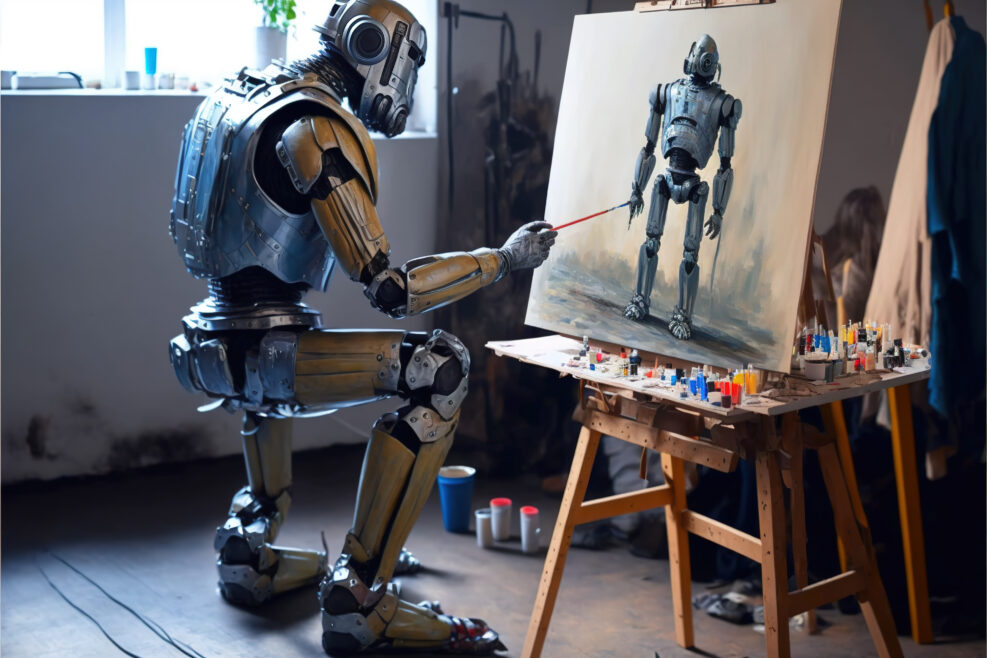
Robot paints picture at home, humanoid robot creating as artist, generative AI.

All We Need To Do To Give a Robot a Soul Is… (Error 404)

The author of Robot Souls argues that programmers have failed to put the “junk,” that is, the soul, into machines — but that they could do so

Academic publisher Taylor & Francis asks in TechXplore, “Should robots be given a conscience?” (June 11, 2023). I spoil no surprise by revealing that we are meant to think that that is both doable and desirable. T & F is publishing Eve Poole’s Robot Souls later this year. Poole is a British writer and academic, and author of Capitalism’s Toxic Assumptions, Buying God, and Leadersmithing. Her thesis is that, in our quest for the most functional software, we left out the “junk,” which includes our “emotions, free will and a sense of purpose”: Our junk code consists of human emotions, our propensity for mistakes, our inclination to tell stories, our uncanny sixth sense, our capacity to cope with uncertainty, an Read More ›

iguana-eye-stockpack-adobe-stock
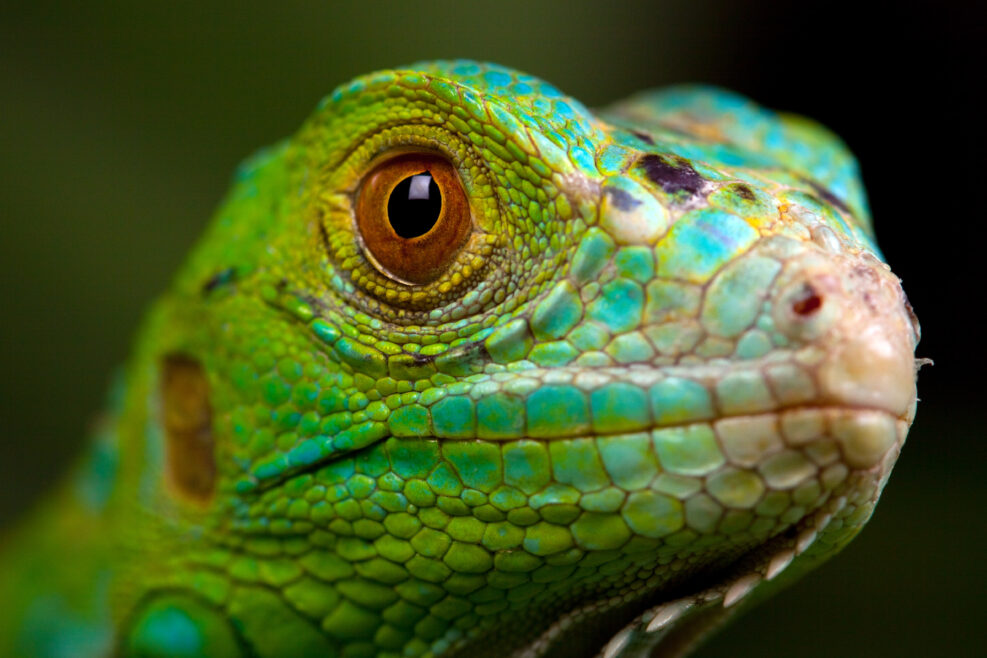
Iguana Eye

Look Out! The “Reptilian Brain” Is Still Here!

Many psychology students are subjected to this day to an exploded pop neuroscience myth endorsed by celebrity scientist Carl Sagan

Do we have a three-part brain — reptilian, mammalian, and human? Curiously, psychology textbooks teach us that we do and neuroscience studies teach us that we don’t. Who to believe? And how did that happen anyway? In the 1960s, Yale University physiologist and psychiatrist Paul D. MacLean (1913–2007) offered the triune brain theory. On that view, the reptilian brain (brain stem) controls things like movement and breathing; the mammalian brain controls emotion (limbic system); and the human cerebral cortex controls language and reasoning (neocortex). That might have been just another theory except that it was widely promoted by celebrity astronomer Carl Sagan (1934–1996) in his book, The Dragons of Eden (Random House, 1977). Praised in The Atlantic as “a rational, Read More ›

cells-under-a-microscope-cell-division-cellular-therapy-3d-illustration-on-a-dark-background-stockpack-adobe-stock.jpg
Cells under a microscope. Cell division. Cellular Therapy. 3d illustration on a dark background

Cognitive Cells? A Newer Challenge to Neo-Darwinism

The origin of self-referential cognition is unknown, say a trio of researchers who call it “biology’s most profound enigma”

Conundrums like this help us understand why panpsychism (all life forms/cells are conscious in some sense) is beginning to replace materialism in science.

Read More ›
tunnel-of-light-stockpack-adobe-stock
tunnel of light

Near-Death Experience Research Is Slowly Filling In the Picture

When an 87-year-old man was having his brain scanned, he died — unexpectedly — of a heart attack. So, in a rare event, the scan recorded his unanticipated final brain activity

In a survey article at Business Insider, Erin Heger points to several studies that shed light on what happens when we die. She starts by referencing Julia A. Nicholson’s recent account of her own NDE when she was eighteen, as a result of a near-fatal car crash: I didn’t feel any pain but I heard voices around me. I could then hear my sister screaming, “She’s dead, my sister is dead.” So I believed that I must have died. I remember my sister, Allan, and John saying, “If you can hear us, move, or touch something,” but I couldn’t move at all. After I started to regain consciousness, I remember seeing the faces of the people that I loved flashing Read More ›

mousetrap-with-a-piece-of-cheese-on-a-dark-vintage-background-the-concept-theres-no-such-thing-as-a-free-lunch-stockpack-adobe-stock.jpg
Mousetrap with a piece of cheese on a dark vintage background. The concept -

Finding From Recent Brain Research Supports Free Will

Researchers, altering Libet’s classical experiment, found that human brains show no “readiness potential” when a decision is important

Philosopher Alessandra Buccella and experimental psychologist Tomáš Dominik, both at Chapman University, offer some interesting support for free will. Many commentators interpreted Benjamin Libet’s experiments that showed that the brain’s readiness to make a decision (readiness potential) often preceded the subject’s conscious awareness of the choice that had been made. There! they said, that proves that there is no free will: To many observers, these findings debunked the intuitive concept of free will. After all, if neuroscientists can infer the timing or choice of your movements long before you are consciously aware of your decision, perhaps people are merely puppets, pushed around by neural processes unfolding below the threshold of consciousness. Alessandra Buccella, Tomáš Dominik, “Free Will Is Only an Read More ›

butterfly-on-a-glass-ball-on-the-beach-refecting-the-lake-and-sky-stockpack-adobe-stock
Butterfly on a glass ball on the beach refecting the lake and sky

Physicist: Life After Death Is Incompatible With Physics

In 2011, Sean Carroll wrote an essay for Scientific American on why — from a science perspective — our minds must be extinguished at death

Back in 2011, particle physicist Sean M. Carroll wrote a guest blog at Scientific American, dismissing the idea of life after death or the immortality of the soul. He began by responding to astrophysicist Adam Frank’s reflections at NPR: For myself I remain fully and firmly agnostic on the question. If ever there was a place where firm convictions seem misplaced this is it. There simply is no controlled, experimental verifiable information to support either the “you rot” vs. “you go on” positions. In the absence of said information we are all free to believe as we like but, I would argue, it behooves us to remember that truly “public” knowledge on the subject — the kind science exemplifies — Read More ›

synapses connected
Neurons cells concept

A Game Developer Looks at Human Consciousness

Gino Yu tries to explain the Asian approach to consciousness to Robert Lawrence Kuhn at Closer to Truth

A few years back, Robert Lawrence Kuhn interviewed game developer Gino Yu at Closer to Truth on the topic, “What is Consciousness?” Consciousness is what we can know best and explain least. It is the inner subjective experience of what it feels like to see red or smell garlic or hear Beethoven. (Jan 18, 2016, 8:34 min) The interview raises some interesting issues. Yu is the founding head of the Multimedia Innovation Center at Hong Kong Polytechnic University: “His main area of research focuses on the application of media technologies to cultivate creativity and promote enlightened consciousness.” (Closer to Truth) So how does he understand consciousness? Selections from the transcript and some notes follow: Robert Lawrence Kuhn: you know I’ve Read More ›

tyrannosaurus-rex-in-the-jungle-generative-ai-stockpack-adobe-stock
Tyrannosaurus Rex in the jungle. Generative AI.

Was the Tyrannosaur as Smart as a Monkey? Assessing a New Claim

One researcher argues that, based on bird studies, the huge predators may have had many more brain cells than we have supposed

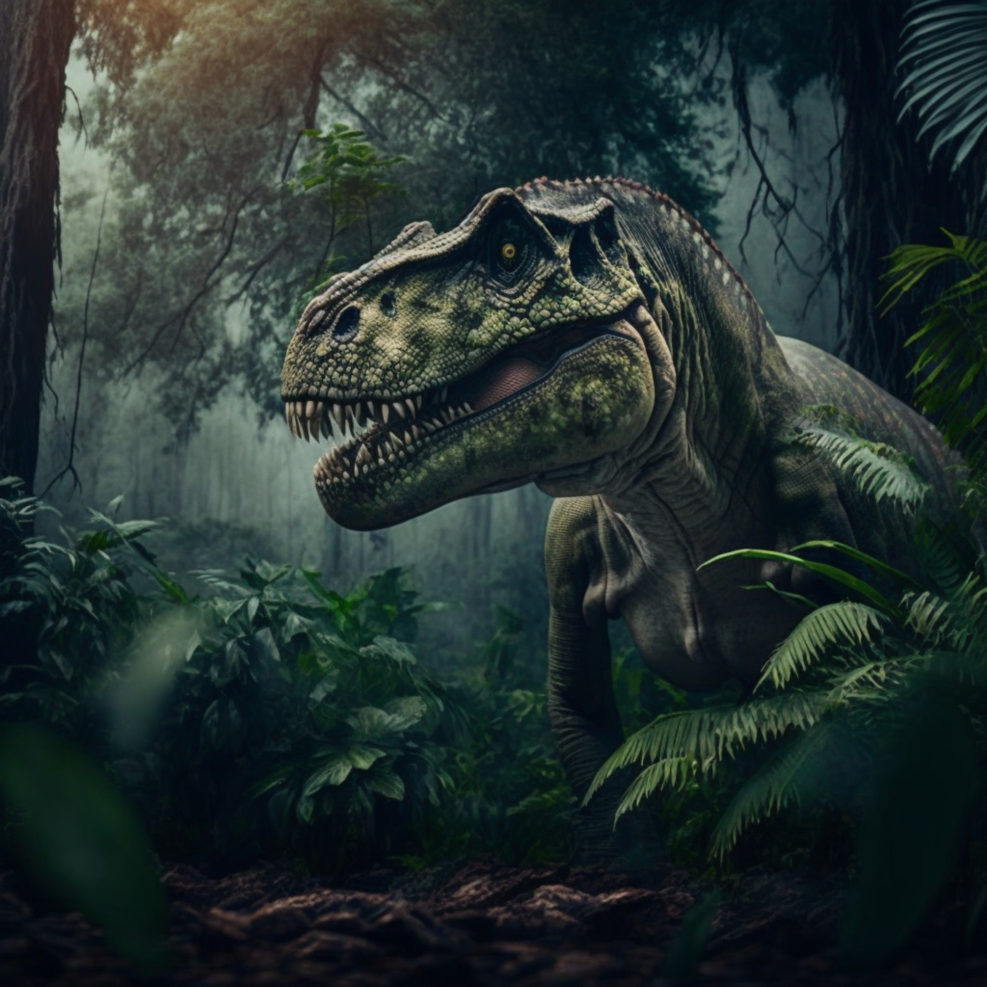
Vanderbilt University neuroscientist Suzana Herculano-Houzel tells us, in a recent paper, that tyrannosaurs had similar numbers of brain neurons as “primates.” But how would we know? Herculano-Houzel stats with the assumption that dinosaurs are descended from birds and makes a distinction between the theropod dinosaurs like the tyrannosaur and others: From that assumption, Herculano-Houzel realized that theropods in particular had a similar correlation between body mass and brain size to pre-impact birds, or basal birds. From there, she used the neuron count of modern birds like emus and ostritches and applied the same rules of scaling to figure out how many neurons theropods like the T-Rex may have had. Frank Landymore, “In terrifying news, big brained T-rex may have been Read More ›

peaceful-old-man-looking-at-his-hound-and-holding-the-paw-of-it-tranquil-man-is-sitting-in-wheelchair-and-wearing-eyeglasses-hound-is-sitting-near-the-chair-stockpack-adobe-stock
Peaceful old man looking at his hound and holding the paw of it. Tranquil man is sitting in wheelchair and wearing eyeglasses. Hound is sitting near the chair

1000 Dogs Tested on Standardized Dog IQ test. What Was Found?

There were no breed differences for short-term memory or logical reasoning but some differences in how much they needed to interact with humans when problem-solving

Assessing dog intelligence is one of those sensitive areas because of the difficulty in agreeing on what to measure. Experts tend to say that border collies are the smartest dog breed but the response they may get is, “My shih tzu understands me and I am a difficult person to understand!” Nonetheless, a Finnish research group decided to try their hand at administering a battery of standardized intelligence tests (smartDOG) to over 1000 dogs between 1 and 8 years old, of 13 different breeds, with a minimum of 40 dogs from each breed. Here’s what they were testing for: The battery involves measuring different cognitive traits, from spatial problem solving to logical reasoning, to impulse control and an ability to Read More ›
abstract-digital-human-face-artificial-intelligence-concept-of-big-data-or-cyber-security-3d-illustration-stockpack-adobe-stock
Abstract digital human face.  Artificial intelligence concept of big data or cyber security. 3D illustration

If Consciousness Is Not Physical, How Can an AI Duplicate It?

Robert Lawrence Kuhn interviewed Berkeley philosopher Hubert Dreyfus on the question before his death in 2017

At Closer to Truth, Robert Lawrence Kuhn interviewed the late philosopher Hubert Dreyfus (1929–2017) a couple of years back on the question “Is consciousness entirely physical.” The interview was released May 18, 2022 (10:03 min). Here’s the big question about consciousness, our inner experience of what things feel like. Is consciousness a product of the physical world alone? Because if consciousness is the output of the physical brain by itself, however complex, then consciousness as physicalism would defeat those who believe, or hope for, the existence of nonphysical realities. Some philosophers (physicalists) do maintain that consciousness is entirely physical or, more commonly, they dance around the point. For example, philosopher David Papineau said in 2020, “If only we could stop Read More ›

3d-illustration-of-eschers-inspired-stairs-stockpack-adobe-stock
3D illustration of Escher's inspired stairs

How Surreal Artist MC Escher Influenced Physicist Roger Penrose

Escher’s mathematical art was all the more remarkable because he had no formal training in mathematics

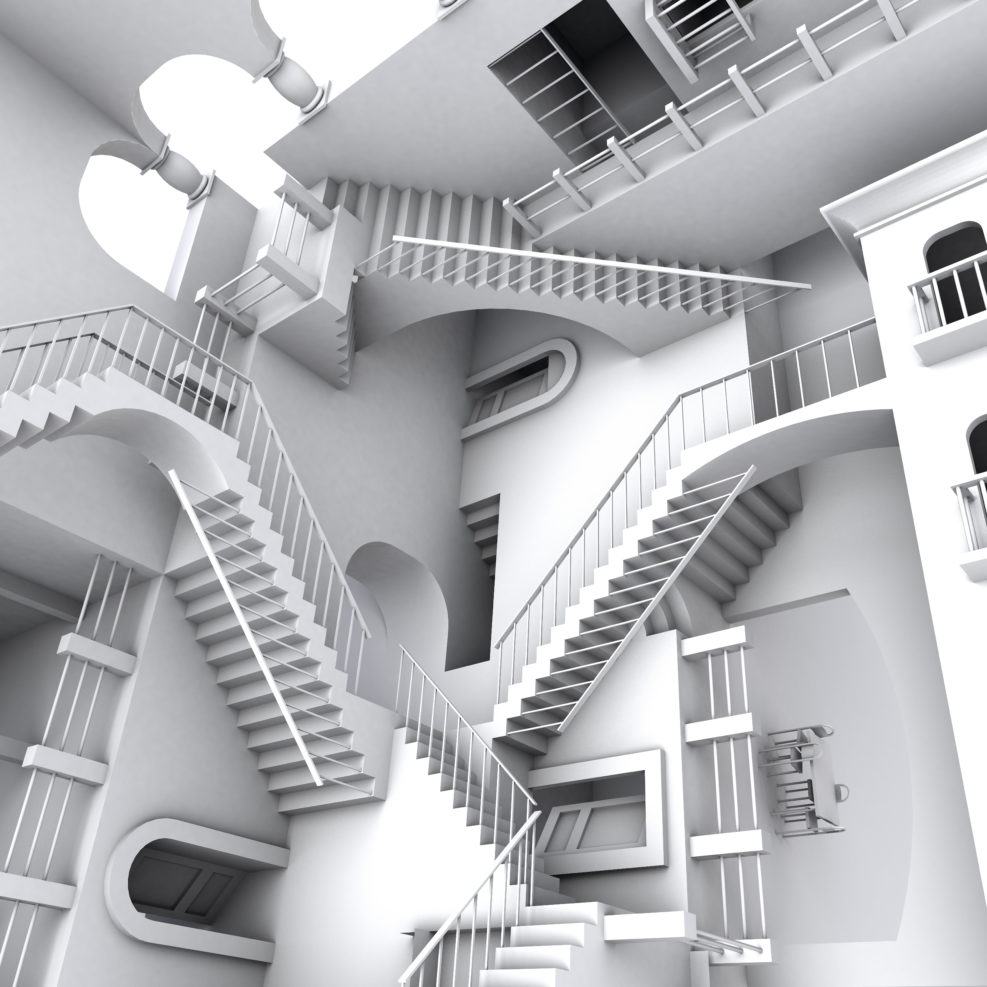
Last month, Robert Lawrence Kuhn interviewed eminent British mathematical physicist Sir Roger Penrose on a number of topics, including the influence of surrealist artist M. C. Escher (December 9, 2022/32:00 min). Here is a transcribed selection from the second part of the discussion in Part 1 above*, beginning around the 12-minute mark, with some notes: Robert Lawrence Kuhn: We talked about the impossible Penrose triangle which really opens up another area of your life in terms of visual representations of remarkable things. Penrose tiling really new ways of thing of seeing visual representation of fiery fundamental geometric and algebraic transformations and things. But what I wanted to ask you is, as youdeveloped that you had this interaction with the artist Read More ›

the-drawings-from-the-ceiling-of-altamira-cave-in-santillana-del-mar-cantabria-spain-stockpack-adobe-stock
the drawings from the ceiling of Altamira cave in Santillana Del Mar, Cantabria, Spain

Do Cave Paintings From 20,000 Years Ago Show Symbolic Writing?

In an article in the Cambridge Archeological Journal, researchers say they’ve deciphered the dots and Y’s among the animal paintings

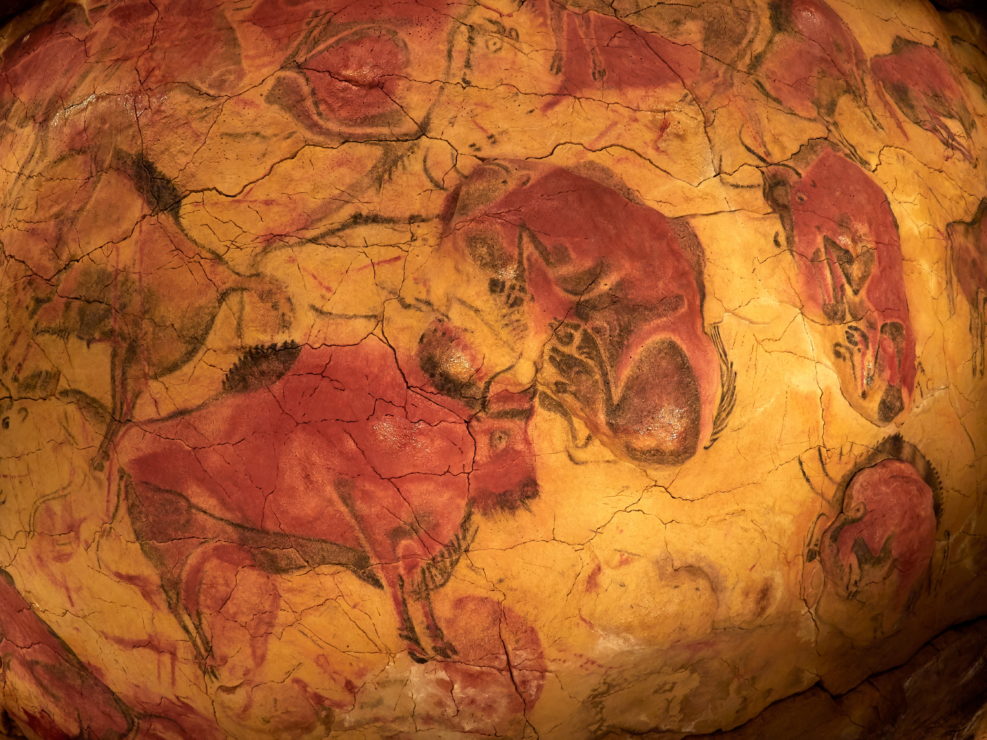
London-based wood carving conservator Ben Bacon has, with academic colleagues, shaken up Ice Age paleontology by demonstrating that the marks on the 20,000-year-old cave paintings of animals found across Europe could be interpreted as a lunar calendar timing their reproductive cycles: Prof Paul Pettitt, of Durham University, said he was “glad he took it seriously” when Mr Bacon contacted him. “The results show that Ice Age hunter-gatherers were the first to use a systemic calendar and marks to record information about major ecological events within that calendar.” News, “Londoner solves 20,000-year Ice Age drawings mystery” at BBC (January 5, 2023) The paper is open access. Bacon had spent many hours both on the internet and in the British Library, studying Read More ›