
The Problem of Smith: When Mind Uploading Multiplies Identity
Tyler Bauer: If personal identity is grounded in an immaterial soul, the real Smith is the body that contains his original soul.
Read More ›Tyler Bauer: If personal identity is grounded in an immaterial soul, the real Smith is the body that contains his original soul.
Read More ›
Much that the NDE experiencer learns cannot easily be expressed, because there are no words for experiences that most people have only after they die.
Read More ›
The physicalist claims that everything about us can be explained by biology, chemistry, and physics. But as Moreland pointed out, this view leaves out important parts of reality.
Read More ›
Idealism’s challenging alternative to physicalism and dualism proposes a resolution to metaphysical issues that aligns with quantum mechanics’ peculiarities.
Read More ›
What does it mean for something to exist? Today, we’re joined by Doug Axe to talk about idealism and what it means for understanding the world around us. Idealism is the belief that reality exists exclusively of minds and their ideas, rather than a physical, material world. This contrasts with physicalism/materialism which views the physical world as the only true Read More ›
Many proponents of artificial intelligence operate from an assumption that our own minds and conscious experience can be solely attributed to our physical brains. But is this assumption true? This question is the key focus of the book Minding the Brain, edited by our guests: Angus Menuge, Brian Krouse, and Robert J. Marks. Joining them to discuss this volume is today’s Read More ›
On this episode, host Dr. Michael Egnor begins a conversation with Dr. Bruce Gordon about a chapter he wrote in the recent volume Minding the Brain titled “Mind Over Matter: Idealism Ascendant.” Dr. Gordon makes a case for idealism, a philosophy of mind positing that all of reality is, in some sense, mental. Egnor and Gordon discuss the plausibility of idealism Read More ›

The idea that science has somehow shown the irrelevance of the mind to explaining behavior is seriously confused.
Read More ›
Dualism — human consciousness is real, immaterial, and special — is the only approach to consciousness that accords with the evidence.
Read More ›
Riccardo Manzotti and Paulo Moderato set out the dilemma: The human mind makes no sense apart from the forbidden dualist perspective.
Read More ›
Any attempt to use science to discredit the existence of mental subjects is fatally flawed because the bedrock data for all science comes from observation.
Read More ›
Editor’s note: We are delighted to welcome the new book from Discovery Institute Press, Minding the Brain: Models of the Mind, Information, and Empirical Science, edited by Angus J. L. Menuge, Brian R. Krouse, and Robert J. Marks. Below is an excerpt from Chapter 2. Look for more information at MindingtheBrain.org. By Angus Menuge The history of physicalism is one of extraordinary diversity: a wide variety of theories, with multiple versions, have jockeyed for dominance. Yet it is also a tale of persistent failure. One physicalist theory after another has either ignored or falsified the central characteristics of consciousness, intentionality, and rationality that define our mental life. We will begin by tracing the history of physicalism from the early varieties of behaviorism Read More ›

Can Goff get science gatekeepers to accept fine-tuning simply by slamming traditional religion? If he does, we will certainly know that things are changing.
Read More ›
If we can uncover the smallest quantum particles in nature, will we have uncovered the fundamental secrets of reality? A longstanding philosophical tradition in the sciences claims “yes.” Uncovering the mystery of the world lies in the ability to interrogate the smallest of the small. But is that the right way to approach it? What special status does the tiny have over the large? A paper at IAI News by London philosopher Peter West argues that reality can’t in fact be elucidated simply by observing quantum mechanics. He talks in some length about the 17th century text Micrographia by Robert Hooke, which features various images of insects and other organisms under the microscope. West notes that Hooke set the stage, Read More ›
At Closer to Truth, Robert Lawrence Kuhn interviewed the late philosopher Hubert Dreyfus (1929–2017) a couple of years back on the question “Is consciousness entirely physical.” The interview was released May 18, 2022 (10:03 min). Here’s the big question about consciousness, our inner experience of what things feel like. Is consciousness a product of the physical world alone? Because if consciousness is the output of the physical brain by itself, however complex, then consciousness as physicalism would defeat those who believe, or hope for, the existence of nonphysical realities. Some philosophers (physicalists) do maintain that consciousness is entirely physical or, more commonly, they dance around the point. For example, philosopher David Papineau said in 2020, “If only we could stop Read More ›

Last month, Robert Lawrence Kuhn interviewed eminent British mathematical physicist Sir Roger Penrose on the relationship between mathematics, the mind, and the physical universe (December 9, 2022/32:00 min). Penrose likes to illustrate the relationship between the three with an “impossible” triangle (see below). Here are a couple of transcribed selections from the first part of the discussion in Part 1*, concerning the Penrose Triangle, with some notes: Robert Lawrence Kuhn: Let’s start with your grand metaphysical framework, your three worlds — three mysteries: the physical world, the mental world, the platonic or mathematical world — each connected to the other two in your famous diagram of an equilateral triangle. What’s the origin of this vision of yours of foundational reality? Read More ›

Canadian science journalist Dan Falk tells us, the philosopher’s zombie thought experiment, “flawed as it is,” demonstrates that physics alone can’t explain consciousness. Not that many physicists haven’t tried. But first, what is the philosopher’s zombie (sometimes called the p-zombie)?: The experiment features an imagined creature exactly like you or me, but with a crucial ingredient – consciousness – missing. Though versions of the argument go back many decades, its current version was stated most explicitly by Chalmers. In his book The Conscious Mind (1996), he invites the reader to consider his zombie twin, a creature who is ‘molecule for molecule identical to me’ but who ‘lacks conscious experience entirely’.” He does everything he is supposed to do but experiences Read More ›

Sounds like the answer should be “Of course!” But the question may not be as simple as it appears. Let’s wind the clock back to the first century BC, when a Roman poet and philosopher named Lucretius wrote the poem On the Nature of Things.” In this poem, Lucretius outlines a philosophy known as Epicureanism in order to demonstrate the world can be explained without reference to a deity. In the Epicurean philosophy, only three things exist: atoms, the void, and the universe. Consequently, everything we see in the physical world can be reduced to atoms bumping into each other. You may notice that Epicurean philosophy sounds similar to modern day physics. This is not an accident. Through the influence Read More ›
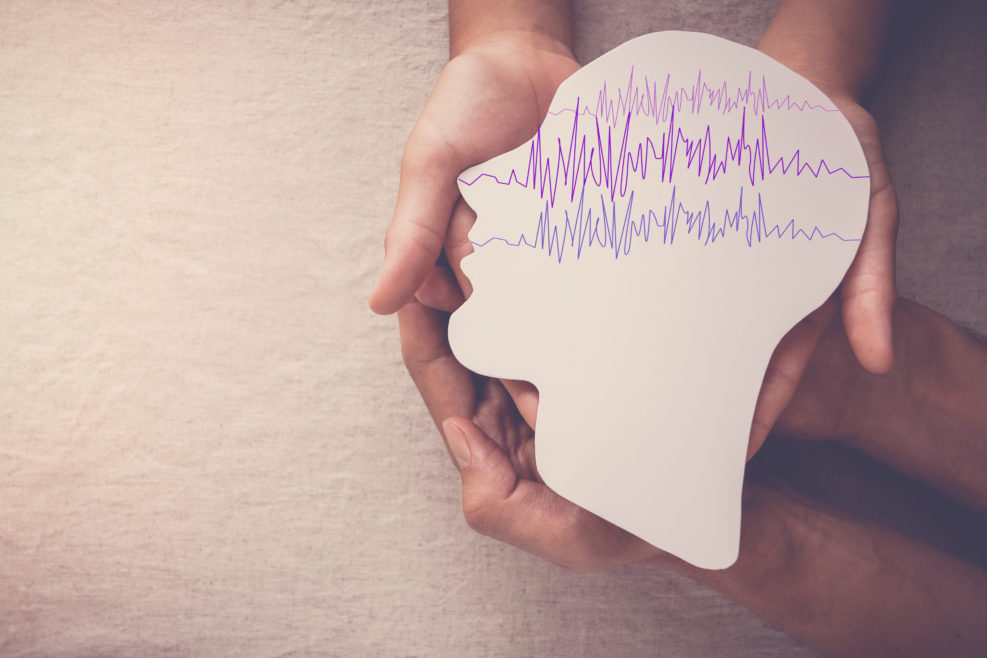
In the recent debate between neurosurgeon Michael Egnor and philosopher David Papineau, “Atheist Philosopher and Christian Neurosurgeon Debate Materialism” at Theology Unleashed, there was sort of digression at 49:30 on the nature of thought. Dr. Egnor talks about what he learned from his experiences with treating epilepsy and Dr. Papineau responds. Note: Dr. Papineau is a “physicalist.” On that view, “the mind is a purely physical construct, and will eventually be explained entirely by physical theory, as it continues to evolve.” (Philosophy basics) He is considered to be one of the best defenders of naturalism (nature is all there is), often called “materialism.” Michael Egnor: There are three metaphysical questions that I think can be answered in an inferential way, Read More ›

Yesterday, we published the third portion of the debate between materialist philosopher David Papineau and neurosurgeon Michael Egnor, where the key issue was “Could there have been a material cause for the Big Bang that is held to have started our universe?” For Egnor’s opening statement, go here. Here’s Papineau’s reply. Today, we look at the portion which starts roughly at 26:30 where they start to talk about the human mind. Is the mind simply “what the brain does”? Papineau begins: Note: Dr. Papineau is a “physicalist.” On that view, “the mind is a purely physical construct, and will eventually be explained entirely by physical theory, as it continues to evolve.” (Philosophy basics) He is considered to be one of Read More ›