Tagepilepsy


Ways the Brain Can Heal
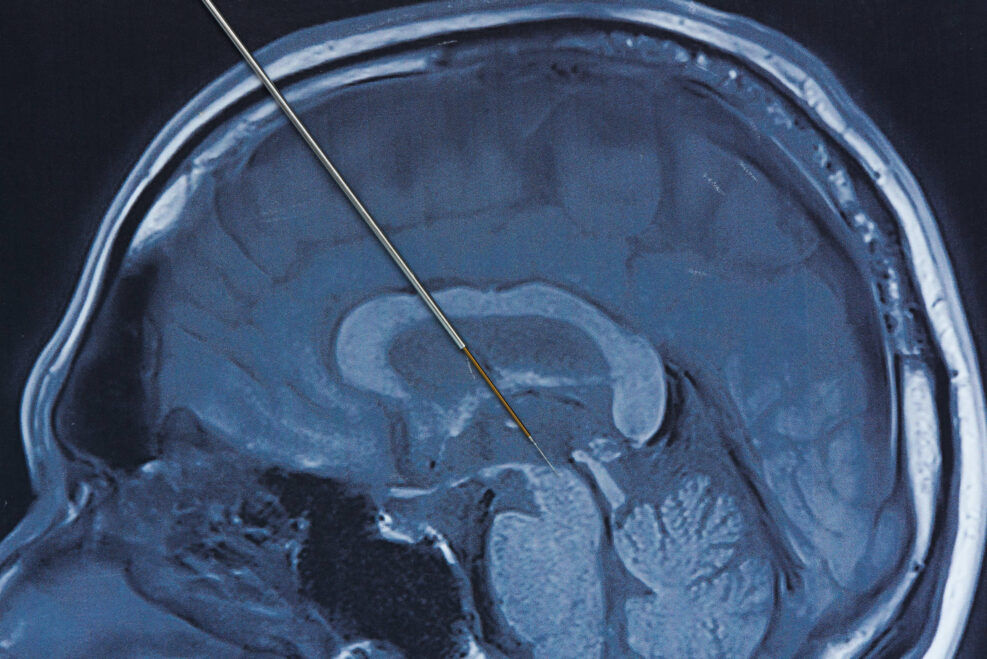
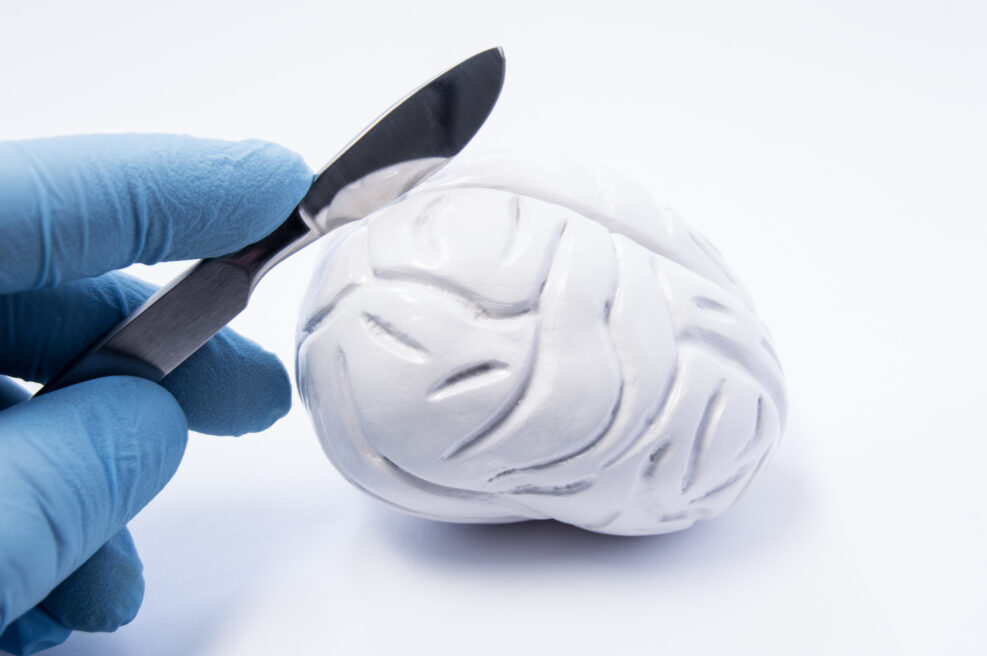
Robert Marks and Andrew Knox continue their conversation on neurology, epilepsy, and mental illness. In this episode, they focus on the medications and practices that can help restore proper brain function, from antidepressants to forms of surgery to Elon Musk’s potential “Neuralink.” Additional Resources

Researchers Locate 440 Genes That Develop Each Brain Differently
Large-scale MRI and genetic datasets are helping us understand the common variants of the genes that help build the human cerebral cortexTo map regions of the brain to specific genes, researchers at the University of California – San Diego did genome-wide association studies (GWAS) of the regional cortical surface area and thickness of 39,898 adults and 9,136 children. That is, they scanned complete sets of DNA (genomes), looking for genetic variations. They were especially interested in variations that might be associated with a problem like autism, epilepsy, or dementia. By and large, construction of the human brain is determined by heredity, though factors like environmental exposures also play a role, particularly during sensitive periods of neurodevelopment during childhood. Large-scale MRI and genetic datasets have increasingly illuminated the common genetic variants that help build the human cerebral cortex — the outer, layered Read More ›

Epilepsy: If You Follow the Science, Materialism Is Dead
Continuing a discussion with Arjuna Das at Theology Unleashed, Dr. Egnor talks about how neurosurgery shows that the mind is not the brainNeurosurgeon Michael Egnor did a recent podcast with Arjuna Das at Theology Unleashed, “where Eastern theology meets Western skepticism.” In the previous segment, they discussed the way in which people’s minds sometimes become much clearer near death (terminal lucidity). Dr. Egnor suggested that that may demonstrate that the brain constrains the mind (rather than creating it). In this segment, they look at objections raised to the view that epilepsy provides evidence for the mind as not merely a function of the brain. Dr. Egnor begins by focusing on the work of Wilder Penfield, the founder of epilepsy surgeries, who worked in Montreal in the mid-twentieth century, “a wonderful scientist, one of the best scientists that neurosurgery has produced”: Here is Read More ›

The Reality of the Mind: The Argument From Epilepsy
Why do epileptic seizures evoke many odd behaviors but not abstract thought?In the recent debate between neurosurgeon Michael Egnor and philosopher David Papineau, “Atheist Philosopher and Christian Neurosurgeon Debate Materialism” at Theology Unleashed, there was sort of digression at 49:30 on the nature of thought. Dr. Egnor talks about what he learned from his experiences with treating epilepsy and Dr. Papineau responds. Note: Dr. Papineau is a “physicalist.” On that view, “the mind is a purely physical construct, and will eventually be explained entirely by physical theory, as it continues to evolve.” (Philosophy basics) He is considered to be one of the best defenders of naturalism (nature is all there is), often called “materialism.” Michael Egnor: There are three metaphysical questions that I think can be answered in an inferential way, Read More ›

Human Neurons Are Different From Animal Ones, Researchers Say
A Canadian research team got a rare chance to compare live brain tissue from donors undergoing surgery with that of rodentsMost neuroscience studies on live neurons depend on animal neurons. But a group of researchers in Canada got the opportunity to study live neurons from 66 human donors undergoing brain surgery for epilepsy and tumors. So they had a chance to compare human with rodent neurons: “The goal of this study was to understand what makes human brain cells ‘human,’ and how human neuron circuitry functions as it does,” says Dr. Taufik Valiante, neurosurgeon, scientist at the Krembil Brain Institute at UHN and co-senior author on the paper. University Health Network, “Researchers Identify Unique Characteristics of Human Neurons” at Neuroscience News (May 3, 2021) Looking specifically at live human cortical pyramidal cells, they found “notable and unexpected differences between their Read More ›

Why, as a Neurosurgeon, I Believe in Free Will
The spiritual aspect of the human soul, sadly, leaves its signature in epilepsyIn his classic book, Mystery of the Mind, (1975) epilepsy surgery pioneer Dr. Wilder Penfield, asked a significant question: “Why are there no intellectual seizures?” Epileptic seizures can be experienced in a variety of ways—convulsions of the whole body, slight twitching of a muscle, compulsive memories, emotions, perceptions of smells or flashes of light, complex motor behaviors such as chewing or laughing or even walking, or subtle moments of inattention. But seizures never have intellectual content. There are no intellectual seizures, which is odd, given that large regions of the brain are presumed by neuroscientists to serve intellectual thought. It is all the more remarkable when we consider that seizures commonly originate in these “intellectual” areas of the brain. Yet Read More ›

Neuroscience Can Help Us Understand Why Free Will Is Real
Physicist Sabine Hossenfelder and biologist Jerry Coyne, who deny free will, don’t seem to understand the neuroscienceEvolutionary biologist Jerry Coyne seems obsessed with denying free will. In a recent post on his blog, Why Evolution Is True, he supported the claim of theoretical physicist Sabine Hossenfelder that we do not have free will: If you’ve read this site, you’ll know that my own views are pretty much the same as hers, at least about free will. We don’t have it, and the fundamental indeterminacy of quantum mechanics doesn’t give it to us either. Hossenfelder doesn’t pull any punches: “This means in a nutshell that the whole story of the universe in every single detail was determined already at the big bang. We are just watching it play out.”… QED! Jerry Coyne, “Sabine Hossenfelder says we don’t Read More ›

Neuroscience Can’t Dismiss Near Death Experiences
It’s sobering to note that neuroscience has utterly failed to explain how the brain and mind relateDespite claims, NDEs are radically different from any mental experience caused by brain impairment.
Read More ›
Why Pioneer Neurosurgeon Wilder Penfield Said the Mind Is More Than the Brain
He gave three lines of reasoning, based on brain surgery on over a thousand patientsMichael Egnor points out that Penfield offered three lines of evidence: His inability to stimulate intellectual thought during brain operations, the inability of seizures to cause intellectual thought, and his inability to stimulate the will. … So he concluded that the intellect and the will are not from the brain. Which is precisely what Aristotle said.
Read More ›
Yes, Split Brains Are Weird, But Not the Way You Think
Scientists who dismiss consciousness and free will ignore the fact that the higher faculties of the mind cannot be split even by splitting the brain in halfPatients after split-brain surgery are not split people. They feel the same, act the same, and think the same, for all intents and purposes. Materialists like Jerry Coyne focus on subtle differences and distort the big picture.
Read More ›
Some People Think and Speak with Only Half a Brain
A new study sheds light on how they do itA range of neuroscience research findings is more readily explained by assuming that some aspects of thought–– abstract intellectual thought and free will–– are immaterial.
Read More ›
A Materialist Neuroscientist Continues the Argument with Himself
On the topic of “intellectual seizures,” he seems committed to both points of viewI assert that intellectual seizures do not exist. Dr. Ali asserts that they do exist and that they do not. The difference between their existence and their non-existence seems to be Dr. Ali’s rhetorical needs of the moment.
Read More ›
Do “forced thinking” seizures show that abstract thought is a material thing?
Epilepsy suppresses abstract thought, it does not evoke it
Do Epileptic Seizures Cause Abstract Thoughts?
A psychiatrist argues that “intellectual seizures” can occurSeizures never evoke abstract thought. That is, if a seizure causes you to think about a triangle, it always causes you to imagine a particular triangle, not to define triangles abstractly.
Read More ›