
Scholars’ Mag Offers Sympathetic Review of Non-Materialist Books
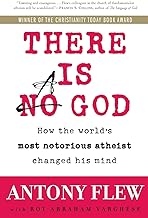
The books are Antony Flew’s There is a God and Michael Egnor’s The Immortal Mind. Unusually for these times, NAS’s mag listens to both sidesThe National Association of Scholars (NAS) — dedicated to upholding liberal arts education — featured the review, by composer Dan Asia, in its quarterly of philosopher Academic Questions.
Antony Flew (1923–2010) had been one of the world’s best-known academic atheists. But, partly under the influence of physicist Gerald Schroeder, he changed his mind early in the Millennium — as he recounted in There Is a God (2008). Flew’s principal reasons for changing his mnd were the evidence of design in the universe and materialism’s inability to account for human consciousness.
Afer his death, he and his reasons for becoming a deist (not a theist) were promptly forgotten. Though not, it appears, by everyone. Here’s a bit from Asia’s take:
Flew announced his “conversion” to a belief in God at a public debate at New York University in May 2004. He stated that this was because of DNA investigations: “What I think the DNA material has done is that it has shown, by the almost unbelievable complexity of the arrangements which are needed to produce life, that intelligence must have been involved in getting these extraordinarily diverse elements to work together.”
Flew’s further change in mind is predicated on answering the following question: “What would have to occur or to have occurred to constitute for you a reason to at least consider the existence of a superior mind?” In answer to this, Flew says: “I now believe that the universe was brought into existence by an infinite intelligence. I believe that this universe’s intricate laws manifest what scientists have called the Mind of God.
“Reason, Science, and the Return of the Divine,” Spring 2026
In reasoning this way, Flew is entirely consistent with many great physicists and philosophers, as Asia shows: “Flew’s journey is noteworthy precisely because it proceeds not from revelation but from reason. His path leads to a divine intelligence inferred from the structure of the cosmos.” He never became a “believer” but he considered the reality of a divine mind the most reasonable inference based on the evidence.
It’s a happy surprise to see that not everyone has forgotten Flew!
If the universe derives from a mind, why should our minds be only matter?
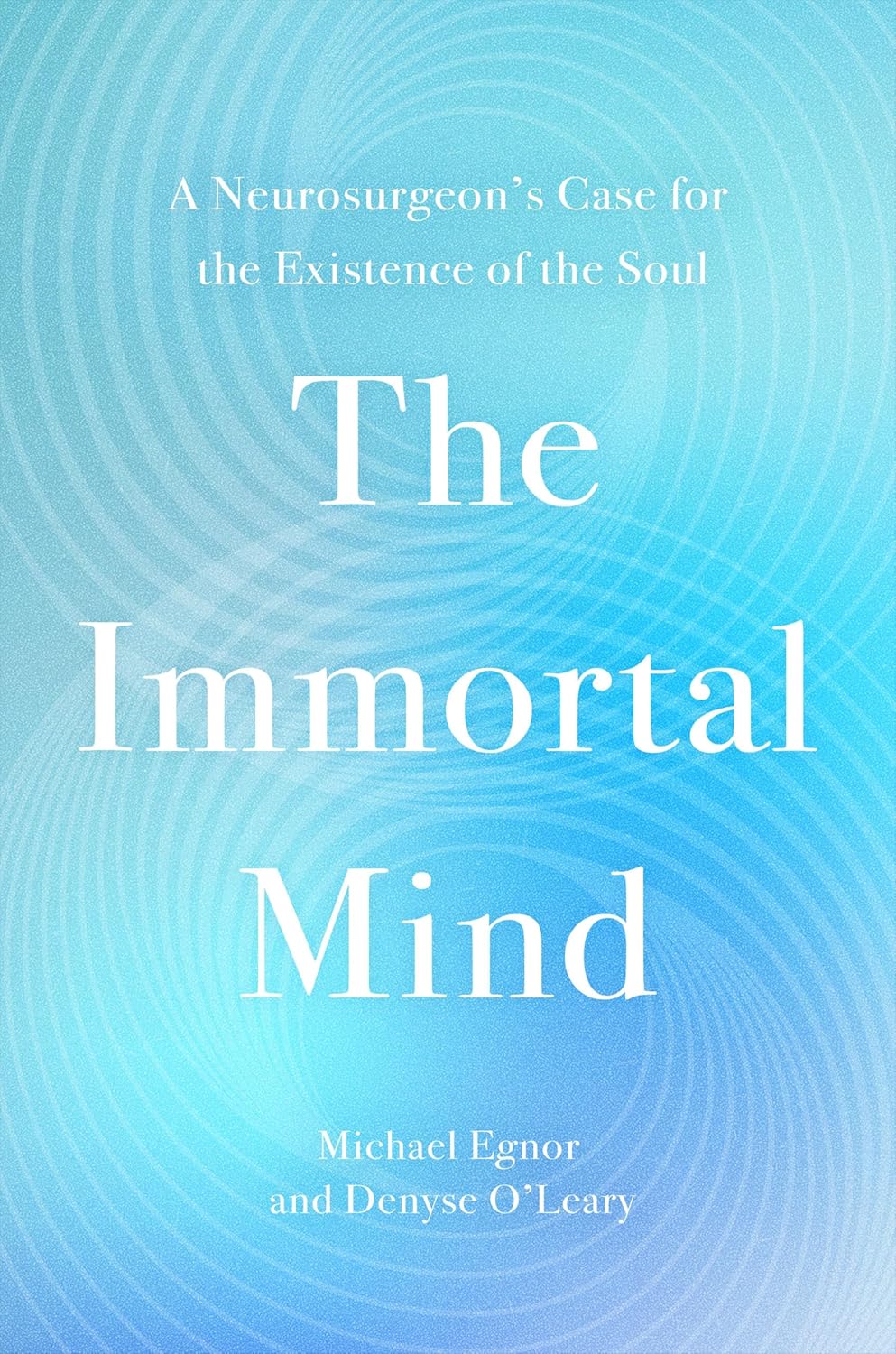
Turning to The Immortal Mind: (2025), he notes that neurosurgeon Michael Egnor and I take our stand on the clearly non-material nature of human consciousness.
 Published by Worthy Books
That’s a controversial view because the dictum that the mind is simply what the brain does is part of the bedrock of neuroscience these days. It’s not a matter of evidence, as we shall see, but of emphatic belief, often despite the evidence.
Asia sums up,
Egnor and O’Leary offer what they regard as the most coherent and rational explanation available: that human consciousness and mind—what we might cautiously call the soul—are not reducible to the physical body. Rather, they suggest that consciousness may be distinct from the brain and not wholly dependent upon it for its existence. If so, it raises the possibility that the mind is more enduring than material processes alone would allow.
From a rational and scientific perspective, certain conclusions at least press themselves upon us. It may be that the evidence points toward the existence of a guiding intelligence behind the universe, and toward a dimension of human personhood that cannot be confined to matter. Whether one is prepared to call this God, or to speak confidently of an immortal soul, remains open to debate. These questions are hardly “settled science.” Yet, as with the Big Bang before its widespread acceptance, we may find ourselves increasingly compelled to take such possibilities seriously—even if cautiously. “Return of the Divine,”
That’s all we ask, actually. Look at the evidence.
But, for a materialist, it’s not so simple. There is a stark difference in the nature of materialist vs. non-materialist belief.
Why materialists can make no concessions, even when faced with masses of contrary evidence
A materialist believes that everything in the universe is matter and energy; one day, science will account even for human consciousness that way. There can be no valid evidence contrary to materialism.
Mark what follows: If such evidence can’t be refuted at present, it must be memory-holed. A questionable but thoroughly materialist attempt to explain away the evidence is perfectly acceptable in the meantime.
Those who object to this treatment of the evidence may be deplatformed or neutralized if they appear credible. Remember, in the materialist view, science is the instrument of materialism. So objectors are understood as a threat to science itself.
One outcome is that the materialist cannot apply common standards for assessing evidence in these matters. Consider balance of probabilities, for example. The problem is that on the balance of probabilities, the universe does show evidence of design and the human mind does have immaterial elements. The best materialist strategy is to prevent these questions from arising, except perhaps to be refuted in a joking, unserious way.
Could materialists protect their positions by demanding evidence beyond reasonable doubt? Well no, because in their view, there can be no reasonable doubt about materialism. No matter how strong the evidence is, accepting it would be, by definition, unreasonable.
This sort of thing makes materialists difficult to argue with constructively. The slightest thing they might have to concede is an explosion of Mount Doom. That’s unavoidable in a totalistic system.
We non-materialists are in a very different position. We can acknowledge materialist explanations for most things; just not all of them. Thus, concepts like assessing evidence in this area, as opposed to merely processing it (for destruction), are our concepts, not theirs.
Anyway, it is good to see a scholars’ magazine that is willing to consider these ideas instead of merely ignoring them or processing them for destruction.
