Mind Matters Natural and Artificial Intelligence News and Analysis

CategoryScience

concept-of-stockpack-adobe-stock.jpg
Concept of

Do We Really Have Free Will? Four Things to Know

Free will makes more sense of our world than determinism and science certainly allows for it

Free will is a contentious topic in science these days. Theoretical physicists weigh in sharply on one side or the other. Just this month, based on quantum mechanics, mathematician Tim Andersen says maybe and theoretical physicist Sabine Hossenfelder says no. Based on cosmology, the study of our universe, physicist George Ellis said yes last June. With free will, as with consciousness, we don’t fully understand what’s involved. All insights from science are partial so we can’t look to science for a definitive answer. But maybe science can offer some hints. Here are four that might be helpful: 1.Has psychology shown that free will does not really exist? Psychological research on free will has supported the concept of free will but Read More ›

frog-with-turtle-and-snail-stockpack-adobe-stock.jpg
Frog with Turtle and Snail

To What Extent Does Life Simply Invent Itself As It Goes Along?

The evidence may surprise us

According to a popular anti-creationist website Talk Origins, one of the strongest pieces of evidence for evolution and common descent is the phylogenetic signal. In their view, when we look at specific properties across multiple species — number of legs, presence or absence of wings, the presence of a gene, a configuration of nucleotides in the genome, etc. — such properties will form a strongly nested hierarchy. We should expect to see such a strongly nested hierarchy if organisms evolved from one another and therefore a “family tree” links all the organisms together. However, if a property that appears only on a branch, it will be shared only by that branch’s leaves. Leaves on a different branch will not have Read More ›

stethoscope-on-an-old-book-of-medicine-conceptual-image-stockpack-adobe-stock.jpg
Stethoscope on an old book of medicine, conceptual image

Should We Really “Listen to Science”? What Should We Listen For?

Politicians who insist that their beliefs represent science might be surprised by the checkered history of that view

This political season, politicians are telling us to “listen to science.” But buyer beware. The politicization of science is a long and sad history of so-called “scientific truths” that were not only mistaken but resulted in tragedy. Those who know a bit of this history should be wary of politicians’ table-pounding claims on topics ranging from climate change to COVID. In a 2003 lecture at Caltech, Michael Crichton, MD (pictured in 2002, courtesy Jon Chase CC BY-SA 3.0), author of great science fiction including Jurassic Park, noted, “science has in some instances been seduced by the more ancient lures of politics and publicity.” For example, racism was “settled science” in the early 20th century. So was eugenics, the so-called science Read More ›

the-region-30-doradus-lies-in-the-large-magellanic-cloud-galaxy-stockpack-adobe-stock.jpg
The region 30 Doradus lies in the Large Magellanic Cloud galaxy.

Maybe There Are Just Very Few Aliens Out There…

The Rare Earth hypothesis offers science-based reasons that life in the universe is rare

Recently, science and science fiction writer Matt Williams has been writing a series at Universe Today on why extraterrestrial intelligences never make contact with us. Last week, we looked at the hypothesis that, to avoid the heat destruction of their advanced technology, the aliens have put themselves into a digital slumber until the universe cools down. This week, let’s look at a quite different approach, which Williams outlines in “Beyond “Fermi’s Paradox” IV: What is the Rare Earth Hypothesis?” (July 29, 2020): That is “the possibility that life-bearing planets like Earth are just very rare.” We don’t see aliens because they are very uncommon: This is what is popularly known as the “Rare Earth Hypothesis,” which argues that the emergence Read More ›

tumor-cell-under-attack-of-white-blood-cells-stockpack-adobe-stock.jpg
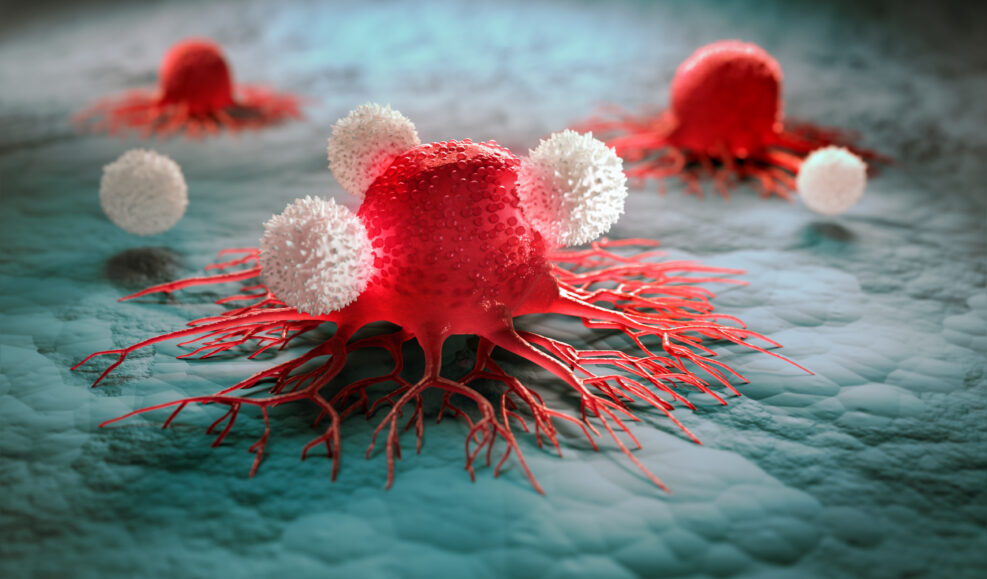
Tumor cell under attack of white blood cells

Why Do Many Scientists See Cells as Intelligent?

Bacteria appear to show intelligent behavior. But what about individual cells in our bodies?

Recently, we talked about the ways in which bacteria are intelligent. Researchers into antibiotic resistance must deal with the surprisingly complex ways bacteria “think” in order to counter them. For example, some bacteria may warn others while dying from antibiotics. But what about individual cells in our bodies? A skeptic might say that bacteria are, after all, individual entities like dogs or cats. There is evidence that individual life forms can show intelligence even with no brain. But dependent cells? Surprisingly, cells that are not independent at all but part of a body can also show something that looks like intelligence, as Michael Denton discusses in Miracle of the Cell (2020): No one who has observed a leucocyte (a white Read More ›

cells-under-a-microscope-cell-division-cellular-therapy-3d-illustration-on-a-dark-background-stockpack-adobe-stock.jpg
Cells under a microscope. Cell division. Cellular Therapy. 3d illustration on a dark background

New Book: Our Bodies’ Cells Are a “Third Infinity” of Information

If the first cell somehow morphed into existence without the ability to reproduce, it would also have been the last cell.

Recently, computer engineer and philosopher Jonathan Bartlett pointed out that Elon Musk has inadvertently highlighted the biggest problem with origin of life studies: How life originated is not as difficult a question as how it originated with the ability to reproduce. If the first cell somehow morphed into existence without the ability to reproduce, it would also have been the last cell. The only cell, in fact. Musk, as it happens, was talking about the production of cars when he tweeted, “The machine that makes the machine is vastly harder than the machine itself.” He estimated “1000% to 10,000% harder.” Indeed, and that’s also true of the cells that comprise just about every living being. Our cells not only live Read More ›

yellow cubes.jpg
Abstract 3d render, geometric composition, yellow background design with cubes

Interview: New Book Outlines the Perils of Big (Meaningless) Data

Gary Smith, co-author with Jay Cordes of Phantom Patterns, shows why human wisdom and common sense are more important than ever now

Economist Gary Smith and statistician Jay Cordes have a new book out, The Phantom Pattern Problem: The mirage of big data, on why we should not trust Big Data over common sense. In their view, it’s a dangerous mix: Humans naturally assume that all patterns are significant. But AI cannot grasp the meaning of any pattern, significant or not. Thus, from massive number crunches, we may “learn” (if that’s the right word) that Stock prices can be predicted from Google searches for the word debt. Stock prices can be predicted from the number of Twitter tweets that use “calm” words. An unborn baby’s sex can be predicted by the amount of breakfast cereal the mother eats. Bitcoin prices can be Read More ›

entrance-gate-to-persepolis-persia-iran-gate-of-all-nations-stockpack-adobe-stock.jpg
Entrance gate to Persepolis Persia Iran Gate of All Nations

How Much Can New AI Tell Us About Ancient Times?

An ambitious new project hopes to use the predictive text that cell phones use to unlock their stories

Many researchers hope that AI will leading to a“golden age” of discovery for lost languages, hard to decipher writings, and badly damaged Biblical scrolls. Algorithms can chug through vast numbers of possibilities of interpretation, presenting the scholar with probabilities to choose from. But even powerful algorithms have their work cut out for them. For example, of the hundreds of thousands of clay (cuneiform) tablets that survive from an ancient part of the Near East called Mesopotamia, many are damaged. We may know the language but we don’t know what’s missing from the text and what difference the missing part makes to what is being said. Experts try to fill in the missing parts but guessing at all the possibilities is Read More ›

virtual-keyboard-stockpack-adobe-stock.jpg
virtual keyboard

SwiftKey Co-founder: Computers Can’t Just “Evolve” Intelligence

Can vain hopes for AI spring from a wrong understanding of evolution?

Ben Medlock asks us to look at self-organization as a principle of life, lacking in computers.

Read More ›
Astronaut and robot or artificial intelligence.jpg
Astronaut and robot or artificial intelligence handshake on alien planet.

Should Robots, Instead of Humans, Go Into Space?

They might be better at life in space than humans. But could they be counselors too?

Are we here to re-create ourselves as robotic humanoids? In a recent podcast, Robert J. Marks discusses what robots can do for us with retired internist and author Geoffrey Simmons. In his most recent book, Are We Here to Re-Create Ourselves?: The Convergence of Designs (2019), Simmons argues that in creating artificially intelligent robots, we are trying to recreate the human being. But can we really recreate everything about ourselves? For example, they discussed, can robots be counselors? Should robots go into space instead of humans? As a writer, Simmons has found audiences for both fiction and non-fiction. For example, he wrote Z-papers (1976), a medically based crime thriller in which “In a Chicago hospital, the U.S. Vice Presidential candidate Read More ›

worried-doctors-and-medical-researchers-on-conference-meeting-discussing-possible-solutions-for-resolving-a-world-health-crisis-health-and-medical-care-concept-selective-focus-stockpack-adobe-stock.jpg
Worried doctors and medical researchers on conference meeting, discussing possible solutions for resolving a world health crisis. Health and medical care concept. Selective focus.

Computers Excel at Finding Temporary Patterns

Which contributes to the replication crisis in science

The scientific method calls for the rigorous testing of plausible theories, ideally through randomized controlled trials. For example, a study of a COVID-19 vaccine might give the vaccine to 10,000 randomly selected people and a placebo to another 10,000, and compare the infection rates for the two groups. If the difference in the infection rates is too improbable to be explained by chance, then the difference is deemed statistically significant. How improbable? In the 1920s, the great British statistician, Sir Ronald Fisher , said that he favored a 5 percent threshold. So 5 percent became the Holy Grail. Unfortunately, the establishment of a 5 percent hurdle for statistical significance has had the perverse effect of encouraging researchers to do whatever Read More ›

hand-throws-a-coin-stockpack-adobe-stock.jpg
Hand throws a coin.

Here Is a Way We Can Be Sure If We Are Living in a Multiverse

An experiment can test the idea that there is an infinite number of universes

For our experiment, we need a quantum coin flipper, a disintegration gun, and observers who are sure that there is an infinite array of universes out there.

Read More ›
recovery-stockpack-adobe-stock.jpg
Recovery

Common Reasons for Dismissing Miracles Are Mistaken, Study Shows

Religious people are more likely to say they’ve experienced a miracle but they aren’t the only ones who do

In a research article published in Review of Religious Research in July, sociologist Edwin Eschler comes to some unexpected conclusions about who experiences miracles—defined as “any experience in which a person believes an event or outcome was influenced by supernatural agents”: For example, ➤ Well-educated and well-to-do people are just as likely to say they have experienced a miracle as poor and uneducated people—if they encounter an existential threat in life: Q: What were your major findings? Eschler: Well, first and simplest was that 57% of respondents had experienced a miracle of some kind. We’re not talking about a fringe belief/behavior. But more important was what I didn’t find: education had no relationship with experiencing miracles at all. Respondents with Read More ›

glorious-sky-elements-of-this-image-furnished-by-nasa-stockpack-adobe-stock.jpg
Glorious Sky - Elements of this Image Furnished by NASA

Bernardo Kastrup Argues for a Universal Mind as a Reasonable Idea

The challenge, he says, is not why there is consciousness but why there are so many separate instances of consciousnesses

In a recent podcast, Michael Egnor continued his discussion with philosopher and computer programmer Bernardo Kastrup; This week, the topic was panpsychism and cosmopsychism. (Last week, the topic was why consciousness couldn’t just evolve from the mud.) https://episodes.castos.com/mindmatters/Mind-Matters-096-Bernardo-Kastrup.mp3 A partial transcript follows: (The complete transcript is here. The Show Notes and Resources are below.) Dr. Kastrup made clear that he is not a panpsychism but rather a cosmopsychist. He explains the difference, defining panpsychism as follows: Bernardo Kastrup (pictured): Panpsychism, well, to be more accurately called constitutive panpsychism, it’s the notion that at least some of the elementary particles that constitutes the universe, at least some of them, are fundamentally conscious. In other words, they have experiential states, fundamental experiential Read More ›

cat-and-robotic-vacuum-cleaner-in-the-room-fluffy-british-shorthair-cat-is-playing-with-a-robotic-vacuum-stockpack-adobe-stock.jpg
Cat and robotic vacuum cleaner in the room. Fluffy british shorthair cat is playing with a robotic vacuum.

In What Ways Are Cats Intelligent?

Cats have nearly twice as many neurons as dogs and a bigger and more complex cerebral cortex

It’s hard to come up with an interspecies IQ test. We live in a world where dogs are smarter than wolves in some ways but wolves are smarter than dogs in others. So much depends on what we want to measure. So let’s look at cats in relation to dogs because dogs have been studied so much more. Dogs are often seen as smarter than cats because they can do more jobs for humans. But humans bred dogs for millennia to do those very jobs. Cats have also made themselves useful to humans by killing pest rodents. But we best help the cat kill rodents just by getting out of his way. Thus, to assess cat intelligence vs. dog intelligence, Read More ›

group-of-people-swims-in-a-mud-stockpack-adobe-stock.jpg
group of people swims in a mud

Why Consciousness Couldn’t Just Evolve from the Mud

Kastrup, a panpsychist, is sympathetic to the basic intuitions behind the idea that there is design in nature (intelligent design theory)

In a recent podcast, “Does the Moon Exist if No One is Looking at It?”, neurosurgeon Michael Egnor interviewed philosopher and computer programmer Bernardo Kastrup. Dr. Kastrup has been, in Dr. Egnor’s words, “leading a modern renaissance of metaphysical idealism”—that is, reality is essentially mental rather than physical.

Read More ›
engineering-students-using-a-3d-printer-stockpack-adobe-stock.jpg
Engineering students using a 3D printer

Why Engineering Can’t Be Reduced to the Laws of Physics

When we reduce the engineer’s mind to a computer, the source of innovation disappears

The fundamental problem of modern science is the problem of innovation. Where does novelty come from? This problem shows up in physics, biology, artificial intelligence, and economics. Within physics, the problem is how to account for the fundamental constants of reality. They are all precisely tuned to make sentient and intelligent life—life that can learn about itself and the universe—possible through science. Within biology, the problem is accounting for the source of highly complex genetic sequences that express finely tuned biological functions. In artificial intelligence, the challenge is identifying solutions that are relevant to a given scenario. In economics the problem is identifying the right products for the market. What do all these situations have in common? In each case, Read More ›

nerd-with-glasses-hacking-websites-stockpack-adobe-stock.jpg
Nerd with glasses hacking websites

Beware of Geeks Bearing Formulas—It’s Often Pseudoscience

Pseudoscience based on data without theory and theory without data undermine the credibility of real science, which is the key to human progress

Elsewhere I have warned of the perils of making decisions based on data without theory. For example, the patterns discovered by data-mining computer algorithms are often nothing more than meaningless coincidences. It is also perilous to go to the opposite extreme—to make decisions based on theory without data. Once upon a time, for example, economists were fond of sketching labor demand and supply curves and assuming that the economy was at their intersection. That is, labor demand is equal to supply, so that everyone who wants to work is working. The unemployed have chosen to be unemployed because they value leisure more than income. True believers were fond of this theory and little troubled by reality. Between 1929 and 1933, Read More ›

underground-stockpack-adobe-stock.jpg
underground

Why Reasonable People Think Near-Death Experiences Are Real

Distinguished engineers Walter Bradley and Robert J.Marks sift through the evidence

In a recent podcast, “Walter Bradley on Near-Death Experiences,” Center director Robert J. Marks discusses these experiences with Walter Bradley, after whom the Walter Bradley Center for Natural and Artificial Intelligence is named. Dr. Bradley is an emeritus distinguished professor at Baylor University, formerly professor and mechanical engineering head at Texas A&M University. https://episodes.castos.com/mindmatters/Mind-Matters-093-Walter-Bradley.mp3 Here are some selections from the transcript: (You can download the entire transcript here.) Marks and Bradley started with first principles: Is it reasonable to believe that there is anything out beyond the material world? Many people assume that science exists to defend materialism. But Walter Bradley has defended the idea that there is also an immaterial world, of which we are a part, in a Read More ›

pregnant-woman-holding-her-tummy-while-standing-near-garden-shed-stockpack-unsplash.jpg
pregnant woman holding her tummy while standing near garden shed

Ethics Prof Slams Claims About Why Pregnant Women “Nest”

Evolutionary psychology is among the “scienciest” of the sciences; implicit belief does not require serious evidence

Evolutionary psychology continues to take a beating, as more people reflect on its central claim: Aspects of our psychology, which we think are the products of reason and emotion applied to personal and historical experience, really stem from the survival and reproduction mechanisms of human and other ancestors of whom we have no historical record. Arianne Shahvisi (above right), senior lecturer in ethics at Brighton and Sussex Medical School, joins philosopher Subrena E. Smith in critiquing of such vast claims. Her focus in a recent article at Psyche is claims about why expectant mothers “nest,” that is, spend a lot of time housecleaning and stocking up. Now, if you are not an evolutionary psychologist, you might hazard a guess that Read More ›