Mind Matters Natural and Artificial Intelligence News and Analysis

CategoryNeuroscience

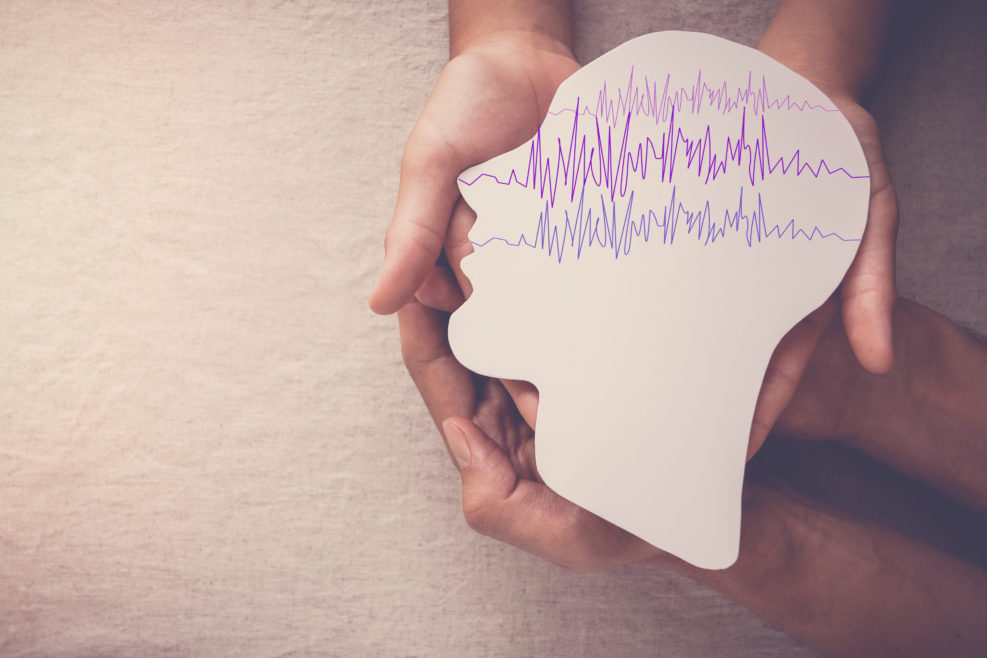
brain waves test
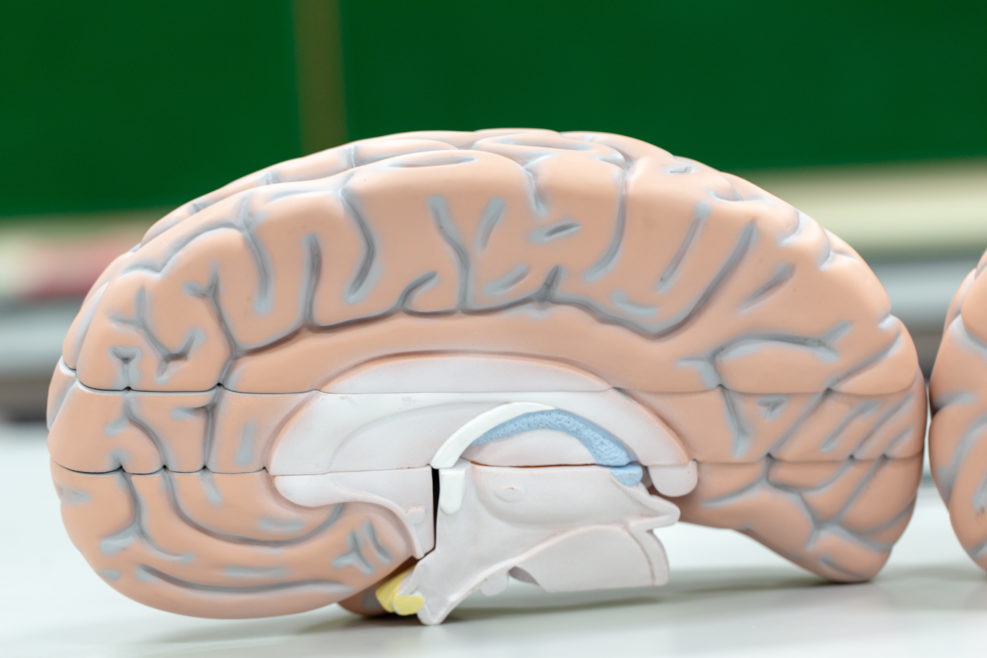
Brain model on human brain wave background

People With Half Their Brains Removed Do Well on Psych Tests

In a recent study, adults who had had hemispherectomies as children — to combat severe epilepsy — performed within 10% of other study subjects on face and word recognition

At Carnegie Mellon University’s Department of Psychology and Neuroscience Institute, researchers recently found that people who had had half their brains removed as children (due to serious epilepsy) “scored surprisingly well on face and word recognition tests”: The researchers expected that those volunteers who had only their right hemisphere would do well at face recognition but not as well at word recognition, since the right hemisphere is generally used to process images while the left hemisphere processes words; they expected the opposite results for those who still had just their left hemisphere. Instead, the researchers found that both groups performed nearly equally well and both were on average 86% accurate on the tests compared to a control group consisting of Read More ›

old-human-skeleton-in-ancient-tomb-at-archaeological-excavation-stockpack-adobe-stock
Old human skeleton in ancient tomb at archaeological excavation

Human Brain Shape Hardly Changed in 160,000 Years

Faces changed, yes, and researchers think diet may have played a role

The changes in human heads over the past 160,000 years were not driven by a changing brain, researchers say. It was the human face that changed, according to a recent article at New Scientist: Comparing the braincases of early modern human children with adults for the first time allowed the researchers to isolate the brain’s role in the evolution of the skull. The team was surprised to find that while the size and proportions of the skulls of H. sapiens children from 160,000 years ago were largely comparable to children today, the adults looked remarkably different to those of modern adults, with much longer faces and more pronounced features. Human faces continue to grow until the age of around 20, Read More ›

3d-illustration-embossed-mesh-representing-internet-connections-cloud-computing-and-neural-network-stockpack-adobe-stock
3D illustration, embossed mesh representing internet connections, cloud computing and neural network.

Can Computer Neural Networks Learn Better Than Human Neurons?

They can and do; when artificial intelligence programmers stopped trying to copy the human neuron, they made much better progress

Neural networks are all the rage in computing these days. Many engineers think that, with enough computer power and fancy tweaks, they will become as smart as people. Recent successes playing games and predicting protein folds pour gasoline on the AI fire. We could be on the edge of the mystical Singularity, when humans and computers will merge and we become immortal gods. Or not. Let’s wind the clock back to the beginning of neural networks. In computer science terms, they are actually a very old technology. The earliest version, called a perceptron, (a single-layer neural network) was invented in the 1960s, inspired by McCulloch and Pitt’s early model of brain neurons. But, the perceptron was ignored for decades because Read More ›

foreign-languages-translation-or-learning-languages-online-mobile-phone-or-smartphone-with-dictionary-app-on-the-screen-stockpack-adobe-stock
Foreign languages translation or learning languages online. Mobile phone or smartphone with dictionary app on the screen.

Six Brain Regions Control Language — But We’re Not Sure How

We’re learning more about human language but it remains, in its way, mysterious

Neuroscientist Saima Malik-Moraleda told The Scientist, recently that six main regions of the brain respond to language tasks but not to, say, math tasks. Using fMRI data, a recent comprehensive survey — of which she is a co-author — examined two native speakers of each of 45 languages while the speaker was performing either a linguistic or non-linguistic specific task. From the interview, SM-M: But the variability that we saw across languages was lower than the variability that we see across participants, meaning that the language network seems to be incredibly stable and similar across languages. One of the questions that cognitive neuroscientists who particularly study language wonder is: “Why do we have six areas? What does each area do?” Read More ›

pileated-woodpecker-nest-in-florida-stockpack-adobe-stock
Pileated woodpecker nest in Florida

Woodpeckers: There Are Advantages to Having a Small Brain

Woodpeckers absorb 1200 to 1400 g shock driving their beaks into wood — but a shock absorbing skull doesn’t explain the absence of damage

How do woodpeckers absorb a remarkable amount of shock to the head — 1200 to 1400 g — for each hit on a tree? A football player might absorb 120 g — without damaging their brains? The answers could help minimize brain damage in humans and suggested explanations include a surplus of tau proteins (2017), an unusual bone in the tongue, and head movements that minimize brain damage. A new research team challenges such explanations saying that their data show that woodpecker heads” act more like stiff hammers” and that “any shock absorbance would hinder the woodpeckers’ pecking abilities.” But then what about the bird’s brain? While the deceleration shock with each peck exceeds the known threshold for a concussion Read More ›

Machine learning , artificial intelligence , ai, deep learning blockchain neural network concept. Brain made with shining wireframe above multiple blockchain cpu on circuit board 3d render.

Artificial neural networks can show that the mind isn’t the brain

Because artificial neural networks are a better version of the brain, whatever neural networks cannot do, the brain cannot do.

What is the human mind? AI pioneer Marvin Minsky (1927–2016) said in 1987 that essentially “Minds are what brains do.” That is, the mind is the result of electrical waves cycling through the brain, as neurons spike and synapses transmit signals. But is that true? Can we test this idea? We can indeed, using artificial neural networks. One of the most popular approaches to artificial intelligence is artificial neural networks. These networks, inspired by an early model of how neurons fire (the McCulloch–Pitts model), consist of nodes, where each node is similar to a neuron. A node receives signals and then sends them to its linked nodes based on an activation function. There are, of course, differences between neural networks Read More ›

organoids-in-petri-dish-few-distributed-on-growing-medium-3d-illustration-rendering-stockpack-adobe-stock
Organoids in petri dish .  Few distributed on growing medium. 3d illustration rendering

Lab-Grown Brains Are Closer Now. Should They Have Rights?

A new neuroscience research area raises as much concern as excitement: growing mini “human brains” in a lab. The excitement is the prospect of better understanding and treatment of dementia, autism, and motor neuron disease (ALS). The concern is that they will become sentient, capable of feeling. Then what? Starting in 2008, researchers learned that they could coax human stem cells to self-organize into “brainlike structures with electrically active neurons.” Although the cell clusters behave, to some extent, like human embryos, they are not human embryos but skin cells from an adult. That limits the ethical conflict in that the research does not depend on the abortion industry. But ethical issues crop up anyway as groups of cells become more Read More ›

-stockpack-unsplash

Neuroscientists: We hear when we are asleep — but we don’t listen

The new finding may help determine whether an apparently unconscious or demented person can actually understand what is said to him

Earlier this week, we talked about the fact that the human nose is much more sensitive than we sometimes think. Our sense of smell gets ignored in favor of visual, auditory, or symbolic information — but it’s still there. The same goes with our hearing when we are asleep, researchers say: The researchers were surprised to discover that the brain’s response to sound remains powerful during sleep in all parameters but one: the level of alpha-beta waves associated with attention to the auditory input and related expectations. This means that during sleep, the brain analyzes the auditory input but is unable to focus on the sound or identify it, and therefore no conscious awareness ensues. Tel-Aviv University, “During sleep the Read More ›

brain-stroke-concept-migraine-and-headache-conceptual-image-3d-illustration-stockpack-adobe-stock
Brain stroke concept. Migraine and headache conceptual image, 3D illustration

Thrones Star Can Speak While Lacking “Quite a Bit” of Brain. How?

Yes, Emilia Clarke is lucky her aneurysms weren’t worse but, given our brains’ complexity, how do our mental abilities survive?

Game of Thrones (2011–2019) star Emilia Clarke, who suffered two aneurysms in her twenties, told BBC News that “‘quite a bit’ of her brain no longer functions” after the extensive bleeding and surgeries: “There’s quite a bit missing, which always makes me laugh,” Clarke said, speaking about her brain. “Strokes, basically, as soon as any part of your brain doesn’t get blood for a second, it’s gone. So, the blood finds a different route to get around, but then whatever bit is missing is therefore gone.” … Clarke said at the time that the surgery left her with “a deep paranoia” over whether it would prevent her from continuing a career as an actor. But she went on to star Read More ›

coconut-octopus-underwater-macro-portrait-on-sand-stockpack-adobe-stock
coconut octopus underwater macro portrait on sand

Jumping Genes … A New Clue to Octopus Intelligence?

Despite being very different, the human brain and the octopus brain share the same sort of jumping genes

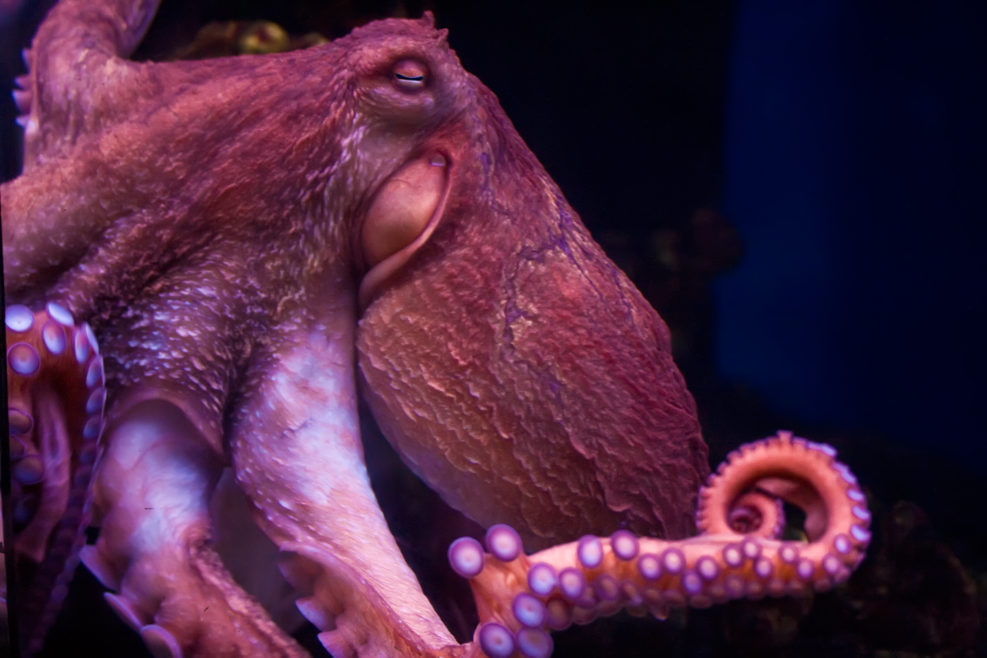
The fact that octopuses are unusually intelligent (like mammals) — even though they are solitary invertebrates — means that they now receive some protection against cruelty. Protection that no one bothers about for, say, clams and oysters. But the science puzzle remains. How did octopuses and some of their close kin among the cephalopods get so smart? Theories about how mammals and birds got to be smart may not work here. A recent paper adds a little more information to the controversy. Studying the common octopus and the California octopus, researchers found that the same “jumping genes” are active in the octopus brain as in the human one — even though the two types of brain are very different. Jumping Read More ›

group-of-cute-smart-dolphins-in-the-ocean-stockpack-adobe-stock
Group of cute smart dolphins in the ocean

Why Some Life Forms Are Smarter Than Others Is Still a Mystery

Brains are not simple so many “just common sense” theories have fallen by the wayside

As biologist John Timmer notes at Ars Technica, some life forms appear much more intelligent than others despite having brains of roughly the same size: Animals with very different brains from ours—a species of octopus and various birds—engage with tools, to give just one example. It seems intuitive that a brain needs a certain level of size and sophistication to enable intelligence. But figuring out why some species seem to have intelligence while closely related ones don’t has proven difficult—so difficult that we don’t really understand it. John Timmer, “Brain size vs. body size and the roots of intelligence” at Ars Technica (July 12, 2022) As he points out, some things we might expect to be true — puzzlingly — Read More ›

a-classy-and-gorgeous-mestiza-woman-in-a-student-uniform-with-bow-tie-serious-pensive-look-in-her-eyes-outdoor-scene-stockpack-adobe-stock
A classy and gorgeous mestiza woman in a student uniform with bow tie. Serious pensive look in her eyes. Outdoor scene.

Neuroscientists: Our Brains May Detect Deepfakes When Minds Don’t

Using electroencephalography, researchers found that brains may be spotting something that minds miss

In an interesting series of experiments using electroencephalography (EEG), University of Sydney neuroscientists found that our brains are sometimes alerted to computer-generated fakes when our minds really don’t know: When looking at participants’ brain activity, the University of Sydney researchers found deepfakes could be identified 54 percent of the time. However, when participants were asked to verbally identify the deepfakes, they could only do this 37 percent of the time. “Although the brain accuracy rate in this study is low – 54 percent – it is statistically reliable,” said senior researcher Associate Professor Thomas Carlson, from the University of Sydney’s School of Psychology. “That tells us the brain can spot the difference between deepfakes and authentic images.” University of Sydney, Read More ›

young-woman-having-knee-pain-stockpack-adobe-stock
Young woman having knee pain

Study: Brain Scans Show That Mindfulness Reduces Acute Pain

The volunteers who meditated during a controlled pain experiment reported a 32% reduction in severity

Recently, neuroscientists at the University of California – San Diego studied whether mindfulness meditation can reduce the perception of pain. That, of course, meant actually causing the volunteers to experience pain. What’s at stake is a central claim of mindfulness meditation: “One of the central tenets of mindfulness is the principle that you are not your experiences,” said senior author Fadel Zeidan, PhD, associate professor of anesthesiology at UC San Diego School of Medicine. “You train yourself to experience thoughts and sensations without attaching your ego or sense of self to them, and we’re now finally seeing how this plays out in the brain during the experience of acute pain.” University of California – San Diego, “Mindfulness meditation reduces pain Read More ›

baby-chimpanzee-ape-at-the-zoo-stockpack-adobe-stock.jpg
baby chimpanzee ape at the zoo.

Human Brain Has Many More Language Connections Than Chimp Brain

That finding isn’t surprising in principle but the researchers pinned down specific areas of greater connectivity

In a study of brain scans from 50 humans and 29 chimpanzees, researchers discovered an interesting difference: The connections between language areas in the human brain are much larger than previously thought and quite different from those of the chimpanzee brain. That’s, of course, consistent with the relative complexity of human thought and language but the question had not really been examined before with a focus on one specific area. The researchers were interested in a nerve tract that connects the frontal and temporal lobes of the brain, the arcuate fasciculus. Chimpanzee brain connectivity seems to involve mainly the temporal lobe but in humans there is a connection towards the frontal and parietal lobes via the arcuate fasciculus. “Our findings Read More ›

nerve-cell-3d-neurons-stockpack-adobe-stock
Nerve Cell. 3D. Neurons

The Human Brain Has Neural Networks Not Found in Lab Mice

They are complex special networks whose purpose is silencing other neurons

Assuming that human brains and lab mouse brains work roughly the same is fine for many purposes. Even though the human brain has a thousand times more neurons, it must does many of the same basic things for the body as a mouse brain. But studying mouse brains won’t tell us what human brains do besides that. Moritz Helmstaedter of the Max Planck Institute for Brain Research in Frankfurt, asks a telling question: “So, is it primarily the fact that our brains are 1,000-fold larger, house 1000-fold more nerve cells that allows us to play chess and write children’s books, which mice arguably cannot do?” In a just-published study that he led, the researchers examined human tissue removed by neurosurgeons Read More ›

two heads different directions
Bipolar disorder mind mental concept. Change of mood. Emotions. Split personality. Dual personality. Head silhouette of man

The Battle Over the Human Mind Split Two Great Thinkers

Charles Darwin opted for a materialist model; his co-theorist Alfred Russel Wallace insisted that the mind was not just the brain

Charles Darwin (1809–1882) and Alfred Russel Wallace (1823–2013) share the credit, technically, for the theory of evolution by natural selection but Darwin became the icon. One reason they parted ways was that Wallace did not agree with Darwin that the human mind was simply an organ that evolved naturally, like any other. There had to be something more to it. Philosopher Neil Thomas explains: In his older years Wallace came to reject natural selection as an explanation for the unfurling of all human and even animal life. By then he had transitioned towards the espousal of a form of natural theology; but his initial and gravest misgiving in the 1860s was focused four-square on the mystery of how the human Read More ›

social-media-concept-stockpack-adobe-stock
Social media concept.

Should Kids Under 16 Be Banned From Social Media?

An internal study by Instagram found that using the platform made fully one-third of teenage girls feel worse — but they couldn’t stop

(This article by Texas State University engineering prof Karl D. Stephan originally appeared at Engineering Ethics Blog (June 20, 2022) under the title “Social Media: For adults only?” and is reprinted with permission.) Writing in National Review, cultural critic Christine Rosen recently proposed a total ban on social media for everyone under the age of 16.  One can imagine all sorts of problems with this idea, ranging from enforcement issues to what it would be like living in a country where nearly all the teenagers start screaming at the same time.  But let’s step back from the immediate issues and effects, and ask what the ethics of such a ban would be.  Rosen cites a number of other things that we don’t let Read More ›

a-german-train-passes-a-train-station-stockpack-adobe-stock
a german train passes a train station

The “My Train Is Moving Too!” Illusion

Special neurons help us study the motion of others when we are moving too — but they can sometimes be fooled

Do you recall that odd feeling when — sitting on a train that you know is standing still — you suddenly feel that it is moving (!)? It happens when you are watching a moving train right beside you and there is no other reference point. There’s a name for that: vection, “the sensation of movement of the body in space produced purely by visual stimulation.” It is a staple, of course, of IMAX films and virtual reality displays. And it’s a fairly easy illusion to produce: It turns out that vection can be induced with any sufficiently decent screen and some scenery. Experimenters can put make people believe they’re spinning in a circle, zipping back and forth, and even Read More ›

healthy-lifestyle-choice-fresh-vegetables-and-fruit-shaped-as-human-head-stockpack-adobe-stock
Healthy lifestyle choice. Fresh vegetables and fruit shaped as human head

Yes, Our Brains — Like Computers — Have a Low-Power Mode

Sure they do. It makes a lot of sense to conserve power when food supplies are low

Neuroscientists have often wondered if the high-metabolism human brain had a power conservation mode and a recent open-access paper in Neuron finds that brains use an energy-saving strategy to cope with shortages. Cognitive neuroscientist Allison Whitten explains: Now, in a paper published in Neuron in January, neuroscientists in Nathalie Rochefort’s lab at the University of Edinburgh have revealed an energy-saving strategy in the visual systems of mice. They found that when mice were deprived of sufficient food for weeks at a time — long enough for them to lose 15%-20% of their typical healthy weight — neurons in the visual cortex reduced the amount of ATP used at their synapses by a sizable 29%. But the new mode of processing Read More ›