Mind Matters Natural and Artificial Intelligence News and Analysis

CategoryNeuroscience

left-and-right-human-brain-anatomy-illustration-3d-rendering-stockpack-adobe-stock
Left and Right Human Brain Anatomy Illustration. 3D rendering

Study: Loss of Half the Brain Doesn’t Mean No Word, Face Contact

Researchers astounded: Contrary to theory, in a recent study, the single remaining brain hemisphere supported both word and face reading functions

Some children have half of their brains removed (hemispherectomy) to control massive seizures that would otherwise destroy the child’s whole brain. Specialists were surprised that the children functioned fairly normally — certainly compared to what would have been expected. A recent study of post-hemispherectomy patients has provided dramatic evidence of rewiring: An unprecedented study of brain plasticity and visual perception found that people who, as children, had undergone surgery removing half of their brain correctly recognized differences between pairs of words or faces more than 80% of the time. Considering the volume of removed brain tissue, the surprising accuracy highlights the brain’s capacity — and its limitations — to rewire itself and adapt to dramatic surgery or traumatic injury. The Read More ›

types-of-coffee-placed-to-taste-or-smell-stockpack-adobe-stock
types of coffee placed to taste or smell

Designed to Dine, Part 2: How, Exactly, We Compute Flavor

Once a universally enjoyed but scientifically ignored phenomenon, flavor bursts out as an extraordinary event of a biological computer

Since Part 1 of this article was served up, have you experienced food and drink with greater awareness of flavor? Part 1 laid out the elements of flavor, including the smell, taste, texture, and mouth feel of foods and drinks. Smell delivers 80% of what we experience as flavor, coming from the thousands of sensory nerves in our noses detecting individual molecules. From the tongue comes taste sensations of sweet, salty, sour, bitter, and umami (savory). Flavor is like a dynamic 3-D hologram, a multi-dimensional composition of sensory inputs fluctuating in real-time, all delivered as data to the brain for final processing. Flavor makes eating fun! The Computation of Yummy The complicated and integrated systems of smell, taste, and other Read More ›

table-filled-with-snacks-and-traditional-eastern-european-lithuanian-food-for-a-feast-celebration-stockpack-adobe-stock
Table filled with snacks and traditional eastern European (Lithuanian) food for a feast celebration.

Designed to Dine: Humans are Computers of Flavor

Food itself has no flavor at all. Flavor is in the sensations — really the brain — of the beholder (and taster)

Whether you’re a professional gourmet, a self-styled “foodie,” or an everyday North American who likes to eat, you probably look forward to celebration dinners. At any feast on Thanksgiving, Christmas, Easter, or the Passover Seder, the focal feature is the food. It doesn’t occur to us to ask: How do we sense the flavors of the food? After all, the food itself has no flavor at all. Flavor is in the mouth — and the nose, tongue, eyes, inner ears, and really the brain — of the beholder. Venture to learn how human beings enjoy food, and you’ll discover exquisite evidence of intelligent design. Like so many biological systems, detecting flavor involves specialized hardware components and the corresponding software to Read More ›

neural-networks-of-the-human-brain-3d-illustration-of-abstract-nerve-centers-electrical-impulses-in-brain-bright-full-color-stockpack-adobe-stock
Neural networks of the human brain. 3d illustration of abstract nerve centers. Electrical impulses in brain. Bright full color

Rats with Human Brains? The Real Story About Brain Organoids

Human brain organoids use adult stem cells from volunteer donors; they bypass the use of fetal tissue from abortions

In Margaret Atwood’s MaddAddam Trilogy (2013) , the characters in the first book navigate a dystopian near-future with few ethical boundaries. Chicken has been genetically modified to be nothing more than meat and a mouth. For entertainment, they watch either pornography or televised executions. One of the central characters, the scientist who made the genetically engineered humans, ends up unleashing a synthetic pathogen intended to rid the world of evil. The excesses are reminiscent of Earth as described in the Flood narrative in the Bible (“Now the earth was corrupt in God’s sight and was full of violence.” Genesis 6:11). As in the Biblical account, a “flood” occurs when the synthetic pathogen ends up killing most of humanity. The remaining Read More ›

depressed-woman-sitting-on-bed-and-holding-head-in-hands-through-window-with-raindrops-stockpack-adobe-stock
depressed woman sitting on bed and holding head in hands through window with raindrops

Study: Depressed Patients’ Brains Can Rewire, Lifting the Gloom

The paper will be presented at as conference of the European College of Neuropsychopharmacology

We are always learning new, mostly hopeful, things about the human brain. This one may help medics treat depression: Scientists believe that the structure of the adult brain is generally rigid and incapable of rapid changes; now new work has shown that this is not true. German researchers have shown that in-patient treatment for depression can lead to an increase in brain connectivity, and those patients who respond well to this treatment show a greater increase in connectivity than those who don’t. European College of Neuropsychopharmacology, “Scientists discover structure of adult brain — previously thought to be fixed — is changed by treatment” at Eurekalert (October 17, 2022) The paper will be presented at the 35th European College of Neuropsychopharmacology Read More ›

senior in coma.jpg
side view of senior man in coma on bed in hospital

Researchers: Comatose People Can Have “Covert Consciousness”

Claassen and Edlow found that the brain patterns of a woman who could not respond physically to commands showed that she recognized them

Columbia University neurologist Jan Claassen and Harvard medical school neurologist Brian L. Edlow introduce us to a vital new concept in consciousness: “covert consciousness,” which is experienced by 15–20% of people who are in a coma: Thirty-year-old New York City resident Maria Murkevich, for example, suffered a ruptured blood vessel in her brain and was comatose. Conventional tests (wiggle your toes, etc.) produced no response but her loved ones still believed she was “in there.”: They were right. But it took a high-tech method to demonstrate that: The medical team gave her an EEG — placing sensors on her head to monitor her brain’s electrical activity — while they asked her to “keep opening and closing your right hand.” Then Read More ›

colorful-abstract-iridescent-space-art-swirl-background-stockpack-adobe-stock
colorful abstract iridescent space art swirl background

Is Consciousness a “Controlled Brain Hallucination”? No.

Anil Seth explains away consciousness away using fashionable terms like that. As a pediatric neurosurgeon, I know from clinical experience that he is wrong

Philosopher David Chalmers famously divided the problem of understanding how consciousness is related to the brain by distinguishing between the easy and hard problems of consciousness. The easy problem of consciousness is typically faced by working neuroscientists — i.e., what parts of the brain are metabolically active when we’re awake? What kinds of neurons are involved in memory? These problems are “easy” only in the sense that they are tractable. The neuroscience necessary to answer them is challenging but, with enough skill and perseverance, it can be done. The hard problem of consciousness is another matter entirely. It is this: How can first-person subjective experience arise from brain matter? How do we get an ‘I’ from an ‘it’? Compared with Read More ›

glowing-lightbulb-with-virtual-brain-and-orange-light-creative-new-business-idea-concept-stockpack-adobe-stock
Glowing lightbulb with virtual brain and orange light . Creative new business idea concept.

How Can We Tell a Genius From a Really Smart Person?

Members of Mensa, a club for people with high IQ, think that the difference is exceptional creativity

A few years ago, Claire Cameron, Nautilus’s Social Media & News Editor asked five present or former members of Mensa, an international high-IQ society, founded in 1946. To qualify as members, they had to score above the 98th percentile on an IQ test or another standardized one. Her conversation with Richard Hunter, a retired finance director at a drinks distributor; journalist Jack Williams; Bikram Rana, a director at a business consulting firm; LaRae Bakerink, a business consultant; and clinical hypnotist John Sheehan brings into sharp relief the difference between high intelligence and genius — a fact that the high-IQ scorers were happy to admit. Some snippets from the conversation (participants are identified by their initials): RH: You can have a Read More ›

funny-boy-and-his-dog-looking-at-piles-of-coins-stockpack-adobe-stock
Funny boy and his dog looking at piles of coins

Researchers Are Zeroing In on Animal Number Sense

We’re beginning to find out more about how animals that don’t really “think” much can keep track of numbers, when needed

University College cognitive psychology prof Brian Butterworth, author of Can fish count? (Basic Books, 2022), talks about animal number sense in a recent article in Psyche: He offers many examples of animals counting single digit numbers but then helpfully addresses the question of how they do it. We are talking here about a variety of very different types of neurological equipment — insects vs. amphibians, for example. Neuroscientists are beginning to pinpoint specific brain functions associated with counting for specific tasks: Female túngara frogs benefit by mating with the male that can produce six croaks in one breath, over the male that can manage only five, because this is an indicator of respiratory fitness. Naturally, the male will try to Read More ›

senior-depressed-african-american-man-looking-at-photo-frame-stockpack-adobe-stock
senior, depressed african american man looking at photo frame

New Function for Our Brains’ Cerebellum: Emotional Memory

Memory is all immaterial information. But very different types of information. Researchers found that the cerebellum handles a lot of emotional memory

We use the same word “memory” to mean very different types of things. There’s the new phone number, in which we have no emotional investment. Then there’s the smell of cinnamon buns from a long-ago home-town bakery, which is a non-shareable emotional investment. And again, there’s a colleague’s advice about addressing a difficult client’s needs… that’s a mixture of a number of different types of memory, in getting the right approach down pat. All memory is immaterial information, of very different types. And a team of researchers finds that our brains’ cerebellum handles a lot of emotional memory: The cerebellum is known primarily for regulation of movement. Researchers at the University of Basel have now discovered that the cerebellum also Read More ›

galapagos-giant-tortoise-head-shot-smiling-walking-slowly-on-galapagos-islands-animals-nature-and-wildlife-close-up-of-tortoise-in-the-highlands-of-galapagos-ecuador-south-america-stockpack-adobe-stock
Galapagos Giant Tortoise head shot smiling walking slowly on Galapagos Islands. Animals, nature and wildlife close up of tortoise in the highlands of Galapagos, Ecuador, South America.

How Can the Two-Headed Tortoise Have Different Personalities?

Many would be surprised to learn that either head had any personality, and yet…

Recently, a “two-headed” tortoise at the Geneva Museum of Natural History reached the remarkable age of 25, thanks to constant care by his handlers: Janus also has two hearts, two pairs of lungs, and two distinct personalities. Sometimes the heads wish to go in different directions. “The right head is more curious, more awake, it has a much stronger personality,” Angelica Bourgoin, who leads the turtle’s care team, said. “The left head is more passive and loves to eat.” News, “Two-headed tortoise Janus celebrates 25th birthday” at DW (September 3, 2022) So how could the tortoise heads have two different “personalities?” Janus — despite the single name given — seems to be a set of conjoined tortoise twins. (Here’s a Read More ›

two-hands-holding-a-paper-with-human-head-and-a-puzzle-piece-finding-a-cure-to-heal-the-disease-mental-health-concept-memory-loss-and-dementia-disease-alzheimers-losing-brain-and-memory-function-stockpack-adobe-stock
Two hands holding a paper with human head and a puzzle piece. Finding a cure to heal the disease. Mental health concept, memory loss and dementia disease. Alzheimer's losing brain and memory function.

The Human Brain Rewires Itself in Middle Age

After we hit forty, our brains integrate more and compartmentalize less

It seems designed to get the best of human longevity: In a systematic review recently published in the journal Psychophysiology, researchers from Monash University in Australia swept through the scientific literature, seeking to summarize how the connectivity of the human brain changes over our lifetimes. The gathered evidence suggests that in the fifth decade of life (that is, after a person turns 40), the brain starts to undergo a radical “rewiring” that results in diverse networks becoming more integrated and connected over the ensuing decades, with accompanying effects on cognition. Ross Pomeroy, “The brain undergoes a great “rewiring” after age 40” at Big Think (September 24, 2022) According to the researchers, when we are young, our brains are modular, suited Read More ›

young-attractive-handicapped-beauty-blogger-is-filming-video-with-smartphone-at-home-stockpack-adobe-stock
Young attractive handicapped beauty blogger is filming video with smartphone at home.

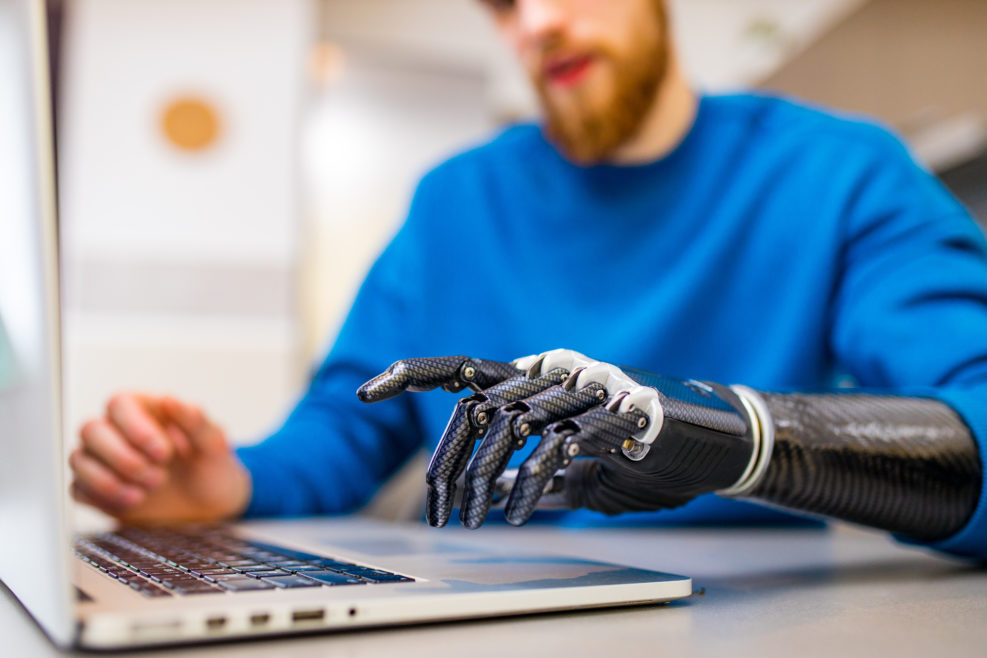
Reality Check: Can Bionic Hands Really Compete With Nature?

A geographer born without a left forearm offers an honest assessment of the “bionic hand” arms race

The author of a recent article in IEEE Spectrum was born without a left forearm so she can talk about the tech reality of prostheses from the front lines: Today, the people who design prostheses tend to be well-intentioned engineers rather than amputees themselves. The fleshy stumps of the world act as repositories for these designers’ dreams of a high-tech, superhuman future. I know this because throughout my life I have been fitted with some of the most cutting-edge prosthetic devices on the market. After being born missing my left forearm, I was one of the first cohorts of infants in the United States to be fitted with a myoelectric prosthetic hand, an electronic device controlled by the wearer’s muscles Read More ›

split self glasses
Multiple personality disorder concept

Another Philosopher Argues That the Unified Self Is an Illusion

At Closer to Truth, Lawrence Kuhn interviews Julian Baggini, who claims, in terms reminiscent of Thomas Metzinger, that a unified self is an illusion

University of Kent philosopher Julian Baggini, author of The Great Guide: What David Hume can teach us about being human and living well (2021), was interviewed recently by Robert Lawrence Kuhn at Closer to Truth (September 1, 2022). In the interview, Dr. Baggini asserted that, while consciousness is not an illusion, a unified self that persists through time is: Here is a partial transcript, interspersed with questions that arise from the discussion: Robert Lawrence Kuhn: Julian, my own internal feeling of awareness my consciousness seems like the most obvious fundamental thing in the world. You tell me it’s an illusion Why? Julian Baggini: (0:11) To be honest, consciousness isn’t an illusion. I mean clearly there’s awareness of the world. I Read More ›

ultrasound-examination-of-the-head-examination-of-a-month-old-baby-stockpack-adobe-stock
Ultrasound examination of the head. Examination of a month old baby

Woman Missing Her Brain’s Language Lobe Pens New York Times Piece

Helen Santoro’s parents were told she would “never speak and would need to be institutionalized.” She became a science writer instead

Children who suffer perinatal strokes may be left with large holes or lesions where brain regions should be. Many are severely disabled. But some are not disabled at all. One woman, Helen Santoro, was so little affected by the lack of a left temporal lobe that she got dropped from a research study of the aftermath. Now a science writer, she published an article last week in the New York Times about her efforts to understand and unravel the mystery. Perinatal stroke is often discovered, as in her case, when the newborn child has trouble with breathing or sucking reflexes. A brain scan showed “a huge hole’ where her left temporal lobe should have been, just above the ear. Because Read More ›

close-up-flying-small-lesser-horseshoe-bat-rhinolophus-hipposideros-hunting-night-moths-insect-pest-catching-in-darkness-via-ultrasound-echolocation-dark-background-detail-wildlife-animal-portrait-stockpack-adobe-stock
Close up flying small lesser horseshoe bat (Rhinolophus hipposideros) hunting night moths insect pest catching in darkness via ultrasound echolocation. Dark background detail wildlife animal portrait.

There Really Is a “Batman” and He Isn’t in the Comics

Daniel Kish lost both eyes to cancer as a baby. With nothing to lose, he discovered human echolocation

Perhaps one should not really say that Daniel Kish “discovered” human echolocation. Yet, having no other options as a blind infant cancer survivor, he discovered early on — and began to publicize — a sense that few sighted persons would even think of: He calls his method FlashSonar or SonarVision. He elaborated for the BBC: Do people need to be blind to do it? Not necessarily: In 2021, a small study led by researchers at Durham University showed that blind and sighted people alike could learn to effectively use flash sonar in just 10 weeks, amounting to something like 40 to 60 hours of total training. By the end of it, some of them were even better at specific tests Read More ›

the-little-chimpanzee-monkey-put-his-human-friends-hand-on-his-head-hugged-him-made-a-grimace-sits-in-a-green-stroller-wearing-blue-shorts-walk-down-the-street-in-the-background-palms-stockpack-adobe-stock
The little chimpanzee monkey put his human friend's hand on his head, hugged him. made a grimace. Sits in a green stroller, wearing blue shorts. Walk down the street. in the background palms,

Researchers Find More Ways That Human and Ape Brains Differ

Underlying the significant differences in brain — to say nothing of the vast difference in mind — is a genetic mystery…

Yale University researchers have identified more specific ways the human brain differs from the brains of all other primates. Using “hundreds of thousands of cells collected from the dlPFC of adult humans, chimpanzees, macaque, and marmoset monkeys,” they found After grouping cells with similar expression profiles they revealed 109 shared primate cell types but also five that were not common to all species. These included a type of microglia, or brain-specific immune cell, that was present only in humans and a second type shared by only humans and chimpanzees. The human-specific microglia type exists throughout development and adulthood, the researchers found, suggesting the cells play a role in maintenance of the brain upkeep rather than combatting disease… An analysis of Read More ›

a-brazilian-wandering-spider-phoneutria-sp-waits-in-ambush-on-a-leaf-at-night-in-costa-rica-stockpack-adobe-stock
A brazilian wandering spider (Phoneutria sp.) waits in ambush on a leaf at night in Costa Rica.

Can Life Forms Like Spiders, That Lack a Neocortex, Really Dream?

Paleontologist Günter Bechly argues that it’s highly unlikely. Michael Egnor sides with Aristotle; they dream about what they can perceive

Recently, paleontologist Günter Bechly took issue with neurosurgeon Michael Egnor on the question of whether spiders dream. Egnor was willing to accept the possibility, noting that spiders can dream only about things they can think about: “If spiders and bacteria dream, they dream of flies or chemical gradients, but not of philosophy.” Bechly, on the other hand, thinks it’s a filament too far for the spider (never mind the bacteria) to dream at all: … I tend to concur with those neuroscientists who doubt any organisms possess phenomenal consciousness that lack a neocortex (found only in mammals) or a comparable structure (in birds and maybe cephalopods). Rapid eye movement may indicate neural activity, but the concept of dreaming for me Read More ›

brain anatomy
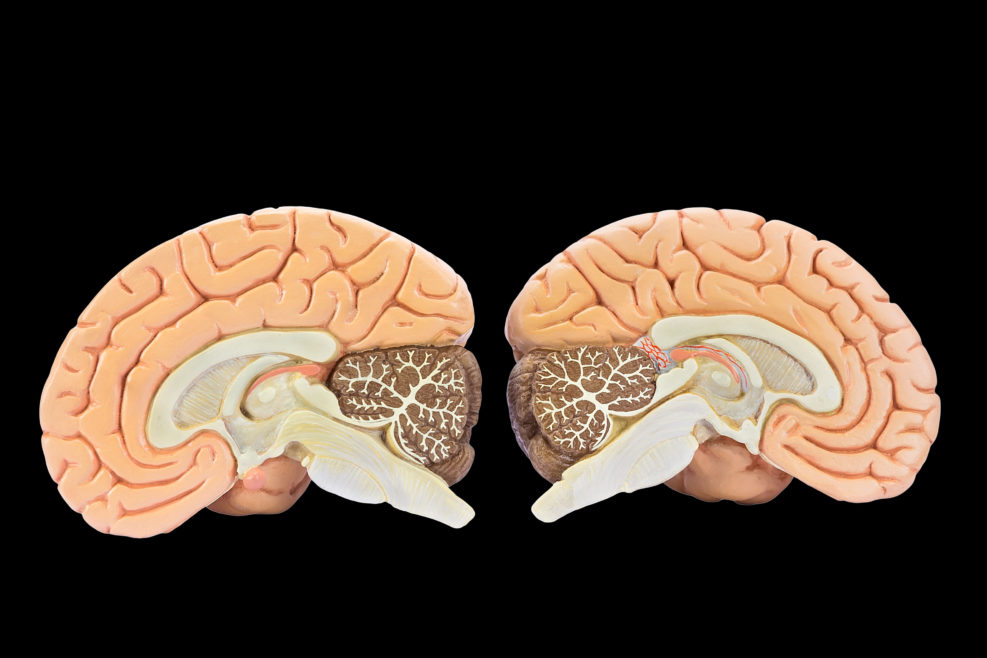
Real human half brain anatomy isolated on black background

A Neurosurgeon on Why Some People Function With Only Half a Brain

The study results are reassuring and they point to two larger truths

Yesterday, we ran a story about a recent study in which 40 people who had half of their brains removed (hemispherectomy) as children — due to intractable epilepsy — did unexpectedly well on psychological tests. Some say that it’s easy to explain because the brain has so many redundant elements. But is that all we need to know? We asked pediatric neurosurgeon Michael Egnor for some thoughts on that approach and he replied: The means by which people with major parts of their brains removed maintain function are not understood. It’s nonsense to say, as some do, that “The brain is massively parallel and recursive and functions under network rules and laws.” That’s typical neuroscience gibberish. The fact is that Read More ›

brain waves test
Brain model on human brain wave background

People With Half Their Brains Removed Do Well on Psych Tests

In a recent study, adults who had had hemispherectomies as children — to combat severe epilepsy — performed within 10% of other study subjects on face and word recognition

At Carnegie Mellon University’s Department of Psychology and Neuroscience Institute, researchers recently found that people who had had half their brains removed as children (due to serious epilepsy) “scored surprisingly well on face and word recognition tests”: The researchers expected that those volunteers who had only their right hemisphere would do well at face recognition but not as well at word recognition, since the right hemisphere is generally used to process images while the left hemisphere processes words; they expected the opposite results for those who still had just their left hemisphere. Instead, the researchers found that both groups performed nearly equally well and both were on average 86% accurate on the tests compared to a control group consisting of Read More ›