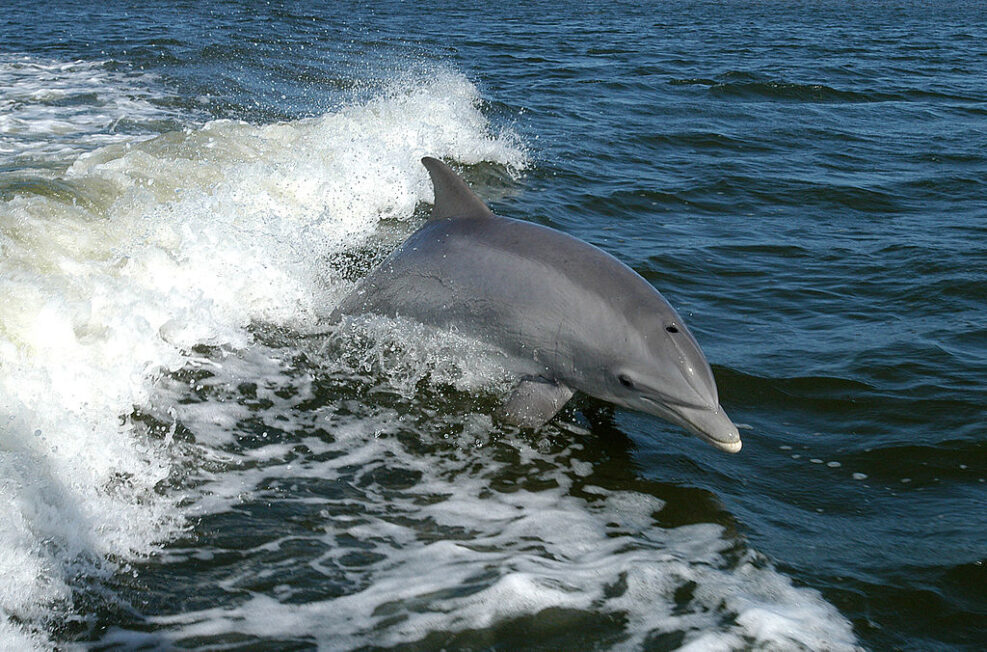
Dolphinese: The Idea That Animals Think As We Do Dies Hard
But first it can lead us down strange pathsDown one of them, some researchers met a dolphin. Unfortunately for the dolphin.
Read More ›Down one of them, some researchers met a dolphin. Unfortunately for the dolphin.
Read More ›
Philosopher Edward Feser notes that there is a kind of mismatch between concepts and ideas on the one hand, which are abstract and completely general, and on the other hand, physical symbols and other material representations, which are always concrete, specific, and individual.
Read More ›
If Sundar Pichai thinks that there is no bias in Google’s algorithms, he is arguing against the nature of writing algorithms itself—not a good position for a computer guy to be in.
Read More ›
Perhaps we cannot have a realistic discussion of the problems Google.gov creates unless we start with a willingness to pay for search engine services. That allows us to bargain as equals with respect to terms.
Read More ›
In the documents Vorhies unearthed, Google seemed to be “intending to scope the information landscape so that they could create their own version of what was objectively true.”
Read More ›
While we prepare a news story on Zach Vorhies’ revelations, it may be worth asking why one of the world’s largest companies has developed what appears to be the atmosphere of a political cult.
Read More ›
As Gioia says, jazz depends on the “personality of the individual musician.” And the blindspot of AI creativity is: There’s no one home.
Read More ›
His question, “How can Google use the rhetoric of ‘borderless’ benefits to justify working with the country whose ‘Great Firewall’ has imposed a border on the internet itself?”, is timely. China’s government uses high tech for, among other things, sophisticated racial profiling.
Read More ›
For decades, researchers were transfixed with the idea of humanizing great apes by raising them among humans and teaching them language. Emerging from the ruins and recriminations of the collapse, philosophy prof Don Ross has a new idea: Let’s start with elephants instead.
Read More ›
A reader, listening to his podcast with computer scientist Judea Pearl, asks how he can be so sure everything is determined by physical forces. How indeed?
Read More ›
In any competition including academic tests, athletic events, and company management where there is an element of luck that causes performances to be an imperfect measure of ability, there is an important difference between competitions among people with high ability and competitions among people of lesser ability.
Read More ›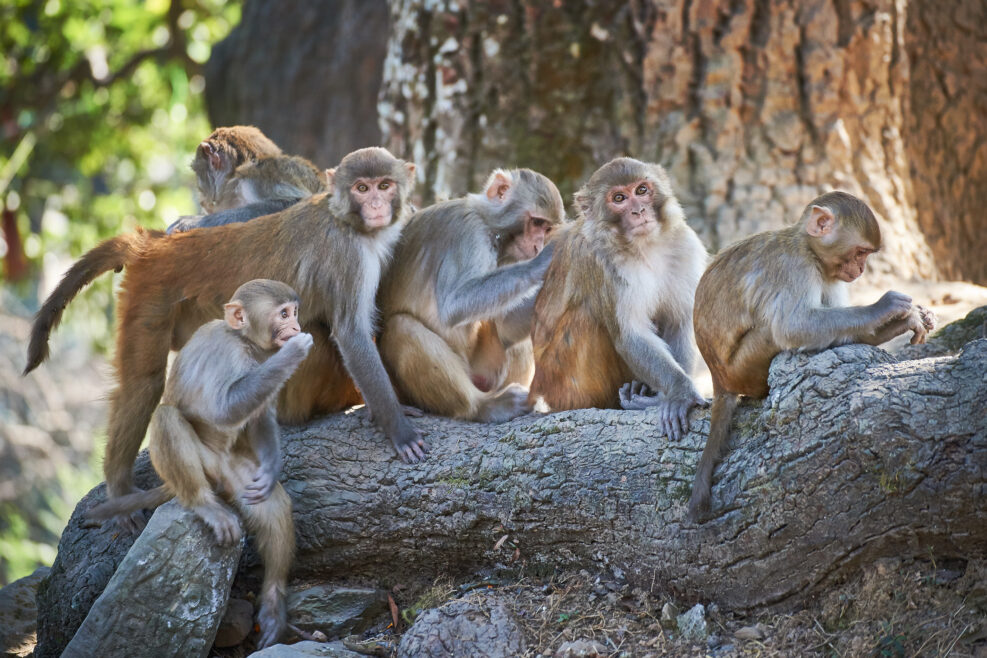
In my ongoing dialogue with Querius, I say no; a human is not reducible to a handful of genes.
Read More ›
Last year, the IBM Health Initiative laid off a number of people, seemingly due to market disillusionment with the product.
Read More ›
In an all-out botwar with the other tech Bigs, DeepMind could simply be paying top minds not to work for the competition while readying AI tools that pay better than winning at board games. Maybe.
Read More ›
This is hardly the time to encourage drivers to believe that someday soon, distraction will be okay. Distracted driving claims the lives of roughly nine people per day in the United States.
Read More ›
Will the predicted tsunami of fake news and advertising make much difference? Possibly, but in ways that might surprise you.
Read More ›
One way we can assess entrepreneurs’ claims (think Elon Musk) is to ask, what physical components does the product require and how is the market responding?
Read More ›
Unfortunately, patterns are not always a source of information. Often, they are a meaningless coincidence like the 7-11 babies this summer.
Read More ›
The great triumph of the theory of evolution was to show that humans are just animals in nature—clever, yes, but clever animals. Or so we are told. But wait!
Read More ›
The Chinese government seeks a database of everyone in the country, not only to track individuals but to determine the ethnicity of those who run up against the law.
Read More ›