Mind Matters Natural and Artificial Intelligence News and Analysis

TagConsciousness

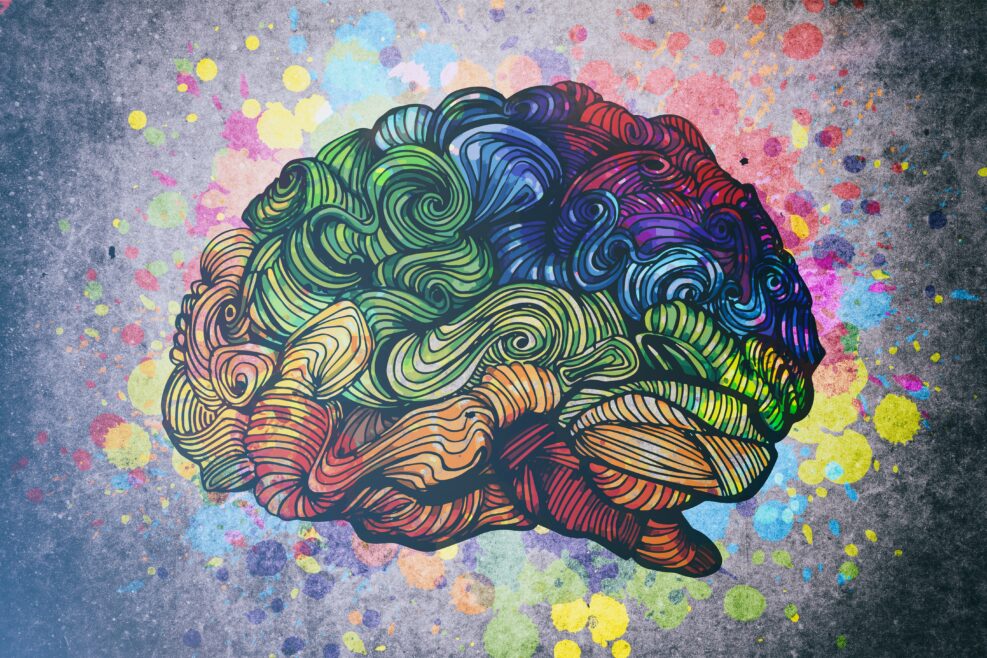
brain-doodle-illustration-with-textures-stockpack-adobe-stock.jpg
Brain doodle illustration with textures

Your Mind vs. Your Brain: Ten Things To Know

Although we are only beginning to understand the workings of the brain, it clearly isn't the same thing as the mind

Modern neuroscience research is both shedding light on the brain and revealing the depths of its mysterious relationship with our minds.

Read More ›
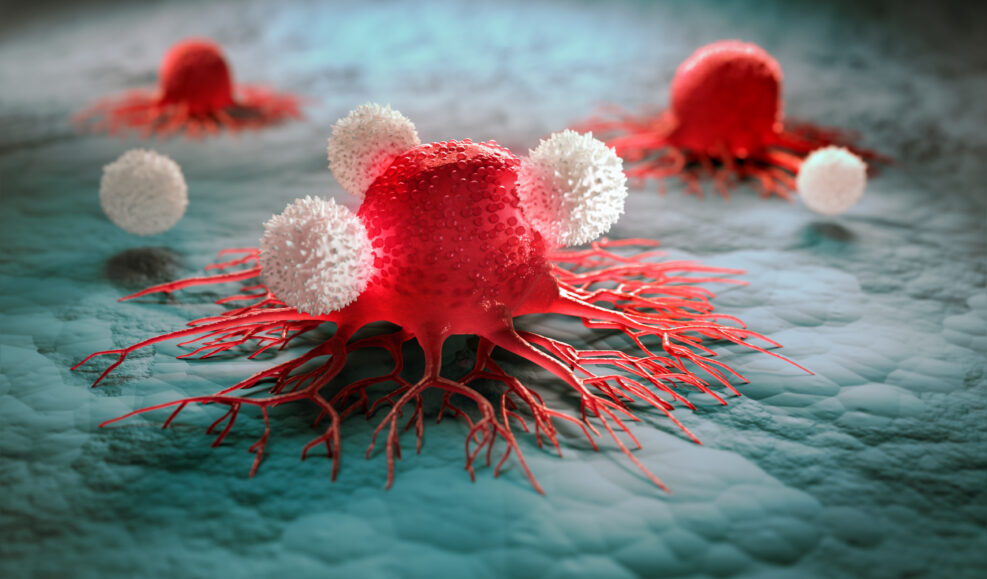
tumor-cell-under-attack-of-white-blood-cells-stockpack-adobe-stock.jpg
Tumor cell under attack of white blood cells

Why Do Many Scientists See Cells as Intelligent?

Bacteria appear to show intelligent behavior. But what about individual cells in our bodies?

Recently, we talked about the ways in which bacteria are intelligent. Researchers into antibiotic resistance must deal with the surprisingly complex ways bacteria “think” in order to counter them. For example, some bacteria may warn others while dying from antibiotics. But what about individual cells in our bodies? A skeptic might say that bacteria are, after all, individual entities like dogs or cats. There is evidence that individual life forms can show intelligence even with no brain. But dependent cells? Surprisingly, cells that are not independent at all but part of a body can also show something that looks like intelligence, as Michael Denton discusses in Miracle of the Cell (2020): No one who has observed a leucocyte (a white Read More ›

blurred-thinking-stockpack-unsplash.jpg
Blurred Thinking

How Can You Talk to Yourself?

If your mind is one, how can it talk to itself? What will artificial intelligence be like in the future. Dr. Geoffrey Simmons and Dr. Robert J. Marks discuss the mind, artificial intelligence, and Dr. Simmons’ book Are We Here to Re-Create Ourselves?: The Convergence of Designs. Show Notes Additional Resources

the-robot-writes-with-a-pen-and-looks-at-the-computer-monitor-artificial-intelligence-stockpack-adobe-stock.jpg
The robot writes with a pen and looks at the computer monitor. Artificial Intelligence

Bingecast: Selmer Bringsjord on the Lovelace Test

The Turing test, developed by Alan Turing in 1950, is a test of a machine’s ability to exhibit intelligent behaviour indistinguishable from a human. Many think that Turing’s proposal for intelligence, especially creativity, has been proven inadequate. Is the Lovelace test a better alternative? What are the capabilities and limitations of AI? Robert J. Marks and Dr. Selmer Bringsjord discuss Read More ›

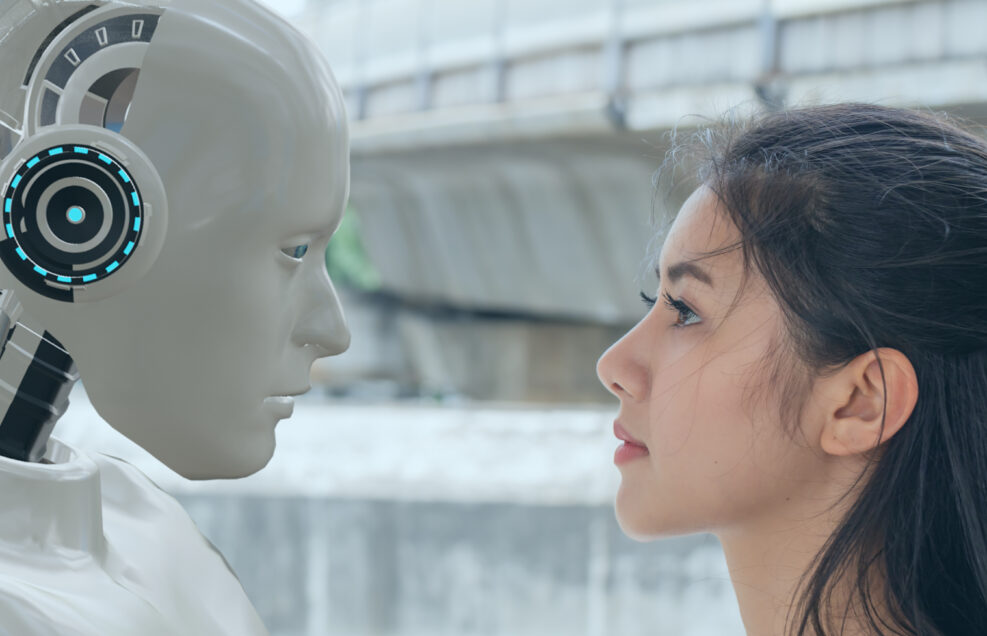
robot-make-a-relationships-with-human-it-use-for-match-and-make-satisfaction-for-love-buddy-by-pair-the-personality-data-with-algorithms-technology-combine-deep-machine-learning-digital-twin-stockpack-adobe-stock.jpg
robot make a relationships with human, it use for match and make satisfaction for love buddy by pair the personality data with algorithms technology combine deep, machine learning, digital twin

Are We Here to Re-Create Ourselves?

What are the capacities of human-like robots? Will they ever replace humans? Dr. Geoffrey Simmons and Dr. Robert J. Marks discuss artificial intelligence, outer space, consciousness, and Dr. Simmons’ book Are We Here to Re-Create Ourselves?: The Convergence of Designs. Show Notes Additional Resources

charting-consciousness-stockpack-adobe-stock.jpg
Charting Consciousness.

Michael Egnor: What Happens to Our Consciousness After We Die?

Computer programmer and philosopher Bernardo Kastrup provides a surprising answer

In this week’s podcast, “Can Computers Think?”, Michael Egnor continued his discussion with philosopher and computer programmer Bernardo Kastrup. As a scientist, Bernardo has worked for The European Organization for Nuclear Research and for Phillips Research Laboratories, and has authored many academic papers and books. This week, they look at a big question, “Will computers ever be conscious?”. But Egnor brought up an even bigger one: “What happens to our consciousness after we die?” As a scientist, Kastrup has worked for The European Organization for Nuclear Research and for Phillips Research Laboratories and has authored many academic papers and books. He is a leading advocate of cosmopsychism, the idea that intelligence did not randomly evolve somehow to help life forms Read More ›

3d-rendering-of-artificial-intelligence-hardware-concept-glowing-blue-brain-circuit-on-microchip-on-computer-motherboard-for-stock-trading-financial-management-or-technology-product-background-stockpack-adobe-stock.jpg
3D Rendering of artificial Intelligence hardware concept. Glowing blue brain circuit on microchip on computer motherboard. For stock trading, financial management, or technology product background

Can Computers Think?

Will computers ever be conscious? What happens to our consciousness after we die? Has science made philosophy irrelevant? Dr. Michael Egnor and Dr. Bernardo Kastrup discuss consciousness, artificial intelligence, and philosophy. Show Notes Additional Resources

line-design-composition-stockpack-adobe-stock.jpg
Line Design Composition

The Evolution (or Not) of Consciousness

Did consciousness evolve? How do materialists deal with the definition of consciousness? Dr. Michael Egnor and Dr. Bernardo Kastrup discuss consciousness, evolution, and intelligent design. Show Notes Additional Resources

glorious-sky-elements-of-this-image-furnished-by-nasa-stockpack-adobe-stock.jpg
Glorious Sky - Elements of this Image Furnished by NASA

Bernardo Kastrup Argues for a Universal Mind as a Reasonable Idea

The challenge, he says, is not why there is consciousness but why there are so many separate instances of consciousnesses

In a recent podcast, Michael Egnor continued his discussion with philosopher and computer programmer Bernardo Kastrup; This week, the topic was panpsychism and cosmopsychism. (Last week, the topic was why consciousness couldn’t just evolve from the mud.) https://episodes.castos.com/mindmatters/Mind-Matters-096-Bernardo-Kastrup.mp3 A partial transcript follows: (The complete transcript is here. The Show Notes and Resources are below.) Dr. Kastrup made clear that he is not a panpsychism but rather a cosmopsychist. He explains the difference, defining panpsychism as follows: Bernardo Kastrup (pictured): Panpsychism, well, to be more accurately called constitutive panpsychism, it’s the notion that at least some of the elementary particles that constitutes the universe, at least some of them, are fundamentally conscious. In other words, they have experiential states, fundamental experiential Read More ›

asian-women-travel-relax-in-the-holiday-standing-on-the-mountain-thailand-stockpack-adobe-stock.jpg
Asian women travel relax in the holiday. Standing on the mountain. Thailand

Bernardo Kastrup on Panpsychism and Cosmopsychism

How do we know what happens around us? Is the whole universe conscious? Dr. Michael Egnor and Dr. Bernardo Kastrup discuss panpsychism, cosmopsychism, and conciousness. Show Notes Additional Resources

group-of-people-swims-in-a-mud-stockpack-adobe-stock.jpg
group of people swims in a mud

Why Consciousness Couldn’t Just Evolve from the Mud

Kastrup, a panpsychist, is sympathetic to the basic intuitions behind the idea that there is design in nature (intelligent design theory)

In a recent podcast, “Does the Moon Exist if No One is Looking at It?”, neurosurgeon Michael Egnor interviewed philosopher and computer programmer Bernardo Kastrup. Dr. Kastrup has been, in Dr. Egnor’s words, “leading a modern renaissance of metaphysical idealism”—that is, reality is essentially mental rather than physical.

Read More ›
wurfel-mit-hashtag-symbol-stockpack-adobe-stock.jpg
Würfel mit Hashtag-Symbol

Multiverse Physicist Max Tegmark Seeks AI That Checks News Bias

Naive people who truthfully claim to be acting only “for good” in trying to address bias in the news via AI are kidding themselves

Max Tegmark (right) is probably better known as a multiverse cosmologist than as an AI specialist. The MIT physics professor told New Scientist in 1998 that “All possible universes exist, even triangular ones.” He also informed Scientific American in 2003 that “Not just a staple of science fiction, other universes are a direct implication of cosmological observations”: Is there a copy of you reading this article? A person who is not you but who lives on a planet called Earth, with misty mountains, fertile fields and sprawling cities, in a solar system with eight other planets? The life of this person has been identical to yours in every respect. But perhaps he or she now decides to put down this Read More ›

paradigm-of-quantum-wave-stockpack-adobe-stock.jpg
Paradigm of Quantum Wave

At Nautilus: Electrons DO have a “rudimentary mind”

Panpsychists in science believe that nature is all there is but, they say, it includes consciousness as a fundamental fact of nature

Consciousness has traditionally been thought to correlate in some way with life but panpsychists in science are now challenging that view.

Read More ›
brain anatomy mri.jpg
Doctor demonstrating human brain anatomy and MRI brain on background

Can We Develop Tests of the Brain for Consciousness?

The paper proposing the tests reads like an ambitious but hopeless project that offers some genuinely interesting moments.

In a recent, well-organized paper, neuroscientist Christopher Tyler of the Smith-Kettlewell Eye Research Institute in San Francisco offers not only ten features that comprise consciousness but also empirical tests for such features. He hopes to finally crack the Hard Problem of Consciousness by dividing consciousness up into component parts and studying associated brain functions. He calls his approach Emergent Aspect Dualism. He hopes to reconcile monism (physical nature is all there is) with dualism (consciousness is not physical). With that in mind, he hopes to identify the physical machinery that rolls out consciousness, the “neural substrate for conscious processing (NSCP).” But he also hopes to borrow as much from dualism as he can, perhaps in part in order to avoid Read More ›

man inside man

The Grammar of Consciousness: I vs. Me

Long ago, in elementary school English grammar, many of us learned about the first person singular: I, me, my, mine. (And then went on to all the others… ) In a long and interesting (paywalled) article about theories of consciousness, we learn about efforts to distinguish between “I” and “me.” In one experiment, a neuroscientist, Catherine Tallon-Baudry has tried to distinguish: This time, they homed in on the distinction between “I” and “me”. Tallon-Baudry says “I” captures the most basic aspect of self – the aspect that comes before thought, the unified entity that does the thinking. It is fundamentally different from the kind of reflection about “me” that implies monitoring different bodily functions without that sense of unity. To Read More ›

eye-stockpack-adobe-stock.jpg
Eye

John Lennox: How Will Artificial Intelligence Impact the World by 2084?

What will be the effects of artificial intelligence by the year 2084? Robert J. Marks and Dr. John Lennox discuss artificial general intelligence, threats and advantages of artificial intelligence, and Dr. Lennox’s book 2084: Artificial Intelligence and the Future of Humanity. Show Notes Additional Resources

ufo-flying-over-the-desert-stockpack-adobe-stock.jpg
ufo flying over the desert

Close Encounters, Fifth Kind, Just Missed Contact

Worth a watch but Stephen Greer and I part company when he makes clear that he believes everything is conscious

In his documentary on UFOs, Stephen Greer certainly gets one thing right: Consciousness doesn’t fit into conventional science inquiry.

Read More ›
eye-stockpack-adobe-stock.jpeg
eye

Why Is Science Growing Comfortable with Panpsychism (“Everything Is Conscious”)?

At one time, the idea that “everything is conscious” was the stuff of jokes. Not any more, it seems

A recent article at New Scientist treats panpsychism as a serious idea in science. That’s thanks to the growing popularity of neuroscientist Giulio Tonioni’s Integrated Information Theory (IIT), which offers the opportunity for mathematical modeling, along with the implication that inanimate matter and/or the universe may be conscious. If IIT continues to gain a sympathetic hearing, panpsychism could become, over time, a part of normal science.

Read More ›
digital-mind-stockpack-adobe-stock.jpeg
Digital mind

Why Our Minds Can’t Really Be Uploaded to Computers

The basic problem is that human minds aren’t “computable.” Peter and Jane are not bits and bytes

The underlying problem with creating immortality by uploading our minds to computers is that people are conscious and even the most sophisticated foreseeable computers are not. And we are not at all sure what consciousness even IS.

Read More ›
Team of Professional Scientists Work in the Brain Research Laboratory. Neurologists / Neuroscientists Surrounded by Monitors Showing CT, MRI Scans Having Discussions and Working on Personal Computers.

Can We Upload Ourselves to a Computer and Live Forever?

There are some who say immortality is available if we can upload our minds to a computer. This presupposes our minds are computable and can be duplicated by a computer. Are our minds computable? Robert J. Marks and Dr. Selmer Bringsjord discuss consciousness, cognition, and artificial intelligence. Show Notes 00:39 | Introducing Selmer Bringsjord, Professor — Rensselaer Polytechnic Institute (RPI) Read More ›