
Why Do Market Economies Succeed? Minds Are the Key Driver
Millions of minds — and billions of choices, tradeoffs, and expectations, as people try to improve their situationsTwo ranchers are talking in a bar. Cal says to Chip, “I’ve got an extra cow. You want one?” Chip replies, “Sure. Can you make change for three sheep?”
Maybe that’s a fable, but it spotlights two key elements of market economics. First, the two ranchers will each benefit from the exchange because each values getting the other rancher’s animal(s) more than keeping their his own. That mutual benefit is called gains from trade. Such a deal is a win‒win. Both ranchers become wealthier in their own estimation after the trade.
 Image via AdobeStock
Second, we can also see that bartering whole items is clunky. It would be so much smoother and simpler if each rancher could exchange coins, perhaps of gold or silver, for each other’s animals. (The technical term for this is: medium of exchange.) Using gold or silver money for trade not only overcomes the complications of trading a sheep for a cow, it helps everyone in the community trade goods and services of all sorts. Money makes trade easier and more efficient, promoting many more win‒wins. The more voluntary exchanges, the more prosperous everyone becomes.
Minds make markets
A community that adopts the use of money for exchanges finds buying and selling products and services of all kinds much easier. That scenario is called a market.
What’s a market? It’s a social arena where humans decide what they want to have or do and then look for others who will help them by providing goods and services for those purposes. It’s where minds interact within the economy.
Why have a market?
We all chase our own goals in life. None of us can do everything ourselves, so we depend on other people for almost everything we need. But to get what you want, you usually have to offer something that someone else actually wants. You can offer your work to unearth, build or fix things, provide personal services, and more. Everything you want requires a win‒win trade with others. The market encompasses all of the inquiries and transactions for every item and service people offer or seek.
Millions of mental decisions and human actions
In our world, the win‒win transactions to provide even commonplace things are truly uncountable. Consider the case of the “simple” fifty-cent pencil, described by Leonard Read in his famous essay, “I, Pencil.”
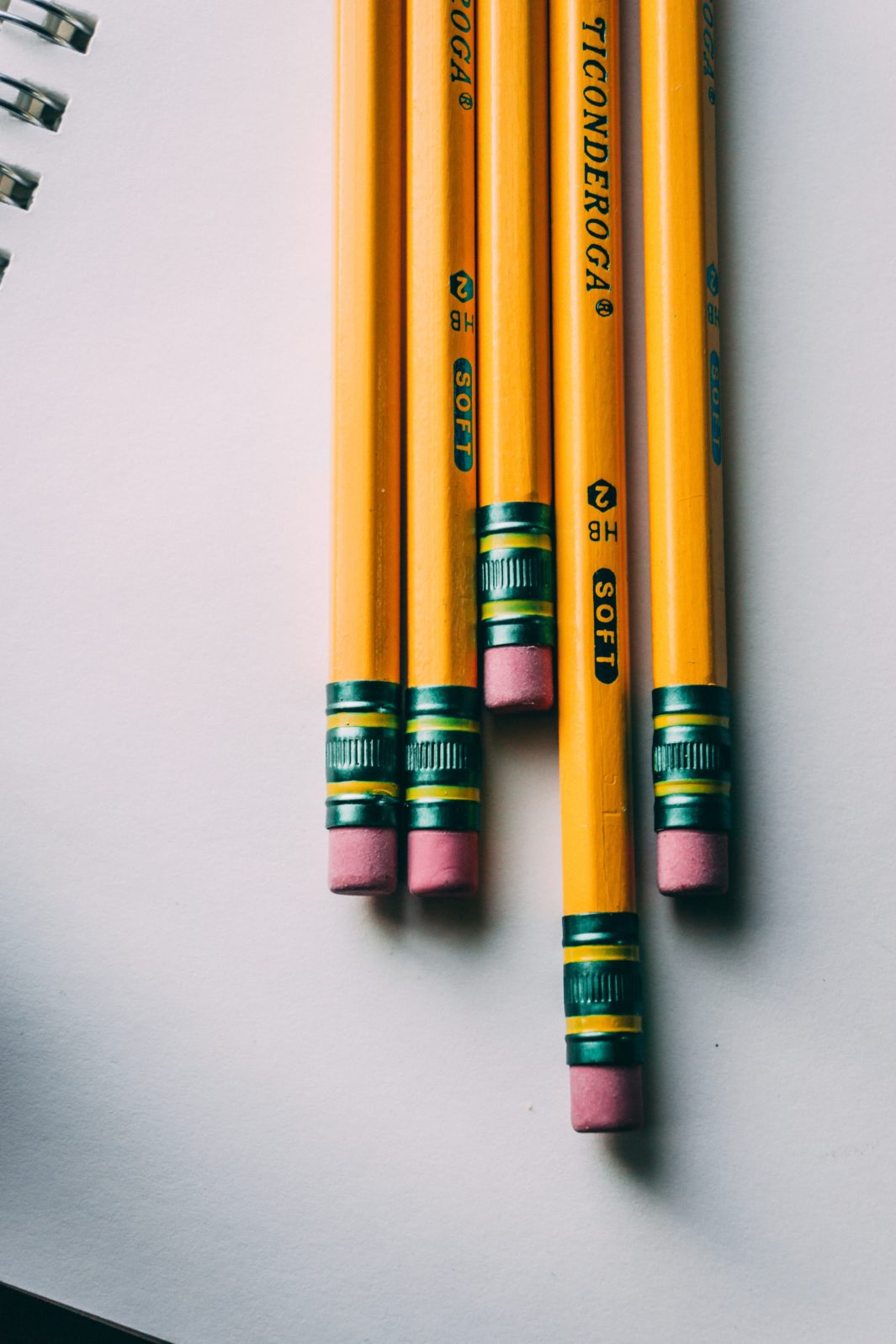 Image Credit: David Pennington -
 Condensed from Read’s detailed account, these are the major materials sourced from all over the world that are needed to make the actual pencil: Cedar, graphite, clay, ammonium hydroxide, tallow, waxes, hydrogenated fats, castor oil, brass, nickel, carbon black + resins, rapeseed oil, rubber and pumice.
To manufacture the pencil calls for labor and processes worldwide, including: logging, sawing, food and sanitation services, toolmaking, mining of many materials, metal and steel working, hemp rope growing and processing, everything to accomplish railroad and truck transportation on several continents, everything related to building and maintaining communications systems, millworking, kiln-drying, waxing, sweeping, grooving, gluing, carving, component assembly, and everything to do with trucks and driving, along with cargo vessels and shipping things overseas.
And for all of these, don’t forget: For every material, human effort, and process there must be people and machines handling the commerce, employment, finances, sales, and delivery of every element including the final product, pencils.
Market trading and prices
Whether we are looking only at pencils, or 21st century smartphones, or the nation-sized big picture, we see the market as millions of humans making millions of decisions and taking actions. With each exchange, there is a win‒win. For products and services, that means for each there is a price.
Where do prices actually come from? Prices are the results of real people making real choices to give up one thing to get another. Prices come from human mental processes at every stage.
 Image Credit: insta_photos -
 What happens when the system of exchanges is large? Then the prices of things will often come together around a figure. That figure will be a function of two things: The seller can get at least enough money to equal what she spent to make or get the product or to provide the service (or more). Second, enough buyers think that price is worth it to them for their purposes. Nobody has perfect information and no one can predict the future, but we all try our best to achieve our goals.
Why do we trade at all? Because we don’t all want the same things. Every time you make a trade, you’re saying, “I’d rather have this than what I’m giving up”—and so is the other person. These subjective decisions come from human minds. Multiply that across an entire society where everyone specializes in different work and experiences different personal wants. Eventually those countless trades settle into something we recognize as money prices.
Note that such prices aren’t set by all-knowing experts with a complete picture of the economy. Far from it. Everyone’s working with different information, spotting different opportunities, and making different guesses about what’s coming next. That uncertainty is exactly why there are people who try to foresee what other people will want in the future, and try to get the resources and processes together to offer it to them. (The technical term for such people: entrepreneurs.)
 Image Credit: irissca -
 Prices in a market act like messengers. They carry information back to the people who make things, helping them figure out what to produce, how to produce it, and whether they’re using scarce resources wisely or wastefully. If the sellers make profits, they continue to sell and possibly expand; if they lose money, they may cut back on production. Prices also tell buyers indirectly about the relative scarcity and costs the suppliers face as well as how urgently other buyers want the same product (or service).
With an efficiently functioning market, people can do economic calculations. Because market prices are expressed in a common currency—money—they give everyone a shared yardstick. Prices in money amounts empower a business owner to compare costs against revenue, weigh one production method against another, or decide which use of a limited resource makes the most sense. Consumers, too, can decide where to spend time and money to address their wants in ways that satisfy them to whatever degree is possible.
Human minds to the max
A market economy is more than just a giant garage sale where goods change hands. It’s more like a universe-size system of interacting human minds weighing factors of present and future, making choices, and taking purposeful actions. The results of these choices and actions radiate back out into the same market to affect everyone involved.
 Image Credit: Nola Viglietti/peopleimages.com -
 Two more mental processes interplay as well. One is sellers seeking profits by serving buyers better, such as by lower prices, more convenience, or better quality. The sellers’ efforts are seen as market competition. The results are producers and sellers working to keep costs down so they can sell more and generate more revenue by serving more consumers.
The other mental process is creativity in entrepreneurship. That’s when people imagine new or better products or services they can provide, and innovate to produce and sell them to consumers who will like and buy them. For this creativity to work, the entrepreneurs look at the prices for everything that goes into making and providing the good or service. The new goods or services become available only when entrepreneurs expect revenue from consumers to exceed all the costs of providing them. By this calculation, resources are less likely wasted on things that consumers on balance don’t prefer.
Harmony and abundance from minds in action
When human life, liberty, freedom of economic choices, and property rights are effectively protected as in the model of Western civilization, the results of markets using money, prices as information, and human creativity are astounding prosperity. All these features come from human minds.
