Mind Matters Natural and Artificial Intelligence News and Analysis

CategoryNeuroscience

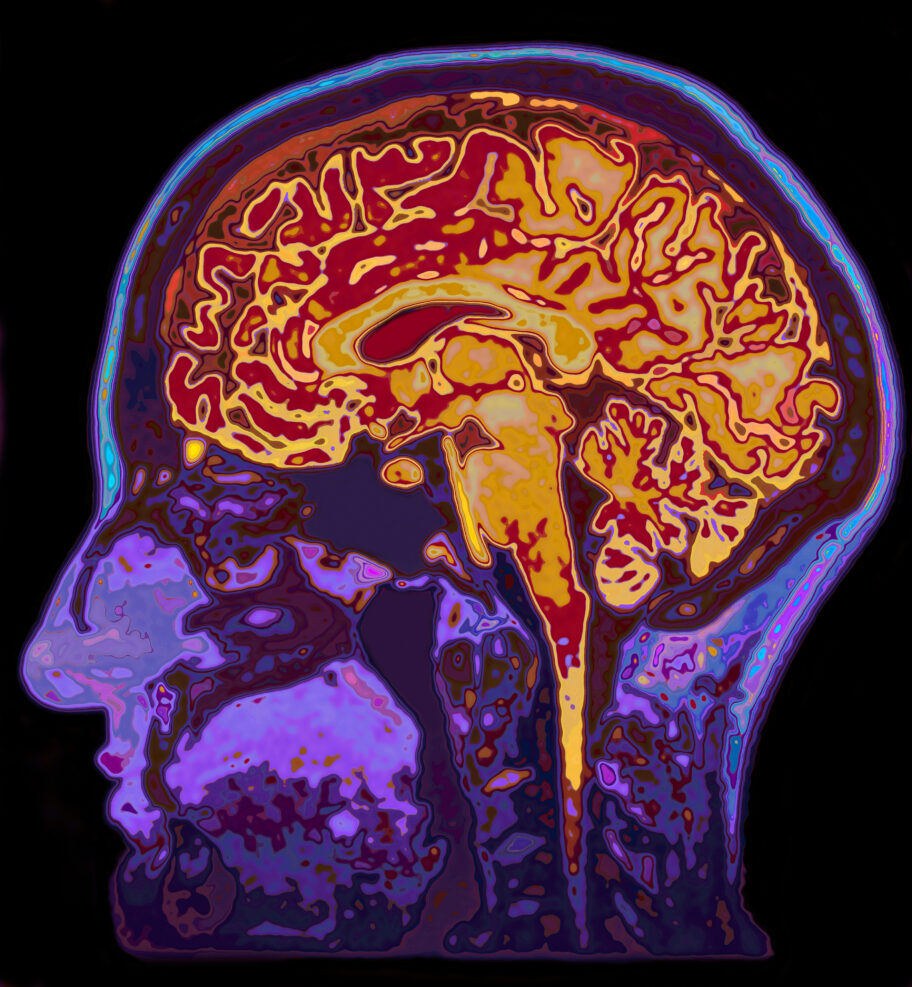
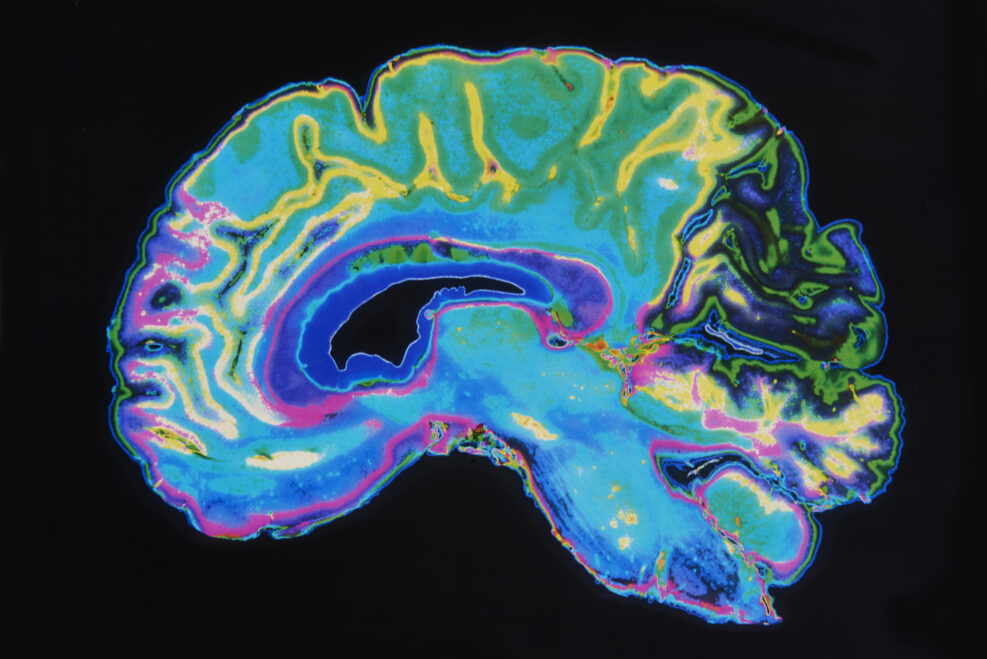
MRI Image Brain On Black Background

How the Injured Brain Heals Itself: Our Amazing Neuroplasticity

Jonathan Sackier is a pioneer in non-invasive techniques for speeding the healing of traumatic brain injuries

People who have come back from catastrophic injuries like Bill Zoller’s intrigue neuroscientists because they offer a glimpse into the neuroplasticity that enables the brain to restore lost functions, which we can learn to augment.

Read More ›

AdobeStock_169158991
Human head in silhouette apparently on fire

The Human Brain: Even Basic Facts Are Hotly Contested

Keep that in mind when AI boosters claim that their product will function like a human brain

When we read that “Scientists Are Closer to Making Artificial Brains That Operate Like Ours Do”, we might ask: If career researchers dispute the question of how the brain works at basic levels, how can non-experts be so sure they have replicated it?

Read More ›
hal-gatewood-405338-unsplash
Plasma Ball

Researchers Identify a New Form of Brain Communication

Mouse studies find brain waves that can bypass synapses and gaps, even communicate with severed nerves

Such surprising new findings show that comparisons between a human brain and a computer greatly underestimate the complexity of the brain.

Read More ›
human-embryo-week-9
Human Fetus Week Nine

The Junk Science of the Abortion Lobby

Fetuses not only experience pain but experience it more intensely than do adults

Much of pro-abortion advocacy is science denial—the deliberate misrepresentation of science to advance an ideological agenda. Mary Ziegler, a law professor at Florida State University, wrote a misleading essay on that theme in the New York Times, “Science won’t end this debate” (January 22, 2019).

Read More ›
jon-tyson-762647-unsplash-altered
A pile of photographic memories with a pancake photo

How Can Consciousness Be a Material Thing?

Maybe it can’t. But materialist philosophers face starkly limited choices in how to view consciousness

In analytical philosopher Galen Strawson’s opinion, our childhood memories of pancakes on Saturday, for example, are—and must be—”wholly physical.”

Read More ›
Afraid man in tinfoil helmet watches TV
Afraid man in tinfoil helmet watches TV, paranoia concept. UFO, conspiracy theory, brain theft protection, phobia

3: With Mind-Reading AI, You Will Never Have Secrets Again!

AI help, not hype, with Robert J. Marks: Did you read about the flap they had to cut out of a volunteer’s skull?

The Daily Mail is the United Kingdom’s second largest circulation daily. A headline from the webpage screams: No more secrets! New mind-reading machine can translate your thoughts and display them as text INSTANTLY! Not a lot of nuance there. The story continues on a tidal wave of hyperbole, • Researchers say they have developed a machine that can translate our thoughts •  The astonishing machine will analyse what you are thinking and display it as text ending with a charitable hope: •  Scientists hope that the machine can be used by people who are unable to speak The reality is that AI can read your mind for a few words repeated often if you have a flap cut out of your skull and Read More ›

phad-pichetbovornkul-269226-unsplash
Aerial shot of artists and craters at work

Human Consciousness May Not Be Computable

One model of consciousness would mean that conscious computers are a physical impossibility

As long as computers simply get faster and use more memory, there is no reason to worry about a self-aware Skynet.

Read More ›
rawpixel-617402-unsplash

Yes, the Placebo Effect Is Real, Not a Trick

But the fact that the mind acts on the body troubles materialists. Such facts, they say, require revision

The fact that you may start to get better if you believe you are receiving treatment is one of the best-attested facts in medicine. Despite that, far from being accepted, this “placebo effect” is seen in many quarters as, at best, a “pesky thing” and at worst, a “trick,” if not a “fraud.” Perhaps that is due to a drive to reduce medical science to the purely physical.

Read More ›
800px-Eug%C3%A8ne_Ferdinand_Victor_Delacroix_018

Hamlet: Did his perplexing neurotransmitters cause the tragedy?

The neuroscientist working from a mechanical perspective would study the material and efficient causes of Hamlet’s act of revenge.

It is essential to note that the Aristotelian neuroscientist, while delving into the complexities of Shakespeare’s remarkable psychological portrayal of this tortured man, can also study Hamlet’s murder of Claudius in just the same way that the mechanistic neuroscientist can. But he doesn’t lose the plot.

Read More ›
Unlocking latest smartphone with biometric facial identification scan

Yes, your brain is a machine—if you choose to see it that way

As a Nobel Prize physicist pointed out, our method of study determines what we learn

Anil Seth, a Professor of Cognitive and Computational Neuroscience at the University of Sussex, gave a TED talk recently (linked below) in which he asserted that “the combined activity of many billions of neurons—each one a tiny biological machine—is generating our conscious experience…” So, is your brain really a biological “machine”? Or is that just an analogy, like saying that a restaurant kitchen is a “hive” of activity? If so, how good is the analogy? Why do we select the analogy of a “machine” rather than a different one? It’s an important question, as we will see, because the questions we ask of nature constrain the answers we obtain. A machine is an artifact. It is a human-built assembly of Read More ›

Image result for plato

Does brain stimulation research challenge free will?

If we can be forced to want something, is the will still free?

The materialist interpretation of Reilly’s work is a misunderstanding of what the research actually shows. The stimulations did not evoke complex abstract intentions and acts—the patients didn’t reflexively decide to do integral calculus or donate to Amnesty International.

Read More ›
marc-olivier-jodoin-572629-unsplash

Does your brain construct your conscious reality? Part II

In a word, no. Your brain doesn't "think"; YOU think, using your brain

The brain understands nothing, imagines nothing, sees nothing. It wills nothing. We understand, we imagine, we see, and we will, using our brains.

Read More ›
cristina-gottardi-685293-unsplash

Does your brain construct your conscious reality? Part I

A reply to computational neuroscientist Anil Seth's recent TED talk

His talk is a breathtaking compendium of fallacies on the mind and the brain. We can learn a lot from him—by understanding the errors into which he falls and the way out of those errors.

Read More ›
MRI Image Of Head Showing Brain

Do either machines—or brains—really learn?

A further response to Jeffrey Shallit: Actually, brains don’t learn either. Only minds learn.

Learning is an ability of human beings, considered as a whole, to acquire new knowledge, not an ability of human organs considered individually.

Read More ›
samuel-castro-71639-unsplash

Inner peace: Is there software for that?

Tech billionaire funds neuroscience in a search for the secret of contentment

His approach to neuroscience is very different from that of the Dalai Lama, who facilitates neuroscience research to better understand contemplation as a path to inner peace. Chen’s focus is more on developing virtual reality.

Read More ›
MRI Image Of Head Showing Brain

Do Big Brains Matter to Human Intelligence?

We don’t know. Brain research readily dissolves into confusion at that point

We also know very little about the human brain. Take this controversy about why the large human brain evolved…

Read More ›
Conceptual image of a large stone in the shape of the human brain
The young and conceptual image of a large stone in the shape of the human brain

The Brain Is Not a “Meat Computer”

Dramatic recoveries from brain injury highlight the difference

The brain looks like a computer only if we analyze it as if it were a computer. Our analysis does not mean that it is a computer, and it does not mean that computation explains the mind or even that computational approaches to neuroscience provide genuinely meaningful insight into neurophysiology.

Read More ›