
Why Memories Cannot Really Be “Stored” Anywhere
A song might capture the immaterial nature of memoryWhere exactly is a popular song located? It lives in memory, human and recorded, in many forms. But it occupies no spatial location.
Read More ›Where exactly is a popular song located? It lives in memory, human and recorded, in many forms. But it occupies no spatial location.
Read More ›
Neurosurgeon Michael Egnor agrees; the image of storing and erasing memories is popular due to computer technology but not relevant to memory.
Read More ›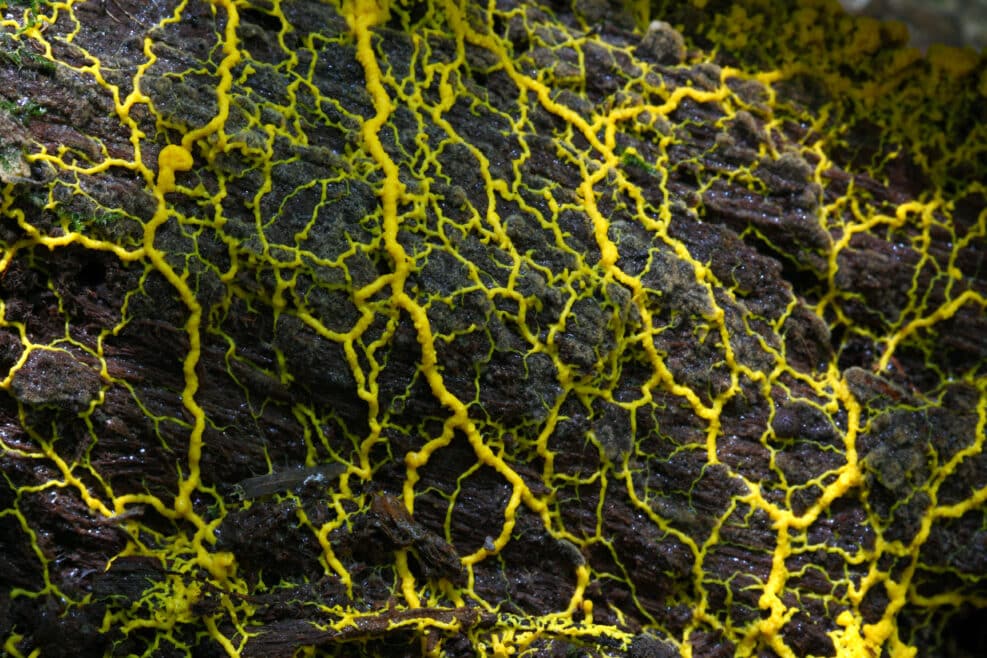
The findings from experiments with polycephalum have been “contentious,” probably because they raise issues about how these traits actually work.
Read More ›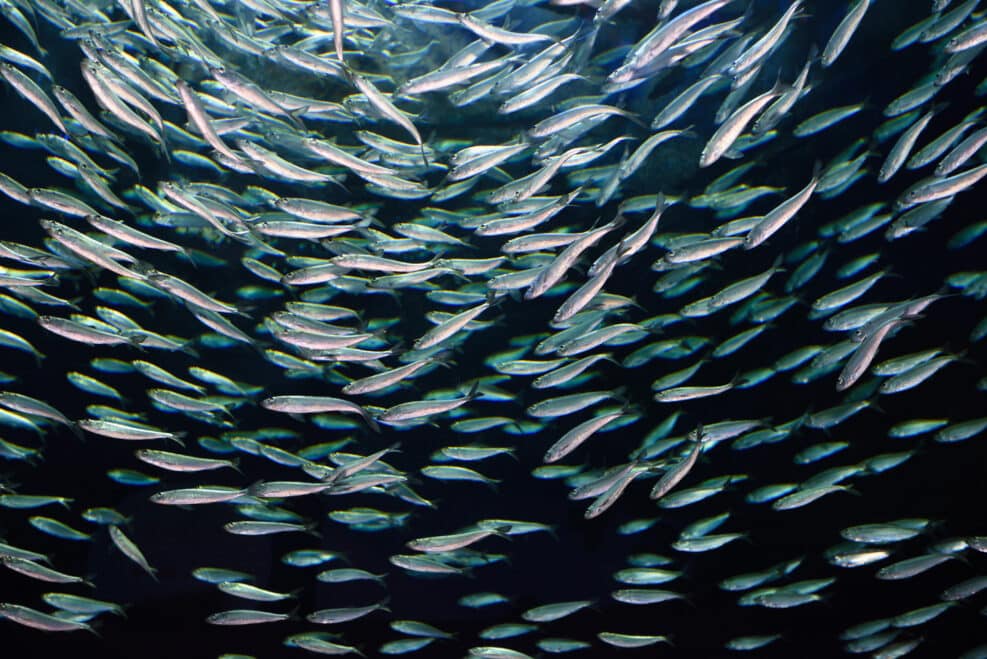
That makes sense if we recall that fish can’t relay a history or write things down so they were depending on older fish to know the way.
Read More ›
How can we compassionately relate to those suffering from Alzheimer’s disease? Is the mind more than the brain? Dr. Stephen Post, an expert in the field and author of Dignity for Deeply Forgetful People, speaks with neurosurgeon Michael Egnor on memory, consciousness, and whether the mind could have arisen from matter. Additional Resources
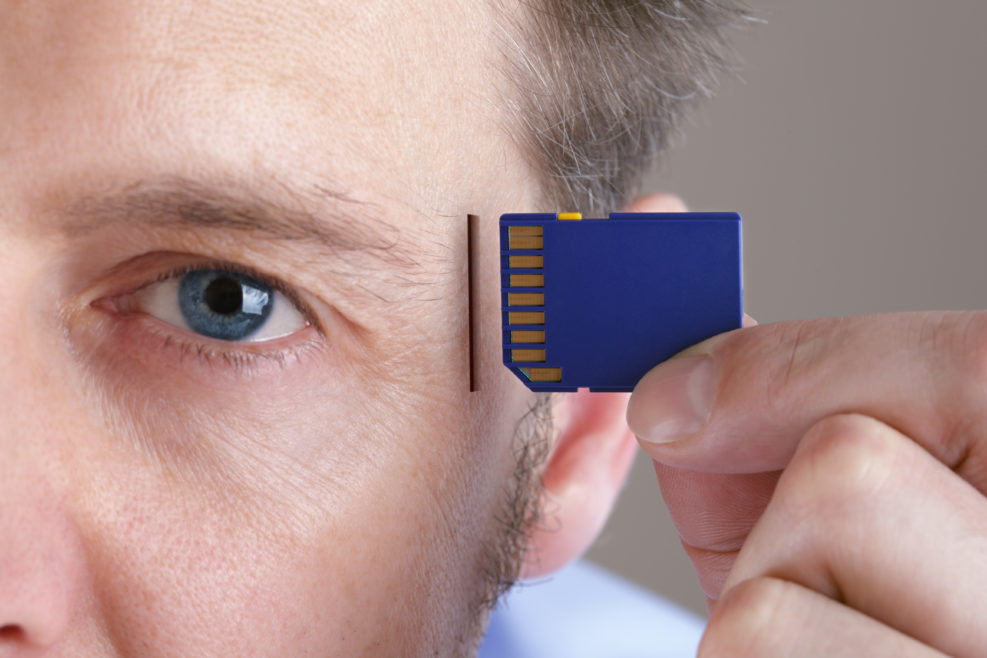
Perhaps you’ve heard of the “mind-body problem,” but what about the relationship between the mind and the brain? Is the mind just an illusion produced by the brain or is it something totally separate? Robert Marks talks with neurologist Andrew Knox on these topics and more in this week’s Mind Matters podcast episode. Additional Resources

The Picower Institute for Learning and Memory at MIT offers an interesting new model of how memories are processed in the brain. Using two macaques playing a game while their brain activities were recorded, the researchers suggest the orchestra as a model. The neurons are the players and the electric field is the conductor: As the brain strives to hold information in mind, such as the list of groceries we need to buy on the way home, a new study suggests that the most consistent and reliable representation of that information is not the electrical activity of the individual neurons involved but an overall electric field they collectively produce. Indeed, whenever neuroscientists have looked at how brains represent information in Read More ›
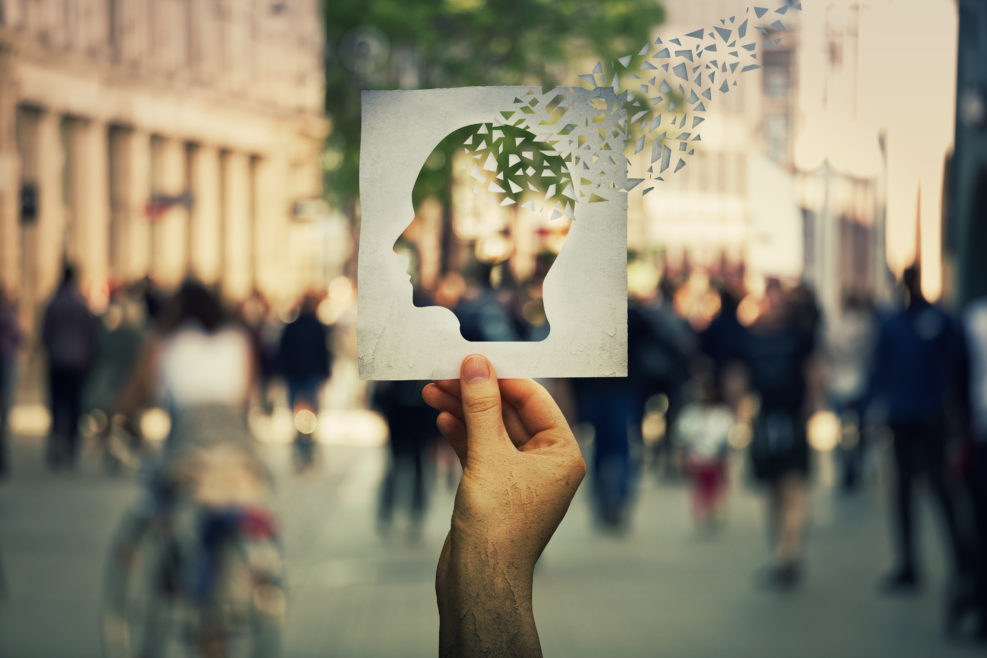
An interesting 2015 discovery sheds some light on memory issues: The urgency to remember a dangerous experience requires the brain to make a series of potentially dangerous moves: Neurons and other brain cells snap open their DNA in numerous locations — more than previously realized, according to a new study — to provide quick access to genetic instructions for the mechanisms of memory storage. David Orenstein, “Memory-making involves extensive DNA breaking” at MIT News (July 14, 2021) The paper is open access. Jordana Cepelowicz explains an “unsettling” discovery made by Li-Huei Tsai’s team at MIT’s Picower Institute for Learning and Memory: … to express learning and memory genes more quickly, brain cells snap their DNA into pieces at many key Read More ›
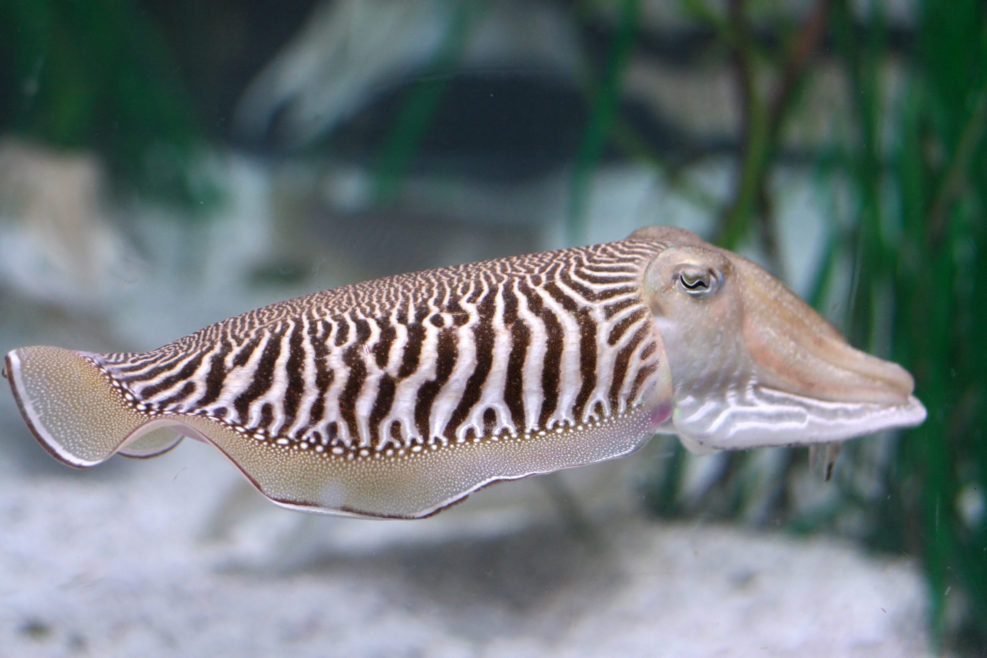
Octopuses have been called a “second genesis” of intelligence, that is, they are invertebrates with high intelligence, instead of vertebrates. But their close relatives, squid and cuttlefish (they are all cephalopods), are not far behind, according to recent research. One unusual finding is that cuttlefish have very good memories: Can you remember what you had for dinner last Tuesday? Or on this day last year? It turns out that cuttlefish can, right up to old age – the first animal we’ve found that doesn’t show signs of deterioration in memory function over time. David Nield, “The Incredible Brains of Cuttlefish Hold Memories That Never Seem to Fade” at ScienceAlert (18 August 2021) Of course, cuttlefish live only a couple of Read More ›

Plants, we are learning, have internal means of remembering and keeping track of things: In a study published in Nature Communications, researchers from Nara Institute of Science and Technology have revealed that a family of proteins that control small heat shock genes enables plants to ‘remember’ how to deal with heat stress… “Heat stress is often repeating and changing,” says lead author of the study Nobutoshi Yamaguchi. “Once plants have undergone mild heat stress, they become tolerant and can adapt to further heat stress. This is referred to as heat stress ‘memory’ and has been reported to be correlated to epigenetic modifications.” Epigenetic modifications are inheritable changes in the way genes are expressed, and do not involve changes in the Read More ›

“The Final Moments of Karl Brant” at DUST by Neil Ellice and Matthew Wilson (June 10, 2021 at DUST, 15:46 min) “Set in the near future where experimental technology allows two detectives to bring a murder victim back to life in a digital state in order to question him about his final moments.” Review: This is an “oldie” from 2013, recently uploaded to DUST. Entrepreneur Karl Brant and academic neuroscientist Bennett Ferryman were partners in a promising new high tech venture in which Brant suddenly perishes, leaving Ferryman now the sole owner — and under interrogation down at the local cop shop: “Am I a suspect?” “Not if you give us a good reason why you shouldn’t be.” Not too Read More ›

A research group surprised the science world by reporting: “We found that individuals in REM sleep can interact with an experimenter and engage in real-time communication,” said senior author Ken Paller of Northwestern University. “We also showed that dreamers are capable of comprehending questions, engaging in working-memory operations, and producing answers. “Most people might predict that this would not be possible — that people would either wake up when asked a question or fail to answer, and certainly not comprehend a question without misconstruing it.” Cell Press, “Real-time dialogue with a dreaming person is possible” at ScienceDaily (February 18, 2021) The paper is open access. There is no clear science explanation for why we dream. But one restriction on dreams Read More ›

First, no one should worry about unpleasant awareness during anesthesia. I’ve performed more than 7000 brain operations and I’ve never had a patient experience unpleasant awareness related to anesthesia. It does happen, but it’s rare, and I’ve never seen it. I’ve had general anesthesia myself four times, and as I tell my anesthesiology colleagues, I’m a big fan of anesthesia. Modern anesthesia is safe, highly effective, and indispensable. Don’t be afraid of it. But I do need to tell you that there are scientific facts about anesthesia and awareness that may surprise you. Second, when I use the word “soul,” rather than “mind” or “consciousness,” to describe mental states, I am not using the word in a spooky or New Read More ›
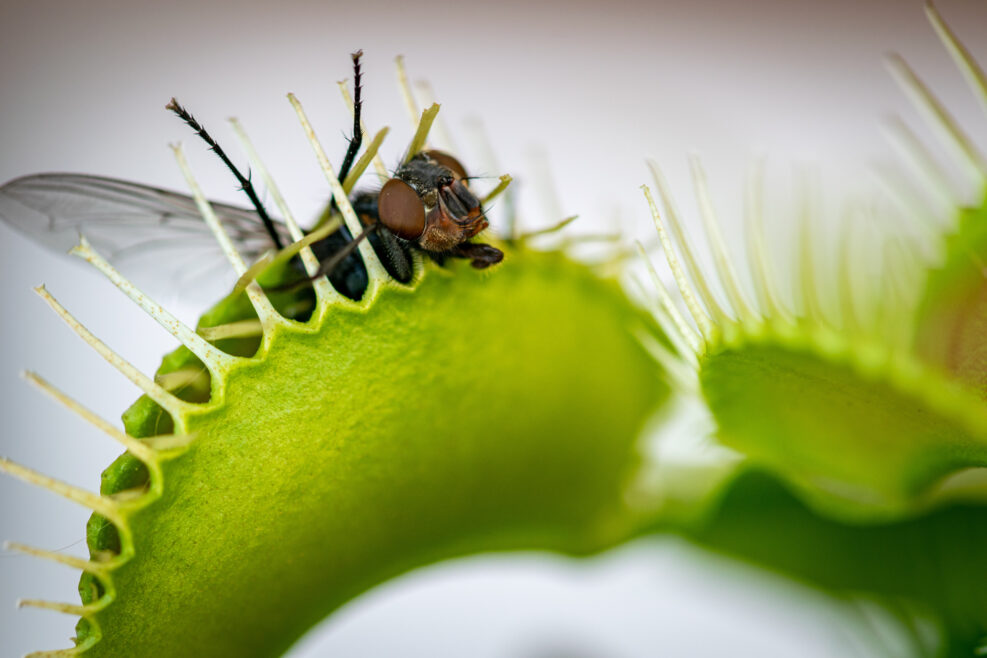
How can a plant remember anything, we might wonder? One way is that it may have specific chemicals circulating in its system. Calcium, according to a recent discovery, turns out to be the element that prompts Venus flytraps to shut their traps on insects—but only on the second try: A Venus flytrap’s short-term “memory” can last about 30 seconds. If an insect taps the plant’s sensitive hairs only once, the trap remains still. But if the insect taps again within about half a minute, the carnivorous plant’s leaves snap shut, ensnaring its prey. Curtis Segarra, “How Venus flytraps store short-term ‘memories’ of prey” at ScienceNews The Venus’s trap is more complex than a mousetrap because the plant can’t just clamp Read More ›

At one time, neuroscientists believed that there must be a “seat” of memory in the brain, something like a room with a door marked Memory. They settled on two structures called hippocampi, on either side of the brain’s base. The illustration shows the the hippocampus of the right hemisphere (public domain). But memories turned out to have no fixed address. Neuroscientist Matthew Cobb, author of The Idea of the Brain (2020, excerpt here), tells us, But the hippocampuses are not the site of memory storage. Rather, these brain regions are the encoders and the routes through which memory formation seems to pass. The memories that are processed by the hippocampuses seem to be distributed across distant regions of the brain. Read More ›

One of a pioneer neurosurgeon’s cases featured a patient who could, unaccountably, speak ancient Greek. The explanation was not occult but it was surely remarkable for what it shows about memory.
Read More ›
Looking for a good “robots, AI, ‘n sci-fi” fix to round out your weekend? Mind Matters has you covered for animations and shorts. For starters, check out DUST, a YouTube channel dedicated to short sci-fi. Its recent AI WEEK (February 11–18) offered “A collection of curated short films dedicated to artificial intelligence and its connection with humanity.” When I say “short,” I mean that the longest is about 30 min; the others are much shorter. So if you have just a few minutes to kill while downing a bowl of spicy curry ramen, I would recommend giving them a watch. For AI narratives, they’re not as clichéd as you might fear. Sunspring | DUST AI Week Runtime | 8:15 Cleanliness Read More ›

In analytical philosopher Galen Strawson’s opinion, our childhood memories of pancakes on Saturday, for example, are—and must be—”wholly physical.”
Read More ›