
CategoryChina

If China Wins the Blockchain Derby, a Global Chill Will Follow
COSM 2025: While the West fusses about cryptocurrencies, China aims at building a blockchain to control the global internet. And few pay attention…
TikTok Is Banned in the U.S. No It’s Not. Yes It Is. No It’s Not…
The political stew aside, we need to look at the key ways TikTok differs from typical social media
Is Your Online Data for Sale? The Tik Tok Hearings May Shed Light
To enable total state surveillance, telecom companies in China, for example, must supply data that can include everything from bank accounts to keystrokes
Last Year Saw the Worst Telecom Hack in Our Nation’s History
While millions of Americans’ metadata were compromised, the specific targets seem to be important political figures and people of interest to the Chinese government
Is TikTok a National Security Risk?
Consuming without thinking is fertile soil for propaganda
A Timely Leak Offers a Peek Into Chinese Cyberespionage Worldwide
What Chinese hackers are doing can sound as exciting as a spy movie — but it is much more dangerous
We’re Slowly Learning About China’s Extensive Hacking Network
China’s state-backed hackers have embedded malware within U.S. programs used to manage clean drinking water, the power grid, and air traffic, among others
China, Cybertheft, and the Ethics of Espionage
All nations spy, but espionage crosses a moral line when it costs normal civilians their jobs.
Big Tech and China
Evaluating the technological competition between the two superpowersHow should the United States deal with China? Jay Richards interviews Dr. Bob Kelly, Managing Partner of Ignition Partners, on a panel he was included in. The panel explored the technological competition between the U.S. and China, what it means for the future, and presented differing schools of thought on how the United States should approach China moving forward. We’ve been sharing a number of lectures from past COSM conferences. This video is just one of many you can find at the Bradley Center’s YouTube page. There you’ll find several lectures, interviews, and panels dealing with issues that range from economics, Big Tech, and artificial intelligence. Notable speakers include 2022 Kyoto Prize winner Carver Mead, venture capitalist Peter Thiel, and George Gilder, co-founder of Discovery Read More ›
China’s Chatbot Toes the Party Line
How will China control what AI does and doesn't say?
The Chinese Spy Balloon Saga, Part 2
China continues to deny that the balloon was used for spying on military basesThe U.S. has shot down four aerial objects this month, one of which was a Chinese surveillance balloon that had traversed the U.S. from Idaho to the Atlantic Ocean. Part 1 of Mind Matters Spy Balloon Saga provides an overview of the four aerial objects that were shot down. Since then, several media outlets found additional information on China’s global high-altitude balloon program, including that the balloon shot down in the Atlantic likely launched from Hainan Island and was intended to surveil U.S. Pacific military bases in Guam and Hawaii. The balloon inadvertently traversed into the continental U.S. Here is a rundown of what of several media outlets have reported: There are 2 known launch sites in China: Dorbod Banner Read More ›

The Chinese Spy Balloon Saga (Part 1)
China may be playing a psychological game with the United StatesOn February 4, the U.S. shot down a Chinese high-altitude surveillance balloon over the Atlantic Ocean off the coast of South Carolina. The balloon was first spotted on January 28 over the Aleutian Islands, and then traveled over Alaska, through Canada, and then into Idaho. Chinese spokespersons maintained that it was a meteorological research balloon that had veered off-course. However, recovery crews confirmed that the balloon platform was equipped with communication surveillance and interception tools. Since then, three other aerial objects, all flown within the vicinity of sensitive U.S. military sites, have been shot down. The other three are not confirmed to be of Chinese origin and have not been identified as surveillance balloons. NORAD (North American Aerospace Defense Command) Read More ›

China Balloons, EMP’s and Bioweapons: A Chilling Possibility
One nuclear burst 250 miles above Kansas could damage most of the power gridNo one has mentioned that the China balloon recently shot down after sailing across the United States could have been weaponized with a bomb or bioweapons. Thankfully, it was not. A single nuclear burst 250 miles above Kansas could destabilize much if not most of the US power grid. Almost the entire country, as well as parts of Mexico and Canada, would be affected by the resulting EMP (electromagnetic pulse). 250 miles above the Earth is about as high as the US Space Station is from Earth. Potential military threats from outer space was a prime motivation for creating the United States Space Force in 2019. The China balloon was not 250 miles up required for a coast-to-coast EMP Read More ›
No More TikTok for State Agencies in Texas
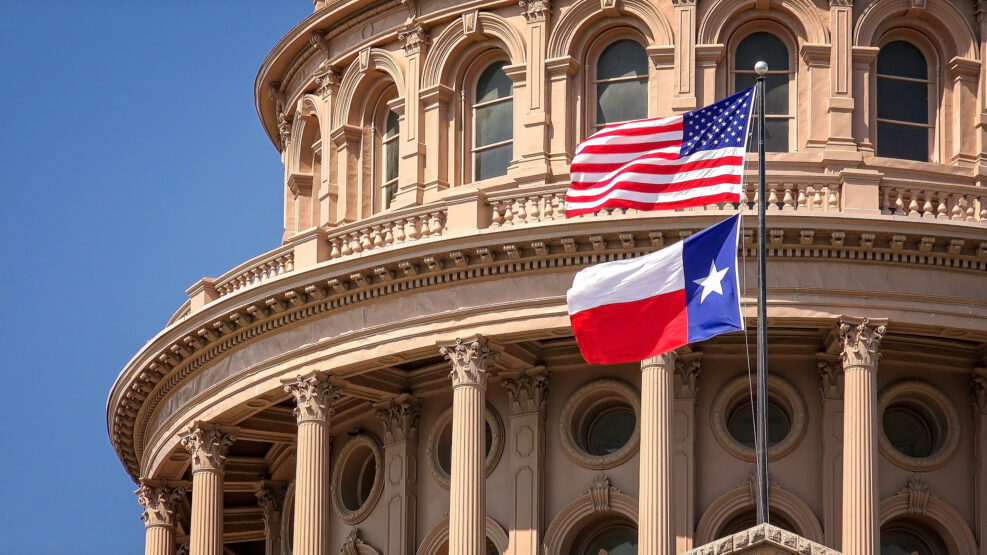
Tenuous US-China relations may prompt other state legislatures to follow in Abbott’s footstepsGovernor Greg Abbott of Texas called for a ban of TikTok from all state agencies this week. Agencies have until February 15th to accommodate to the policy, which entails removing the social media app from all devices used to carry out official Texas-related business. The new ruling will also involve restricting access to TikTok usage on personal devices in potentially “sensitive locations and meetings.” TikTok, owned by the Chinese company ByteDance, Ltd., has been criticized for mining data from its American users. Since the Chinese government can demand data disclosures from businesses, Gov. Abbott thinks TikTok is an issue of state and national security: TikTok harvests significant amounts of data from a user’s device, including details about a user’s internet Read More ›
War With China: Who Will Win?
Has the United States lost its status of military superiority?General Mike Minihan, head of Air Mobility Command and 50,000 US service members, said, “I hope I am wrong. My gut tells me we will fight [China] in 2025.” China’s invasion of Taiwan might spark this war. Predictably, the politically obedient Department of Defense (DOD) responded “comments [by Minihan] are not representative of the department’s view on China.” “Views” can be unimportant. Whether or not General Minihan is correct is important. Who would win the war between the US and China? Many are pessimistic about the chances of the United States being the victor. Here are short summaries (with links) of a few disturbing opinions from those who should know. So, how is the US doing? Here are some disturbing Read More ›
China Leads the World in Face Recognition Exports
The global power is exporting the AI to weak and autocratic countries, according to a report from Brookings InstituteChina is the world’s leading exporter of facial recognition technology, according to a study conducted by researchers from Harvard and MIT. The study aimed to elucidate the ramifications of the AI revolution and what it means for such technology to be exported from a global power like China. They found that China is more likely than other countries to export AI technology to other countries. China also focuses on exporting facial recognition to countries with weak democracies that are experiencing social unrest and upheaval. Political motivation might be driving such trades. The authors write, The Chinese government’s demand for surveillance and political control translates into more exports of AI. Moreover, our finding that autocrats and would-be autocrats abroad demand surveillance Read More ›
Life After Zero-Covid: Protesters Are Rounded Up
The way Beijing lifted its zero-Covid measures was just as unethical as the zero-Covid measures themselvesIn response to widespread protests and a slumping economy, the Chinese Communist Party abruptly reversed its zero-Covid policies. Rather than taking responsibility for bad policy, however, Beijing instead left a scared and immunologically vulnerable populous to fend for itself in a country with an inadequate healthcare structure. Analysts have said that rather than using the lockdowns as an opportunity to fortify its healthcare system, which has been inadequate to serve China’s large population even before the coronavirus, Beijing doubled down on state and local surveillance. In the next couple of articles, we will look at the aftermath of Beijing’s zero-Covid policy, a policy that General Secretary Xi Jinping has used to justify the superiority of China’s socialist system over “chaotic” Read More ›

China: Protesters Evade Censors and Confront State Surveillance
Chinese citizens are known for their clever plays on words to evade social media censors.The graffiti on the bathroom wall at the university said there would be a gathering in honor of the people who had died in an apartment fire in Urumqi, Xinjiang. Bathrooms usually do not have surveillance cameras, so this announcement would probably go unnoticed by censors. It is better than risking punishment by posting on social media. In another city, Chinese citizens discretely shared information about the location of a vigil for the Urumqi victims on WeChat in the guise of dinner plans. A number of people died in the fire, whose toll was likely inflated because emergency vehicles were unable to access the building due to zero-Covid measures. Social media posts showed doors that were barred shut and barricades Read More ›

When the Chinese Had Had Enough, Their Government Had To Listen
Embarrassingly, Xi had already declared victory over the virus in 2020, touting authoritarian governments as better able to respond“The political object is the goal, war is the means of reaching it, and means can never be considered in isolation from their purpose.” (von Clausewitz, On War) Beijing’s zero-Covid policy was not sustainable. The highly publicized events in October and November in Urumqi, Xinjiang and at the Zhengzhou Foxconn factory served as the inciting events for what became a nationwide call for ending zero-Covid, giving people their freedoms — and there were even calls for Xi Jinping to step down. In the course of a week, Beijing went from touting zero-Covid to easing restrictions to censoring mentions of zero-Covid policy online. In November in Urumqi, the capital of Xinjiang, several residents, including four children, died in an apartment fire Read More ›