Mind Matters Natural and Artificial Intelligence News and Analysis

Denyse O'Leary

hand-with-microphone-tied-with-rope-depicting-the-idea-of-freedom-of-the-press-idea-of-the-repression-of-the-mass-media-or-freedom-of-expression-stockpack-adobe-stock
Hand with microphone tied with rope, depicting the idea of freedom of the press, idea of the repression of the mass media or freedom of expression

Newsletter Group Creates Alarm Plus Demands for Censorship

Substack is getting a lot of ink these days — raising both hope from readers and hand wringing from old media

The traditional media our parents grew up with are slowly dying in a chronic low-ratings crises — but surprising new media are being born. Substack is getting a lot of ink these days — raising both hope and handwringing. Its very existence shows how information is rapidly changing. At Substack, an online subscription newsletter system founded in 2017, tech guys Chris Best and Hamish McKenzie point out bluntly that the “New York Times” model of information is doomed: Today, as a result of a mass shift of advertising revenue to Google and Facebook, the news business is in crisis. The great journalistic totems of the last century are dying. News organizations—and other entities that masquerade as them—are turning to increasingly Read More ›

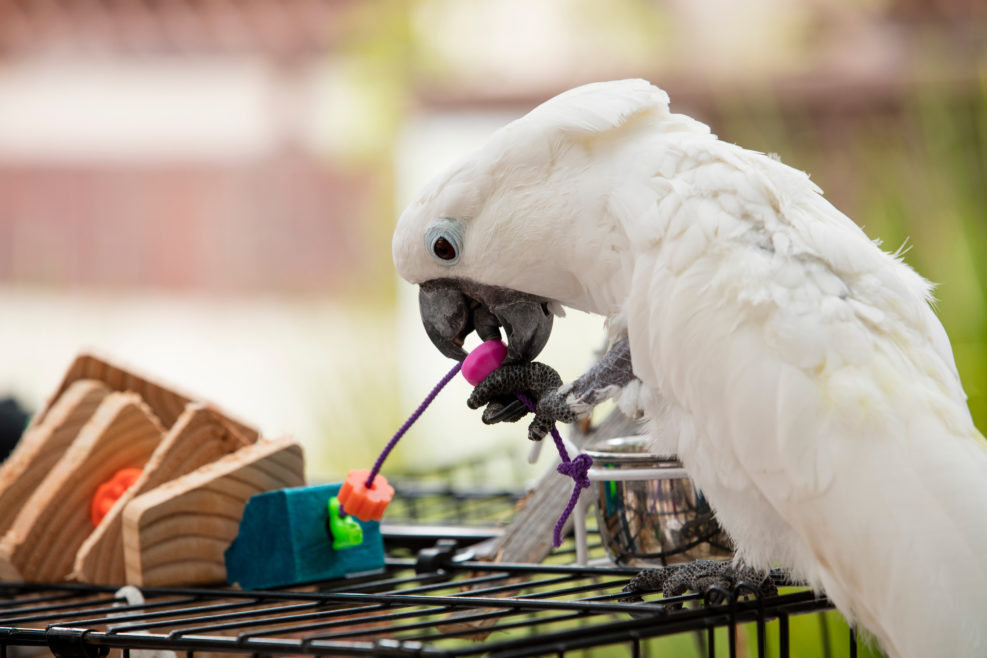
parrot-stockpack-adobe-stock
parrot

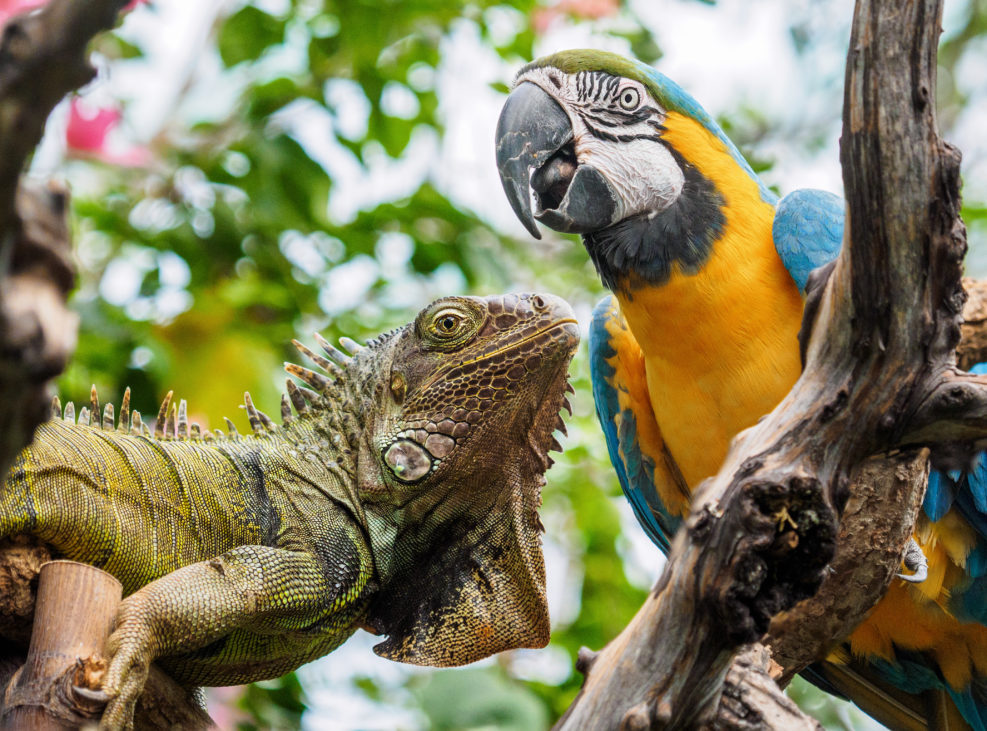
Do Birds Really Understand What They Are Saying?

Remarkable claims are made for some birds

Perhaps because parrots can carefully mimic human voices (and many other sounds), many claims are made for their intelligence For example, that they understand abstractions like currency: After training eight African grey parrots and six blue-headed macaws to barter metal rings for walnuts, the researchers paired the birds up with same-species partners. They then put the parrots in clear chambers joined by a transfer hole, and gave one bird—the donor—ten rings, while the other was left with none. Even without the promise of a reward for themselves, seven out of eight of the African grey parrot donors passed some of their available tokens through the transfer hole to their broke partners, usually shuttling them beak to beak. On average, about Read More ›

close-up-of-math-formulas-on-a-blackboard-stockpack-adobe-stock
Close up of math formulas on a blackboard

Is Our “Number Sense” Biology, Culture — or Something Else?

It’s a surprisingly controversial question with a — perhaps unsettling — answer

British science writer Philip Ball, author of How to Grow a Human, offers an even-handed account of a controversy on the origin of our ability to understand numbers (numeracy). Numeracy is the beginning of mathematics, the most abstract of all human pursuits. It isn’t possible to get very far in mathematics without some ability to abstract. Ball cites as an example the difference between 152 and 153. Many life forms, competing for a pile of food items, can distinguish between 2 and 3. But distinguishing between 152 and 153 clearly requires abstraction. It’s the same principle as the chiliagon, a geometric figure like a triangle except that it has 1000 sides. A triangle can be envisioned concretely. A chiliagon can Read More ›

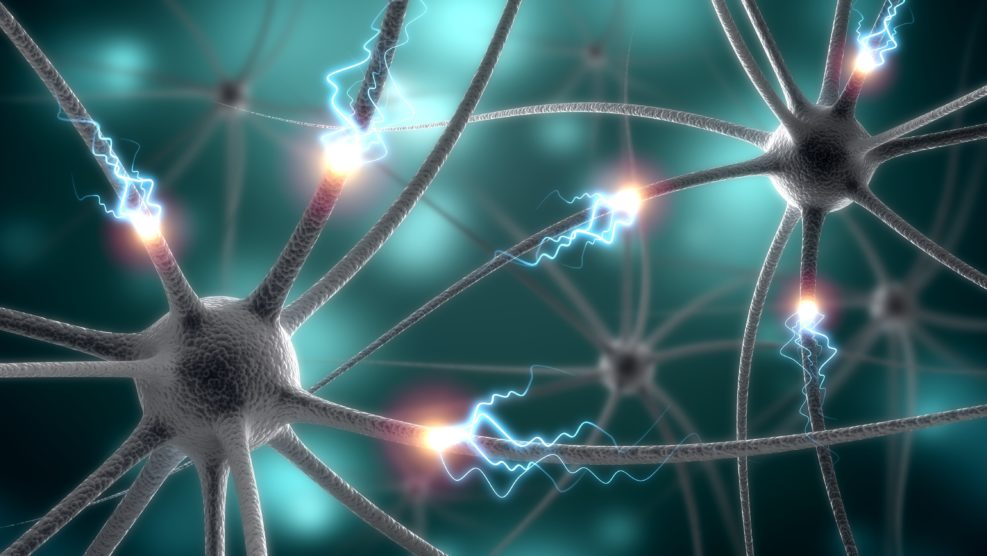
illustration-of-synapse-and-neuron-on-a-blue-background-stockpack-adobe-stock
Illustration of synapse and neuron on a blue background.

Will We Soon Be Able to Test Theories of Consciousness?

Proponents of two leading theories of consciousness are trying to develop tests for their models, in a hitherto baffling field

Science journalist and author Anil Ananthaswamy has written a thoughtful piece at New Scientist on the leading models of consciousness and their relationship to quantum mechanics (quantum physics). Are we reaching the point where we can test at least one of them? Ananthaswamy is well qualified to assess the arguments. He is the author of both Through Two Doors at Once (2018) on quantum physics and The Man Who Wasn’t There (2015) on the nature of the self. Models of consciousness that assume that “consciousness isn’t separate from the material reality that physics explains” (materialist or naturalist theories) fall into three general classes, as he explains. Analysts like Tufts philosopher Daniel Dennett and Princeton neuroscientist Michael Graziano argue that consciousness Read More ›

red-and-green-men-meet-for-a-treaty-candidates-political-debate-civilized-resolution-of-conflicts-and-disputes-search-for-compromise-networking-in-business-negotiation-platform-stockpack-adobe-stock
Red and green men meet for a treaty. Candidates Political Debate. civilized resolution of conflicts and disputes, search for compromise. Networking in business. Negotiation platform.

Will Florida’s Law for Diversity of Thought at Universities Work?

In an internet-linked global society, protecting diversity of thought becomes even more important

A new Florida law, which took effect July 1, asks universities to survey “intellectual freedom and viewpoint diversity” annually on their campuses, to find out how free students, faculty, and staff feel “to express their beliefs and viewpoints.” Ohio Northern University law professor Scott Gerber explains, The problem DeSantis has identified is not unique to Florida — Indiana’s Republican governor signed a similar bill last month — and it traces directly to the political biases of the processes by which faculty are hired. Many of the same colleges and universities that tout tenure as a way to encourage free thought censor it by not allowing conservative and libertarian faculty candidates who think freely to get in the door. I once Read More ›

live-lobster-in-the-aquarium-product-in-the-supermarket-close-up-photo-of-big-lobsters-in-water-tank-for-sale-stockpack-adobe-stock
Live lobster in the aquarium. Product in the supermarket. Close up photo of big lobsters in water tank for sale

Can Crabs Think? Can Lobsters Feel? What We Know Now

In Switzerland, it is now illegal to boil a lobster alive. Are the Swiss right? Is it cruel?

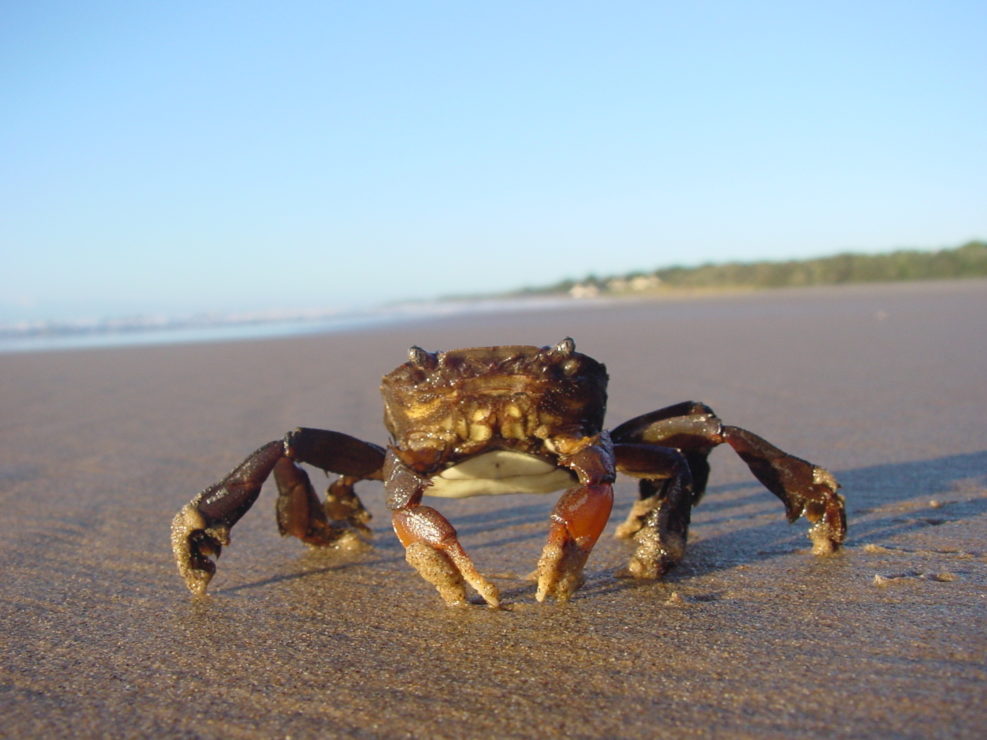
Because crustaceans have shells, we may tend to think of them as like machines. Yet crustaceans, along with octopuses, show some surprising abilities and complexities. Take crabs, for example: A new Swansea University study has revealed how common shore crabs can navigate their way around a complex maze and can even remember the route in order to find food … Spatial learning is quite complicated, so figuring out how it works in crustaceans gives us a better understanding of how widespread this ability, and learning in general, is in the animal kingdom.” The researchers tested 12 crabs over four weeks, placing food at the end of the maze each time. The route to the end of the maze required five Read More ›

warning-cancel-culture-spreading-fast-stockpack-adobe-stock
Warning, cancel culture spreading fast

Black American Conservatives Lead Fight Against Cancel Culture

They “trigger” bullies when they say what they think needs to be said, not what the Cancel mob insists on hearing

British writer Douglas Murray dissects social media’s Cancel Culture, in a typically unsparing fashion: All ages have their orthodoxies. And if writers, artists, thinkers and comedians do not occasionally tread on them, then they are not doing their jobs. Meanwhile human nature remains what it is. And just as some children will always pull the wings off flies and fry small ants with their toy magnifying glasses, so a certain number of adult inadequates will find meaning in their lives by sniffing around the seats in the public square until they find an aroma they can claim offends them. Douglas Murray, “How to fight back against ‘cancel culture’” at Spectator (January 24, 2020) Black American conservatives “trigger” Cancel Culture when Read More ›

book threads
book

Books: The First Step in Fighting Cancel Culture

Malicious envy was always out there but before social media it could rarely assemble so large a mob
Many writers and artists are beginning to speak out and take action, recognizing that sharing the cost of speaking up reduces its burden. Read More ›
faceless army
blinded slaves in the water

Books: Cancel Culture As an Invisible Army of Censors

The new censorship is different from traditional “banned” or “challenged” lists because a younger, much more active crowd is behind it

For authors, Cancel Culture, powered by social media, is becoming a serious business. A poorly thought-out tweet from years past — or merely one to which socially powerful people take exception — may destroy a career. The mob has hit genre fiction hard. One author, studying the trend, recounts, Since March, I have been sending discreet messages to authors of young adult fiction. I approached 24 people, in several countries, all writing in English. In total, 15 authors replied, of whom 11 agreed to talk to me, either by email or on the phone. Two subsequently withdrew, in one case following professional advice. Two have received death threats and five would only talk if I concealed their identity. This is Read More ›

octopus-stockpack-adobe-stock
Octopus

Octopuses Get Emotional About Pain, Research Suggests

The smartest of invertebrates, the octopus, once again prompts us to rethink what we believe to be the origin of intelligence

The octopus is becoming a popular creature among neuroscientists. It is a very smart invertebrate with an unusually complex nervous system, organized in a fundamentally different way from that of, for example, mammals. Recently, a researcher has found the first strong evidence that octopuses feel pain, as opposed to merely reacting to it. There are two parts to pain: The natural physical reaction, like a sophisticated alarm system, sets off a chain of involuntary responses. But that chain of responses, by itself, doesn’t prove that any “self” is feeling anything. The alarm system would work just the same in an empty building as in a populated one. The second component can be called “emotional.” The life form experiences the pain Read More ›

nairobi-kenya-ranger-feeding-orphaned-baby-elephant-in-david-sheldrick-wildlife-trust-conservation-center-stockpack-adobe-stock.jpg
Nairobi, Kenya : Ranger feeding orphaned baby elephant in David Sheldrick Wildlife Trust conservation center

There Is No Escape From Human Exceptionalism

Author Melanie Challenger thinks we should embrace our true animal nature. But that’s impossible

Melanie Challenger, author of How to Be Animal (2021) thinks we would be less messed up if we could just accept our animal nature. She writes at Aeon, “Human exceptionalism is dead: for the sake of our own happiness and the planet we should embrace our true animal nature.” Further, Today, our thinking has shifted along with scientific evidence, incorporating the genetic insights of the past century. We now know we’re animals, related to all other life on our planet. We’ve also learned much about cognition, including the uneasy separation between instinct and intention, and the investment of the whole body in thought and action. As such, we might expect attitudes to have changed. But that isn’t the case. We Read More ›

american-staffordshire-terrier-dog-with-little-kitten-stockpack-adobe-stock.jpg
American staffordshire terrier dog with little kitten

Researchers Ponder Why Animals Adopt Other Species’ Orphans

Beliefs about what animals “should do” are often hampered by a lack of common sense reasoning and an outdated evolution theory

At The Conversation, evolutionary anthropologist Isabelle Catherine Winder (pictured) and anatomist Vivien Shaw pose a question, “Animal adoptions make no evolutionary sense, so why do they happen?“ For instance, scientists working with gorillas in Rwanda recently found the gorillas band together to take care of orphans. In these cases, young peers and (surprisingly) dominant adult males can be key to immature orphans’ survival. Perhaps it really does take a village to raise a child. Meanwhile researchers in DR Congo found that bonobos (apes closely related to chimpanzees) go even further, and sometimes adopt babies from a different social group. We even have examples of cross-species adoption, such as the dolphin who adopted and nursed a melon-headed whale, and a group Read More ›

ancient-forest-hoh-rain-forest-in-olympic-national-park-stockpack-adobe-stock.jpg
Ancient Forest, Hoh Rain Forest in Olympic National Park

Plants Help Each Other. Are They Self-Aware? Can They Suffer?

Recent discoveries that plants can do many things that we used to think only animals could do raise some interesting questions

In recent decades, we have learned that plants are much more like animals in their use of information than earlier thought. They have nervous systems that use glutamate to speed transmission, as mammals do. And seeking to thrive and grow, they communicate extensively. Recently, environmental journalist Richard Schiffman interviewed forest ecologist Suzanne Simard, author of the just-released Finding the Mother Tree on the intelligence of trees: You also found that birches give sugars to fir trees in the summer through the mycorrhizal networks and that firs return the favor by sending food to birches in the spring and fall, when the birches lack leaves. Isn’t that cool? Some scientists were having trouble with this: Why would a tree send photosynthetic Read More ›

happy-april-fools-day-and-funny-pranks-concept-with-a-pair-of-comical-glasses-with-bushy-eyebrows-and-thick-mustache-isolated-on-blue-background-with-copy-space-stockpack-adobe-stock.jpg
Happy april fool's day and funny pranks concept with a pair of comical glasses with bushy eyebrows and thick mustache isolated on blue background with copy space

Comedy: An Endangered Art Form in the Age of Rage?

A deeper issue underlies the current posturing against the Babylon Bee and the cartoon skunk PePe LePew

The Babylon Bee, an evangelical Christian satire site, has become unFunny to much of the elite commentariat of our day. The comedy gold the commentariat attacks has created says a good deal about the role of Big Social Media in funnelling and shaping our culture. Many commentators were not used to hearing their icons mocked, even gently. By 2019, fact-checking site Snopes started “fact-checking” obvious satire and the Bee responded (of course) with ridicule. But a New York Times headline of the day raises the issue that must really have been nagging at many aspirants to social power: “Satire or Deceit? Christian Humor Site Feuds With Snopes.” The Bee has its defenders, notably David French: Snopes has fact-checked whether Democrats Read More ›

redacted text.jpg
Lorem ipsum text that has been redacted

What Your News Feed Will Look Like If Big Tech Runs It

Reading Elkus’s essay, one wants to ask, “Who is the collective ‘we’ who are supposed to be out of control?”

In an essay at The New Atlantis, Adam Elkus, a graduate student in computational social science at George Mason University, reflects on a curious change in public panics in recent years: Pundits’ obsession with AI doom has given way to “primal fear of primates posting,” with demands that top government or Big Tech crack down on social media: Once upon a time — just a few years ago, actually — it was not uncommon to see headlines about prominent scientists, tech executives, and engineers warning portentously that the revolt of the robots was nigh. The mechanism varied, but the result was always the same: Uncontrollable machine self-improvement would one day overcome humanity. A dismal fate awaited us. We would be Read More ›

electronics-engineer-works-with-robot-checking-voltage-and-program-response-time-computer-science-research-laboratory-with-specialists-working-stockpack-adobe-stock.jpg
Electronics Engineer Works with Robot Checking Voltage and Program Response time. Computer Science Research Laboratory with Specialists Working.

Has the United States Lost Silicon Valley?

Once on friendly terms with the U,S, Department of Defense, Silicon Valley must consider the views of its friends in China

Recently, we learned that China had, for the first time, surpassed the United States in AI patent filings: The development was revealed by Li Yuxiao, Deputy Head of the Chinese Academy of Cyberspace Studies at the 7th World Internet Conference (WIC), reports SCMP. With this, China is now bolstering its position of being a leader in AI. As per the report, China had filed more than 110,000 artificial intelligence patents last year, more than the patents filed by the United States but the number of patents filed by the country has not been disclosed. “China surpasses US for the first time in artificial intelligence patent filings” at TECHregister (November 27, 2020) Now, people have been claiming that innovative competitiveness is Read More ›

chimpanzee-with-a-hand-in-its-mouth-stockpack-adobe-stock.jpg
Chimpanzee with a hand in its mouth

Bonobo Chimpanzees Adopt Orphans, a First for Great Apes

But this story is not what it seems. Let’s cut through some pop science assumptions. The real story is a good argument that humans are not just animals

There’s been a stir recently among primate zoologists around two female bonobos who adopted infants from outside their group: During observations at the Luo Scientific Reserve in Wamba, Democratic Republic of the Congo, the scientists saw the mother bonobos (Pan paniscus) carrying, grooming, nursing, and sharing food with their adoptees, who were in excellent health and treated well by their new social groups. The team’s analysis of DNA extracted from the infants’ faeces confirmed that the youngsters were genetically unrelated to the groups they lived in. “Bonobo mums open their arms to outsider orphans” at Nature Why do they do it? Various explanations are offered: The researchers suggest, “In both cases, adoptees had no maternal kin-relationship with their adoptive mothers. Read More ›

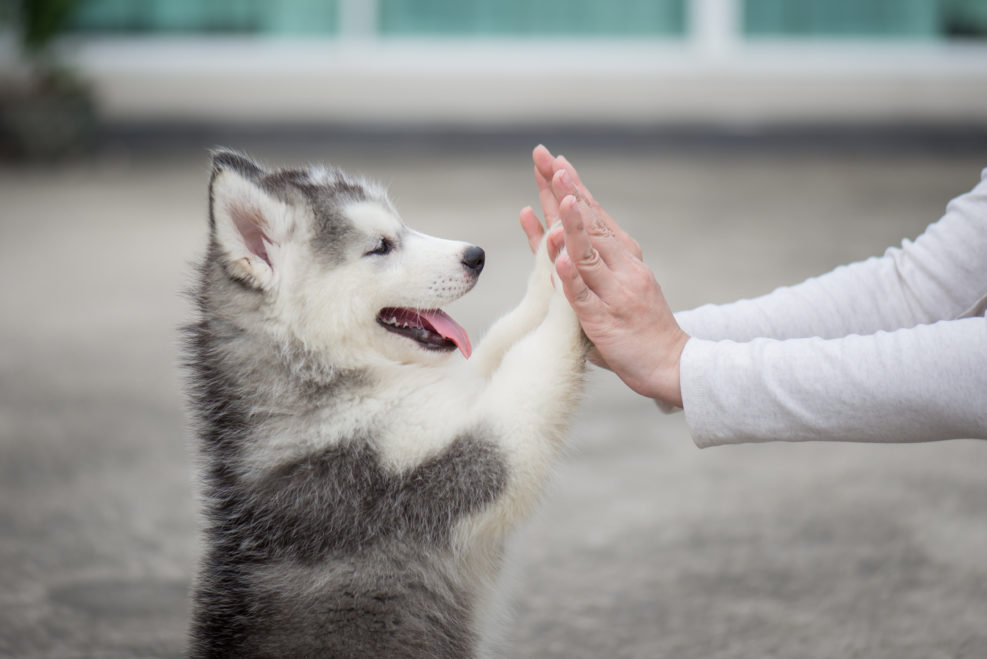
labrador-welpe-und-junge-frau-geben-sich-ein-high-five-stockpack-adobe-stock.jpg
Labrador Welpe und junge Frau geben sich ein High Five

Researchers: Dogs Are Hardwired To Understand Us

Recent research on nearly 400 Labrador puppies reveals a genetic basis for a tendency to look to humans for guidance

Considerable mystery surrounds the question of why dogs achieve a close emotional relationship with humans. Chimpanzees are genetically very much closer to us but few of us bond with them. So the ability is not obviously genetic — but recent findings point to at least one genetic component: Puppies seem naturally adapted to learn the significance of a common human communication method, pointing: Scientists have known for more than 2 decades that dogs understand the logic behind a surprisingly complex gesture: When we point at something, we want them to look at it. That insight eludes even our closest relatives, chimpanzees, and helps our canine companions bond with us. But it’s been unclear whether pooches acquire this ability simply by Read More ›

thumbs-up-on-bricks-wall-stockpack-adobe-stock.jpg
Thumbs up on bricks wall

Facebook Exec Admits the Company Has Too Much Power

He worries, talking with an undercover reporter, that Zuckerberg is 36 and is “the ruler” of two billion people

In a video titled “KING ZUCK: Facebook Global Planning Lead Reveals Dire Need For Government Intervention In Facebook” (March 15, 2021), we hear an insider’s view from Benny Thomas, Facebook’s Global Planning Lead— who told what he knew to a Project Veritas undercover reporter. From the undercover interview: Benny Thomas: I’ll make less money but it will be a better thing for the world. Facebook and Google are too powerful and they need to be made less powerful … It needs to be broken up the way the telecom companies were broken up and the oil companies were broken up.” No king in the history of the world has been the ruler of two billion people. And he’s 36. [a Read More ›

close-up-of-a-red-ant-face-in-white-stockpack-adobe-stock.jpg
close up of a red ant face in white

Can Insects, Bacteria, and Plants Have Personalities Too?

If personality amounts to observed individual differences in behavior, the answer is yes, though the issues are more complex for plants

Yesterday, we looked at a paper in which researchers reported that marmosets (a South American monkey) have personalities. Most of us would simply assume that they do and we are right to think so. Research on many vertebrate animal species shows that even reptiles and fish have personalities. Of course, the number of dimensions a vertebrate’s personality can have varies with its intellectual and lifestyle complexity. But now, what about the vast world of the invertebrates, the life forms whose body is not organized around a spinal cord terminating in a brain? Their body plans can vary from that of a starfish through to a honeybee. Can they have personalities, despite very different brain arrangements, including — in some cases Read More ›