Mind Matters Natural and Artificial Intelligence News and Analysis

Denyse O'Leary

bacteria-stockpack-adobe-stock
bacteria

Would Cognition in Bacteria “Dethrone” Humans?

A cognition researcher’s approach to the question helps account for the growing popularity of panpsychism — as an alternative

Of course we can “see ourselves” as an earthworm. But it doesn’t work in reverse. And Pamela Lyon sheds no light on that fact, apart from denigrating humans.

Read More ›

Girls eye with paint and earth

Why Panpsychism Is Starting To Push Out Naturalism

A key goal of naturalism/materialism has been to explain human consciousness away as “nothing but a pack of neurons.” That can’t work

Panpsychism is not dualism. By including consciousness — including human consciousness — as a bedrock fact of nature, it avoids naturalism’s dead end.

Read More ›
black-female-student-in-front-of-chalkboard-stockpack-adobe-stock
Black female student in front of chalkboard

If Reality Is Fundamentally Mathematical, Why the War on Math?

Just as physicists are recognizing the mathematical nature of reality more clearly, the basic idea of getting math right is under fire in our schools

Sam Baron, a philosophy prof at Australian Catholic University, whose specialty is the philosophy of mathematics, argues in a new paper that mathematics is not a human invention. It gives structure to the world we live in. We simply observe it. So do many life forms, it seems. He offers an example: There are two subspecies of North American periodical cicadas that live most of their lives in the ground. Then, every 13 or 17 years (depending on the subspecies), the cicadas emerge in great swarms for a period of around two weeks. Why is it 13 and 17 years? Why not 12 and 14? Or 16 and 18? One explanation appeals to the fact that 13 and 17 are Read More ›

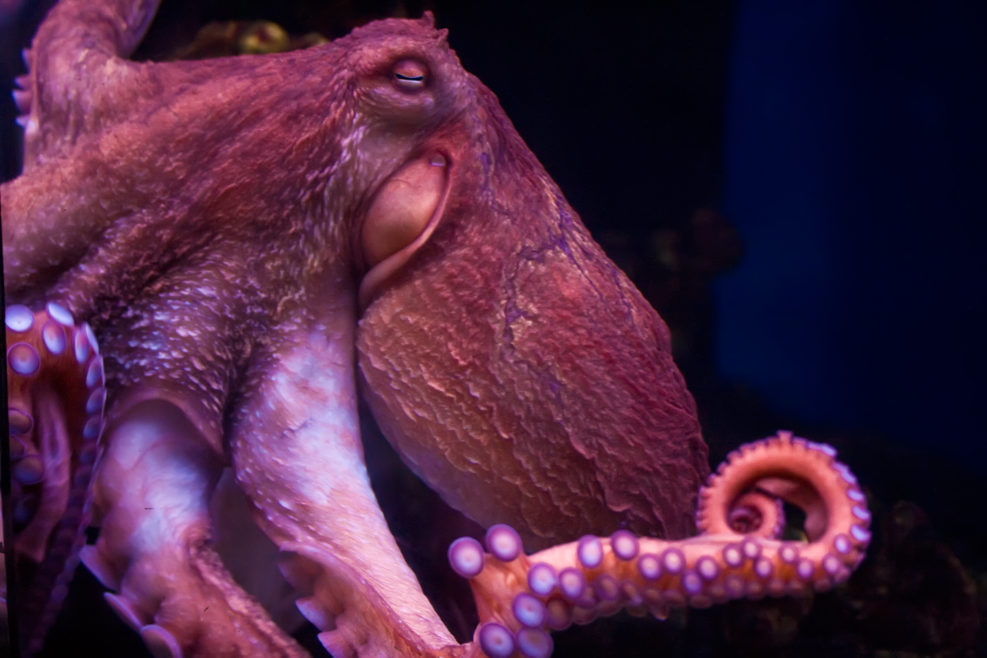
octopus-stockpack-adobe-stock
Octopus

British Government Moves To Protect Octopuses From Cruelty

The move to protect cephalopods and crabs/lobsters follows from research showing their intelligence and awareness of pain

Following a report from the London School of Economics and Political Science, the British government has decided to extend animal protection laws to include “cephalopods (including octopuses, squid and cuttlefish) and decapods (including crabs, lobsters and crayfish).” No, this is not just another nut moment along the lines of “Salad is plant murder!” There’s a background: Researchers have discovered in recent decades that some invertebrates, especially those with complex central nervous systems, are much more intelligent and capable of experiencing pain (sentient) than we used to think. As George Dvorsky explains at Gizmodo, the British government introduced the Animal Welfare (Sentience) Bill in May. The bill defined sentient animals as animals with backbones (vertebrates). However, scientists have known for some Read More ›

open-eye-in-space-stockpack-adobe-stock
open eye in space

A Darwinian Biologist Resists Learning To Live With Panpsychism

Jerry Coyne makes two things quite clear: He scorns panpsychism and he doesn’t understand why some scientists accept it

The differences between panpsychism and naturalism are subtle but critical. As panpsychism’s popularity grows, insight will be better than rage and ridicule.

Read More ›
stand-out-from-the-crowd-and-different-creative-idea-concepts-one-red-3d-social-media-notification-love-like-heart-pin-icon-pop-up-from-others-on-light-green-pastel-color-wall-background-3d-rendering-stockpack-adobe-stock
Stand out from the crowd and different creative idea concepts One red 3d social media notification love like heart pin icon pop up from others on light green pastel color wall background 3D rendering

Indie Social Medium Now Shows Big Gain Due to Big Tech Censorship

Rumble recently received backing from venture capitalist Peter Thiel, PayPal and Facebook co-founder

In the current issue of City Journal, Steven Malanga looks at the traffic Silicon Valley is losing. Not much was expected of Rumble, an alternative YouTube founded in 2013 by Canadian entrepreneur Chris Pavlovski. But it hung on until 2020, when YouTube stepped up its efforts to remove content inconsistent with its public-spirited values or with its parent company Google’s political alliances — depending on who you talk to. At any rate, high-profile commentators were looking fora new home. And they found one: In just ten months, Rumble’s online viewership has increased 25-fold. The company has attracted funding from prominent venture capitalists and recently completed a series of deals to bring such outspoken voices as Greenwald, Gabbard, and Joe Rogan Read More ›

neuron-close-up-stockpack-adobe-stock
Neuron close up

Human Neurons, Brains, Much More Efficient Than Animal Ones

What was formerly thought to be “junk DNA” differs between humans and chimpanzees and plays a role in brain development

What makes humans different should be straightforward, right? We should, for example, have more complex neurons than ferrets and macaques. But we don’t. We have simpler ones: Neurons communicate with each other via electrical impulses, which are produced by ion channels that control the flow of ions such as potassium and sodium. In a surprising new finding, MIT neuroscientists have shown that human neurons have a much smaller number of these channels than expected, compared to the neurons of other mammals. MIT, “A Striking Difference Between Neurons of Humans and Other Mammals” at Neuroscience News (November 10, 2021) The paper requires a subscription. In the most extensive study of its kind, nine other mammals were studied. Larger mammals have larger Read More ›

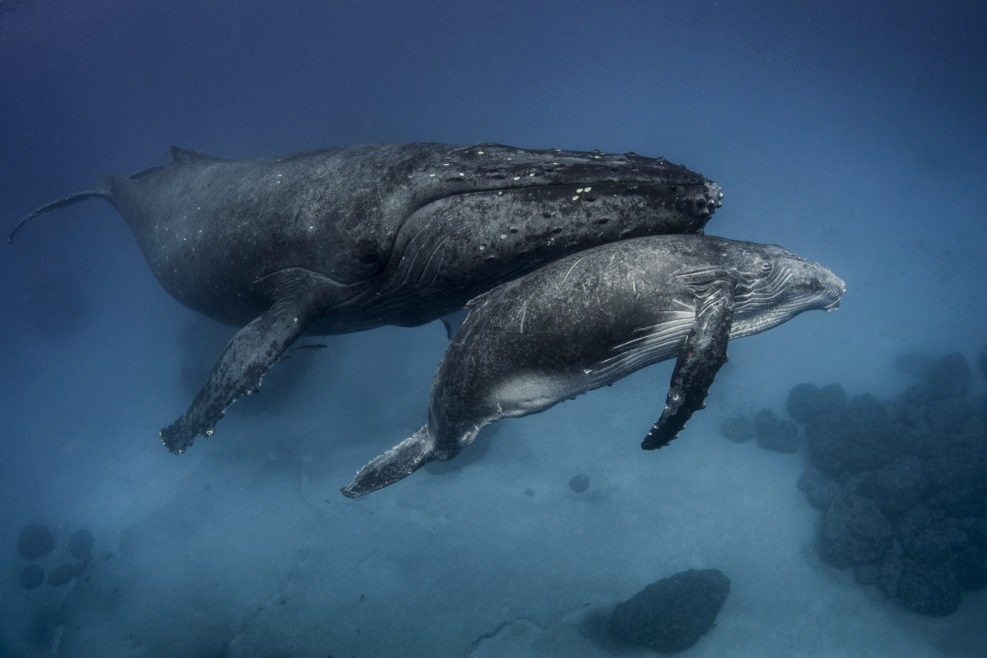
female-humpback-whale-with-calf-stockpack-adobe-stock
Female humpback whale with calf

Can AI Help Us Talk to Whales? Maybe. But Then What?

In the real world, if we succeed in communicating with whales, it will be much like communicating successfully with dogs, cats, and horses. None of them are furry people.

A recent article in the Smithsonian Magazine holds out the hope that AI can help enable us to talk with whales: The clicks of sperm whales are ideal candidates for attempting to decode their meanings—not just because, unlike continuous sounds that other whale species produce, they are easy to translate into ones and zeros. The animals dive down into the deepest ocean depths and communicate over great distances, so they cannot use body language and facial expressions, which are important means of communication for other animals. “It is realistic to assume that whale communication is primarily acoustic,” says Bronstein. Sperm whales have the largest brains in the animal kingdom, six times the size of ours. When two of these animals Read More ›

bacteria-stockpack-adobe-stock
bacteria

University of Chicago Biochemist: All Living Cells Are Cognitive

James Shapiro’s recent paper points out, with examples, that bacteria meet the Oxford English Dictionary’s definition of “cognitive”

University of Chicago biochemist and evolutionary biologist James Shapiro has a message that those who believe that consciousness is an illusion (as, for example, philosopher Daniel Dennett claims) should heed: If all living things are “cognitive” then, to what extent would life itself have to be an illusion? Something’s wrong there. Let’s follow the thread of what Shapiro is saying. He takes a simple approach: If bacteria and archaea, thought to be the oldest, simplest life forms from at least 2 billion years ago, can be shown to have cognitive processes, then it stands to reason that most (if not all) of the more complex life forms have them too: All living cells sense and respond to changes in external Read More ›

shocked-woman-holding-laptop-being-picked-blamed-by-many-people-in-the-internet-stockpack-adobe-stock
shocked woman holding laptop being picked blamed by many people in the Internet

Silicon Valley: From Laid Back Hippies to Top Cops…What Happened?

A political science prof traces the steps by which the naive assumptions of the early Valley morphed into shadow banning, outright banning, and so forth

Political scientist Jon Askonas offers a grim but somehow strengthening look at how Silicon Valley morphed from Apple’s revolt against 1984 to an increasingly comfortable relationship with totalitarian China. We must, he says, go back to the beginning. First, this is how Apple saw itself in 1984: Most of Silicon Valley saw itself that way — liberating people from authoritarianism. So what happened? In an incisive essay at The New Atlantis, Askonas offers some thoughts on what’s changed: ➤ First, he says, the Valley was very much influenced by 1970s California hippie beliefs about human nature that did not long survive realities like this: Faced with deadly riots in unstable societies caused by Facebook posts, Facebook tweaked its algorithms in Read More ›

Group of people holding hands praying worship believe

Compassion and Religion: Darwin’s Unscratchable Itches

If one’s research is in a hole as deep as evolutionary psychology is when accounting for compassion, why not stop digging?

Last Sunday, I pointed to a chapter I wrote in The Comprehensive Guide to Science and Faith: Exploring the Ultimate Questions About Life and the Cosmos (2021) on evolutionary psychology, best understood as the psychology we have derived from our not-quite-human ancestors. “Not-quite-human ancestors”? Well, if you believe in conventional evolution theory at all, you must suppose that we have not-quite-human ancestors. Thus, to understand the origin of traits like giving to the Heart & Stroke Fund or subscribing to popular science magazines, we must get back to a point before any such institutions could have existed but there was some sort of dim potential. But we can’t really do that because, as noted last Sunday, there is no such Read More ›

the-altamira-caves-spanish-rock-art-it-is-the-highest-representation-of-cave-painting-in-spain-stockpack-adobe-stock
The Altamira Caves. Spanish rock art. It is the highest representation of cave painting in Spain

There Is No Such Thing as a Fossil Mind

A chapter on evolutionary psychology in Comprehensive Guide to Science and Faith (2021) looks at the curious discipline of evolutionary psychology

This month, the The Comprehensive Guide to Science and Faith: Exploring the Ultimate Questions About Life and the Cosmos (Harvest House 2021) appeared. The basic theme of the handbook, as described by editors design theorist William Dembski and Joseph Holden is “Science and Christianity are often presented as opposites, when in fact the order of the universe and the complexity of life powerfully testify to intelligent design.” I wrote one of the chapters, “What is evolutionary psychology?”. It concerns the effort to understand human psychology by appealing to a prehuman (“evolutionary”) past. As such, it explains a large variety of human behaviours as the unconscious enactment of a Darwinian survival scenario among not-quite humans that is wired into modules in Read More ›

dog at grave of tom sayer
Tomb of bare-knuckle fighter Tom Sayer on Highgate Cemetery

A Philosopher Simply Invents Animals’ Concept of Death

She demands that we accept her invention so we can “rethink” human exceptionalism, and the “disrespect for the natural world that comes with it”

Last week I talked about the question of whether primate mothers who carry dead infants around understand the concept of death. The scientists conducting the research sounded commendably cautious in the conclusions they drew. Not everyone follows their lead in this. Susana Monsó, professor of philosophy at UNED (Madrid) is the author of La zarigüeya de Schrödinger (Schrödinger’s Possum), “ a book on how animals experience and understand death,” and she dispenses with such caution. Her subtitle is “Having a concept of death, far from being a uniquely human feat, is a fairly common trait in the animal kingdom.” Yet she falls far short of demonstrating that. Her essay is a classic on what happens when we seek simply to Read More ›

ile-aux-singes-stockpack-adobe-stock
Île aux singes

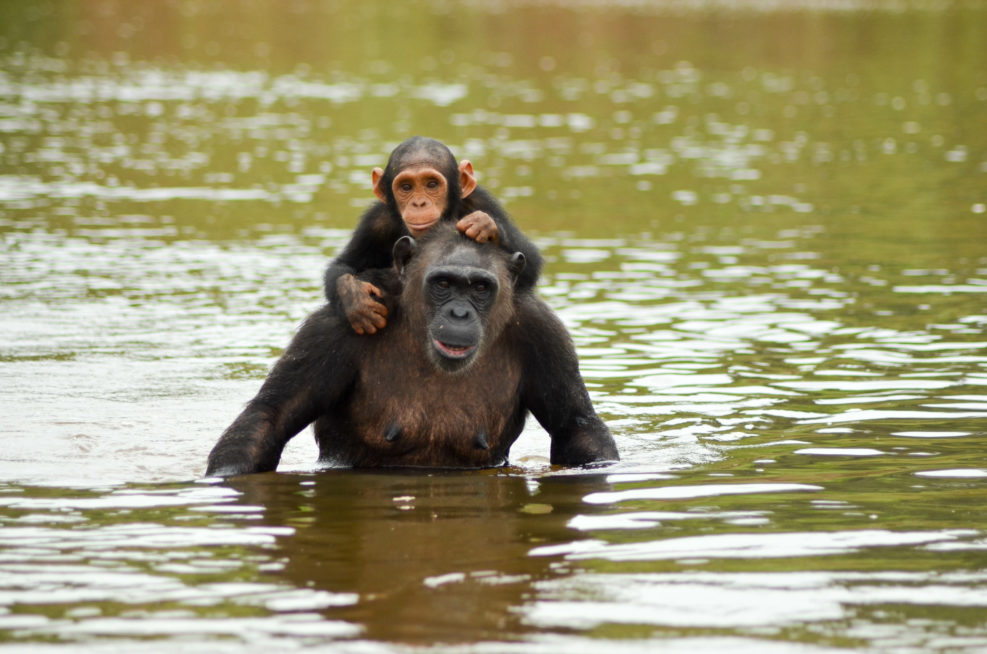
Does a Chimp Mom Who Carries a Dead Baby Around Understand Death?

In a recent study of primate mothers, researchers imply that their behavior shows a growing awareness of the nature of death

That is a trickier question than it first seems. Researchers looked into the habit some primate moms have of carrying a baby who has died, sometimes for months: Published today in Proceedings of the Royal Society B, the researchers compiled data from anecdotes reported in 126 publications on primate behaviour. In the largest study of its kind, researchers undertook the most extensive and rigorous quantitative analysis to date of a behaviour known as “infant corpse carrying” in primate mothers, looking at 409 cases across 50 species. While there is debate among scientists around whether primates are aware of death, this new study suggests that primate mothers may possess an awareness — or be able to learn about death over time. Read More ›

earth-magnetic-field-stockpack-adobe-stock
Earth magnetic field

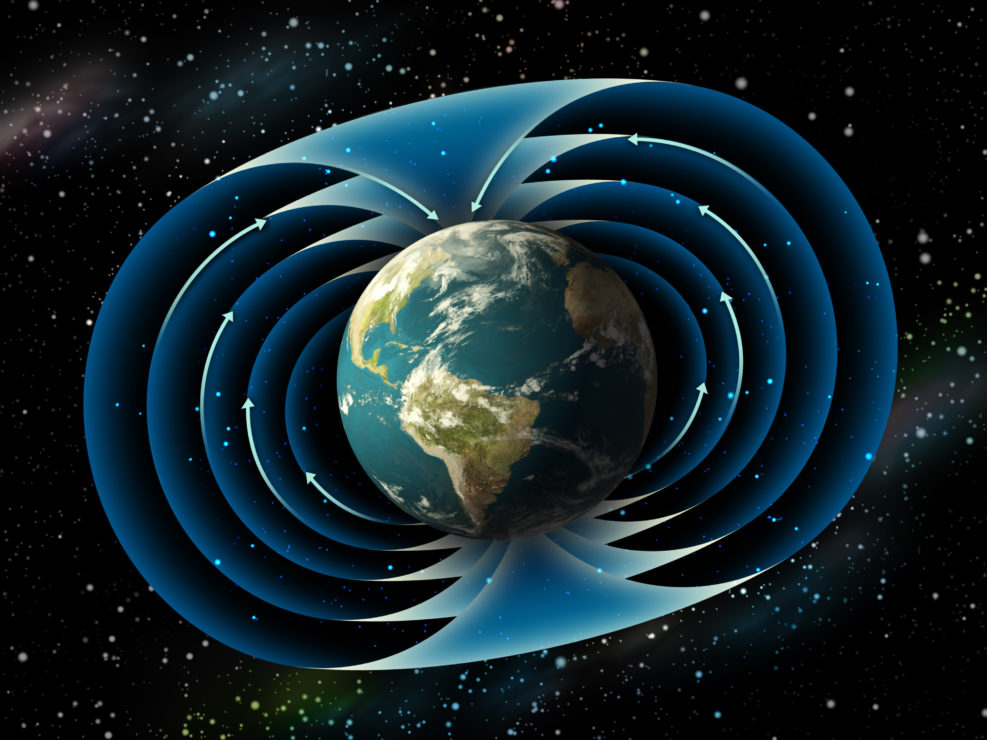
Physicist: Migrating Birds’ Mysterious Quantum Sense Is “Spooky”

Birds like the European robin pack a $10,000 lock-in amplifier into a 2 micron cell

Earlier this year, the night-migratory European robin (Erithacus rubecola) made the headlines. Evidence has emerged that it may be using quantum mechanical effects to sense Earth’s magnetic field in order to migrate. Few expected to find quantum mechanical manipulation in the eye of a bird. Zoologist Eric Warrant, who was not involved in the research, says, that magnetic direction sensing is “the last sense we know, effectually, nothing about.” But this mysterious intelligence appears essential to migration, and hence, to the survival of many birds. So how, exactly, do they do it? Humans perceive the world around them with five senses — vision, hearing, taste, smell and touch. Many other animals are also able to sense the Earth’s magnetic field. Read More ›

computer-system-error-stockpack-adobe-stock
Computer System Error

Facebook Outage: Not a Hack But Shows Dire Need for Competition

Monday’s Facebook outage was a sobering lesson on the power (and, ironically, helplessness) of monopoly Big Social Media

As the New York Times put it, “When apps used by billions of people worldwide blinked out, lives were disrupted, businesses were cut off from customers — and some Facebook employees were locked out of their offices.” (October 4, 2021) A less sympathetic source writes, As of publishing time, Facebook has been down for several hours, along with WhatsApp, Instagram, Messenger, and Oculus VR. But that’s just the beginning. The social media behemoth’s stock prices also crashed on Monday, making the company’s already bad day even worse. The plummet in stock prices came as a Facebook executive was on CNBC defending the company against claims by a whistleblower that the company prioritized profit over the safety of young Facebook users. Read More ›

canceled person
Cancel Culture Symbol

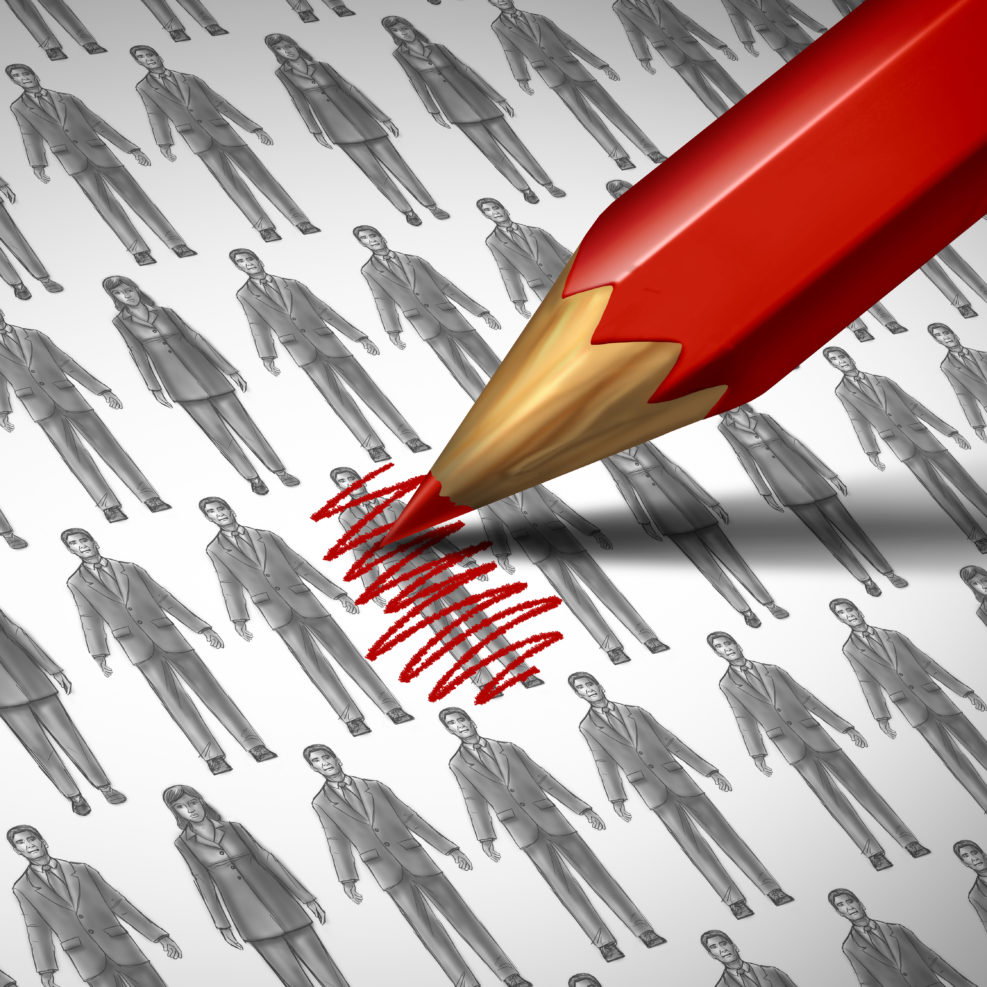
Database! One Stop Shop for Tracking Attacks by Cancel Culture

Looking at a number of entries at once helps us grasp the extent of the takeover of our culture, especially at universities, by grievance mobs

One used to hear many people say “Cancel Culture is so ridiculous, it will go away soon.” Well, that’s not happening. Evolutionary biologist Jerry Coyne, who usually writes about other matters, discusses two representative incidents: The removal of a book review at Science-Based Medicine written by one of its own editors because it was deemed too friendly to Abigail Shrier’s book, Irreversible Damage (2021), on the 4,400% rise from from 2008 to 2018 of teenage females seeking to transition to males — and the curious absence of rigorous studies that might account for the astounding increase. Coyne notes I read Shrier’s book and thought it was fair, empathic, and certainly not transphobic. But because Shrier was unfairly accused of transphobia Read More ›

mini-robot-work-stockpack-adobe-stock
mini robot work

Love Among the Ruins, for Robots — Sci-fi Saturday

A beautifully rendered animated short of robots looking for some place to just exist in a deserted, ruined industrial landscape

“Left Behind” at DUST by Minna Ericksson and Kateriina Kontturi at Xero Shorts (May 1, 2021, 7:14 min, animated) A lone robot walks the desolate landscape in search of a new life. It finds one in a unexpected place. Review: In a ruined, dystopian industrial landscape, a large robot (presumably laid off from a shut down enterprise) searches for a new place to be. The robot finds a cute baby robot that, duckling fashion, immediately bonds and begins to follow it around. The giant robot is none too pleased and tries, at first, to shed its unwanted companion. Then the baby robot begins to dance and… no more spoilers. This animation is not a laff riot; the climax reaches for Read More ›

set-of-numbers-1-2-3-made-of-leather-3d-render-font-with-skin-texture-isolated-on-black-background-stockpack-adobe-stock
Set of numbers 1, 2, 3 made of leather. 3D render font with skin texture isolated on black background.

Further Dispatches From the War on Math

Discussions of social policy where math is relevant can be useful. But a student who does not understand how an equation works will fail at both math AND social policy

Earlier this year, I reposted an article that originally ran at Salvo on the war on the teaching of mathematics as a discipline in publicly funded schools in North America. The war continues so here are some updates: Recently, three mathematicians who immigrated to the United States weighed in: The United States has been dominant in the mathematical sciences since the mass exodus of European scientists in the 1930s. Because mathematics is the basis of science—as well as virtually all major technological advances, including scientific computing, climate modelling, artificial intelligence, cybersecurity, and robotics—US leadership in math has supplied our country with an enormous strategic advantage. But for various reasons, three of which we set out below, the United States is Read More ›

cutting card
Male hand cutting banking card with scissors

The New Internet: Reclassify Political Opponents as “Hate Groups”

Maybe this is something to talk to legislators about

You don’t want your tax money spent in a certain way? Maybe you are a “hater.” Increasingly, bad things can happen as a result. Even from corporations you trust. A friend has pointed out that many American corporations are not nearly so interested in making money these days as they are in politically correct positioning. Consider the current trend toward depublishing books the public wants to read and “de-newsing” news stories people want to hear. But the trend is growing beyond books and news. It could affect your right to bank and use credit institutions. Successful entrepreneur David Sacks has the story at Substack about how concerns about “hate speech” can further an agenda: Just as there is no set Read More ›