TagPanpsychism (vs. materialism)


The Battle Over the Human Mind Split Two Great Thinkers
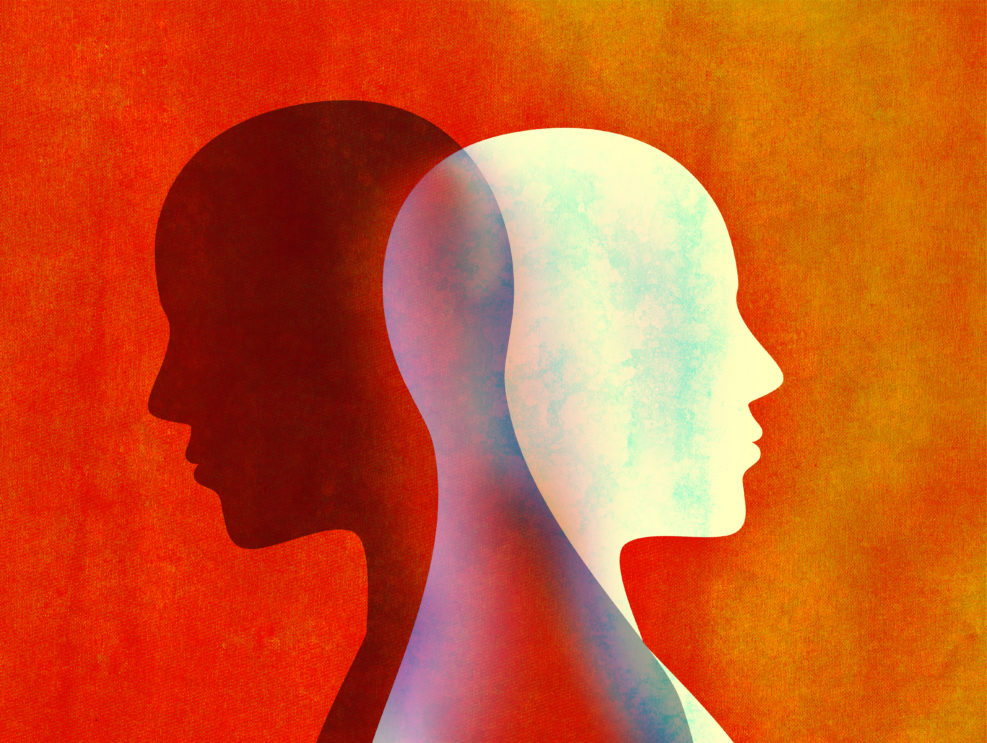
Charles Darwin opted for a materialist model; his co-theorist Alfred Russel Wallace insisted that the mind was not just the brainCharles Darwin (1809–1882) and Alfred Russel Wallace (1823–2013) share the credit, technically, for the theory of evolution by natural selection but Darwin became the icon. One reason they parted ways was that Wallace did not agree with Darwin that the human mind was simply an organ that evolved naturally, like any other. There had to be something more to it. Philosopher Neil Thomas explains: In his older years Wallace came to reject natural selection as an explanation for the unfurling of all human and even animal life. By then he had transitioned towards the espousal of a form of natural theology; but his initial and gravest misgiving in the 1860s was focused four-square on the mystery of how the human Read More ›

Would Cognition in Bacteria “Dethrone” Humans?
A cognition researcher’s approach to the question helps account for the growing popularity of panpsychism — as an alternative
Neuroscientist: Even Viruses Are Intelligent
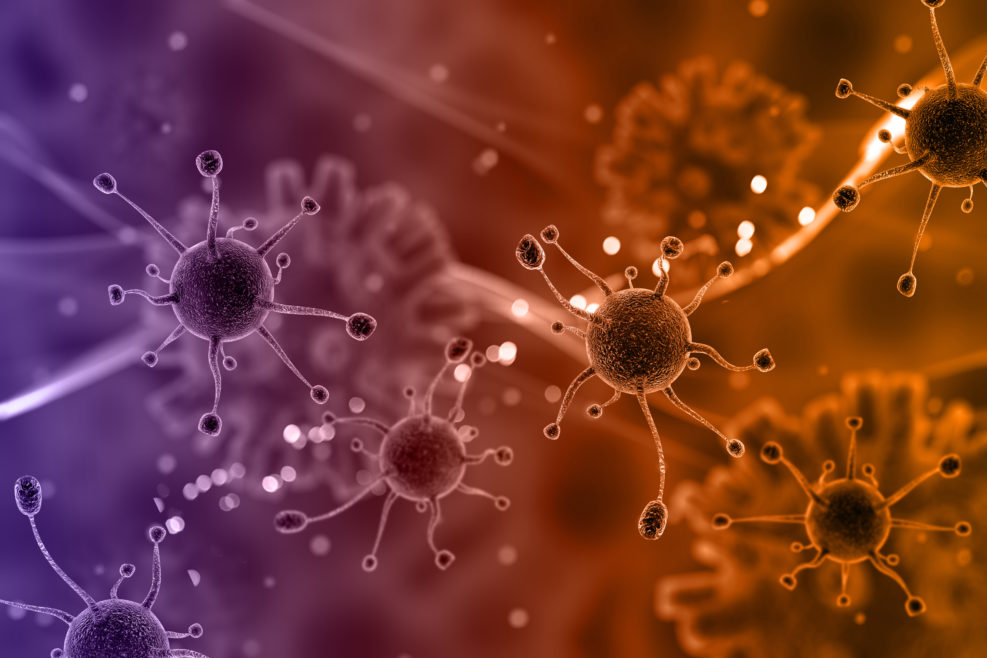
Antonio Damasio says, in the excerpt from his new book, that — based on the evidence — we cannot deny viruses “some fraction” of intelligence
University of Chicago Biochemist: All Living Cells Are Cognitive
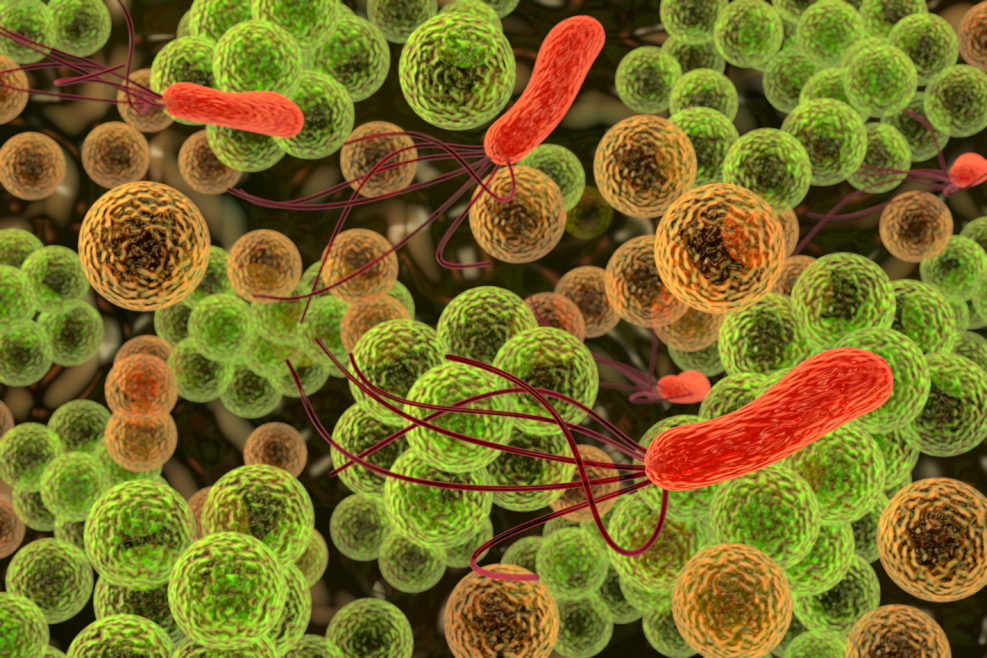
James Shapiro’s recent paper points out, with examples, that bacteria meet the Oxford English Dictionary’s definition of “cognitive”University of Chicago biochemist and evolutionary biologist James Shapiro has a message that those who believe that consciousness is an illusion (as, for example, philosopher Daniel Dennett claims) should heed: If all living things are “cognitive” then, to what extent would life itself have to be an illusion? Something’s wrong there. Let’s follow the thread of what Shapiro is saying. He takes a simple approach: If bacteria and archaea, thought to be the oldest, simplest life forms from at least 2 billion years ago, can be shown to have cognitive processes, then it stands to reason that most (if not all) of the more complex life forms have them too: All living cells sense and respond to changes in external Read More ›

Researchers: The Universe Simulated Itself Into Existence
A recent physics journal paper proposes self-simulation as the origin of the universe, using a quantum gravity modelYesterday, we looked at “Untitled Earth Sim 64,” a science fiction comedy based on the idea that Earth is a messed up simulation — created by entities that are in themselves simulations. And maybe their simulators were in turn simulated… And so forth. The problem is, where’s the original? Surprisingly, perhaps, there is a physics theory that offers an answer: The universe simulated itself: A new hypothesis says the universe self-simulates itself in a “strange loop”. A paper from the Quantum Gravity Research institute proposes there is an underlying panconsciousness. The work looks to unify insight from quantum mechanics with a non-materialistic perspective. How real are you? What if everything you are, everything you know, all the people in your Read More ›

Do Any Dogs Go To Heaven? If So, Why?
Neuroscientist Christof Koch was troubled as a child by the Catholic tradition that dogs like his beloved Purzel did not go to heaven
Quick Facts on IIT (the Leading Theory of Consciousness)
IIT may be part of a trend in science in which emergence and panpsychist theories are slowly replacing materialist and physicalist onesConsciousness, as a concept, is so easy to experience and so hard to define. Or explain. The most popular current theory of consciousness is Integrated Information Theory (IIT), pioneered by neuroscientist Giulio Tononi and championed by Allen Institute neuroscientist Christof Koch. For the purpose of discussing IIT, science writer Mike Hogan works with this definition: Consciousness for purposes of this theory is defined as ‘self-awareness’ or the Central-Identity; the inner-voice that allows your brain to talk to itself, an awareness that ‘you’ exist, the rationalization of your own relevance to that existence, and an awareness of the cause and effect of your actions in regard to yourself and your environment. Mike Hogan, “The Best Available Story of Human Consciousness” at Read More ›

A Physicist and Philosopher Examines Panpsychism
Idealism says everything is an idea in the mind of God. Panpsychism says everything participates in consciousness (thus is not just an idea)
Can Mathematics Help Us Understand Consciousness?
Gregory Chaitin asks, what if the universe is information, not matter?In last week’s podcast, “The Chaitin Interview IV: Knowability and Unknowability,” Walter Bradley Center director Robert J. Marks interviewed mathematician Gregory Chaitin, best known for Chaitin’s Unknowable Number, on, among other things, consciousness. What can mathematics contribute to the discussion. Also, what does Chaitin think about panpsychism (everything is conscious”)? The discussion began with reference to David Chalmers’s 1996 book, The Conscious Mind: In Search of a Fundamental Theory, in which Chalmers coined the term “Hard Problem of Consciousness.” The term acknowledged what everyone knew, that human consciousness is a very difficult problem to understand, especially from a materialist perspective.Are there other approaches? Chaitin offers a look at the challenge panpsychism presents to materialism: https://episodes.castos.com/mindmatters/Mind-Matters-127-Gregory-Chaitin.mp3 This portion begins at 28:25 Read More ›