
Mind Matters Natural and Artificial Intelligence News and Analysis

Brendan Dixon

xavier-lee-304841-unsplash
Light streaks from moving cars at night

Autopilot Is NOT Just Another Word for “Asleep at the Wheel”

As a recent fatal accident in Florida shows, even sober, attentive drivers often put too much trust into Tesla’s Autopilot system, with disastrous results

Like all tools, AI systems, when used correctly, can augment our abilities, but they are nowhere near replacing us. And we endanger ourselves, and others, when we believe they can.

Read More ›


Film studio with cameras and movie equipment
Film studio with cameras and movie equipment exposing edge of facade

Could AI Authentically Create Anything?

Brendan Dixon: The first question posed to me as an artist was,“What are you trying to say?”

Du Sautoy believes that AI will “in the distant future” achieve consciousness. For that, we have no evidence. It is a statement of religious faith akin to that of Anthony Levandowski’s AI Church.

Read More ›
rohan-makhecha-408608-unsplash

Why AI Fails To Actually Create Things

Only one of the traits du Sautoy suggests is an essential part of creativity

Du Sautoy’s fourth trait—“originality of a truly independent nature”—is a useful part of the definition of creativity. It is, however, the one trait that he admits is missing from AI’s “creative” attempts

Read More ›
the game of go
the game of go

Why AI Appears To Create Things

When AlphaGo made a winning move, it exhibited no more creative insight than when it played pedestrian moves

Our surprise at AlphaGo’s move says more about our inability to predict what a program will do than about any creative effort of the program. We’ve known for decades that we cannot predict the results of any moderately complex computer program.

Read More ›
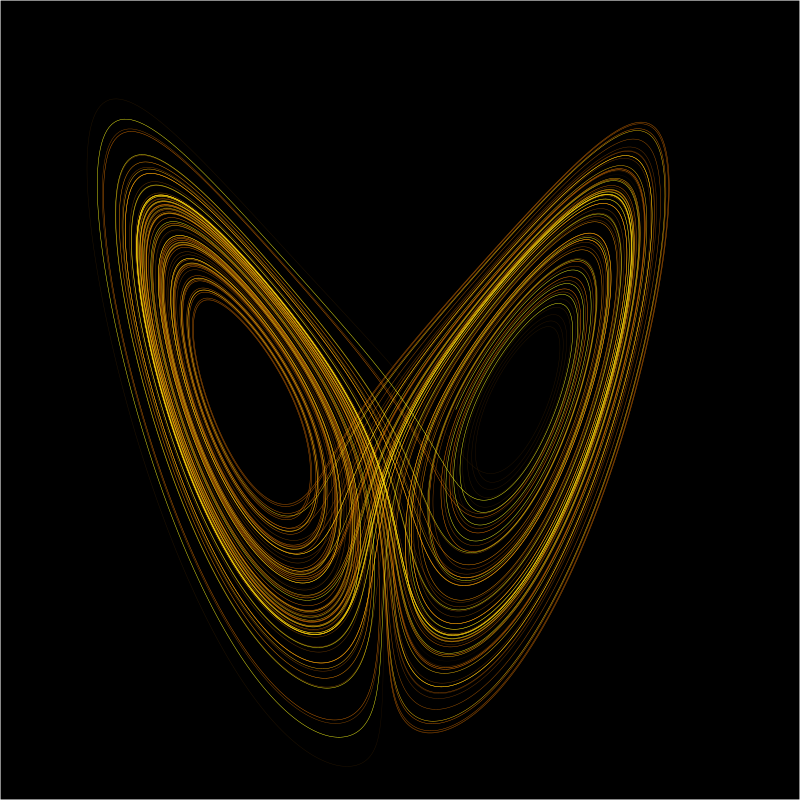
Lorenz Attractor of Chaos Theory Wikimol Dschwen

Does the Butterfly Effect Sharply Limit AI’s Power?

Our world and our lives are more complex, and even chaotic, than math allows

Edward Lorenz discovered that certain systems—notably those in which we live and move, such as weather, economies, and traffic—are inherently unpredictable.

Read More ›
jj-ying-525664-unsplash
Taxi in traffic

News from the Real World of Self-Driving Taxis: Not Yet

WayMo includes a human in all their “robotaxis,” just in case, because the vehicles (at last report) were still confounded by common conditions

Hype serves no one other than the early investors hoping to get their cash back. Calm evaluations—and an appreciation for the amazing beings that humans are—would serve all of us much better than overpromised claims that are doomed to under deliver.

Read More ›
alphabet-close-up-communication-278887
Scrabble pieces with numbers and letters

The Numbers Don’t Speak for Themselves

The patterns uncovered by machine learning may reflect a larger reality or just a bias in gathering data

Because Machine Learning is opaque—even experts cannot clearly explain how a system arrived at a conclusion—we treat it as magic. Therefore, we should mistrust the systems until proven innocent (and correct).

Read More ›
Internet academic learning, e-learning and online college education concept theme with close up on graduation cap with red tassel on computer keyboard
Mortar Board on top of keyboard

Artificial Intelligence Is Actually Superficial Intelligence

The confusing ways the word “intelligence” is used belie the differences between human intelligence and machine sophistication

Words often have more meaning than we hear at first. Consider colors. We associate green with verdant, healthy life and red with prohibition and danger. But these inferences are not embedded in the basic meaning of “red” or “green.” They are cultural accretions we attach to words that enable the richness of language. That, by the way, is one reason why legal documents and technical papers are so difficult to read. The terms used are stripped clean of such baggage, requiring additional words to fill the gaps. The word “intelligent” is like that. Saying that a computer, or a program, is intelligent can lead us down a rabbit hole of extra meaning. An honest researcher merely means the computer has Read More ›

tom-barrett-329280-unsplash
View of Lake Michigan from the Memorial Museum in Milwaukee, Wi

AI Winter Is Coming

Roughly every decade since the late 1960s has experienced a promising wave of AI that later crashed on real-world problems, leading to collapses in research funding.

Nearly all of AI’s recent gains have been realized due to massive increases in data and computing power that enable old algorithms to suddenly become useful. For example, researchers first conceived neural networks—the core idea powering much machine learning and AI’s notable advances—in the late 1950s. The worries of an impending winter arise because we’re approaching the limits of what massive data combined with hordes of computers can do.

Read More ›
joshua-sortino-215039-unsplash

The “superintelligent AI myth”

The problem that even the skeptical Deep Learning researcher left out

I largely agree with what François Chollet said last year as to why there will be no explosion of general artificial intelligence. But when he challenged the fear of an AI-driven “intelligence explosion,” he, perhaps unwittingly, said more than he meant.

Read More ›