Who Owns Your Mind’s Creative Work? Who Owned Dolly Parton’s?
The unsettling logic driving the movement to abolish copyright — and the counterargument rooted in the mind itselfWeddings, funerals, breakups at 2 a.m. — one song always shows up: “I Will Always Love You.” Whitney Houston sent it into the stratosphere. Lorelai Gilmore poured it out on Gilmore Girls.
Yet it arose out of Dolly Parton’s soul in 1974, pure emotion turned into melody, lyrics, and musical history.
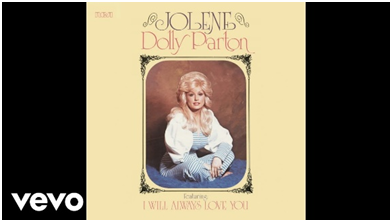
So it’s Dolly’s song, right? It’s hers, she wrote it, she can license it, she can get paid for it. Right?
Not according to attorney Stephan Kinsella. His 2025 article, “The Problem with Intellectual Property,” argues that Dolly shouldn’t have any rights to her own song. By that logic, she owns the paperclip holding her sheet music more than she owns the song itself.
The movement to abolish your copyright
Kinsella is a nationally known lawyer and libertarian writer. His claim: No one owns the creative products of their own mind — not a song, not a painting, not a novel. He puts it bluntly: “that all forms of Intellectual Property should be abolished entirely, not merely reformed; that IP rights are unjust and incompatible with legitimate property rights.” Translation: composers and authors don’t actually own their own work.
Sit with that. Beethoven spent four years on his Fifth Symphony (da-da-da-DAH). He never owned a note of it?
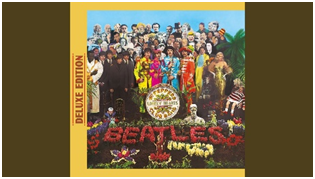
The Beatles poured 350-plus studio hours into Sgt. Pepper’s Lonely Hearts Club Band. Nobody owned the result? Really?
By the same logic, nobody owns any of these, either:
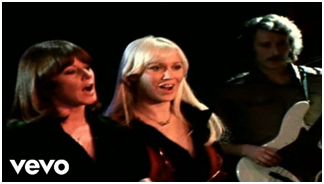
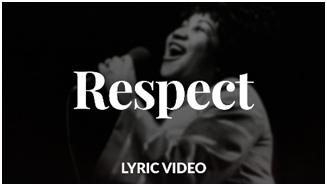
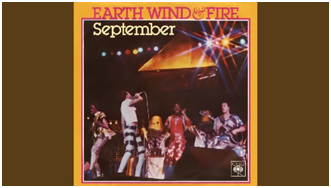
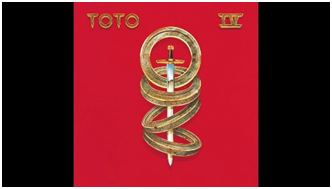
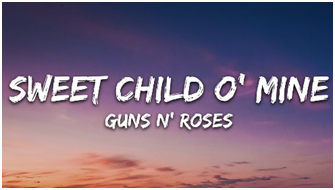
No intellectual property means the people who did the work — the creativity, talent, years, money — get zero protection for it.
The case for devaluing mind-made products
Kinsella isn’t alone; plenty echo his argument: “The purpose of property rights is to support actors in the pursuit of their goals by enabling them to employ resources, including their own bodies, free of physical conflict and interference from other actors. Property rights are inherently practical.”
Their case: Laws protecting songs and books as “property” trample on other people’s property rights. If you own paper, ink, or audio recording gear, why can’t you use it to make copies and sell them as you please? Copyright, in this view, blocks people from freely using things, like copying equipment, they legitimately own.
Without apology, the argument says a corporation could scoop up your songs, mass-produce them, sell millions worldwide — and you don’t get a dime. And Kinsella trumpets: “Material progress is made over time because information is not scarce. It can be infinitely multiplied, learned, taught, and built on. … It is good that ideas are infinitely reproducible.”
His reasoning, condensed:
- A resource becomes owned not because someone creates it, but because someone first occupies the place or totally controls the thing.
- Creation is a source of things having value, but it always involves turning already-owned inputs into a more valuable form. The owner of the transformed materials already owned them before the transformation; the act of transforming them does not create new property rights, even if it creates new things having value.
- A person who claims a previously unowned thing owns it because he occupied, homesteaded, enclosed, or exclusively controls it, not because he created it.
- Creation is neither necessary nor sufficient for ownership or property rights. Society should reject the idea that the act of creating something gives the creator ownership of it.
By this reasoning, Beethoven owned the paper and ink of his musical score — but not the symphony that came from his mind.
Lysander Spooner: Advocate for the human mind
But creative works come from minds! Economic and policy arguments often skip this: Before there’s a song, there’s a mind. Over a century before Kinsella, another lawyer and libertarian, Lysander Spooner, made exactly that case in The Law of Intellectual Property (1855), arguing property is fundamentally a function of the mind:
- Property is simply anything that someone values and which is possessed — that is, has an owner.
- The right of property is the owner’s right of dominion, the right to the exclusive control, dominion, use, and enjoyment of any particular thing.
- The principle of property is that a thing belongs to one person and not to another.
- The human mind owns every thing that is considered property. Bodies own nothing. The mind rules and directs the body it inhabits.
- A person’s ideas are that person’s property, for that owner’s enjoyment and use. Others don’t own those ideas; the owner has absolute dominion over them and may give them away or sell them. Others cannot rightfully force the owner to relinquish those ideas.
- There is no real basis to say that “material wealth is produced by physical labor, and that ideas are produced by intellectual labor.” What we call “physical labor” is in reality performed wholly by the mind, will, or spirit, which uses the bones and muscles merely as tools.
- Typically, when a person’s labor produces or creates a thing, the person owns it. Likewise, when a person’s mind produces creative things, that person owns those things — unless that owner has given or contracted it over to others.
Kinsella treats the mind as incidental. Spooner treats it as the first cause. Which view actually honors the human being behind the work?
Your brain isn’t the whole story
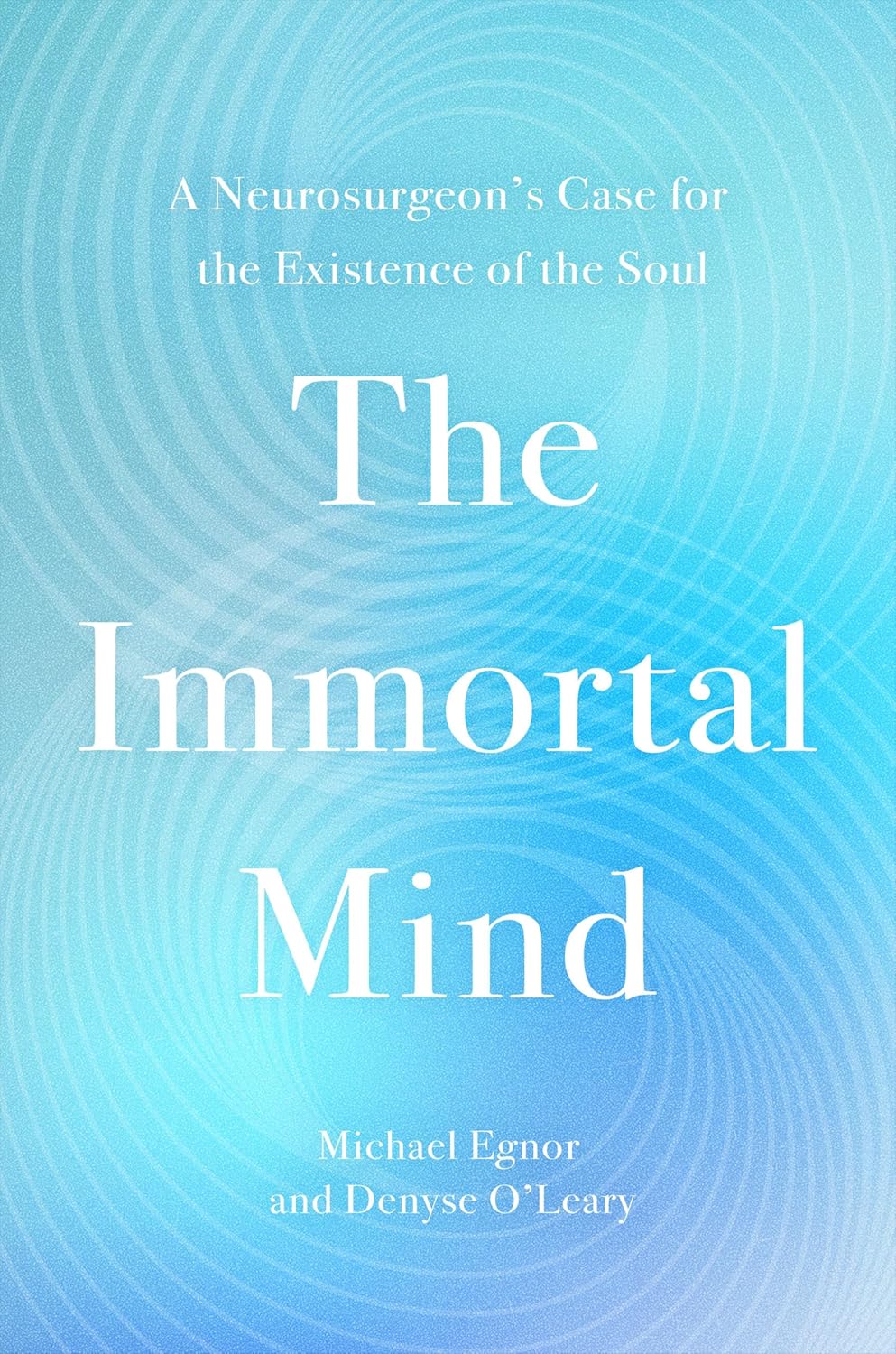 Published by Worthy Books
The anti-intellectual property position implicitly rests upon the assumption that the mind is just a biological brain function. But science-based findings presented in The Immortal Mind (2025), by Dr. Michael Egnor and Denyse O’Leary, show that the mind is not confined to the brain. People retain distinct personalities and thoughts despite lacking large parts of their brain, sustaining damage to, or having surgery done on the brain. Near-death experiences add another layer: Personality and selfhood appear to persist even when brain activity has flatlined, and each account reads as uniquely personal, not some shared, generic consciousness.
So, is creativity purely a brain function? A sweeping 2026 study, “The Neural Basis of Creative Thought,” (open access), reviewed 787 published experiments on where and how creativity happens. Two takeaways:
- Creative thought rests on two foundations: pre-existing knowledge and executive mechanisms that are goal-directed and can transform knowledge.
- Creative thought is tied to general-purpose cognitive systems that support “semantic cognition, episodic memory, and executive control.”
Notice what’s missing: The 2026 study says nothing about the actual content of creativity. Researchers tracked electrical signals and blood flow in brain tissue responding to stimuli — nobody found where a line of poetry or a specific melody actually lives, or how it’s formed, stored and retrieved. The study never even claims the brain is the sole source of a creative idea.
Where does a song like Dolly’s come from?
Creativity is deeply personal and uniquely human, springing from something beyond gray matter alone. Every mind is one of a kind, genuinely distinct from the physical brain housing it. Environment and prior knowledge may affect the raw materials, but the act of creating something new remains intensely individual.
A song, painting, or novel comes from a mind that seems to transcend the brain and body. If the mind is immaterial — and NDE evidence points toward a spiritual dimension — that changes the conversation. Judeo-Christian tradition teaches that every human is an image-bearer of the Creator, gifted with a mind and a singular selfhood, the wellspring of everything a person creates. To wave away creative work as worthless, insisting art and music are “not scarce” and therefore can’t be property, insults every creative mind that ever put pen to paper or fingers to piano.
Patent and copyright law protect something quintessentially human: the ability to create — the same way property law protects anyone’s right to their car, their house, or their paperclips.
Dolly Parton’s song isn’t ink spots, it’s soulcraft.
