Data Centers Challenge Our Usual Politics — Will They Change It?
True, they use a lot of energy. But much of the controversy seems to suggest a shift in the political landscapeFirst, getting past the drama: Data centers have a huge energy footprint. But so do cars and planes, if we look at the total environment bill for each. And there is no serious move to abolish either of them on that account.
We are not slacking off in our desire for AI products either; we seem to want more of them. That means more data centers — or more people doing without what we say we want. We must choose, and then the main question is, will it be a choice with all the facts in view?
That said, the conflict about data centers seems to be, in some part, a political tug-of-war around changing alliances.
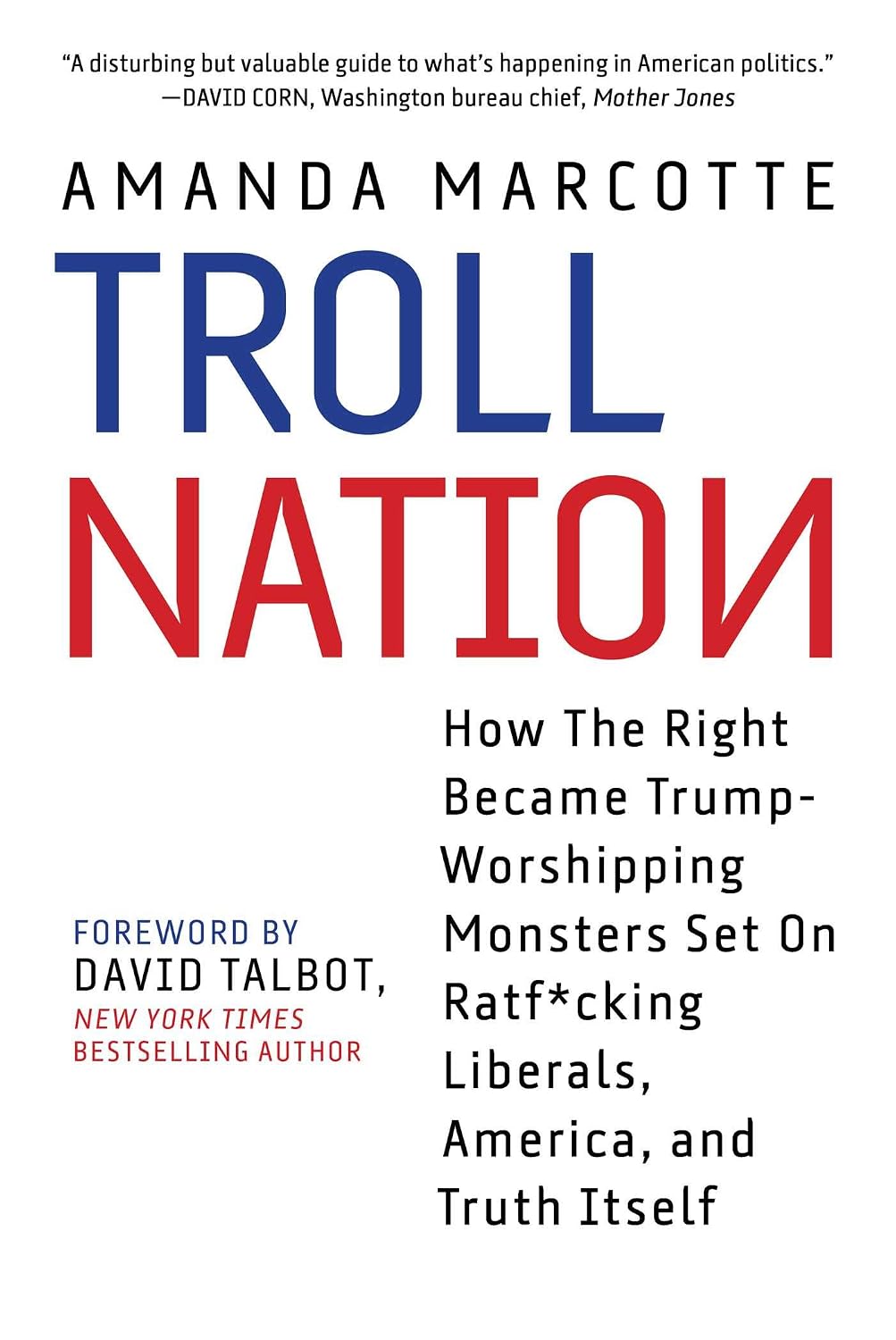 Published by Brilliance Publishing, Inc. in 2018.
For example, at Salon, Amanda Marcotte wants her politically progressive readers to know that, with data centers, “Silicon Valley billionaires hope to buy their way out of democracy”:
The pattern suggests that Silicon Valley is focused on destroying the burgeoning movement for tech accountability, before it has a chance to grow enough in power to actually pass laws constraining the industry once a Democrat retakes the White House… The more voters learn about data centers, the more they oppose them. In March, a Gallup poll even found that 71% of Americans oppose data centers in their community, more than they oppose a local nuclear power plant.
“Data center backlash is panicking tech oligarchs ahead of midterms,” September 2, 2026
Marcotte, an award-winning writer, is also the author of Troll Nation: How The Right Became Trump-Worshipping Monsters Set On Rat-F*cking Liberals, America, and Truth Itself (2018) — which gives us some sense of her overall approach to the issues.
What’s interesting about her position, echoed at left-leaning Mother Jones, The Nation, and Rolling Stone, is that it signals a possible political realignment.
Silicon Valley has been culturally leftwing for some time. And yet, urban studies specialist Joel Kotkin noted at the New York Post last month,
Much of the opposition to AI, data centers and the oligarchs themselves comes from the nonprofit world that the oligarchs themselves have supported. They have been particularly proficient in funding the climate change activists and organizations that Bryce labeled “the anti-industry industry.”
Once, the oligarchs tried bridging the contradiction by embracing the delusion that they could power data centers with “green energy,” which is clearly not practical or cost-effective. Now “the green chickens” have “come home to roost,” as bold statements of faith in “renewables” have been shattered, forcing AI to rely on demons like natural gas.
“The ‘progressive’ movement rebels against the tech oligarchs who funded it,” August 31, 2026
Kotkin is not particularly sympathetic to the tech bosses as they struggle to adjust to being slugged from behind.
So is the Valley shifting right?
Agence-Presse France seems to have thought so ever since Elon Musk took over Twitter and turned it into X:
Long considered non-identifiable ideologically, Musk’s politics are now hardline right wing as he uses his platform (now called X) to stoke the themes cherished by Fox News, conservative talk radio and far right movements across the West.
“Led by Musk, Silicon Valley inches to the right,” France 24, October 3, 2024
If the Twitter files are any indicator, what APF seems to mean here is that discussions at X became more representative of a broad swathe of opinion than in the days when more direct censorship was exercised.
Politico argued for a rightward swing in 2025: “… characters like Musk, Andreessen, Peter Thiel and David Sacks found common ground with Trump on many cultural issues, and realized that if they asked nicely, he would deliver them exactly what they wanted from the federal government.”
This year, Harvard Magazine featured an article that asserts that the Democrats have lost key tech industry endorsements: “By the start of Trump’s second term as president, however, several influential figures in Silicon Valley—including OpenAI CEO Sam Altman and Meta CEO Mark Zuckerberg—had distanced themselves from the Democratic Party.”
Altman? Zuckerberg? Who knew? Let’s see if all this makes any difference in the upcoming US midterms.
Some ask, can we lose the drama? What are the pros and cons?
Whether data centers can be adapted successfully to an environment is a technical, not an ideological question. At City Journal, Judge Glock offers a broad financial assessment, including this unexpected tidbit:
The large scale of data-center projects, which often cost in the tens of billions of dollars to construct, means they can bring in much more tax revenue than other types of development. Morrow County, Oregon, has used time-limited tax exemptions to attract data centers. Three of its five centers are still tax exempt, but the other two already pay about a third of property taxes in the county, in addition to supporting special community projects. Places such as Loudoun County, Virginia, or Quincy, Washington, now get about half their tax revenue from data centers.
“Why Opposition to Data Centers Is Perplexing,” September 3, 2026
So there’s much more to the story, once we get past the politics. Stay tuned.
Next: Data Centers and the Environment: Fact, Fiction, and Politics
