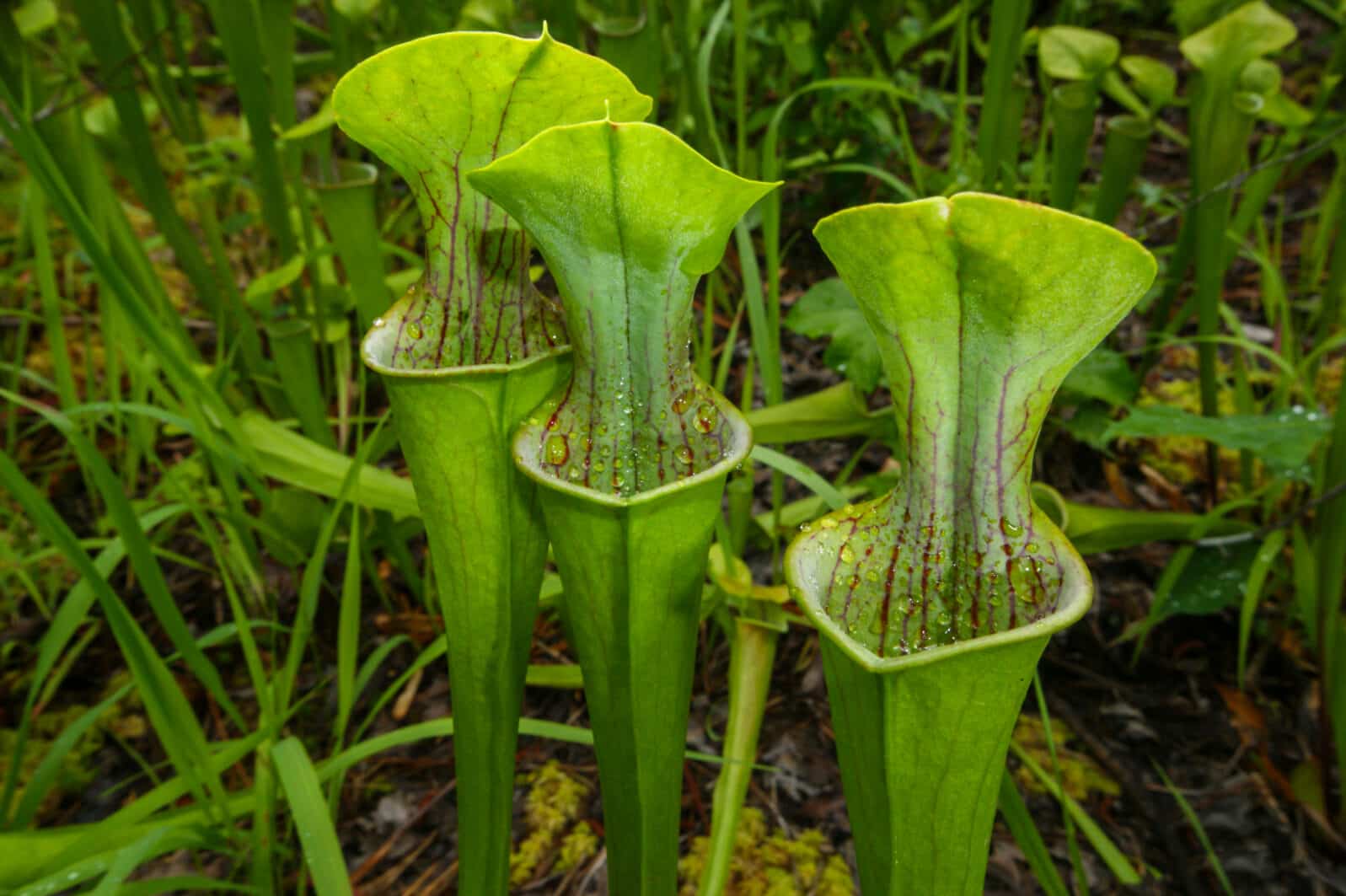
Unexpected: Plants Undermine Materialist Consciousness Theory?
Plant scientist Calvo’s critique of neuron-based theories appears not to be hippie panpsychism; he is asking hard science questionsPanpsychism has often appeared to be a strategy for rescuing materialism: We have minds, but so what? So do electrons! What about it?
However, if plant scientist Paco Calvo’s work is any guide, the idea of plant cognition could end up undermining materialism — which is probably not the intention, but so it goes. An article about his work, by science writer Amanda Gefter at Nautilus, hints at the strain.
While Calvo now runs the Minimal Intelligence Lab at the University of Murcia in Spain, he started out in the 1990s studying the human mind. Back then the human mind was understood as a computer.
Calvo soon realized that that approach doesn’t work. No surprise, really. Humans invented computers for the same reason as we invent a variety of other machinery — to do specific jobs better than we can. It hardly follows that our minds are similar to computers or our feet similar to tires.
Intelligent behavior in plants?
At any rate, Gefter tells us, Calvo switched to studying plants to see what he could learn about cognition — awareness of information — in general:
Plants’ abilities to sense and respond to their surroundings lead to what seems like intelligent behavior. Their roots can avoid obstacles. They can distinguish self from non-self, stranger from kin. If a plant finds itself in a crowd, it will invest resources in vertical growth to remain in light; if nutrients are on the decline, it will opt for root expansion instead. Leaves munched on by insects send electrochemical signals to warn the rest of the foliage,2 and they’re quicker to react to threats if they’ve encountered them in the past. Plants chat among themselves and with other species. They release volatile organic compounds with a lexicon, Calvo says, of more than 1,700 “words”—allowing them to shout things that a human might translate as “caterpillar incoming” or “*$@#, lawn mower!”
Their behavior isn’t merely reactive—plants anticipate, too. They can turn their leaves in the direction of the sun before it rises, and accurately trace its location in the sky even when they’re kept in the dark. They can predict, based on prior experience, when pollinators are most likely to show up and time their pollen production accordingly. A plant’s form is a record of its history. Its cells—shaped by experience—remember.
“What Plants Are Saying About Us,” March 7, 2023
Plants have no brains or neurons. And yet they can acquire, process and store information:
“When I open up a plant, where could intelligence reside?” Calvo says. “That’s framing the problem from the wrong perspective. Maybe that’s not how our intelligence works, either. Maybe it’s not in our heads. If the stuff that plants do deserves the label ‘cognitive,’ then so be it. Let’s rethink our whole theoretical framework.” “Plants Are Saying“
He spells out the implications, as he understands them:
If the representational theory of the mind says that plants can’t perform intelligent, cognitive behaviors, and the evidence shows that plants do perform intelligent, cognitive behaviors, maybe it’s time to rethink the theory. “We have plants doing amazing things and they have no neurons,” he says. “So maybe we should question the very premise that neurons are needed for cognition at all.” “Plants Are Saying“
Calvo and colleagues propose a new theory of cognition that they call “4E cognitive science,” the four E’s being “Embodied, embedded, extended, and enactive cognition.” It’s interesting that “evolution” is not one of the E’s; the proponents seem to want to avoid speculation in favor of observation. The theory is described in an open access article. at Phenomeology and the Cognitive Sciences (January 21, 2025).
Developing the new theory, they want to reject dualism and keep “an evolutionary perspective on the mind,” among other things. But that probably won’t insulate them against further attacks on their approach.
For example, as Gefter notes,
“Cognition is not something that plants—or indeed animals—can possibly have,” Calvo writes in his new book, Planta Sapiens. “It is rather something created by the interaction between an organism and its environment. Don’t think of what’s going on inside the organism, but rather how the organism couples to its surroundings, for that is where experience is created.”
The mind, in that sense, is better understood as a verb. As the philosopher Alva Noë, who works in embodied cognition, puts it, “Consciousness isn’t something that happens inside us: It is something we do.”
Those who see the world of plants as cognitive are even beginning to accuse the rest of us of plant blindness.
But can they really keep this — and materialism too?
Electrons are conscious too! was often treated as a sort of joke, to show where panpsychism must lead. We weren’t expected to take it seriously.
But this may be different. Materialist theories of cognition (consciousness?) are on shaky ground if the material role of the brain or neurons is discounted as non-essential, despite professions of orthodoxy on the part of 4E supporters.
What about the feverish search for the brain’s consciousness spot or module, for example? Or the circuit that neuroscientist Christof Koch famously bet on — and lost the bet?
If cognition can exist without a specific material substrate, one possible implication is that — even in the world of non-human life — an underlying force seeks expression by whatever means are available. It is not easy to align such a perspective with eliminative materialism. And that’s the only type of materialism that slams the door of science safely on any immaterial reality.
If Calvo’s observations about the nature of plant cognition are supported by those of others, he is jamming the door of science open to immateriality, whether he realizes it or not.
