How to Think Clearly in the Age of AI
AI isn’t really artificial intelligence, but simulated intelligenceHuman beings possess a unique and powerful innovative energy that can bring forth new things that did not exist before.
Read More ›
Human beings possess a unique and powerful innovative energy that can bring forth new things that did not exist before.
Read More ›
After spending three days conversing with Anthropic’s AI chatbot Claude about a range of topics, noted atheist Richard Dawkins acknowledged that he was now open to the possibility that artificial intelligence may possess consciousness.
Read More ›
AI belongs to this world of necessity and it is bound by the inputs we give it: code, training data, prompts. It has no imagination.
Read More ›
His solution?: More technology, not less. Meta has made billions of dollars monetizing our attention. Why not monetize our loneliness, too?
Read More ›
You’re not solving the loneliness problem; you’re creating a false reality that damages people even further because there is no human being on the other side.
Read More ›Is there strong scientific evidence for near-death experiences, the subject of the new film After Death? On an episode of ID the Future, I spoke with Dr. Gary Habermas about his chapter evaluating the evidence for near-death cases in the recent book Minding the Brain: Models of the Mind, Information, and Empirical Science. As Dr. Habermas explains, most near-death accounts contain both objective and subjective elements. Personal testimony about other realms can’t be independently corroborated, but objective evidence rooted in this world can be confirmed and evaluated. “I can’t verify heavenly discussions or heavenly sites,” says Habermas, “so the kind of NDE data I’m talking about virtually always occur on this earth in normal kinds of situations, like parking lots or in your Read More ›
Ann Gauger holds that truth, beauty, and goodness are hallmarks of a designed world.
Read More ›
Tech critic Andrew McDiarmid speaks of his friendship with Dorothy, a wise elderly woman he befriended who espoused a sound view of technology.
Read More ›
Are humans progressing morally as well as materially? What does it mean to be human in the cosmos? On a new episode of ID the Future, we bring you the second half of a stimulating conversation between Dr. David Berlinski and host Eric Metaxas on the subject of Berlinski’s book Human Nature. In Human Nature, Berlinski argues that the utopian view that humans are progressing toward evolutionary and technological perfection is wishful thinking. Men are not about to become like gods. “I’m a strong believer in original sin,” quips Berlinski in his discussion with Metaxas. In other words, he believes not only that humans are fundamentally distinct from the rest of the biological world, but also that humans are prone to ignorance and Read More ›
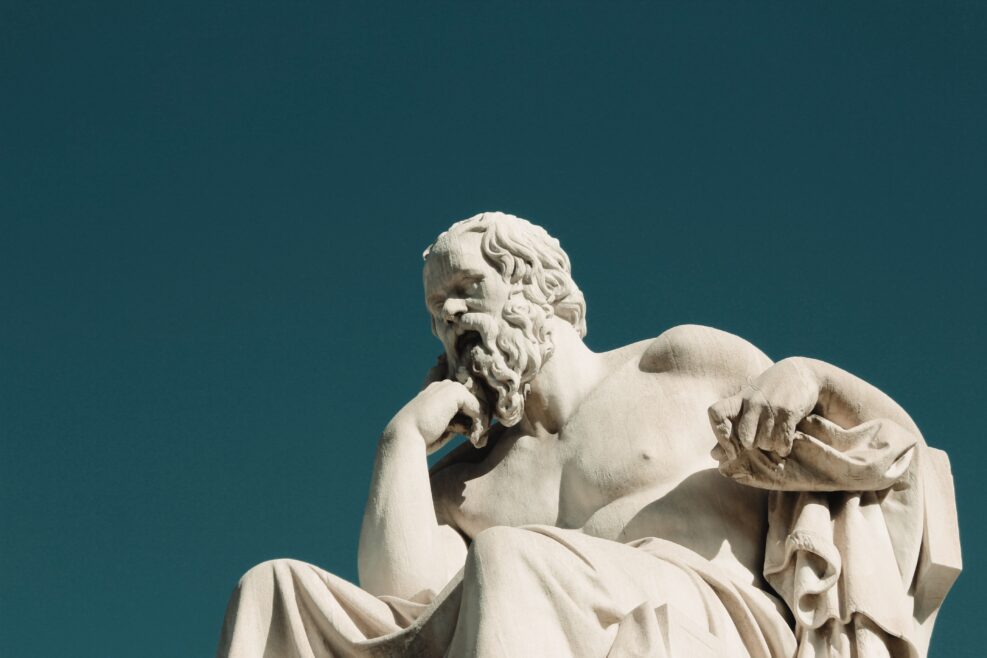
In this conversation and in his book, Berlinski argues that human beings have a fundamental essence that is radically different from other organisms.
Read More ›
This past June, we published an article featuring a conversation between physicist Lawrence Krauss and novelist Cormac McCarthy, where they discussed whether mathematics was “discovered or invented.” Robert J. Marks went on to write his own thoughts on the question shortly thereafter. If you’re further interested in mathematics and whether there is an actual correspondence between math and the natural world, consider watching new podcast episode featuring Dr. Melissa Cain Travis. Do humans project mathematical order onto nature? Or was it there all along? On a new episode of ID the Future, I conclude a three-part conversation with Dr. Melissa Cain Travis about her recent book Thinking God’s Thoughts: Johannes Kepler and the Miracle of Cosmic Comprehensibility. In Part 3, we look Read More ›

April 21 is John Muir’s birthday. Muir is typically remembered as one of America’s foremost naturalists, father of our national parks and a tireless defender of the wilderness. But he might very well have been none of those things. As a young man, Muir was gifted at building machines, and he was set to pursue a career in technology until everything went dark. Literally. Revisiting this little-known chapter of Muir’s life can inspire us to better navigate our own relationship to technology and give us a fresh reason to celebrate his work. In 1849, Muir left his homeland of Scotland and moved with his family to the backwoods of Wisconsin. Farm work, chores, and family Bible studies kept him busy Read More ›
As I reported last year, there’s been a lot of talk about a singularity in the last decade. That’s the point when machine intelligence (AI) exceeds human intelligence and begins to rule humanity and eventually the entire universe. It’s a scary proposition to be sure, but we can rest easy on that front, because it’s not going to happen. The futurists assume there’s a bridge between narrow applications of AI and the general intelligence humans possess. But no such bridge exists. As Erik J. Larson explains in his book The Myth of Artificial Intelligence, we’re not even on the right road to such a bridge. You can also take George Gilder’s word for it. One of the most influential thinkers on technology and economics Read More ›

This story originally appeared at the New York Post (December 31, 2022) Remember those bathroom readers filled with trivia, factoids, and stories? They’ve been entertaining in the throne room since 1988. Though the 35th anniversary edition came out last fall, it probably won’t hit the bestseller lists. The truth is most of us have something else to distract us in the bathroom — our smartphones. We pull them out on the john, at stoplights, in line at checkout, while we pump gas — virtually anywhere we have to wait for more than ten seconds. The lure of social stimuli gives us a dopamine hit that keeps us coming back any time we get a minute. But what if we’re cheating ourselves out Read More ›

This article ran at the Daily Wire (August 22, 2022) where it is available by subscription only. Last week, Spider-Man: No Way Home actor Tom Holland made the bold decision to delete Instagram and Twitter and take a break from social media. In a video shared with his 67 million Instagram followers, Holland called both of the apps overstimulating and overwhelming. “I get caught up and I spiral when I read things about me online,” Holland added, “and ultimately it’s very detrimental to my mental state.” The strength to stop something as addictive and sometimes harmful as social media is a superpower all on its own. Forget spidey sense — Holland will soon start to experience new levels of clarity, Read More ›

[This article is republished with permission from the New York Post (July 23, 2022) where it appeared under the title “Constance Wu’s suicide tweet proves social media can mean life or death.”] “Looking back, it’s surreal that a few DMs convinced me to end my own life, but that’s what happened.” Last week, actress Constance Wu confessed on Twitter that she had tried to take her own life after she made “careless tweets” about the renewal of her TV show, ABC’s “Fresh Off the Boat,” in May 2019. “So upset right now that I’m literally crying,” she had posted about the show’s renewal, which had forced her to give up another project she was passionate about. As would be expected on a public Read More ›

This story originally appeared at Newsmax. (May 19, 2022) As I reported last year, there’s been a lot of talk about a Singularity in the last decade. That’s the point when machine intelligence (AI) exceeds human intelligence and begins to rule humanity and eventually the entire universe. It’s a scary proposition to be sure, but we can rest easy on that front, because it’s not going to happen. The futurists assume there’s a bridge between narrow applications of AI and the general intelligence humans possess. But no such bridge exists. As Erik J. Larson explains in his book The Myth of Artificial Intelligence, we’re not even on the right road to such a bridge. You can also take George Gilder’s word for it. One Read More ›

This story originally appeared at Newsmax. (April 5, 2022) as “Time to Write Our Own Stories, Not Big Tech” and is reprinted with permission. It’s one of the best movies of the late 1990s. In The Truman Show, Truman Burbank (Jim Carrey) has no idea his life is actually a popular TV show. Everything has been fabricated — his parents, his friends, his marriage, his job. But things start happening — a studio light falls from the sky, a fake elevator reveals a hidden backstage room. Suddenly, Truman is determined to discover the truth of his existence. Rebelling against the script being played out all around him, he begins a journey to seek the truth and discover the life he was Read More ›
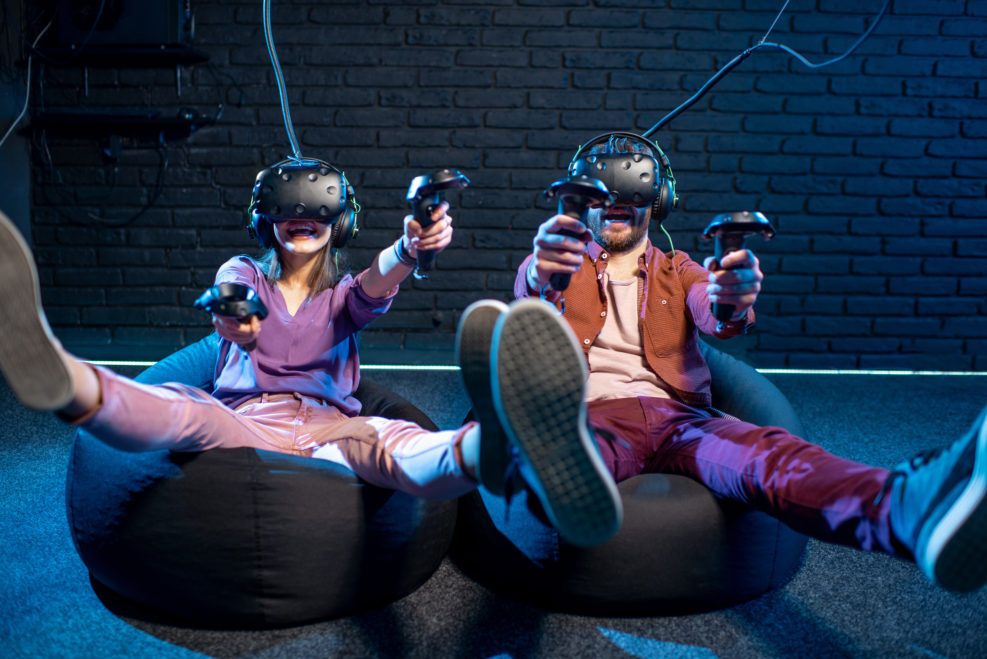
This story originally appeared at Newsmax. (February 17, 2022) Facebook’s recent name change to Meta has ushered in the Age of the Metaverse. Big Tech’s focus is shifting to a new frontier, the untamed wilds of the virtual world. Or is it worlds? Interestingly, the Germanic word world has a literal meaning of “age of man.” Which sounds quite fitting. But will the metaverse be an age that will see us grow and be nourished, as the root of age suggests? Or will we give in to our modern tendency toward laziness, entitlement and poor judgment? Before someone dares you to slip on a VR headset to get your first taste of the metaverse, get one thing straight — who is the boss of your tech? By Read More ›

This story originally appeared at Newsmax as “You Can Actually Find Joy Outside Your Smartphone.” Recently, I took my family into town to get dinner. We live in a small community, in the country, so it’s a bit of an event to go out to dine in the city. Once there, I called around to see what establishments were open. Before I reached any humans, I was told to visit websites, download apps, and consider ordering online for pickup. One message even hung up on me without transferring me to a person. Finally, I found a place that would take us in and actually feed us. As we moved through the ordering line, one of the workers wore a shirt that made Read More ›