Mind Matters Natural and Artificial Intelligence News and Analysis

TagMichael Egnor

Choosing the High Road or Low Road

How Libet’s Free Will Research Is Misrepresented

Sometimes, says Michael Egnor, misrepresentation may be deliberate because Libet’s work doesn’t support a materialist perspective

“Neuroscientist Benjamin Libet’s experiments are described very often both in the scientific literature and in the popular press as supportive of materialism—which is something that they don’t support and something that Libet made very clear was not his conclusion.” – Michael Egnor

Read More ›
Green wavy parrot is sitting on a white cage. The parrot looks out of the cage.

How a Neuroscientist Imaged Free Will (and “Free Won’t”)

At first, Libet thought that free will might not be real. Then he looked again…

Neuroscientist Benjamin Libet (1916–2007), who studied measured brain activity as people make decisions, came across the power of “free won’t”: an apparently free decision not to do something we had decided on earlier.

Read More ›
charles-deluvio-JtX2OR6bNAE-unsplash

Michael Egnor on Splitting the Brain and Staying You

If you lose all four of your limbs, are you still you? Most people would say yes. What if your brain were cut into two pieces? Would you still be you? Robert J. Marks and Dr. Michael Egnor discuss splitting the brain and the research of Roger Sperry. Show Notes 00:30 | Introducing Dr. Michael Egnor, Professor of Neurosurgery and Read More ›

Choose your way

How Did “Wanting” Things Emerge?

Agency (“wanting” or “deciding” things) is as hard a problem in physics as consciousness

Rocks don’t resist becoming sand but plants resist, by various strategies, becoming insect food. All life forms seem to need and want things; the most intelligent ones want more complex and less obviously necessary things. At New Scientist, we are told that wanting things is a “superpower” that physics can’t explain. But are we asking the wrong questions?

Read More ›
isaiah-rustad-HBABoZYH0yI-unsplash

Michael Egnor: Free Will or Free Won’t?

There have been ongoing philosophical and theological arguments about free will vs. predestination. How do experiments on the human brain inform us on this question? Robert J. Marks discusses free will, free won’t, predestination, and the brain with Dr. Michael Egnor. Show Notes 00:40 | Introducing Dr. Michael Egnor, Professor of Neurosurgery and Pediatrics at State University of New York, Read More ›

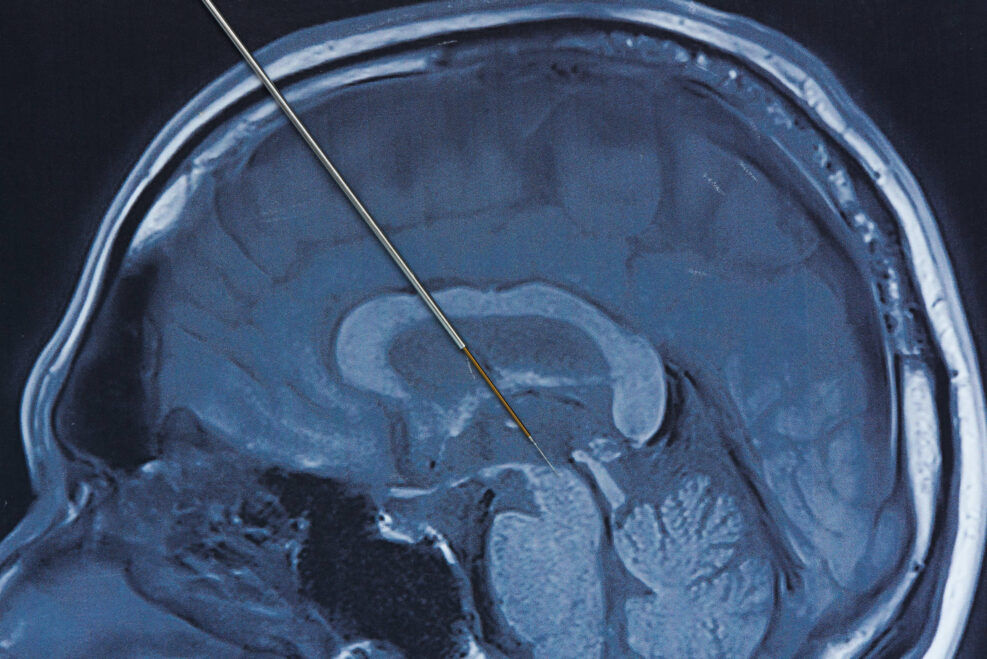
Concept of brain recording for parkinson surgery

Why Pioneer Neurosurgeon Wilder Penfield Said the Mind Is More Than the Brain

He gave three lines of reasoning, based on brain surgery on over a thousand patients

Michael Egnor points out that Penfield offered three lines of evidence: His inability to stimulate intellectual thought during brain operations, the inability of seizures to cause intellectual thought, and his inability to stimulate the will. … So he concluded that the intellect and the will are not from the brain. Which is precisely what Aristotle said.

Read More ›
Atomic structure. Futuristic concept on the topic of nanotechnology in science. The nucleus of an atom surrounded by electrons on a technological background

Theoretical Physicist Slams Panpsychism

Electrons cannot be conscious, in Sabine Hossenfelder’s view, because they cannot change their behavior

Hossenfelder’s impatience is understandable but she underestimates the seriousness of the problem serious thinkers about consciousness confront.

Read More ›
Two Scientists in the Brain Research Laboratory work on a Project, Using Personal Computer with MRI Scans Show Brain Anomalies. Neuroscientists at Work.

Pioneer Neuroscientists Believed the Mind Is More Than the Brain

A number of them were Nobel Laureates and their views were informed by their work

In a podcast discussion with Walter Bradley Center director Robert J. Marks, neurosurgeon Michael Egnor talks about how many famous neuroscientist became dualists—that is, they concluded that there is something about human beings that goes beyond matter—based on observations they made during their work.

Read More ›
Photo by Josh Marshall

What Is the Difference Between “Soul” and “Spirit”?

Neurosurgeon Michael Egnor explains the subtle distinction between the meaning of the two, often confused, terms

Loosely speaking, the soul is the principle of life in a body and the spirit refers more to the immaterial aspects of the soul, which are the ability to reason and the ability to make decisions based on reason.

Read More ›
Double personality long exposure artistic creative portrait. Young handsome man profile. looking side. Ghost. abstract conceptual artistic view. representation of subconscious feelings and thoughts

The Mind’s Reality Is Consistent with Neuroscience

A neglected “dualist” theory offers some insights

Neurosurgeon Michael Egnor thinks that the explanation of the relationship of the mind to the brain that best fits today’s neuroscience is that certain powers, particularly the intellect and will, are not generated by matter but are immaterial. However, other properties of the mind, like perception, memory and imagination are physical, generated by brain matter.

Read More ›
Glowing human brain with nerve cells. 3d illustration

Michael Egnor: Is There Evidence for a Soul?

From the perspective of a brain surgeon, is there evidence for a soul? Is there evidence for a spirit? Robert J. Marks discusses neuroscience, brain surgery, the soul, and the spirit with Dr. Michael Egnor.

Read More ›
AI(Artificial Intelligence) concept.

Why Eliminative Materialism Cannot Be a Good Theory of the Mind

Thinking that the mind is simply the brain, no more and no less, involves a hopeless contradiction

How can you have a proposition that the mind doesn’t exist? That means propositions don’t exist and that means, in turn, that you don’t have a proposition.

Read More ›
Connected neurons or nerve cells- 3d illustration

Why Would Philosophers Deny That Consciousness Is Real?

Because, says computer scientist Bernardo Kastrup, the materialism they are committed to makes no sense and that’s the best they can do

A Dutch computer scientist and philosopher who has reflected deeply on the mind–matter problem finds himself asking, how can serious scientists or philosophers convince themselves that their own consciousness “doesn’t exist” or is a “mistaken construct”? What, exactly, is thinking the thought that their consciousness doesn’t exist? I want to understand what makes the consciousness of an intelligent human being deny its own existence with a straight face. For I find this denial extremely puzzling for both philosophical and psychological reasons. Don’t get me wrong, the motivation behind the denial is obvious enough: it is to tackle a vexing problem by magically wishing it out of existence. As a matter of fact, the ‘whoa-factor’ of this magic gets eliminativists and Read More ›

Zen garden stones on sand with pattern, top view. Meditation and harmony

Yes, Consciousness Is Real But That’s Not the Half of It

Philosopher Massimo Pigliucci ends up skating deftly around the main problems

Those who would understand immaterial realities like consciousness should not speak so disrespectfully of dualism as Dr. Pigliucci does.

Read More ›
Concept of brain surgery or neurosurgery. Neurosurgeon holding scalpel in hand over 3D anatomical model of human brain. Brain surgery operations for treatment of diseases - tumor, aneurysm, epilepsy
Scalpel on model of brain

Some People Think and Speak with Only Half a Brain

A new study sheds light on how they do it

A range of neuroscience research findings is more readily explained by assuming that some aspects of thought–– abstract intellectual thought and free will–– are immaterial.

Read More ›
Abstract.

Neuroscientist Says Our Souls Are Not Machines

A reviewer notes that Sharon Dirckx makes her case in a way that is easy for the attentive non-specialist reader to understand.

If readers are looking for a book by a writer familiar with the science who does not just adopt the materialist view and then spend two hundred and fifty pages supporting it, Am I Just My Brain? might be a good choice.

Read More ›
Dolphin portrait while looking at you with open mouth

What Do Animal Studies Tell Us About Human Minds?

They show that human experience is unique

Many people assume that human consciousness arose accidentally many eons ago from animal consciousness and that therefore we can find glimmers of the same sort of consciousness in the minds of animals. But that approach isn’t producing the expected results.

Read More ›
Blue watercolor triangle

A simple triangle can disprove materialism

Conventional descriptions of material processes do not help much when we are trying to account for abstract thought

Philosopher Edward Feser notes that there is a kind of mismatch between concepts and ideas on the one hand, which are abstract and completely general, and on the other hand, physical symbols and other material representations, which are always concrete, specific, and individual.

Read More ›
headless balloon
man without head holding white balloon

If the Mind Is Immaterial, Is Human Cloning Impossible?

I agree with Mike Egnor that the mind is immaterial but I don’t think human cloning is impossible

There are, of course, empirical implications of both the materialist and non-materialist understanding of the human mind. But the success of human cloning won’t weigh on the question one way or the other.

Read More ›
super brain

Are Lab-Grown Human Brains the Next Big Thing?

Neurosurgeon Michael Egnor thinks the hopes for humanly conscious lab-grown brains are faint indeed

“Neural tissue grown in a lab cannot have intentionality unless it has sense organs,” Egnor says, “But such manufactured intentionality can only be about concrete things, not abstract things.”

Read More ›