
Haidt: Beauty and Awe Help Us Escape the Phone-Based Life
The question is: why are we drawn to beauty?I want the beauty of the forest to actually be beautiful, not just signal a primordial drive to forage and hunt.
Read More ›I want the beauty of the forest to actually be beautiful, not just signal a primordial drive to forage and hunt.
Read More ›
Those who can connect with a source of meaning beyond the material pain of the world are the ones who will stay alive in body and spirit.
Read More ›
I’ve been reading the modern classic The Brothers K by American writer David James Duncan. Not to be confused with The Brothers Karamazov, this novel creatively riffs off of Dostoevsky’s iconic novel while retaining its own unique flavor. Set in Washington state during the crazy 1960s, The Brothers K is about the Chances, a family with a father beaten down after a failed shot at pro baseball, and the four brothers who each respond differently to the rapidly changing culture of the United States. The Chances’ grandmother, who they affectionately call “Grandawma,” is a staunch Darwinist, while Mrs. Chance is a devout Seventh Day Adventist. The Chance children have to wade through the opposing worldviews they’re brought up in, and Read More ›

If our experiences are all just brain chemicals responding to different gradations of light, it would seem nigh impossible to defend beauty.
Read More ›
Gratitude expert Robert Emmons writes that it’s impossible to be grateful to oneself.
Read More ›
Imagine you’re walking through a world-class art museum, and you come across Van Gogh’s “Sunflowers.” (Let’s assume someone hasn’t already thrown tomato soup on it.) The painting isn’t a replication. It’s not a copy of a copy of a copy. It’s the original canvas and paint, the direct object created by the artist himself, shaped by age, visited by thousands of admirers—it’s “vintage.” You stand there admiring the work of a past genius, and get a sense of its beauty and meaning in a whole new way. There’s something unique in witnessing “the real thing.” Why do people travel worldwide to look at Da Vinci’s “Mona Lisa” when they can see a digital recreation through a Google search? Or why Read More ›

What happens when a beloved fantasy world, once respected and celebrated because it soared above the surrounding fray of decadent literature and art, becomes mainstream? What if the very work that was intended to transcend consumerism becomes the object of mass consumption? Harley J. Sims, writing for MercatorNet, believes Amazon has diluted the characteristic beauty and depth of The Lord of the Rings for the sake of mass consumption and appeal. I’ve shared my own thoughts on the new Rings of Power show in two separate pieces (here and here) for Mind Matters already, but just to recap: the show is interesting and entertaining enough to keep watching, but it’s missing something—a moral and imaginative ingredient Tolkien articulated beautifully in Read More ›
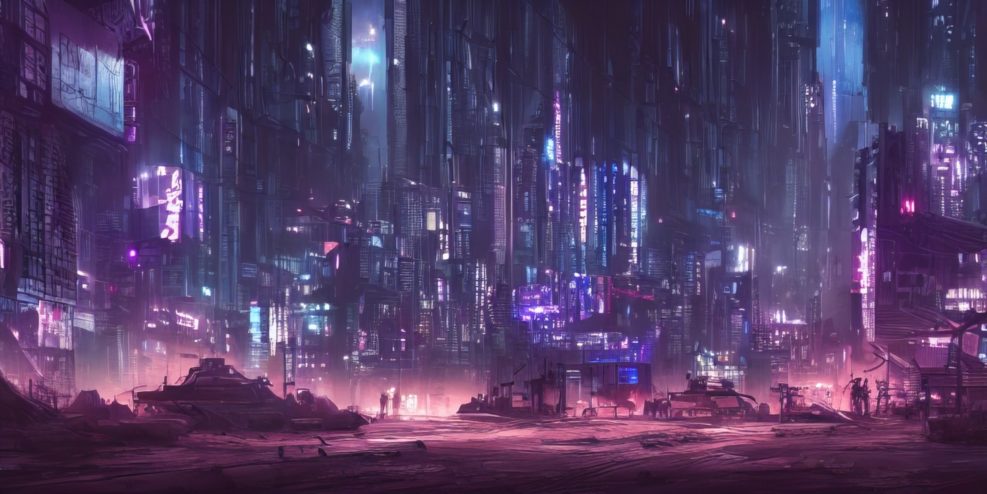
The capacities of AI art generators have grown much in the past couple of years. Through complex algorithms, AI scans the internet and manages to make artistic composites, some sublime, others grotesque. Today, AI art generators have incredible potential, but their capacities can also be easily abused. According to a Wired article from September 21, Science fiction novelist Elle Simpson-Edin wanted to generate artwork for her newest book. So, she tried AI tools. Her novel unabashedly depicts gore and sex, but most of the AI tools she discovered included “guardrails” that sanctioned explicit content. That is until she found Unstable Diffusion, “a Discord community for people using unrestricted versions of a recently released, open source AI image tool called Stable Diffusion.” Read More ›