Mind Matters Natural and Artificial Intelligence News and Analysis

CategoryMedia

woman-reading-online-news-on-digital-tablet-stockpack-adobe-stock
Woman reading online news on digital tablet

E-Books: What’s To Know About a New Way To Read

The electronic books might appeal to people with more interests than space to store stuff

E-books, books you can read on your computer, are becoming an ever-bigger presence in the market. MarketWatch currently wants nearly US$6000 to tell your company the market share forecast. They now make up 21% of book sales. Clearly, e-books would appeal to people who have more interests and ideas than they have space to store stuff. According to MarketWatch, the market is growing by roughly 20% a year. One source describes it like this: The global eBook market is being driven by technological advancements and the sophistication of reading devices that provide an experience similar to reading a physical book. The increased use of smartphones and the multilingual capabilities are predicted to boost global demand for eBooks. “eBook Market Overview Read More ›
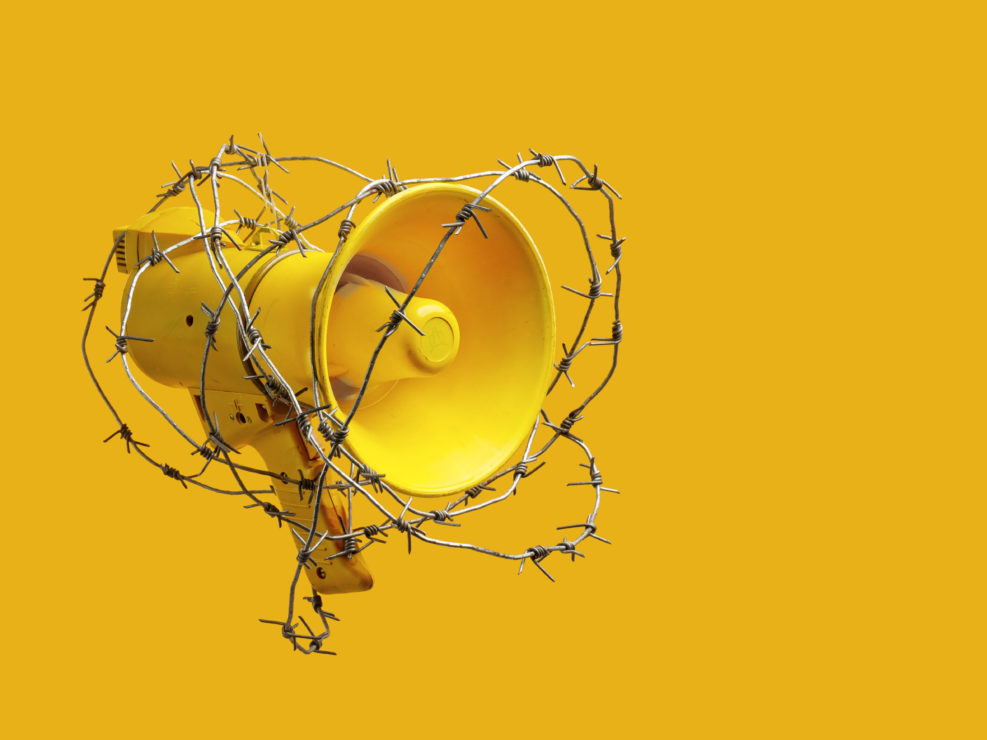

megaphone-wrapped-in-barbed-wire-the-concept-of-banning-freedom-of-speech-censorship-barbed-wire-megaphone-stockpack-adobe-stock
megaphone wrapped in barbed wire. the concept of banning freedom of speech. censorship barbed wire megaphone

The Courts: May Social Media Censor Speech and Ban Users?

Two federal appeals courts came down on opposite sides. Hear the story

May Twitter, Facebook, or YouTube censor your posts and ban you from using their social media platforms? May a state government require large social media platforms to allow users and posts to present lawful information, ideas, and viewpoints with which the platforms disagree? Florida and Texas both enacted laws to restrict platforms from censoring and banning users whose content the platforms disliked. Two different federal appeals courts in 2022 ruled on whether these two states’ laws were constitutional — and came out on opposite sides. The following three scenarios frame the key issues. Scenario A: Commercial Ground Transportation A fellow boards a private company-owned, regularly scheduled commercial bus bound for Berkeley, California, wearing a T-shirt proclaiming in big letters: Save Read More ›

portrait-of-paparazzi-in-a-row-with-cameras-and-microphone-stockpack-adobe-stock
Portrait of paparazzi in a row with cameras and microphone

Tales From Why Mainstream Media Don’t Matter Like They Used To

Two incidents highlight their declining ability to just plain report. That’s BECOME the news story in many situations

Recently, I wrote about the way mainstream media (MSM), facing a steep and steady decline in profitability, public interest, and public trust, have reached the point where politicians can ignore them with impunity. The politicians haven’t changed; rather, the voters have. MSM probably don’t play nearly as big a role in how voters (and consumers) make up their minds today as do social media — after all, social media is where the advertising dollars have gone, and it’s probably no accident… No longer needed for basic information, MSM now mainly advertise the views of a social elite to the public. A longtime newsman recently mourned the loss of objectivity, but the transition to upscale soapbox has made that loss inevitable Read More ›

press-and-media-camera-video-photographer-on-duty-in-public-new-stockpack-adobe-stock
press and media camera ,video photographer on duty in public new

Longtime Newsman Mourns the Loss of Objectivity in Media

Peter Menzies notes that news media today are “overflowing with agenda-driven employees intent on publicizing their own opinions”

Reporter and editor Peter Menzies reflects on mainstream news media journalists’ revolt against objectivity in recent years. It’s not a pretty picture: News organizations overflowing with agenda-driven employees intent on publicizing their own opinions while suppressing or ejecting anyone guilty, in [Bari] Weiss’s words, of “Wrongthink,” have proliferated across North America. The Washington Post, for example, has had to battle its own reporters over their social media activism. Staff at National Public Radio, the U.S.’s federally funded, not-for-profit network, demanded and last year received the right to participate in demonstrations and voice political opinions in public. Peter Menzies, “Objectivity: What Journalists Hate but the Public Still Craves” at C2C Journal (August 31, 2022) Menzies, a Canadian, cites similar examples from Canada, where the overall situation Read More ›

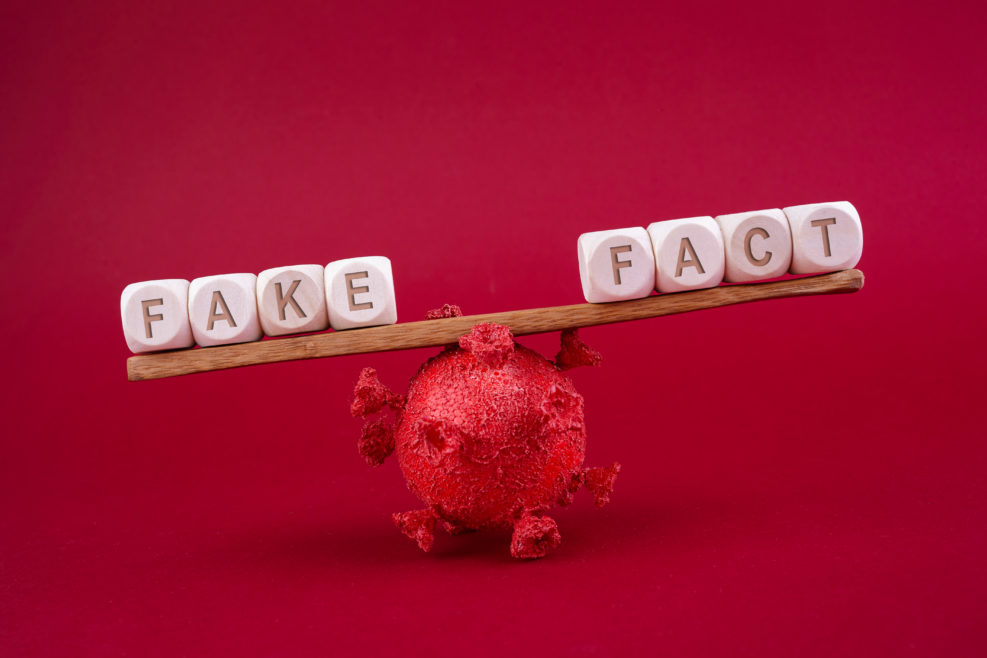
social-media-concept-corona-virus-fake-news-concept-scale-on-red-background-stockpack-adobe-stock
Social media concept. Corona virus fake news concept. Scale on red background

Why Misinformation Comes From the Top as Well as the Bottom

At Big Think, Cameron English asks us to look at the incentives for academic scientists to publish questionable research that gains widespread attention.

Cameron English, Director of Bio-Sciences at American Council on Science and Health, offers a useful take on the need felt by some in power to crack down on Misinformation: The uncomfortable truth is that academic scientists routinely publish questionable research that attracts widespread media attention, adding to the morass of “inaccurate information” circulating online. If we want to get this problem under control, we need our trusted sources to quit releasing untrustworthy information. Cameron English, “‘Trusted’ Sources Spread Anti-Science Nonsense, Too” at Big Think (August 4, 2022) But the fact is, untrustworthy information pays: It is true that researchers live and die by their grants; they either “publish or perish,” as the old saying goes. Often, that means academic scientists Read More ›

internet-law-concept-stockpack-adobe-stock
Internet law concept

US Federal court rules: Machines do not “invent” things

Evidently, Stephen Thaler’s aim was to get the patent office to recognize that an AI system can invent things all by itself

Check out this headline from lawandcrime.com: Federal Appellate Court Rules AI Systems Cannot Be “Inventors” Because They Are Not Human. Notice the angle: framing a battle between machines and homo sapiens, pitting human intelligence against artificial intelligence. The article’s first sentence spotlights the center attraction, stating: The U.S. Court of Appeals for the Federal Circuit ruled Friday [Aug. 5, 2022] that artificial intelligence or “AI” systems cannot patent their inventions because they are not “natural people.” Here the Law and Crime article subtly inserts two key beliefs: (1) that AI systems can in fact invent things all by themselves; and (2) that AI systems physically can “patent their inventions.” The sentence thus implies that the human-centric court unfairly blocked them. Read More ›

news in mobile phone
Online news in mobile phone. Close up of smartphone screen. Man reading articles in application. Hand holding smart device. Mockup website. Newspaper and portal on internet.

Beyond the Search Engine: Shape Your Own News Feed

A news aggregator keeps you current with news YOU care about or need to know

Recently, we discussed the world beyond Google, in which a variety of easily accessible search engines offers you a choice of different advantages. But now let’s look at something even more focused… A news aggregator collects news stories and other information, sorted by categories and preferences, from across the internet. News Now is one example. Let’s say you want to know more about the asteroid Bennu. You could type “Bennu” into a search engine. But you already know the basic stuff about the asteroid; right now you want to know if there has been any recent news about it. You could go to News Now, choose Science, then Astronomy, then Asteroids, Comets, and Meteoroids, then Asteroid Bennu. You will find Read More ›

digital-marketing-new-startup-project-millennials-business-team-hands-at-work-with-financial-reports-and-a-laptop-stockpack-adobe-stock
DIGITAL MARKETING new startup project MILLENNIALS Business team hands at work with financial reports and a laptop

The Role Mainstream News Media Really Play in Our Society Today

Why, exactly, traditional news media are increasingly out of touch with the public

Yesterday, we looked at why politicians can now get away with ignoring news media: The mainstream media are much less influential than they used to be. One reason is that news consumers use the internet to create their own channels. Once-mighty media are reduced to competing with their own readers for mind space and relevance now. The highlighted politicians were Republicans. But their Democrat opponents are surely in the same position. Whether their base turns out to vote for them in sufficient numbers or not, traditional news media are much less likely to influence the decision than in the past. So, if traditional mainstream news media are not as directly influential as they used to be, what role do they Read More ›

woman-gesticulating-during-interview-with-media-press-conference-close-up-stockpack-adobe-stock
Woman gesticulating during interview with media, press conference, close-up

Why Politicians Are Learning to Ignore News Media

Successful politicians now think they can get away with ignoring mainstream media. Could they be onto something?

A recent development — politicians ignoring media — has set journalists buzzing: This past weekend, Florida governor Ron DeSantis and Sen. Marco Rubio, both of whom are up for reelection this fall, headlined the Republican Party of Florida’s annual Sunshine Summit. Other high-profile Florida Republicans were also in attendance at the Hardrock Hotel & Casino event, which this year tried something new: after seven years of being open to the press, “it limited which media could attend, giving inside-the-room access to right-wing outlets that give the governor positive coverage,” Politico reports, adding that traditional GOP figures were “largely replaced by the conservative social media influencers with massive followings who have recently moved to Florida and become some of DeSantis’ most Read More ›

young-amateur-football-fan-supporters-cheering-with-confetti-watching-local-soccer-cup-match-at-stadium-friends-people-group-on-green-t-shirts-having-excited-fun-on-sport-world-championship-final-stockpack-adobe-stock
Young amateur football fan supporters cheering with confetti watching local soccer cup match at stadium - Friends people group on green t shirts having excited fun on sport world championship final

Researchers: Distrust of Science Is Due to Tribal Loyalty

In Part 2 of 4, we look at a claim arising from a recent study: We blindly believe those we identify with, ignoring the wisdom of science

Recently, a paper lamenting the decline of trust in science was discussed at ScienceAlert, a science news site. In representing the paper—doubtless accurately — for a lay audience, the write-up embodies the causes of legitimate public distrust. That is worth dissecting in more detail. Yesterday, we looked at the write-up in light of the government responses to COVID, which were all too often panicked reactions rather than trustworthy guidance. Then, in the wake of the debacle, the White House chose to set up a Disinformation Board to target non-government sources of alleged disinformation — which could only deepen existing distrust. We press on. The second point of four raised at ScienceAlert is that tribal loyalty is thought to create distrust Read More ›

power-struggles-stockpack-unsplash
Power Struggles

This Isn’t Fake News: Mainstream Media Are Very Out of Touch

Massively so, if recent survey research is any guide. But how did they get SO far out of touch?

From media and culture analyst Joe Concha at The Hill, which reports on the doings of Congress, we learn about a new in-depth survey by the non-politically affiliated Pew Research Center: Per Pew, 65 percent of the nearly 12,000 journalists surveyed say the media do a solid job of “covering the most important stories of the day” and reporting news accurately. But a solid majority of the American public at large has the opposite view, with just 35 percent feeling the same way. That’s a 30-point perception gap. Joe Concha, “The media bubble is real: Study shows massive disconnect between journalists, public” at The Hill (June 22, 2022) Some other contrasts: ● “serving as a watchdog over elected leaders” Journalists: Read More ›

female-politician-talking-on-media-press-conference-public-relations-event-stockpack-adobe-stock
Female politician talking on media press conference, public relations, event

Why Science News Sucks — A Response to a Disgusted Physicist

There are reasons why science journalists can't usually be skeptical in the way that other journalists can. Here are some of them

In her usual forthright manner, theoretical physicist Sabine Hossenfelder asks, by blog post and Youtube video, “Why does science news suck so much? It’s hardly an original question but among her suggested answers are some thoughtful reflections, including 9. Don’t forget that science is fallible A lot of media coverage on science policy remembers that science is fallible only when it’s convenient for them. When they’ve proclaimed something as fact that later turns out to be wrong, then they’ll blame science. Because science is fallible. Facemasks? Yeah, well, we lacked the data. Alright. But that’d be more convincing if science news acknowledged that their information might be wrong in the first place. The population bomb? Peak oil? The new ice Read More ›

print-is-alive-stockpack-unsplash
Print is Alive

Have Newspapers Simply Lost Touch With the Mainstream Public?

The depressing stats tell a tale that’s a bit more complex: Readers tolerate out-of-touch media less now because they we need them so much less

Earlier this week we looked at the way a flailing newspaper chain decided to cut back on editorial and opinion pages. The decision should not be a surprise in an age when so much opinion is available for free — and by no means is all of it foolish. One familiar response has been to say, well, media are too “liberal” (or “leftist” or “progressive”) for the readers — and that’s why newspaper are losing them. It’s a factor but there is more to the story. First, we are dealing with a fact: Pious disclaimers notwithstanding, as a group, media personnel are generally more likely to support progressive causes than average Americans. A variety of explanations is offered, including this Read More ›

newspaper-production-and-printing-process-stockpack-adobe-stock
newspaper production and printing process

Flailing News Chain Gannett Cuts Back on Opinion Pages

Younger readers say they can’t tell the difference between news and opinion

Virginia-based Gannett, the largest newspaper chainin the United States, owns of owns USA Today and also 260 dailies and more than 170 paid weeklies in 46 states. And it is floundering in red ink. According to the Washington Post, “Gannett lost $670 million in 2020, and $135 million last year.” As the losses head for a cumulative billion, it has made a seemingly radical decision: Cut back on opinion pages. Here’s some of the reasoning, according to the Post (which is owned by Amazon founder Jeff Bezos): Gannett says its internal research — primarily reader surveys — suggests editorials, guest commentary columns, op-eds and letters to the editor have lost relevance in an age when opinions overflow on social media. Read More ›

toilet-paper-shortage-coronavirus-panic-buying-man-hoarding-carrying-many-rolls-at-home-in-fear-of-corona-virus-outbreak-closing-shopping-stores-stockpack-adobe-stock
Toilet paper shortage coronavirus panic buying man hoarding carrying many rolls at home in fear of corona virus outbreak closing shopping stores.

Economist Faces Painful Truths About COVID-19 Information Dump

Jeffrey A. Tucker admits he was wrong to think that just giving people more information would reduce panic — or that Big Tech was a force for human freedom

Economist Jeffrey A. Tucker, president of the Brownstone Institute, shares some thoughts about what he learned about the spread and management of information from the response to COVID-19. Two things he learned are especially worth noting. At one time, Tucker, who describes himself as a “Victorian Whig” (an old-fashioned liberal), believed that merely giving people access to more accurate information would improve our response to crises. He had good reason to believe that: Historically, dictators like Stalin, Hitler, or Xi have restricted access to information in order to keep the public easy to control. So what happened when, in the Western world, the internet opened the dam? The speed and abundance of information actually amplified error. At the height of Read More ›

whistleblower-employee-stockpack-adobe-stock
Whistleblower Employee

Dox Show Disinformation Board Was For Use Against Americans Too

A whistleblower leaked a cache of documents to two U.S. senators who have put them online

On Tuesday, Senators Chuck Grassley (R – Iowa) and Senator Josh Hawley (R – Missouri) publicized whistleblower documents that make clear that the Disinformation Governance Board, currently on hold, had much greater ambitions than we have been led to believe. Here are some highlights from the documents publicized June 7, 2022: Department of Homeland Security Secretary Alejandro Mayorkas explicitly told CNN that the new Governance Board was not intended to spy on U.S.citizens: Mayorkas: Ministry of Truth won’t “monitor American citizens … the board does not have any operational capability. What it’ill do is gather together best practices … & disseminate those best practices to the operators that have been executing & addressing this threat for years” pic.twitter.com/VbHF6Wek2Y — Tom Read More ›

social-media-censorship-political-war-between-us-president-banning-social-networks-tiny-person-on-the-laptop-keyboard-looking-at-the-forbidden-sign-on-the-screen-internet-communication-risk-concept-stockpack-adobe-stock
Social media censorship, political war between US president banning social networks. Tiny person on the laptop keyboard looking at the forbidden sign on the screen. Internet communication risk concept

New U.S. Disinformation Board on Hold Amid Flak From Both Sides

Most current controversies are not clear divisions between True and Untrue or Right and Wrong. Government would merely reinforce the Establishment

If you’d blinked, you’d have missed it: The Department of Homeland Security on Wednesday paused a new and controversial board’s work on disinformation and accepted the resignation of its leader, capping weeks of concerns about impinging on free speech rights and at times frenzied conspiracy theories about the board itself… The Disinformation Governance Board’s director, Nina Jankowicz, wrote Wednesday that the board’s future was “uncertain,” according to a resignation letter obtained by The Associated Press. Nomaan Merchant and Amanda Seitz, “New ‘disinformation’ board paused amid free speech questions” at Associated Press (May 18, 2022) A recommendation as to whether the Board should continue will be offered, we are told, within 75 days. The Washington Post knows who to blame: “How Read More ›

stopping dominoes blue
Business crisis manager stopping falling dominos from collapsing

Who Opposes Musk’s Proposed Twitter Takeover Deal?

Four groups to watch are Twitter employees, left-wing action coalitions, legacy media, and the European Union

First, the state of play: Elon Musk’s foray into buying Twitter remains on hold amid disputes about how much of Twitter is dominated by bot accounts. Musk believes that 20% of the accounts are spam. Spam bots on Twitter are automated accounts that can take actions like real humans, such as sending out tweets, following other users, as well as liking and retweeting other users’ posts. Such accounts can be programmed to try and drive traffic to a product or service as part of a commercial endeavor or spread content as part of a social or political influence operation. Tom Ozimek, “Musk Says Twitter Deal on Hold Over Spam Bots” at Epoch Times (May 13, 2022) That’s something Musk says Read More ›

lhasa-jokhang-temple-tibet-china-stockpack-adobe-stock
Lhasa Jokhang Temple, Tibet, China

How China Controls Hollywood — and Your Mind?

That is, if you pay any attention to Hollywood’s products

King’s College prof Robert Carle offers some thought about China and Hollywood at MercatorNet. On an elaborate apology tour (his words) Disney boasted that few people had seen its Kundun film. Good business strategy? Hey, it gets worse: By the turn of the century, Hollywood directors and producers had learned not to broach subjects (Tibet, Xinjiang, Hong Kong, Taiwan, Tiananmen) that offend the Communist Chinese. They had also standardised a lobbying process to get China’s approval for its films. Early in the movie’s life cycle, international distributors meet with Chinese film bureau officials. American studios have to satisfy layers of Chinese bureaucrats before a movie hits the market. Schwartzel recounts dozens of stories of how American films have been edited Read More ›

newspapers-and-laptop-different-concepts-for-news-network-or-traditional-tabloid-journals-data-sources-electronic-screen-of-computer-or-paper-pages-of-magazines-internet-or-papers-stockpack-adobe-stock
Newspapers and Laptop. Different Concepts for News -  Network or Traditional Tabloid Journals. Data Sources - Electronic Screen of Computer or Paper Pages of Magazines, Internet or Papers

The Cultural Changes That Destroyed Trust in Media

The critical question isn’t whether traditional media are trusted but whether their model can even survive the tsunami of the internet

Felix Salmon, chief financial correspondent at Axios, shares the gloomy news: For the first time ever, fewer than half of all Americans have trust in traditional media, according to data from Edelman’s annual trust barometer shared exclusively with Axios. Trust in social media has hit an all-time low of 27%. Felix Salmon, “Media trust hits new low” at Axios (January 1, 2021) But the trust issue is highly polarized: When Edelman re-polled Americans after the election, the figures had deteriorated even further, with 57% of Democrats trusting the media and only 18% of Republicans. Felix Salmon, “Media trust hits new low” at Axios (January 1, 2021) But even if media are willing to just write off Republicans, it can’t be Read More ›