
CategoryArtificial Intelligence
The New Politically Correct Chatbot Was Worse?
If you are a human being who talks to people for a living, don’t quit your job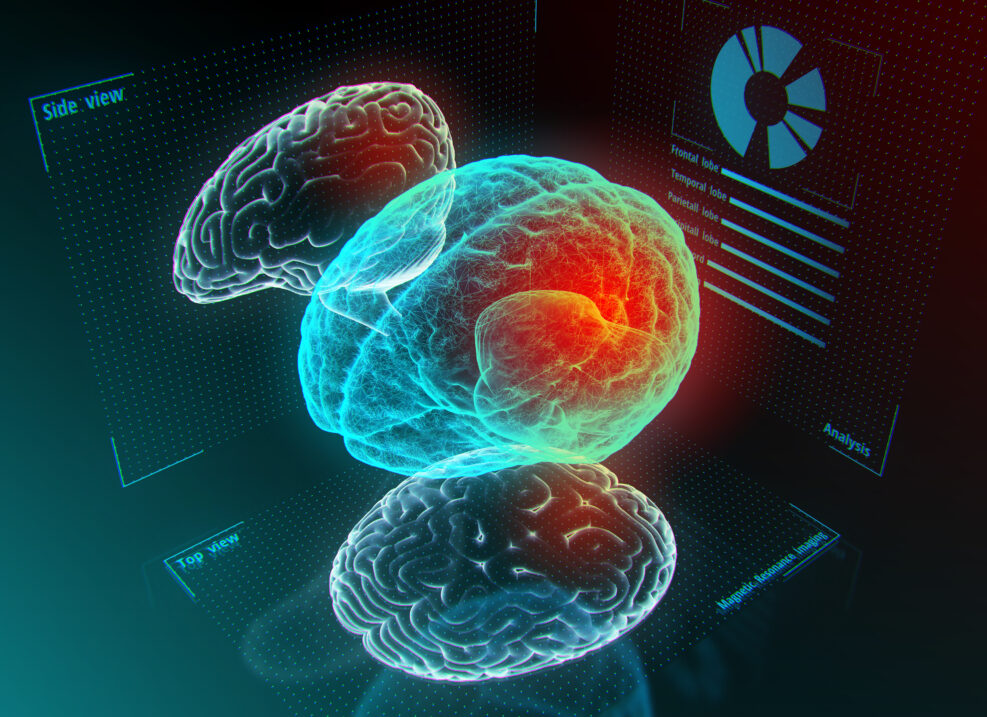
AI That Can Read Minds?
Deconstructing AI hypeThe source for the claims seems to be a 2018 journal paper, "Real-time classification of auditory sentences using evoked cortical activity in humans." The carefully described results are indeed significant but what the Daily Mail article didn't tell you sheds a rather different light on the AI mind reader.
Read More ›
Claim: Yes, you can upload your brain
Fine print: They might have to kill you first
AI Has a (Wonderful) Plan for Your Life
Tech-savvy religion scholars play with reshaping societyThe team is pessimistic about getting politicians on side and hopes to persuade policy analysts to convince the politicians to adopt the policies their model suggests instead. Wildman predicts, “We’re going to get them in the end.”
Read More ›
Virtual Railroads and West Virginia Back Roads
AI’s Temptation to Theft Over Honest ToilJust as a train on a rail requires minimal, or indeed no, human intervention, so cars driving on virtual railroads might readily dispense with the human element.
Read More ›
Big Question: Can Big Data Read the Minds of Others?
And should Facebook scan your posts for suicidal thoughts? (It does.)Neurologist Robert Burton reflects at Aeon on the fact that mind reading does not really work. Most fashionable theories of mind, like the mirror neuron theory, have not really been much use: This is not to say that we have no idea of what goes on in another’s mind. The brain is a superb pattern-recogniser; we routinely correctly anticipate that others will feel grief at a funeral, joy at a child’s first birthday party, and anger when cut off on the freeway. We are right often enough to trust our belief that others generally will feel as we do. More. True, but the problem isn’t with recognizing what most people probably think; it’s with recognizing unusual but important patterns. How Read More ›
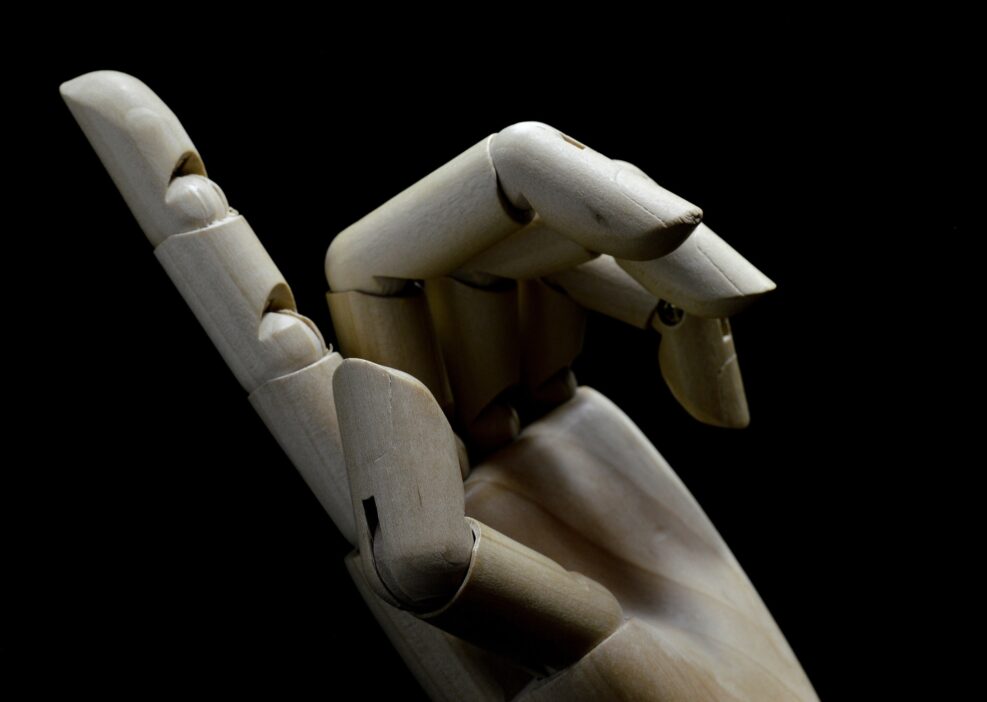
Robot Priests: And You Thought “Robotic Religion” Was Just a Pointed Criticism…?
You know, rote prayers, mindless gestures… Is that the way of the future for some?
How Humans Can Thrive in a World of Increasing Automation
Remarks on the purpose and goals of the Walter Bradley Center at its launchAt the official launch of the Walter Bradley Center for Natural and Artificial Intelligence, July 11, 2018, design theorist design theorist William Dembski offered three key thoughts on the center’s purpose and goals—and how its work may be evaluated. Dr. Dembski was unable to attend*, so his remarks were read by the Center’s director Robert J. Marks: Good evening. Thank you for attending this launch of the Walter Bradley Center for Natural and Artificial Intelligence. In my talk tonight, I’m going to address three points: (1) the importance of its work, (2) its likely impact, and (3) why it is appropriately named after Walter Bradley. First, however, I want to thank friends and colleagues of Seattle’s Discovery Institute for their Read More ›

Neurosurgeon Outlines Why Machines Can’t Think
The hallmark of human thought is meaning, and the hallmark of computation is indifference to meaning.
AI machines taking over the world?
It’s a cool apocalypse but does that make it more likely?Doomsday thinking is easily mocked. The character marching hairy and barefoot under his “End Is Near” sign, is a staple of cartoons in middlebrow mags. Yet when media magnets market doomsday scenarios—like the late Stephen Hawking (“worst event in the history of our civilization”) and Elon Musk (“an immortal dictator from which we would never escape”) — it’s a Cool apocalypse.
Read More ›
AI Can Mean Ultimate Big Surveillance
That’s what we should really worry aboutThe celebrity worry about superintelligent AI taking over and getting rid of us humans distracts our attention from a real-world fact: Artificial intelligence (AI) maximizes the opportunities while crashing the costs of corporate and government surveillance. Both have grown massively in recent years, with predictable results. The surveillants don’t by any means want to get rid of us. They want to take over and run our lives, ostensibly for our own good but certainly for theirs.
Read More ›
Why “Mind Matters” Matter
Mind Matters is a podcast and a news and commentary site where “artificial and natural intelligence meet head-on.” That’s a great slogan, but what does it mean? As your host for the podcast part of the site, I thought I’d take advantage of my role to talk you about some of our exciting plans for both the podcast and the online journal (the latter to be edited by science journalist Denyse O’Leary). Here’s a quick run-down: Topics Mind Matters will track the latest developments in applied AI and technology. How will AI continue to augment human performance and abilities? What are the latest innovations of AI? And how does AI affect you? How is AI applied in pricing your admission Read More ›

The Threat, Promise, and Limits of AI
New Center to Explore the PossibilitiesWhat is a human being? Are we unique creatures, bearing evidence of purpose in our making? Or are we meat-clad robots, a race of glitchy natural machines sprung up by chance through unguided evolution?
Read More ›