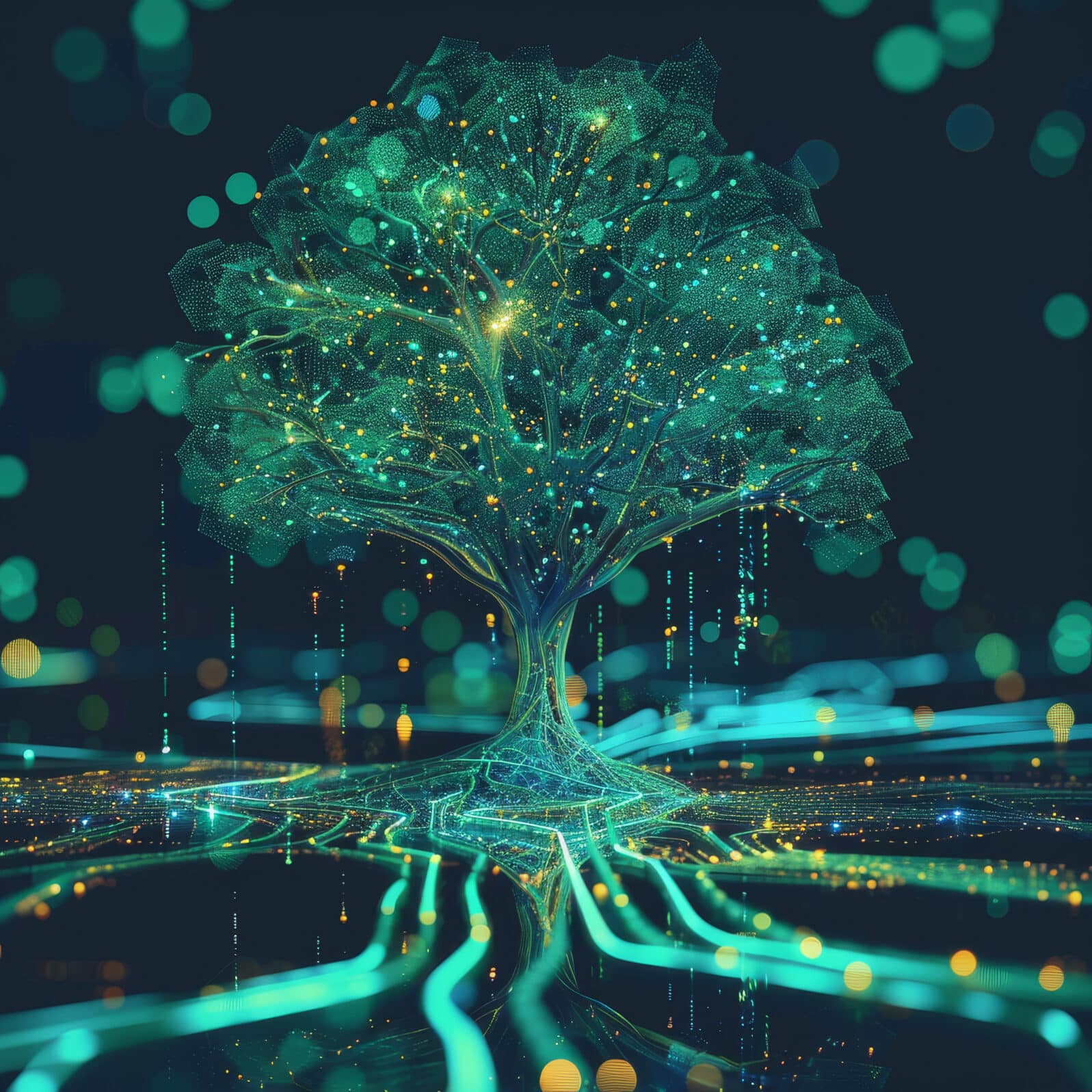
Life is computation? A good argument for intelligent design!
At MIT Press Reader, AI researcher Blaise Agüera y Arcas makes the case, with an assist from Alan Turing (1912–1954) and John von Neumann (1903–1957):
In 1994, a strange, pixelated machine came to life on a computer screen. It read a string of instructions, copied them, and built a clone of itself — just as the Hungarian-American Polymath John von Neumann had predicted half a century earlier. It was a striking demonstration of a profound idea: that life, at its core, might be computational.
Although this is seldom fully appreciated, von Neumann was one of the first to establish a deep link between life and computation. Reproduction, like computation, he showed, could be carried out by machines following coded instructions. In his model, based on Alan Turing’s Universal Machine, self-replicating systems read and execute instructions much like DNA does: “if the next instruction is the codon CGA, then add an arginine to the protein under construction.” It’s not a metaphor to call DNA a “program” — that is literally the case. “Is Life a Form of Computation?,” September 22, 2025
Except for one thing. As he goes on to say, life is vastly more complex than computation:
Biological computing is “massively parallel,” decentralized, and noisy. Your cells have somewhere in the neighborhood of 300 quintillion ribosomes, all working at the same time. Each of these exquisitely complex floating protein factories is, in effect, a tiny computer — albeit a stochastic one, meaning not entirely predictable. The movements of hinged components, the capture and release of smaller molecules, and the manipulation of chemical bonds are all individually random, reversible, and inexact, driven this way and that by constant thermal buffeting. Only a statistical asymmetry favors one direction over another, with clever origami moves tending to “lock in” certain steps such that a next step becomes likely to happen. “Form of Computation?”
Overwhelmed, one is left with only two questions: How many computer geniuses did it take in order to produce even a tiny fragment of this complexity? And how great must be the mind that designed all this! No use talking about spontaneous activity or randomness alone here. We all know that these elements of nature don’t produce complex machines, living or otherwise.
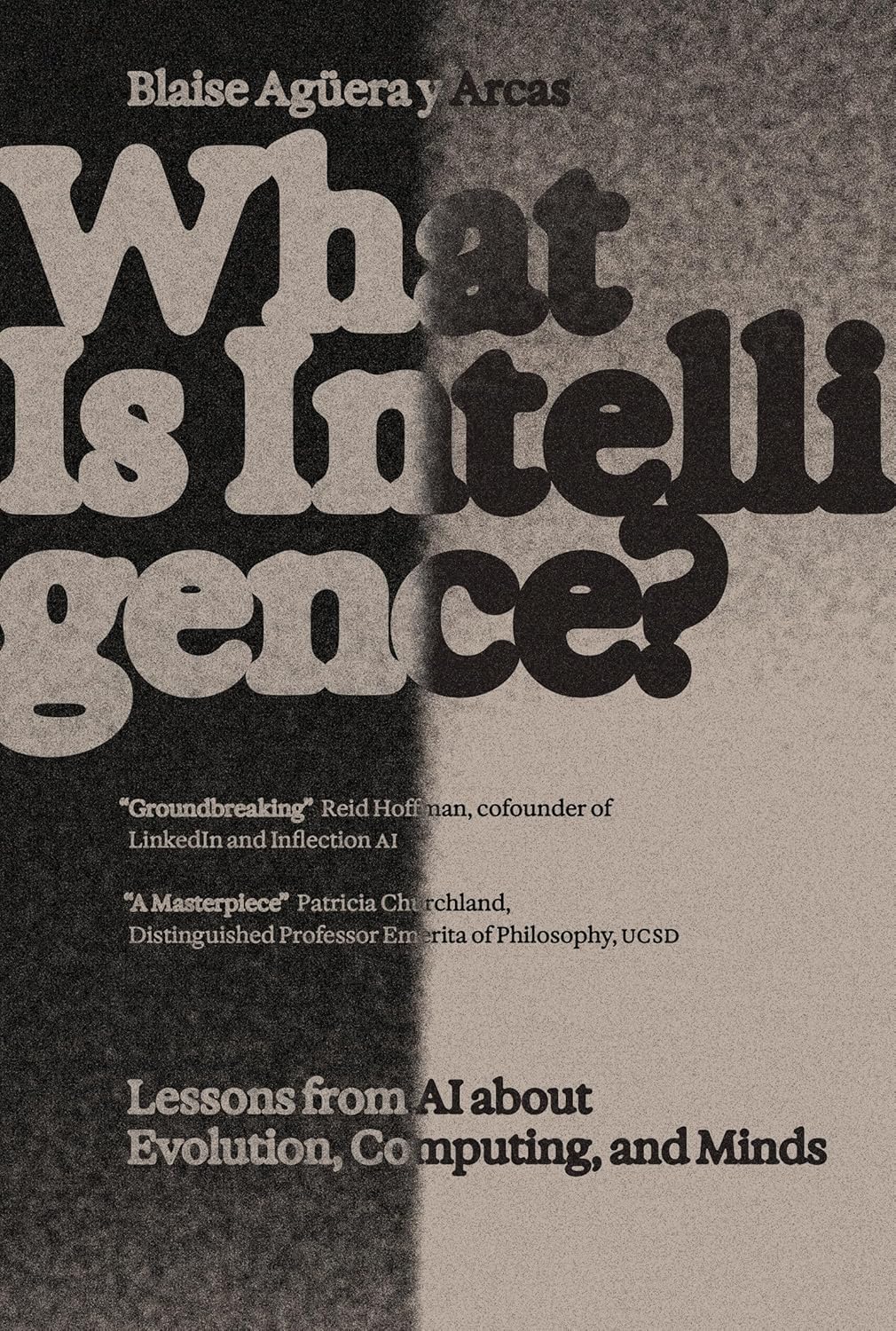
Agüera y Arcas, a VP/Fellow at Google, where he is the CTO of Technology & Society, is the author of forthcoming What Is Intelligence? (MIT Press 2025) from which the article is adapted. He hails the development of computers that break free of earlier constraints:
Computation doesn’t require a central processor, logic gates, binary arithmetic, or sequential programs. There are infinite ways to compute, and, crucially, they are all equivalent. This insight is one of the greatest accomplishments of theoretical computer science. “Form of Computation?”
These new machines don’t seem to have broken free of the need for intelligent programmers somewhere along the line. Does Agüera y Arcas realize that he is making a very good case for intelligent design of life forms?
The book is open access at Antikythera.
