Is Transhumanism Uncomfortably Tempting?
An ethicist asks us to stop and reflectJacob Schatzer identifies three issues in the essay, “The Allure of Transhumanism,” that might prompt some queasy recognitions in all of us, at times.
Read More ›Jacob Schatzer identifies three issues in the essay, “The Allure of Transhumanism,” that might prompt some queasy recognitions in all of us, at times.
Read More ›
Computers are very effective but they operate with a very limited set of causal abilities. Humans work from an entirely different set of causal abilities. Uploading your brain to a computer is not a question of technology. It can’t work in principle.
Read More ›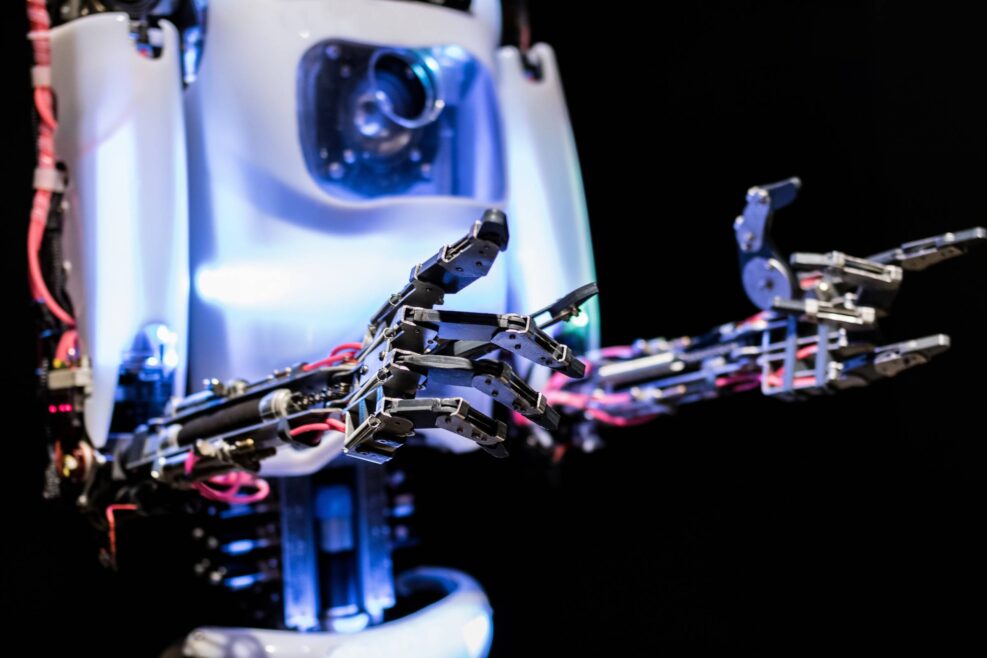
Transhumanism can mean uploading one’s mind into cyberspace. But some transhumanists hope to slowly morph into “immortal cyborgs” with endlessly replaceable parts. Five years ago, we were told, we were all turning into cyborgs: Did you recently welcome a child into the world? Congratulations! An upstanding responsible parent such as yourself is surely doing all you can to prepare your little one for all the pitfalls life has in store. However, thanks to technology, children born in 2014 may face a far different set of issues than you ever had to. And we’re not talking about simply learning to master a new generation of digital doohickeys, we’re talking about living in a world in which the very definition of “human” Read More ›
The late philosopher Jerry Fodor (1935—2017) said that the reason “we’re all materialists” is that the alternatives seem even worse. Transhumanism, had he lived to see it develop, would give him pause for further reflection.
Read More ›
In these excerpts from the podcast, Walter Bradley Center director Robert J. Marks talks with John Lennox about an AI immortality where we are told, for example, that we won’t need tongues because we can tap right into our taste buds.
Read More ›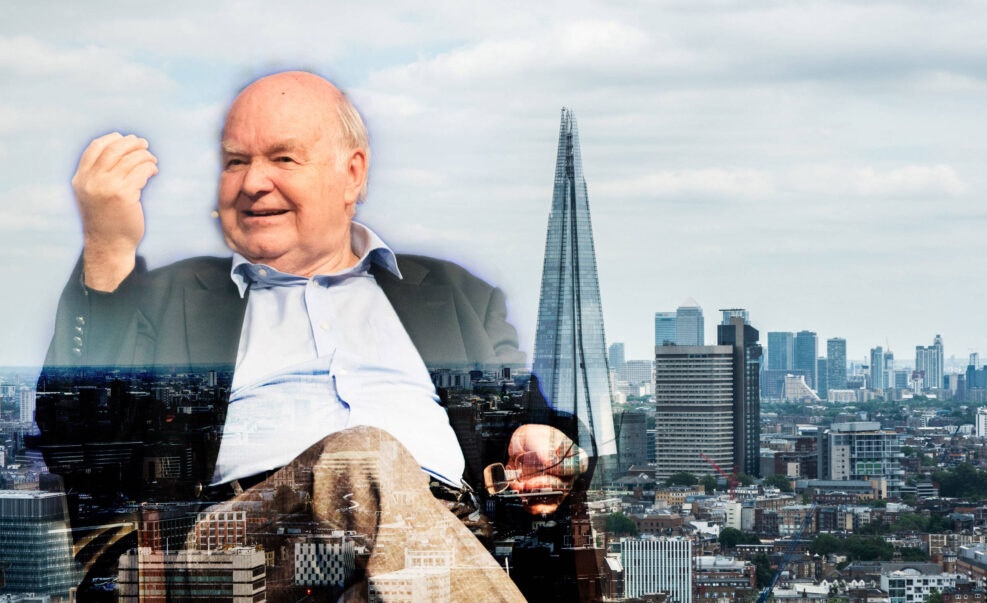
Natural and artificial intelligence can be discussed from a number of viewpoints, including philosophically, technically and theologically. Robert J. Marks and Dr. John Lennox address AI from all of these points of view today on Mind Matters. Show Notes 01:10 | Introducing Dr. John Lennox 03:33 | Bacon and Erdős numbers 05:38 | Should we fear artificial intelligence? 06:10 | Read More ›
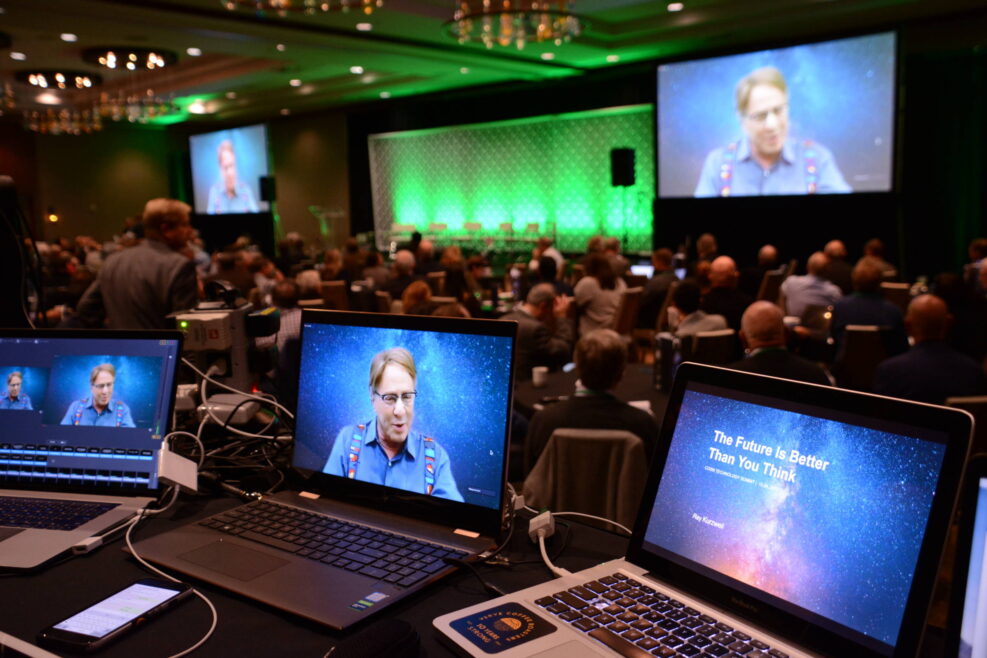
Advocates point to the success of Kurzweil’s past predictions as evidence that his Singularity is indeed Near, as his 2005 book predicts or Nearer, as his forthcoming one (June 2020) does. But questions bubbled to the surface.
Read More ›
Everything has a history, including Silicon Valley. According to a new media theorist, an influential Valley philosophy might underlie the current attitudes, values, and beliefs: There is a Silicon Valley religion, and it’s one that doesn’t particularly care for people — at least not in our present form. Technologists may pretend to be led by a utilitarian, computational logic devoid of superstition, but make no mistake: There is a prophetic belief system embedded in the technologies and business plans coming out of Google, Uber, Facebook, and Amazon, among others. Douglas Rushkoff, “The Anti-Human Religion of Silicon Valley” at Medium In an excerpt from his new book, Team Human (2019), Rushkoff traces the history to a post-Cold War collaboration centered on Read More ›
The transhumanist movement swoons over increasing intelligence. If I had to choose between increasing the intelligence of the human race versus enhancing our capacity to love, the human race would be far better off embracing the latter than the former. There is no brain implant for that.
Read More ›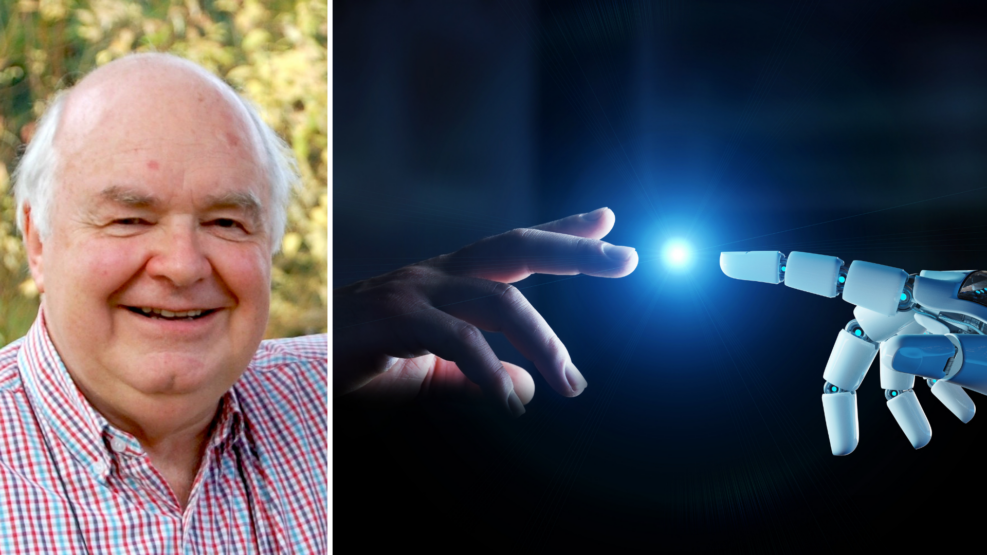
Show Notes 00:46 | Introduction; Dr. John Lennox 01:47 | Trans-humanism 03:00 | Kurzweil and Human Enhancement 06:24 | Chips and Biometrics 07:35 | Trans-humanism and Gnosticism 09:25 | Nothing New Under The Sun 11:15 | More Than Exceptional 13:50 | Forthcoming Book 14:30 | Economy and Personal Security
The advantage of adding talk of evolution to transhumanism is that it turns a perennial tale of immortality just out of reach into a chronicle of inevitable ascent, like the fabled “Ascent of Man.”
Read More ›
A book on the new pop science religion might well be titled “Tales of the Invented God.” Its author would likely be challenged to keep up with all the non-events breathlessly documented. After all, the technocrats who invent their future gods can change, re-envision, replace, upgrade, eliminate them at any time.
Read More ›
In a recent piece, we looked at cognitive scientist Susan Schneider’s explanation as to why we couldn’t cheat death by uploading our minds to the internet. But some have made a career of marketing the idea
Read More ›
Presumably, in Ian Pearson’s future, the rich can attend their own funerals and alternate world funerals an indefinite number of times, each one numbering as many different people as he wants.
Read More ›
It sounds rather like avoiding death by becoming something that isn’t actually alive. Some thoughts to consider before we hit the Enter key… 😉
Read More ›