
CategoryReligion
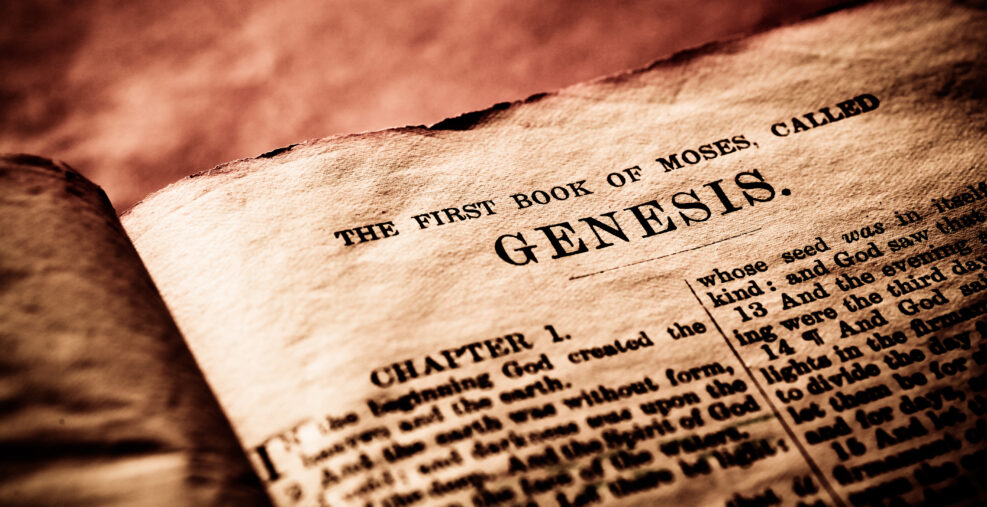
A.I. Jesus Sputters from the King James Bible
The developer emphasizes that the program is a purely human creationThe developer of A.I. Jesus is brazen about his intentions: In these days of trials and tribulations many have turned to religion. But what religion is left for those who have averted their gaze from the fables of old to the shiny metal toys of today? I present to you A.I. Jesus. An artificial intelligence of my invention created from the King James Bible and nothing else. This A.I. learned human language from reading the bible and nothing else; absorbing every word more thoroughly than all the monks of all the monasteries that have ever been. George Davila Durendal, “I Created an A.I. Clone of Jesus” at Medium Durendal (pictured) is an AI engineer and Founder & CEO at a Read More ›

Common Reasons for Dismissing Miracles Are Mistaken, Study Shows
Religious people are more likely to say they’ve experienced a miracle but they aren’t the only ones who doIn a research article published in Review of Religious Research in July, sociologist Edwin Eschler comes to some unexpected conclusions about who experiences miracles—defined as “any experience in which a person believes an event or outcome was influenced by supernatural agents”: For example, ➤ Well-educated and well-to-do people are just as likely to say they have experienced a miracle as poor and uneducated people—if they encounter an existential threat in life: Q: What were your major findings? Eschler: Well, first and simplest was that 57% of respondents had experienced a miracle of some kind. We’re not talking about a fringe belief/behavior. But more important was what I didn’t find: education had no relationship with experiencing miracles at all. Respondents with Read More ›

Some Mysteries About Cats … Solved!
Pet dogs outnumber cats but they’ll never excel at creating the aura of mystery at which the cat effortlessly succeedsFollowing up on the ways cats are intelligent, it might be fun to look at how humans got involved with them. It turns out that there are reasons why we have always found cats mysterious, compared to dogs. Why are people so fond of cats? There are lots of reasons but here’s an interesting find: Domestic cats’ meows for attention are said to be unique to their relationship with humans. Oxford neuroscientist Morten Kringelbach has found a way to map human responses via magnetoencephalograph (MEG) studies that measure electrical activity in our brains in real time. He found that the cry of a baby triggered a response in the orbitofrontal cortex before study subjects had identified the sound consciously. Adult Read More ›

If New Tech Enhances Our Lives, Why Does It Make Us Crazy?
It doesn’t have to. Let’s think this throughIt has never been easier to connect but somehow we don’t. Andrew McDiarmid, author of the blog Thinking and thriving in the digital age, asks us to consider why loneliness (and suicide) have accompanied the rise of new communications technology. And he offers a challenge: Here are just a few questions to ask yourself about each tech tool you have. Is using this tool a wise use of my time? Does it encourage me to think for myself? Does it enable me to use my God-given abilities and spiritual gifts? Does it help me accomplish what God wants me to do? Does using this tech compromise my witness to others by causing me to stumble or get distracted? Does it Read More ›

Why Reasonable People Think Near-Death Experiences Are Real
Distinguished engineers Walter Bradley and Robert J.Marks sift through the evidenceIn a recent podcast, “Walter Bradley on Near-Death Experiences,” Center director Robert J. Marks discusses these experiences with Walter Bradley, after whom the Walter Bradley Center for Natural and Artificial Intelligence is named. Dr. Bradley is an emeritus distinguished professor at Baylor University, formerly professor and mechanical engineering head at Texas A&M University. https://episodes.castos.com/mindmatters/Mind-Matters-093-Walter-Bradley.mp3 Here are some selections from the transcript: (You can download the entire transcript here.) Marks and Bradley started with first principles: Is it reasonable to believe that there is anything out beyond the material world? Many people assume that science exists to defend materialism. But Walter Bradley has defended the idea that there is also an immaterial world, of which we are a part, in a Read More ›
Do Some Passages in the Book of Revelation Seem to Talk About AI?
Revelation is notoriously obscure but a passage about a future “total control” state gives pause for thoughtJohn Lennox, author of 2084: Artificial Intelligence and the Future of Humanity (2020), is not only an Emeritus Professor of Mathematics at Oxford University but also pastoral advisor to Green Templeton College at Oxford. In a podcast, “Does Revelation Talk About Artificial Intelligence?” with Robert J. Marks, director of the Walter Bradley Institute, he addresses the title question, “Do some passages in the Book of Revelation seem to talk about AI?”: https://episodes.castos.com/mindmatters/Mind-Matters-091-John-Lennox.mp3 Selections from the transcript are provided below: (The complete downloadable transcript may be found following the Show Notes and Resources. “Can AI Replace the Need for Belief in God?” provides an account of the earlier portion of this lively discussion.) Robert J. Marks (right): Last question I want Read More ›
Can AI Replace the Need for Belief in God?
Oxford mathematician contends that science should increase our respect for what God has created and allowed us to doJohn Lennox. author of 2084: Artificial Intelligence and the Future of Humanity (2020), is not only an Emeritus Professor of Mathematics at Oxford University but also pastoral advisor to Green Templeton College at Oxford. In a podcast, “Does Revelation Talk About Artificial Intelligence?”, he discusses with Robert J. Marks, director of the Walter Bradley Institute, the title question: “Can AI replace the need for belief in God?” https://episodes.castos.com/mindmatters/Mind-Matters-091-John-Lennox.mp3 Selections from the transcript are provided below: (The complete downloadable transcript may be found following the Show Notes and Resources) Robert J. Marks (right): Let’s talk about the theological implications of AI. You have a reputation, not only as a mathematician, but a Christian apologist. And I wanted to go into some Read More ›
Oxford Mathematician: Atheism Detracts from Science
The problem, as John Lennox sees it, is that atheism does not provide grounds for believing in rationalityToday, Evolution News and Science Today published an excerpt from Oxford mathematician John Lennox’s 2084: Artificial Intelligence and the Future of Humanity (Zondervan 2020): in which Lennox discusses some of the ways in which atheism detracts from science: Science proceeds on the basis of the assumption that the universe is, at least to a certain extent, accessible to the human mind. No science can be done without the scientist believing this, so it is important to ask for grounds for this belief. Atheism gives us none, since it posits a mindless, unguided origin of the universe’s life and consciousness. John Lennox, “Why Science and Atheism Don’t Mix” at Evolution News and Science Today: He offers physicist John Polkinghorne’s explanation of Read More ›

In Dan Brown’s AI Hype Novel, the Hero Stumbles Onto God
Not clear that was supposed to happen but stories do get away on their authors at times…In a recent podcast, “John Lennox: False Assumptions in the hype over AI,” Oxford mathematician John Lennox, author of 2084: Artificial Intelligence and the Future of Humanity (2020) discussed common mistaken assumptions with Walter Bradley Center director Robert J. Marks. One of them seems to be that AI might prove there is no God, replace God, or become God. Things get interesting when these science fictions meet the world of fact. https://episodes.castos.com/mindmatters/Mind-Matters-090-John-Lennox.mp3 From the transcript: Robert J. Marks: In your book, you discussed Dan Brown’s novel entitled Origin. Now Dan Brown is famous for writing many, I don’t know, kind of strange books. One was the Da Vinci Code, but his recent one deals with artificial intelligence and you discuss Read More ›

COVID-19: Atheism Went Viral As Well
Atheists are uniquely unsuited to accuse others of devaluing human lifeProfessor Steven Pinker’s quickly deleted tweet provides a window into anti-religious hate. In health and medicine, he is entirely mistaken.
Read More ›
Is Intelligence Common or Rare in the Universe?
A recent analysis says that life is common but intelligence not so much. Let’s explore the reasoningWe really don't know anything about life elsewhere in the universe so even university-trained scientists often try to WISH it into existence.
Read More ›
Gödel and God: A Surprising History
A thought-provoking account of master logician Gödel’s largely unknown proof of the existence of GodIn an unsanitized, politically incorrect (but factual) history, Selmer Bringsjord talks about how the tormented genius Kurt Gödel took up a quest that dated back a thousand years to prove the existence of God by formal logic. His original version didn’t quite work but his editor’s version passed an important logic test.
Read More ›
God’s Existence Is Proven by Science
Arguments for God’s existence can be demonstrated by the ordinary method of scientific inferenceIf we approach the arguments logically, as the ancient philosophers did, we will see that it is more certain that God exists than that anything else does. Atheist evolutionary biologist Jerry Coyne should consider the arguments more carefully before assuming that prayer is foolish.
Read More ›
Why Does the Vatican Need Microsoft?
Should the Church really partner with IBM and Microsoft to make pronouncements on tech regulation?When giant corporate actors like IBM and Microsoft promote “transparency and compliance with ethical principles?”, we run the risk that they are helping to craft regulations that hinder future competitors (“regulatory capture”). Rather than partner with them in making statements, the Church should stay clear.
Read More ›
Jerry Coyne Hasn’t Got a Prayer
He understands neither natural theology nor natural scienceWe are more scientifically certain of God’s existence than we are of quantum mechanics or Newtonian or relativistic gravitation. The logic is rigorous.
Read More ›
Are We Doomed Unless We Get Ourselves Digitized?
A tech writer suggests humans can escape Earth’s end by digitizing ourselves elsewhere in the galaxyToday’s apocalyptic vision seems now to have moved on from the arrival of the extraterrestrials to uploading ourselves to a supercomputer. Whether it’s possible is really secondary. The main question is whether it answers a cultural need for a vision that mirrors the inner turmoil of the day.
Read More ›
Why prayer is wise during a pandemic
Evolutionary biologist Jerry Coyne thinks that only fools would pray about coronavirus. He is wrong and here is whyIf God is real, then prayer is probably the first thing you want to do in a crisis. A plea to the Boss is a fine preamble to the grunt work of managing a crisis. I’m a neurosurgeon, and I pray before each operation. It really helps.
Read More ›Scientific American Explores Panpsychism… Respectfully
This is a major change. At one time, a science mag would merely ridicule the idea of a conscious universeMake no mistake, panpsychism—as Goff elucidates it—is a purely naturalist view But he asks, what IS nature? It turns out, no one really knows.
Read More ›
2019 AI Hype Countdown #2: Big Data Is Our Crystal Ball!
The biggest problem is that human behavior is not as predictable as the models implyMany models are ridiculously simplistic, making the results worse than worthless. They become a way of solidifying biases.
Read More ›