
Michael Egnor: Three atheist scientists walk into a book
Let no one say that Dr. Michael Egnor, distinguished neurosurgeon and keen analyst of the human soul, has, apart from those gifts, no sense of humor. At our recent Dallas Conference on Science and Faith, he talked about the question of free will, which is denied by prominent atheist scientists including Sam Harris, Darwinian evolutionary biologist Jerry Coyne, and primatologist and Stanford professor of neurology, Robert Sapolsky.
Egnor observes, “If there is no free will, everything is an act of nature,” and therefore “morality” can make no claims about anything. It’s an only illusion projected by the meatware of our brains.
Regarding Harris, Coyne, Sapolsky and the books they’ve authored, Dr. Egnor says, “The people who deny free will, the authors of these books, if you want to find out out if they believe in morality, and therefore if they believe in free will, all you have to do is tear up their royalty checks from their books. And tell them, ‘Hey, I didn’t have any choice, it’s just an act of nature.’” That’s funny.
He also offers a proposal for a book to be co-authored by the esteemed free will deniers, to be titled, We Can’t Control Our Thoughts and We Don’t Know Where They’re Coming From: Three Scientists Who Didn’t Choose to Write This Book, to be published by The Atheist Press. That made me laugh out loud. Enjoy:
Crossposted at Science and Culture Today.
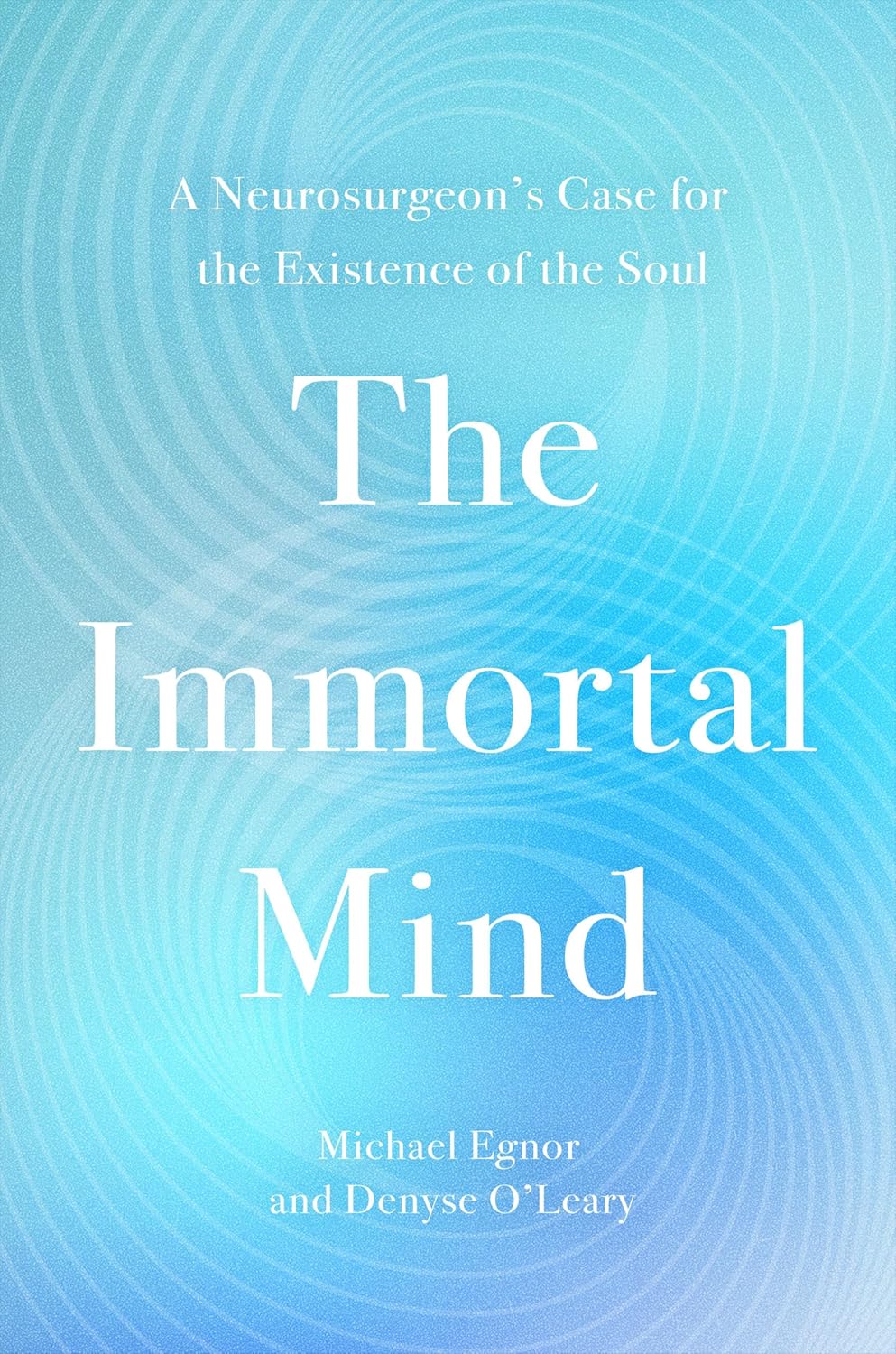
Note: In The Immortal Mind: (2025), Egnor offered a similar jibe at the irrationality of denying free will:
Imagine a patient walking into a doctor’s office and telling the doctor about a belief that he can’t get out of his head: “I believe, Doctor, that I’m controlled by an alien force, and have no control over anything I do. My thoughts and feelings and movements are not my own — they are forced upon me. I’m a robot made of meat. What can I do about this?”
The good doctor would no doubt be concerned for the patient’s sanity and recommend a psychiatric evaluation.
On the other hand, if the patient added, “And I’m a neuroscientist who does brain research,” we can imagine the psychiatrist exclaiming, “Well, you’re in the mainstream of scientific opinion in the best universities and laboratories. Please, come and lecture to my medical students about cutting-edge neuroscience!” (pp. 136–137)
