
Consciousness in Plants Rebrands an Exploded Materialism
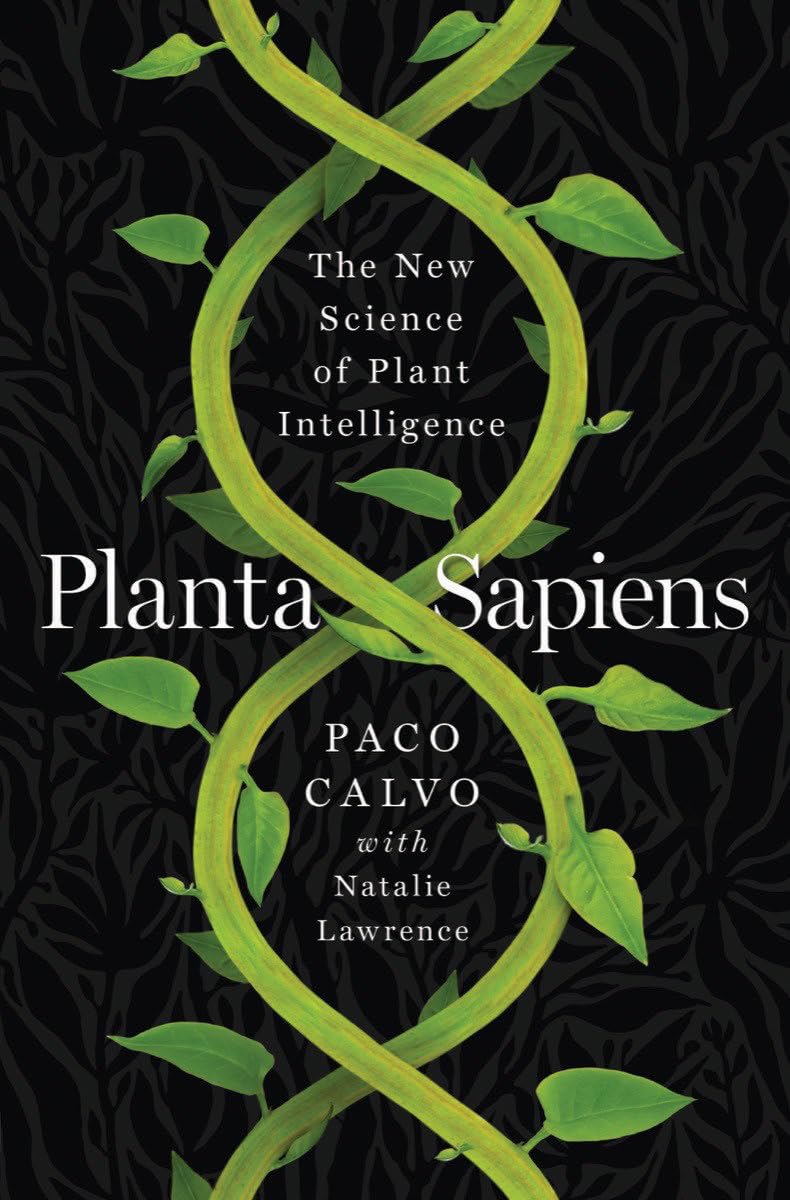
It’s not so much that consciousness in plants is being demonstrated as that what consciousness means is changing so as to include plantsCambridge philosopher of science Natalie Lawrence, author with Paco Calvo of Planta Sapiens: Unmasking Plant Intelligence (Little, Brown, 2022), tells us at IAI.TV, that “New studies suggest consciousness exists in organisms without brains.” It’s an argument for consciousness in plants and slime molds.
She starts by dismissing the “Hard Problem of human consciousness:
The deep entrenchment of this preconception isn’t surprising, given that our own consciousness is the only one we have access to. But this “brain-centrism” pervades the cognitive sciences, shaping our understanding of other beings and approaches to research. It’s one of several kinds of scientific chauvinism that currently limit the field of enquiry and hamper our scientific approach to other kinds of minds. June 15, 2026
Why, she asks, should consciousness be limited to beings with neurons?:
Across the philosophy of mind, it is becoming increasingly clear that there are fruitful avenues for exploring the origins and nature of consciousness well beyond neuronal systems. If anything, assuming the necessity of brains is beginning to look like a fragile position. At the radical frontiers of cognitive science, the concept of what a mind can be and the diverse systems from which it might originate are broadening. By studying organisms very different from us and our vertebrate relatives—such as plants or slime molds— researchers are revealing capacities that hint at minds beyond traditional confines, from maze solving to responsivity to anesthetics. June 15, 2026
Lawrence identifies a growing movement to see plants and slime molds as conscious:
To move forward, we need experimental strategies that do not begin with human cognition as the template for mind. There’s a growing network of researchers across science and philosophy who are doing just that. For example, the Minimal Intelligence Laboratory (MINT Lab) in Spain is working with plant models to break new ground in the study of diffused intelligence systems. Plant experience is not directly accessible to scientific investigation, so it must be approached indirectly through behaviour and experimentally tractable proxies. Led by Professor Paco Calvo, the team is exploring how to apply experimental tools from the cognitive sciences to study plant behaviours and distributed cognition.
In the current project, Behavioural Evidence for Plant Consciousness, for example, Calvo and his team are developing frameworks for testing whether plants can perform advanced forms of learning. June 15, 2026
In these times, we can reasonably infer that they will find whatever they are looking for. It’s not so much that consciousness in plants is being demonstrated as that what consciousness means is changing so as to include plants.
Arguments for plant consciousness treated more favorably
Paco Calvo, the first author of Planta Sapiens, is described at ResearchGate as a “a leading figure in the philosophy of plant behavior and signalling” so these are not fringe figures. It is interesting to reflect on how much headway panpsychism (everything is conscious) has made in the past two decades.
The arguments for plant consciousness, to take one example, are treated very favorably today, compared to what we might have expected fifty years ago — when they might have been considered presumptive evidence of lunacy (“Dandelions talk to me!” = I need intervention before I harm myself.)
Indeed, neuroscience writer Annaka Harris, wife of materialist neuroscientist Sam Harris, tells us that plants are conscious. Other scientists protest in vain. The need to see humans as equivalent to animals has now spread to the need to see us as equivalent to plants. Some even think us “soul-blind” if we doubt.
Of course it is true that we have underestimated the cognition of many life forms, seeing them as biological machines. But I suspect that what is really going on here is more like this: Instead of being expected to believe that human consciousness is an illusion, we can accept that it exists — along with the cabbage mind and possibly the electron mind. Instead of believing that nothing is conscious, we are now to believe that everything is.
A materialist theory
In short, panpsychism — as it entrenches itself in science culture — is very much a materialist theory. It avoids the absurdity of eliminative materialism by admitting that human consciousness is real. But then it tries to make human consciousness simply one example among many of consciousness in nature. That’s probably how believing that plants have minds came to seem reasonable, perhaps even essential.
In popular culture, this approach easily tips over into animism, the belief that plants are “non-human persons with whom we may maintain and develop social relationships.” Among those with political aspirations or power, it more likely culminates in plant rights movements, with varying effects on vulnerable human populations.
Plants can process information in ways of which we have not been aware; that’s true But anyone who is seeking to evade the Hard Problem of human consciousness by pointing to plant sensitivities is seeking a way to rescue and rebrand an exploded materialism.
